I founded a leather goods brand in Manhattan’s Garment District six years ago. In that time, I’ve watched the NYC leather goods market transform completely. Material costs swung 24% year-over-year. Sustainability disclosures went from “nice to have” to legally required. And customers on Madison Avenue started asking not just “Is this real leather?” but “What’s in the coating?” The global leather goods market is on track to hit $524 billion by 2035, growing at 22% CAGR — but capturing that growth from a New York base means sourcing material that passes compliance, performs in retail, and tells a verifiable story. For an increasing number of NYC fashion brands, that material is silicone leather.
The NYC Leather Goods Market: Growth Meets Compliance Pressure
New York City sits at the intersection of the leather goods market’s two biggest forces: surging demand and tightening regulation. The numbers tell the story. High-end fashion demand grew 33% globally, online leather accessories purchases grew 29%, and vegan leather product demand surged 32%. Manhattan’s Madison Avenue corridor anchors prestige-tier allocation, while Midtown and the Financial District drive corporate procurement of work-appropriate totes and satchels. Every major leather goods brand wants a footprint here.
But New York State’s alignment with FTC Green Guides substantiation requirements has changed the sourcing calculus. Brands that previously marketed “genuine leather” or “eco-friendly leather” without documented supply-chain evidence now face enforcement risk. The rule is simple: if you claim it, you prove it. That means every batch of leather goods leaving a NYC atelier needs traceable material documentation — from chemical composition to manufacturing origin.

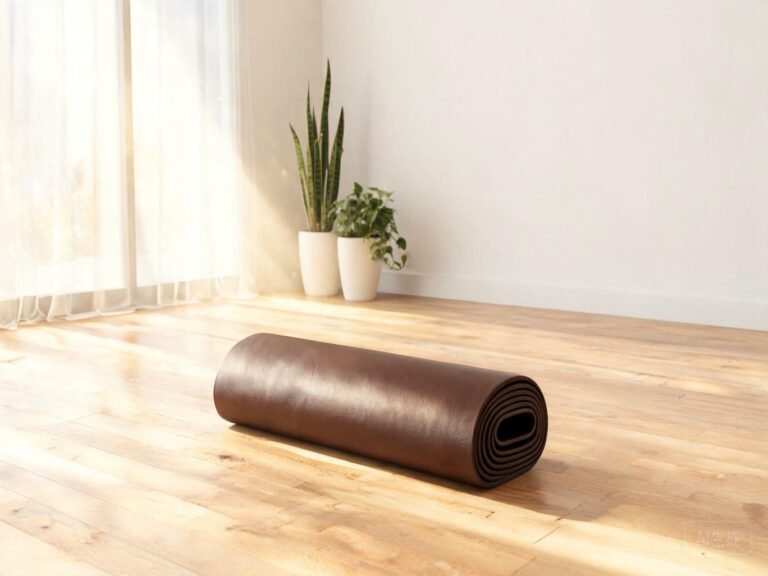
Finished silicone leather goods warehouse — custom-rolled, labeled, and documented for traceable supply chain delivery
Why NYC Fashion Brands Are Reconsidering Their Leather Source
Three pressures are forcing NYC leather goods brands to rethink their material sourcing:
1. Raw material cost volatility (up 24%). Genuine leather prices fluctuate with livestock markets, tannery capacity, and environmental compliance costs at origin (up 21%). For NYC brands operating on tight fashion-season margins, unpredictable material costs make pricing strategy nearly impossible. Silicone leather’s raw material costs are stable because they’re tied to widely available silica, not livestock or petroleum derivatives.
2. Compliance documentation demands. New York’s FTC Green Guides alignment means brands must substantiate environmental claims with verifiable data. PU and PVC leather suppliers often can’t provide full chemical disclosure — plasticizer formulations are frequently proprietary or incomplete. Silicone leather’s chemistry (PDMS — polydimethylsiloxane) is fully documentable: REACH compliant, FDA food-contact certified, and inherently flame retardant without additive chemicals.
3. Consumer shift toward sustainable leather (adoption up 27%). NYC’s fashion-forward consumers are driving the 32% surge in vegan and sustainable leather demand. Brands that can’t answer “What’s in your leather?” lose shelf space and customer trust. Silicone leather answers that question with a single-page compliance sheet — no greenwashing, no ambiguity.
Silicone Leather for Fashion: Texture, Color, and Performance
For NYC fashion brands, the material question isn’t just about compliance — it’s about whether silicone leather can actually deliver the look, feel, and performance that luxury leather accessories brands demand. After two years of testing silicone leather across our handbag, belt, and small-goods lines, here’s what the data shows:
| Property | Genuine Leather | PU Leather | Silicone Leather |
|---|---|---|---|
| Color options | Limited (natural dyes) | Wide (pigmented) | 40+ standard + custom Pantone match |
| Texture options | Natural grain only | Embossed patterns | Lychee, pebble, smooth, custom emboss |
| Chemical disclosure | Tannery-dependent (often incomplete) | Proprietary plasticizer formulas | Full PDMS documentation (REACH/FDA) |
| Color fastness (UV 1,500 hrs) | ΔE 2.0–3.0 | ΔE 3.5–5.0 | ΔE < 0.5 |
| Min order quantity | 50–500 hides | 500–1,000 yards | 300 yards (custom) / 100 yards (stock) |
| Lead time (custom color) | 8–12 weeks | 4–6 weeks | 3–4 weeks |
| NYC compliance readiness | Variable | Limited disclosure | Full documentation package |
Data compiled from supplier documentation and independent testing per ISO 105-B02 (UV), ISO 12947 (abrasion), and REACH SVHC disclosure requirements.

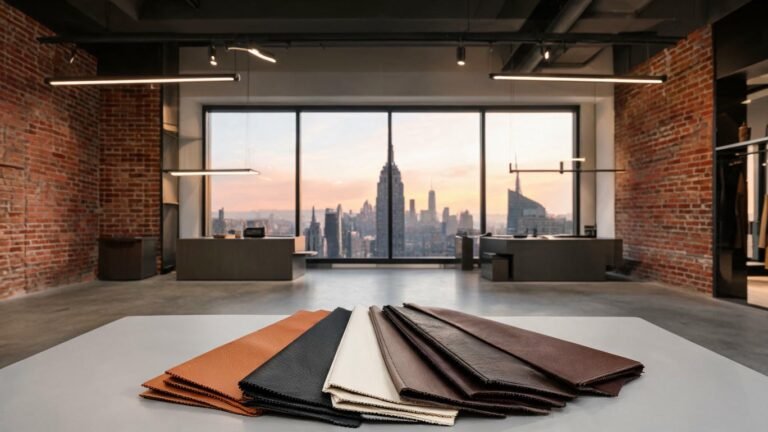
Metallic and standard color sample strips — silicone leather available in fashion-forward finishes including metallic sheen
Texture Variety: Matching NYC Fashion’s Visual Language
Silicone leather for clothing and accessories — texture, flexibility, and color options for NYC fashion applications
NYC fashion brands don’t source material — they source a visual language. A handbag’s texture communicates price point, a belt’s embossing pattern signals brand identity, and a wallet’s finish determines perceived quality. The advantage of silicone leather texture options is range: lychee grain for contemporary accessories, smooth semi-gloss for minimal designs, pebble grain for heritage aesthetics, and custom embossing for signature patterns — all from the same base material with identical performance characteristics.
In my experience, the transition from PU to silicone leather required zero retooling of our cutting and sewing equipment. The material handles identically on industrial sewing machines, accepts the same edge-paint and hardware, and actually performs better in heat-stamped branding — the silicone surface accepts foil debossing with sharper edge definition than PU.
Supply Chain Transparency: NYC’s Compliance Reality
If you’re a NYC leather goods brand, here’s the compliance landscape in 2026: New York State’s FTC Green Guides alignment means every environmental claim must be substantiated. The EU REACH regulation applies if you ship internationally. And major NYC retailers increasingly require full chemical disclosure before they stock your products. Non-compliant materials don’t just risk regulatory action — they risk lost retail partnerships.

Warm and cool tone sample hangers — color-matched silicone leather for NYC fashion brand seasonal collections
What NYC brands need from suppliers: A single compliance package that covers chemical composition (full REACH SVHC list), manufacturing origin documentation, material safety data sheets, and certification of any sustainability claims. TOPSUN provides this as standard documentation with every order — no extra requests, no weeks-long delays while a supplier assembles partial disclosures.
Sourcing Checklist: 6 Specs NYC Leather Goods Brands Need
Before placing a bulk order for leather goods material, verify these specifications. Each one protects your brand from a failure mode that NYC’s market and regulatory environment won’t forgive:
- Full chemical disclosure — request the complete REACH SVHC (Substances of Very High Concern) report. If the supplier can’t provide it, you can’t substantiate compliance claims to NYC retailers or regulators.
- Custom color matching capability — request Pantone-matched samples and verify ΔE < 1.5 across batch runs. NYC fashion brands need seasonal color consistency across multiple production orders.
- Texture and embossing options — confirm available patterns (lychee, pebble, smooth, custom) and minimums for custom embossing rollers. Your signature pattern shouldn’t require a 5,000-yard commitment.
- Thickness range — verify available gauges (0.5mm–2.0mm). Handbags, belts, and wallets each require different stiffness; a single supplier should cover the full range.
- UV color fastness data — request ISO 105-B02 xenon arc test results. NYC showroom windows and retail floor lighting cause fading; < 0.5 ΔE after 1,500 hours is the threshold for year-round display.
- Sample delivery turnaround — confirm how quickly custom swatches ship. NYC fashion operates on seasonal calendars; a 3-week sample delay can mean missing a buyer appointment.

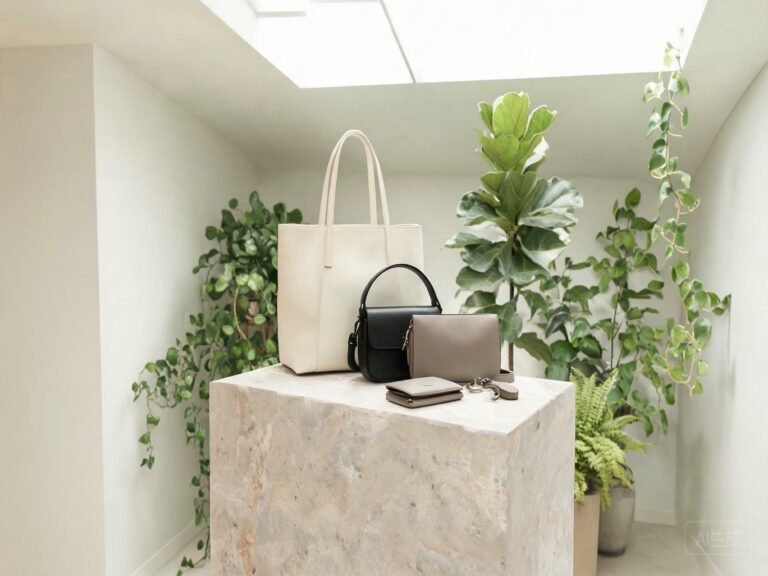
Silicone leather in fashion application — handbags and accessories meeting NYC retail quality and compliance standards

Belt material texture in silicone leather — meets the stiffness, edge-clean, and durability requirements for leather goods
Frequently Asked Questions
Can silicone leather match the look and feel of genuine leather for NYC fashion goods?
Yes. Silicone leather is available in 40+ standard colors with custom Pantone matching, and multiple embossing patterns including lychee, pebble, and smooth finishes. The hand-feel — softness, drape, and surface temperature — is comparable to premium genuine leather. For handbags, belts, and small leather goods, the visual and tactile differentiation from genuine leather is negligible to end consumers while offering superior color consistency and stain resistance.
What compliance certifications does NYC require for imported leather goods?
New York State’s alignment with FTC Green Guides requires substantiation of any environmental or material claims. For international shipping, EU REACH SVHC compliance is expected. Major NYC retailers increasingly require full chemical disclosure. Silicone leather meets these requirements with standard documentation: REACH compliance, FDA food-contact certification, and full PDMS chemical composition disclosure — all provided as a standard package with every order.
How does TOPSUN handle custom color matching for NYC fashion brands?
TOPSUN offers Pantone-matched custom colors with ΔE < 1.5 across batch runs. Custom swatches ship within 3–4 weeks of color specification. Minimum order quantities for custom colors start at 300 yards, with stock colors available from 100 yards. For NYC fashion brands operating on seasonal calendars, this lead time allows color development to align with collection planning.
About TOPSUN
TOPSUN supplies silicone leather to NYC leather goods brands, fashion houses, and accessory manufacturers seeking compliant, traceable, and customizable material for handbags, belts, wallets, and apparel that meets US FTC Green Guides, REACH, and FDA food-contact standards.
40+ standard colors with Pantone matching, lychee/pebble/smooth/custom embossing, thickness 0.5–2.0mm, 300-yard custom MOQ, 3–4 week lead time, full REACH SVHC and FDA documentation included standard.