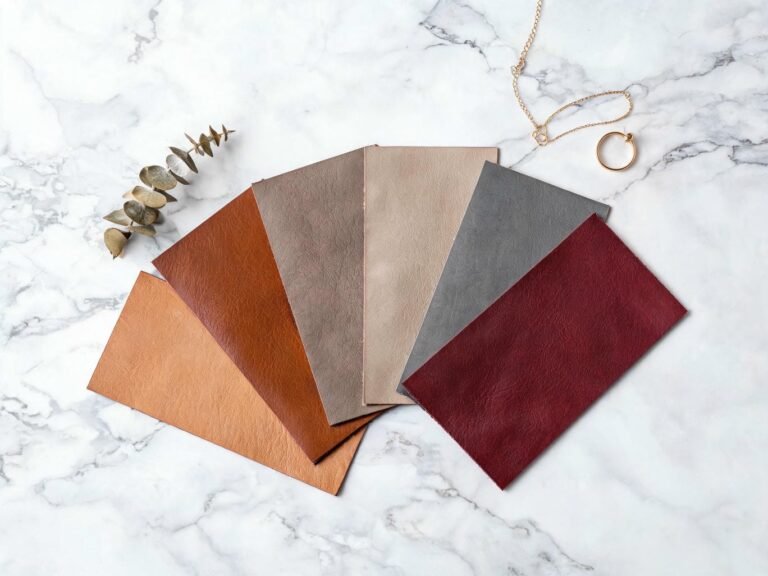
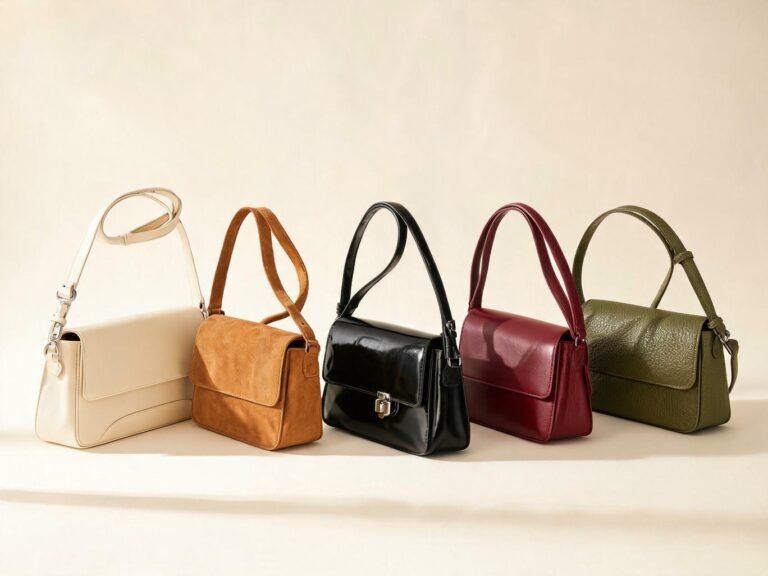
A leather accessories brand using generic PU leather at $3-5/unit material cost competes on price against hundreds of identical suppliers. A brand using custom-colored silicone leather with exclusive texture embossing at $8-12/unit material cost competes on uniqueness — and can retail 3-5x higher because the material itself is the brand differentiator.
How Material Choice Defines Your Leather Accessories Brand Tier
In the leather accessories market, material is the primary signal of brand tier. Customers may not know the difference between full grain and bonded leather, but they can feel it, see it, and watch it age. Here is how the material hierarchy maps to brand positioning:
| Brand Tier | Material | Material Cost/Unit | Retail Price Range | Customer Expectation |
|---|---|---|---|---|
| Commodity | Bonded / PU | $1–3 | $10–30 | Disposable, 1-season use |
| Mid-Market | Genuine Leather | $3–8 | $30–80 | “Real leather” label, 2–3 year life |
| Premium | Top Grain / Full Grain | $8–20 | $80–250 | Quality, patina, 5–10 year life |
| Luxury | Exotic / Custom | $20–50+ | $250–1000+ | Exclusivity, heritage, 15+ year life |
| Premium Eco | Silicone Leather (custom) | $8–12 | $80–300 | Sustainability + durability + custom design |
Material costs based on small accessories (wallet, card holder, watch strap). Retail prices reflect typical DTC and boutique pricing in US/EU markets.
The 4-Step Material Strategy for Building a Leather Accessories Brand

Step 1: Define Your Brand’s Material Story
Before sourcing materials, articulate what your brand stands for through its material choice. Are you positioning as heritage luxury (full grain, vegetable-tanned, ages beautifully)? Sustainable innovation (silicone leather, zero VOC, cruelty-free)? Accessible quality (top grain, uniform finish, reliable performance)? Your material story must be authentic, verifiable, and consistent across every product in your line.
Step 2: Select a Material That Creates a Defensible Position
A defensible position means your competitors cannot easily replicate your material strategy. Generic PU is indefensible — anyone can buy it. Full grain Italian leather is defensible through tannery relationships but increasingly commoditized. Custom-colored silicone leather with exclusive texture embossing is highly defensible — the color formulation and embossing plate are proprietary to your brand.

Step 3: Develop Exclusive Colors and Textures
Off-the-shelf colors and textures make your products look like everyone else’s. Invest in custom color development (Pantone-matched, ΔE ≤ 1.0) and exclusive texture embossing that becomes your brand’s signature. A customer should be able to identify your product by touch alone. TOPSUN’s custom color development takes 3–5 days with a 300-meter MOQ — an investment that pays back through brand distinctiveness at retail.

Step 4: Build Quality Documentation Into Your Brand Narrative
Premium accessories brands do not just sell products — they sell provenance. Include material certification cards with each product: Martindale test results, REACH compliance, carbon footprint data. A wallet that comes with “Tested to 200,000 Martindale cycles, zero VOC, REACH compliant” documentation commands a higher price than the same wallet sold without documentation. The certification becomes part of the brand experience.
Why Accessories Brands Are Switching from Genuine to Silicone Leather
The shift from genuine leather to silicone leather in the accessories market is driven by three converging forces:
- Vegan positioning — The global vegan leather market is growing 7.8% annually. Brands that position as cruelty-free capture the growing segment of consumers who reject animal products but still want premium quality and aesthetics.
- Performance advantage — Silicone leather’s 200,000+ Martindale cycles (vs 30,000–70,000 for genuine leather) means accessories that don’t show wear. For daily-use items like wallets and watch straps, this translates to products that look new for years — driving repeat purchases and brand loyalty.
- Regulatory future-proofing — EU chromium VI restrictions, growing microplastic regulations, and ESG reporting requirements make genuine leather an increasingly risky material for emerging brands. Silicone leather eliminates Cr VI risk, microplastic shedding, and Scope 3 emissions exposure.

The pricing math: a silicone leather wallet costs $8–12 in material (vs $3–5 for PU, $8–15 for genuine leather). At retail, the silicone leather wallet sells for $80–120 — the same as a genuine leather wallet — but with a stronger sustainability story, better durability, and cleaner regulatory profile. The material cost premium is 2x; the brand positioning premium is 3–5x over PU competitors.
Custom Color and Texture: Building Brand Identity Through Materials

The most successful leather accessories brands — from heritage houses to emerging DTC labels — share one trait: their material is instantly recognizable. Hermès Togo grain. Saffiano cross-hatch. Bottega Veneta intrecciato weave. The material texture is the brand signature.
Silicone leather makes custom texture development accessible to emerging brands. Unlike genuine leather, where texture is limited to the natural grain of the hide (or whatever embossing the tannery offers), silicone leather can be embossed with any pattern:
- Signature grain patterns — Create a proprietary pebbled, striated, or geometric texture that becomes your brand’s tactile signature
- Branded embossing — Subtle logo or monogram patterns pressed into the leather surface
- Color exclusivity — Custom Pantone-matched colors that no competitor can replicate without your formulation
- Multi-material consistency — The same color and texture across wallets, bags, straps, and phone cases for a unified product line
About TOPSUN: Material Partner for Leather Accessories Brands
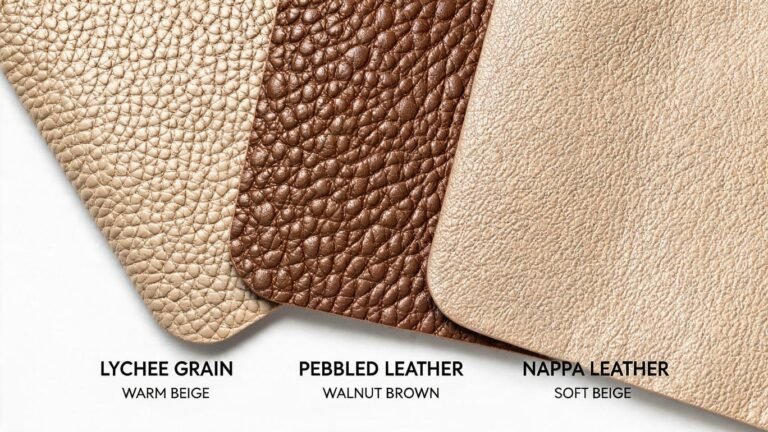
TOPSUN partners with leather accessories brands to develop custom silicone leather materials that define brand identity. We offer custom color matching (Pantone, 3–5 day development, ΔE ≤ 1.0), exclusive texture embossing (lychee, nappa, pebbled, custom patterns, 7–10 day development), and full quality documentation including Martindale, color fastness, and REACH, FDA, and ISO 10993 certifications. With 300-meter MOQ for custom materials and batch-to-batch color consistency, we provide emerging and established accessories brands with the material exclusivity and performance documentation needed to command premium positioning in a commoditized market.
Silicone leather for clothing and accessories — premium hand feel, custom colors, and brand-exclusive textures
Leather Accessories Brand FAQ
What is the minimum order quantity for custom silicone leather for accessories?
TOPSUN’s MOQ for custom-colored silicone leather is 300 meters per color and thickness combination. For standard colors and textures, the MOQ can be reduced to 100 meters. This is sufficient material to produce approximately 2,000–4,000 wallets or 5,000–8,000 card holders, making it accessible for emerging brands launching their first collection.
Can silicone leather replicate the look and feel of premium genuine leather for accessories?
Yes. TOPSUN offers texture embossing that replicates full grain, top grain, and exotic leather grain patterns including Togo-style pebbled grain, Saffiano-style cross-hatch, and nappa smooth finishes. The silicone surface achieves the same tactile quality and visual depth as premium genuine leather, while offering superior durability and waterproof performance.
How does silicone leather compare to genuine leather for watch straps?
Silicone leather outperforms genuine leather for watch straps in every practical measure: 200,000+ Martindale cycles (vs 30,000–70,000), 100% waterproof (sweat and water resistant), no conditioning required, no odor absorption, and no cracking at flex points. For watch straps specifically, the comfort against skin is superior due to silicone’s hypoallergenic properties and temperature stability.
Can I get exclusive colors and textures that competitors cannot access?
Yes. When TOPSUN develops a custom color formulation or texture embossing plate for your brand, that formulation and plate are reserved for your exclusive use. We do not sell your custom color or texture to other clients. This material exclusivity is a core component of brand differentiation in the accessories market.
Related resources: What is leather made of · Certification gallery · Silicone leather introduction · Vegan fabrics guide
Develop Your Brand’s Signature Material
Start your custom material development: submit your Pantone color reference and desired texture. Receive A4 samples within 2 weeks, with full quality documentation and exclusivity agreement. Build your leather accessories brand on material that no competitor can replicate.