A D2C founder recently told us she spent six months and $40,000 developing a leather goods line through an OEM partner — only to discover that a competitor launched an identical aesthetic product three months earlier using a white label supplier at one-fifth the development cost. The global private label handbags market reached USD 108 billion in 2023, growing at 6.2% CAGR through 2030. Yet most B2B resources conflate white label, private label, and OEM into a single category, leaving brands confused about which model actually fits their stage, budget, and differentiation strategy. The distinction matters — it determines your MOQ, unit cost, time-to-market, and how defensible your brand position will be.

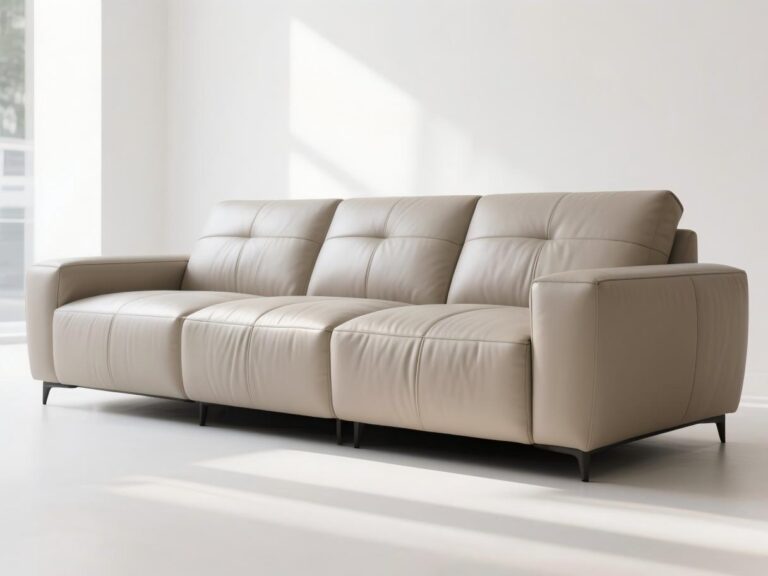
Understanding the supplier landscape — white label, private label, and OEM serve different brand stages
What Is a White Label Leather Supplier? The Three Models Defined
The leather goods manufacturing industry uses three terms — OEM, private label, and white label — often interchangeably, but they describe fundamentally different supplier relationships. Understanding the distinction is the first step in choosing the right partner:
OEM (Original Equipment Manufacturer): You provide complete specifications — design, materials, dimensions, hardware, packaging. The factory produces exactly what you specify. MOQs typically start at 500–1,000+ pieces per style. Unit costs are lowest at scale, but development timelines stretch to 8–16 weeks, and you bear the cost of custom tooling, sampling, and quality iteration.
Private Label: The supplier offers a base product design that you can modify — different leather colors, textures, hardware finishes, and branding. MOQs range from 100–500 pieces. You get moderate differentiation without the full development burden of OEM. This is the B2B sourcing guide most mid-stage brands follow.
White Label: The supplier’s existing product is rebranded with your logo, label, or packaging — no material or design modifications. MOQs drop as low as 50–200 pieces. Speed-to-market is fastest (2–4 weeks), upfront investment is minimal, and you can test market demand before committing to OEM-scale production.

Production process flow — white label suppliers leverage existing manufacturing infrastructure to reduce your time-to-market
Cost and MOQ Comparison: White Label vs Private Label vs OEM
The financial model for each supplier type reflects the tradeoff between customization and efficiency. White label’s shared tooling and existing product lines mean the supplier absorbs development costs across multiple clients — passing the savings to you through lower MOQs and unit prices:
| Factor | White Label | Private Label | OEM |
|---|---|---|---|
| MOQ (per style/color) | 50–200 pcs | 100–500 pcs | 500–1,000+ pcs |
| Unit Cost (leather goods) | $10–14 | $12–16 | $13–17 |
| Sample Fee | None (existing stock) | $50–150 | $100–300 |
| Time to Market | 2–4 weeks | 4–8 weeks | 8–16 weeks |
| Customization Level | Logo/label only | Color, texture, hardware | Full custom design |
| Brand Differentiation | Low (shared product) | Moderate | High (exclusive) |
| Total Cost (200 units) | $2,060–2,960 | $2,450–3,350 | $2,650–3,450 |
Cost data based on OEM and white label leather goods pricing analysis. Actual pricing varies by material, complexity, and order volume.
The total cost comparison reveals a surprising insight: for a 200-unit launch, the price gap between white label and OEM is only $500–600 — but the development time gap is 6–12 weeks. For early-stage brands testing market fit, white label’s faster iteration cycle is worth far more than the marginal unit cost savings of OEM at this volume. The B2B platform compliance requirements are also simpler for white label, since the supplier has already completed certification testing on the base product.

Modern factory workshop — white label suppliers with cleanroom-grade facilities deliver consistent quality across shared product lines
When to Choose Each Model: A Brand-Stage Decision Guide
The right supplier model depends on where your brand sits in its lifecycle. Here’s how to map your stage to the optimal manufacturing relationship:
Stage 1 — Market Validation (0–500 units): Choose white label. Your goal is proving that customers will buy your brand’s aesthetic and price point, not building proprietary product IP. White label’s 50-piece MOQ lets you test multiple product categories — bags, wallets, accessories — simultaneously with minimal capital exposure. If a product line underperforms, you pivot without sunk tooling costs.
Stage 2 — Brand Building (500–2,000 units): Transition to private label. Once you’ve validated demand, you need differentiation — exclusive leather colors, custom textures, branded hardware. Private label gives you 60–70% of OEM’s customization at 40% of the development cost. This is where China leather manufacturer quality partnerships become strategic, since the factory handles material engineering while you focus on brand and channel.
Stage 3 — Brand Defense (2,000+ units): Invest in OEM. At this volume, the unit cost advantage of OEM (typically $2–4 lower per piece) offsets the higher development costs. More importantly, OEM gives you exclusive designs that competitors cannot replicate through the same supplier — building a defensible product moat that supports premium pricing.
White Label Silicone Leather: The Material Advantage
For brands evaluating white label leather suppliers, the material specification is the single most important differentiator. Most white label leather goods use PU or PVC — materials with 3–5 year lifespans, known hydrolysis issues, and increasing regulatory scrutiny under REACH and California Prop 65. A white label supplier offering silicone leather as the base material gives your brand an immediate performance advantage that competitors using conventional synthetics cannot match.
Silicone leather’s 200,000+ Martindale abrasion cycles, zero-VOC production, and 10+ year service life mean your white label products outlast competitors’ OEM products — at lower volume and faster turnaround. Combined with unlimited Pantone color matching, Delta E ≤ 1.0 batch consistency, and custom embossing available in 7–10 days, the material transforms white label from a “budget option” into a strategic launch platform.

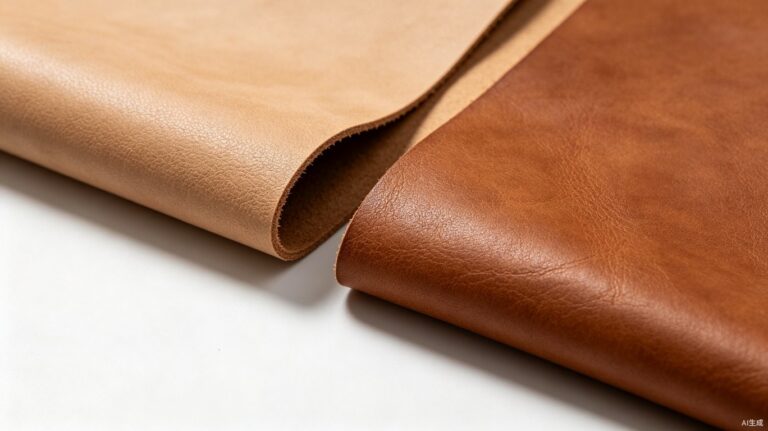
Custom color matching — white label suppliers offering Pantone-accurate leather give brands differentiation without OEM costs
7 Questions to Ask Before Signing With a White Label Leather Supplier
- What is the actual MOQ per color/style? Some suppliers advertise 50-piece MOQs but require separate minimums per color. Clarify whether the MOQ applies to total order or per SKU.
- Who owns the product design IP? White label means the supplier owns the design. Confirm whether they sell the same product to competitors in your market — and whether they offer territorial exclusivity.
- What material certifications are included? Request REACH, RoHS, and if applicable, ISO 10993-5 test reports. The supplier should provide these at no cost since they already tested the base product.
- What is the lead time for reorders? White label’s advantage is speed. Confirm that reorders ship within 2–3 weeks, not the 8–12 weeks typical of OEM reorders.
- Can the leather material be upgraded later? If you launch with PU white label and want to upgrade to silicone leather for the same product, can the supplier accommodate without new tooling?
- What is the quality control process? Require pre-shipment inspection reports with photos. White label’s shared production means quality must be verified per batch, not assumed.
- What branding options are available? Beyond logo embossing, ask about custom dust bags, hangtags, inner labels, and packaging — these details create the unboxing experience that distinguishes your brand.
About TOPSUN: TOPSUN offers white label and private label silicone leather manufacturing for brands entering the leather goods market. With 500-meter MOQ on leather material, 7–15 day lead times, unlimited Pantone color matching, and 100+ texture options, TOPSUN enables D2C brands to launch premium silicone leather products without OEM-scale investment. Free A4 swatches shipped worldwide via DHL/FedEx — contact info@topsunsiliconeleather.com or WhatsApp +44 744 461 7933.
Custom OEM/ODM capabilities — how TOPSUN supports white label through full custom manufacturing