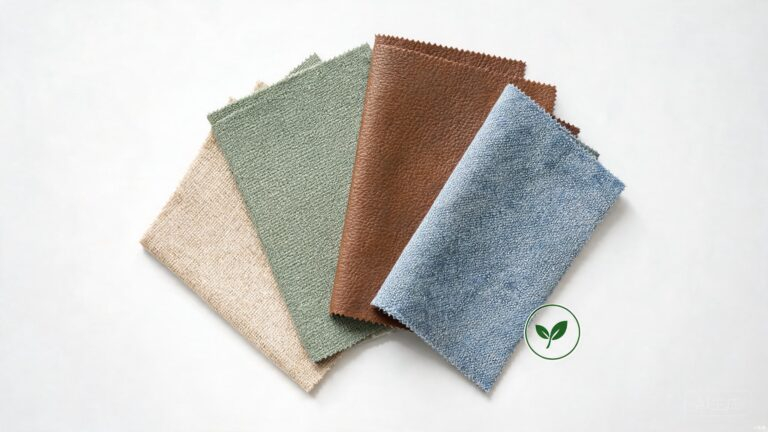
Biodegradable fabrics are having a moment. Brands slap “biodegradable” and “compostable” on labels like they’re badges of honor. Consumers pay a premium assuming they’re making an eco-friendly choice. And procurement teams incorporate biodegradability into their sustainability scorecards, checking the box and moving on.
But here’s the uncomfortable truth: most “biodegradable” fabrics only biodegrade under very specific conditions — conditions that most end-of-life textiles never actually encounter. A fabric that composts in 90 days in an industrial composting facility at 58°C with controlled moisture and microbial activity might persist for decades in a landfill, or even longer in the ocean.
This guide cuts through the greenwashing and explains what biodegradability actually means for fabrics, which materials deliver on the promise, which ones don’t, and why durability might be a more important sustainability metric than biodegradability for many B2B applications.
Explore Eco-Friendly Materials
What “Biodegradable” Actually Means (and Doesn’t Mean)
Biodegradation is the process by which microorganisms (bacteria, fungi, algae) break down organic material into simpler substances — carbon dioxide, water, methane, and biomass. But not all biodegradation is created equal. Three critical factors determine whether a “biodegradable” material actually breaks down in the real world:
1. Environment — A material that biodegrades in soil might not biodegrade in water, and vice versa. Marine biodegradation is much harder because ocean temperatures are low, microbial density is lower, and oxygen levels vary. Most “biodegradable” claims are tested in soil or industrial compost — not in the environments where discarded textiles actually end up.
2. Timeframe — “Biodegradable” doesn’t mean fast. A material that takes 50 years to break down is technically biodegradable, but that’s not useful from a waste management perspective. Meaningful biodegradation standards specify timeframes: ASTM D6400 (industrial composting) requires 90% disintegration within 180 days. Materials that take decades don’t count.
3. Completeness — Partial biodegradation isn’t the same as full biodegradation. Some materials break down into microplastics — small enough to be invisible but not small enough to be metabolized. These microplastics enter the food chain and persist in the environment. True biodegradation means the material is fully converted into natural compounds with no harmful residues.
Sustainability fact: The U.S. EPA estimates that only about 15% of textiles are recycled, and less than 1% of clothing is recycled into new clothing. The vast majority goes to landfill or incineration — environments where most “biodegradable” materials never actually biodegrade.
Biodegradable Fabric Types: What Works, What’s Marketing
Let’s evaluate the major fabric categories by their actual biodegradability — not their marketing claims.
| Fabric Type | Source | Biodegradability | Key Caveat |
|---|---|---|---|
| Hemp | Cannabis sativa plant | Excellent — soil & compost | Rough texture limits apparel use |
| Linen (Flax) | Flax plant fibers | Excellent — soil & compost | Wrinkles easily; lower durability |
| Organic Cotton | Cotton plant (no pesticides) | Good — 1–5 months in compost | Very high water use in farming |
| TENCEL™ Lyocell | Eucalyptus wood pulp | Excellent — soil, freshwater, marine | Closed-loop manufacturing process |
| Wool | Sheep fleece (animal) | Good — 3–12 months in soil | Methane from sheep farming |
| PLA (Polylactic Acid) | Corn starch / sugarcane | Good — industrial compost only | Does NOT compost at home |
| Recycled Polyester | PET plastic bottles | None — persists 200+ years | Better than virgin, but still plastic |
| Bio-leather (mushroom, pineapple) | Mycelium / pineapple leaf | Good — theoretical | Still emerging; durability issues |
| PU Leather | Polyurethane (fossil fuel) | Very poor — 30–50 years | Breaks down into microplastics |
| Silicone Leather | Silica (sand) + polymer | Not biodegradable | But 10+ year service life; recyclable |
A few important takeaways from this comparison. First, the most biodegradable fabrics (hemp, linen, Tencel) tend to be the least durable — they’re great for clothing and home textiles, but they’re not suitable for high-wear applications like commercial upholstery, automotive interiors, or heavy-use consumer goods.
Second, “bio-based” doesn’t equal “biodegradable.” PLA (polylactic acid) is made from corn, but it only composts in industrial facilities at high temperatures — toss a PLA item in your backyard compost, and it might sit there for years unchanged. And even bio-based materials can have significant environmental footprints from farming, processing, and transportation.
The Durability vs. Biodegradability Paradox
Here’s the uncomfortable truth that most sustainability marketing ignores: biodegradability and durability are often in direct conflict. Materials that break down quickly at end-of-life also tend to break down quickly during use. Materials that last for decades through heavy use also tend to persist in the environment for decades after disposal.

The full lifecycle matters — not just what happens at end-of-life
This creates a paradox for sustainability-minded buyers. Do you choose:
- Option A: A biodegradable material that lasts 2 years in service and then composts in 3 months — meaning you need 5 replacements over 10 years
- Option B: A non-biodegradable material that lasts 10+ years in service and then goes to landfill — meaning you only need 1 item over 10 years
From a lifecycle perspective, Option B often has a lower environmental impact, because the manufacturing phase — not the disposal phase — is typically the largest contributor to a product’s carbon footprint. If you make 5 items instead of 1, you multiply the manufacturing impact by 5x, and that dwarfs any end-of-life benefit from biodegradability.
| Lifecycle Phase | Biodegradable (short-life) Material | Durable (long-life) Material |
|---|---|---|
| Raw material extraction (10-year period) | 5× production cycles | 1× production cycle |
| Manufacturing emissions | 5× higher | 1× baseline |
| Transportation impact | 5× more shipments | 1× shipment |
| End-of-life disposal | Composts (if collected properly) | Landfill (persists) |
| Net environmental impact | Often higher | Often lower |
This doesn’t mean biodegradability is irrelevant — it means it’s only one piece of the sustainability puzzle. For short-use products (packaging, single-use items, fast fashion), biodegradability makes a lot of sense. But for long-use products (furniture, automotive interiors, luggage, industrial applications), durability and service life are far more important sustainability metrics.
Clean, efficient manufacturing with zero VOCs — part of silicone leather’s overall sustainability profile
A Better Framework: Holistic Sustainability Evaluation
Instead of fixating on biodegradability as a single metric, B2B procurement teams and material specifiers should evaluate materials across the full lifecycle. Here’s the framework we recommend:
1. Production Phase — What goes into making the material?
- Raw material source (renewable vs. non-renewable)
- Water usage (per kg or per m² of finished material)
- Energy use and carbon emissions
- Chemical inputs (solvents, dyes, tanning agents, plasticizers)
- Waste generation and hazardous byproducts
- VOC emissions during manufacturing
2. Use Phase — How does the material perform in service?
- Service life and durability (how long does it actually last?)
- Maintenance requirements (cleaning products, conditioners, sealants)
- Energy consumption in use (e.g., thermal comfort reducing HVAC load)
- Reusability and repairability
3. End-of-Life Phase — What happens when it’s no longer usable?
- Recyclability (mechanical, chemical, or not recyclable)
- Biodegradability / compostability (under what conditions?)
- Toxicity of breakdown products (microplastics? leachate?)
- Circular potential (can it be reused, remanufactured, or upcycled?)
See Our Full Sustainability Profile
Silicone Leather’s Place in the Sustainability Landscape
Let’s be transparent: silicone leather is not biodegradable. The silicone-SiO bond is very stable — that’s what makes the material durable, UV-stable, and hydrolysis-resistant — and it also means it doesn’t break down quickly in the environment. If you evaluate materials solely on biodegradability, silicone leather doesn’t win.
But if you evaluate across the full lifecycle, the picture changes dramatically:
| Sustainability Metric | Silicone Leather | Genuine Leather | PU Leather |
|---|---|---|---|
| VOC emissions (production) | Zero (solvent-free) | High (tanning + finishing) | High (DMF solvents) |
| Water usage | Very low | Very high (30–50 L/m²) | Moderate (wet process) |
| Service life (commercial) | 10–15+ years | 5–10 years (with care) | 3–5 years |
| Maintenance burden | Near zero (wipe with water) | High (conditioning + sealants) | Low (but short life) |
| Biodegradability | Not biodegradable | Biodegradable (with chemicals) | Poor — breaks into microplastics |
| Recyclability | Separable & mechanically recyclable | Limited (downcycling only) | Very difficult |
| Hazardous chemicals | None | Chromium, dyes, sulfides | DMF, plasticizers, heavy metals |
The honest assessment: silicone leather isn’t perfect. It’s not biodegradable, and it’s made from silica (sand) which is abundant but requires energy-intensive processing. But across the full lifecycle — zero-VOC manufacturing, very low water use, 10+ year service life, near-zero maintenance, and no toxic chemicals — it stacks up very well against both genuine leather and PU leather.
For applications where durability matters most (commercial upholstery, automotive interiors, healthcare furniture, marine seating), the environmental case for silicone leather is strong — not because it biodegrades at end-of-life, but because it reduces the total number of products that need to be manufactured, shipped, and disposed of in the first place.
Beyond the Biodegradability Hype
Biodegradable fabrics have an important role to play in a sustainable textile economy — especially for short-use applications where composting infrastructure is available. But treating biodegradability as the only sustainability metric is a mistake. It ignores the far larger environmental impacts of the production phase, and it incentivizes the creation of products that don’t last long enough to justify their own manufacturing footprint.
The future of sustainable materials isn’t about choosing between biodegradable and durable — it’s about matching the right material to the right application, using a holistic lifecycle approach. For some products, biodegradability is the right priority. For others, durability and longevity deliver better environmental outcomes. Smart sustainability means understanding the difference.
If you’re evaluating materials for a specific project and want to understand the full lifecycle impact — not just the marketing claims — we’re happy to share our complete environmental data, test results, and lifecycle analysis documentation.
Request Sustainability Data & Documentation
About TOPSUN
TOPSUN manufactures premium silicone leather with a focus on holistic sustainability — zero-VOC production, minimal water use, long service life, and clean chemistry. We believe durability is one of the most underrated sustainability metrics.
Solvent-free dry coating · Zero VOC emissions · Minimal water usage · No toxic chemicals · 10+ year service life · OEKO-TEX certified · Full lifecycle data available