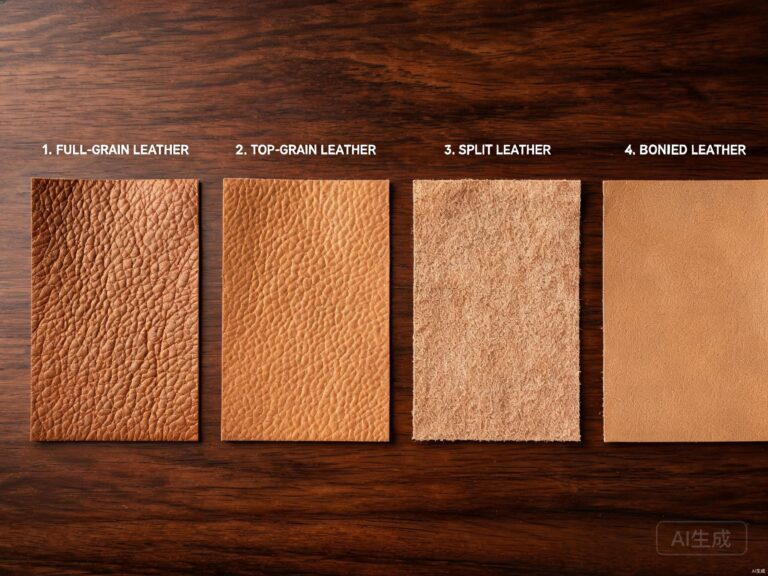
To a consumer, “real leather” and “genuine leather” sound interchangeable. To a specifier writing material schedules, they are entirely different risk profiles. “Real leather” typically describes full-grain or top-grain hides — the outermost layers with natural fiber density intact. “Genuine leather,” despite its reassuring name, is made from the split layer left after those top grades are removed. It is legally leather, but it behaves like a different material under stress. Here is the difference between real leather and genuine leather that determines whether your furniture program ships with a 10-year warranty or a 3-year apology.
Download Leather Grading Guide
What “Real Leather” Actually Means in B2B Contracts
In commercial specs, “real leather” means full-grain or top-grain. Full-grain uses the entire hide surface with natural grain intact; top-grain sands away minor imperfections while retaining the dense collagen structure. Both grades breathe, resist tensile stress, and develop a patina that many luxury brands market as a feature. For high-end furniture and automotive trim, real leather remains the tactile benchmark. But the term itself is unregulated — a supplier can legally call split leather “real” because it came from an animal. Smart buyers specify the grade, not the adjective, and reference standard leather type classifications in purchase orders.

Natural grain texture on full-grain real leather — the dense outer layer of the hide.
Genuine Leather: The Split Hide Behind the Label
Genuine leather is produced from the corium — the inner layer of the hide left after the grain is split off for full-grain and top-grain production. It is softer, more fibrous, and lacks the natural grain pattern that gives real leather its strength. To compensate, manufacturers emboss an artificial grain and spray a pigmented polyurethane coating. The result looks uniform out of the box, but the coating cracks and peels as the fibrous substrate flexes. In our physical testing, genuine leather samples show surface cracking at 15,000–25,000 Martindale cycles, while full-grain exceeds 50,000. For context, residential sofa upholstery should withstand at least 25,000 cycles; commercial seating demands 40,000+. That places genuine leather below the threshold for professional use. If you are comparing top grain and genuine leather side by side, the structural difference is visible at 10× magnification.

Corrected grain surface on genuine leather — embossed and coated to mimic natural texture.
Durability by Numbers: Full Grain vs Genuine
The performance gap is measurable and stark. Full-grain leather lasts 20–30 years with basic conditioning. Top-grain delivers 10–15 years. Genuine leather, due to its split construction and heavy coating, typically shows wear, cracking, or delamination within 3–7 years. For a B2B furniture program, that replacement cycle translates directly to service calls, negative reviews, and brand reputation damage. The upfront cost savings of genuine leather — roughly 30–50% less than full-grain per square foot — evaporate after the first re-upholstery cycle. When we model total cost of ownership over 10 years, genuine leather often costs more than top-grain because of labor and logistics.

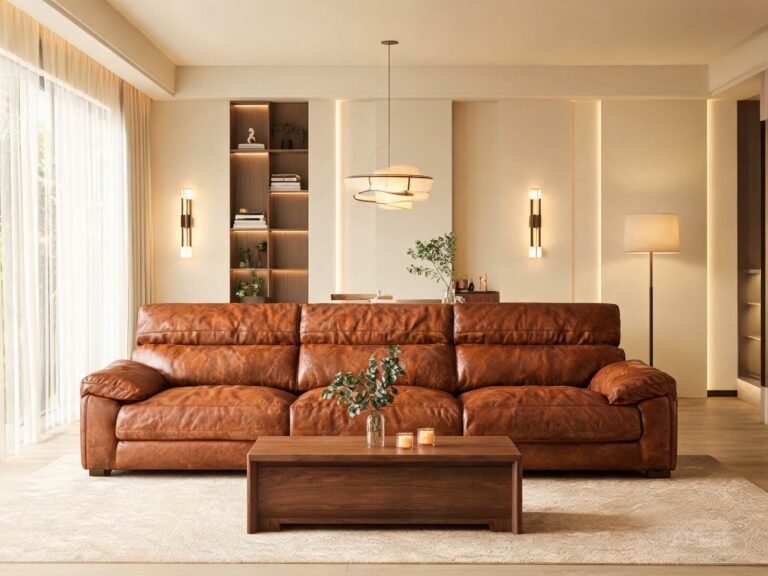
Top-grain real leather in a residential sofa application — durable enough for daily family use.
| Property | Full-Grain (Real) | Genuine Leather (Split) |
|---|---|---|
| Hide Layer | Outermost, grain intact | Inner corium, split off |
| Surface Finish | Natural grain, develops patina | Embossed, pigmented coating |
| Martindale Cycles | 50,000+ | 15,000 – 25,000 |
| Typical Lifespan | 20 – 30 years | 3 – 7 years |
| Price (per sq ft) | $12 – $18 | $4 – $8 |
Source: Industry testing data and TOPSUN internal abrasion studies. Prices reflect 2026 North American B2B wholesale ranges.
Material comparison: how silicone-coated alternatives bridge the performance gap between grades.
Specifying Smart: What Designers Should Demand
Designers and specifiers can eliminate ambiguity by banning vague terms from material schedules. Replace “genuine leather” with “split leather, corrected grain” so procurement teams know exactly what they are buying. Better yet, specify performance metrics: Martindale minimums, coating adhesion after flexing, and colorfastness to light. For programs where consistency matters more than natural variation, silicone leather alternatives offer the hand feel of full-grain real leather with batch-to-batch uniformity that hides cannot match. Unlike genuine leather splits, silicone-coated fabrics will not peel, crack, or delaminate under flexing stress — a warranty advantage that finance teams appreciate. For buyers weighing silicone vs PU, the thermal stability and UV resistance of silicone coatings provide additional margin for outdoor or automotive applications.

Precision coating lines deliver batch consistency that natural hide grades cannot guarantee.

Genuine leather furniture may look premium on day one, but coating durability varies widely by supplier.
Why Precision Beats Vague Labels
The difference between real leather and genuine leather is not semantic — it is structural. One is built from the dense outer layer of the hide; the other is made from what remains after that layer is stripped away. For B2B buyers, the choice determines warranty exposure, replacement cycles, and brand reputation. Specifying precisely — whether full-grain, top-grain, or a high-performance full silicone leather — is the only way to align material cost with client expectation. In our experience, the most successful programs treat leather selection as an engineering decision, not a marketing one.
Request Full-Grain Silicone Samples
Frequently Asked Questions
Can genuine leather be used in commercial furniture?
It can, but with significant caveats. Genuine leather suits low-traffic accent pieces or decorative panels where flexing is minimal. For seating that sees daily use, the peeling risk within 3–5 years makes it a poor investment compared to top-grain or high-performance synthetics.
Is bonded leather the same as genuine leather?
No. Bonded leather contains only 10–20% leather fiber mixed with polyurethane binder . Genuine leather is at least a single split layer. Bonded leather peels faster and is unsuitable for any load-bearing upholstery application.
Why do some suppliers call genuine leather “real”?
Because there is no global legal restriction on the term “real leather.” A split hide is technically from a real animal, so the description is legally defensible even if it misleads buyers about quality . That is why performance-based specifications — Martindale cycles, coating adhesion, lightfastness — protect buyers better than label claims.
About TOPSUN
TOPSUN supplies designers and specifiers with silicone-coated alternatives that replicate the hand feel of full-grain real leather while eliminating the grade inconsistency and warranty risk of genuine leather splits.
Capabilities include custom texture embossing, color matching from 500 meters, and REACH-compliant formulations for furniture, automotive, and fashion programs.