When a yacht owner replaces cockpit upholstery every three to four years with standard marine vinyl, the material choice drives the entire cost structure of ownership. Over a ten-year cycle, that’s three reupholstery jobs — each running $15,000 to $40,000 depending on vessel size. The marine fabric specified at the build stage is the single decision that determines whether those costs materialize. Yet most procurement teams evaluate marine fabric on unit price per yard, not on what it costs when it fails. Here’s the five-year total cost picture for the four material types dominating marine upholstery today — and why the cheapest option at purchase is almost never the cheapest at year five.
The Three Things That Destroy Marine Fabric
Salt water, UV radiation, and mildew. These are the three failure modes that separate genuine marine fabric from furniture-grade material pretending to be marine-grade. If your supplier’s spec sheet doesn’t address all three with test data, you’re sourcing for a showroom, not an ocean.
Salt spray is the silent killer. ASTM B117 salt spray testing measures how long a material resists saltwater corrosion. PVC marine vinyl breaks down at 200–400 hours. PU marine leather survives 300–500 hours. Silicone leather holds past 1,000 hours with no structural change. Salt penetrates seams, corrodes stitching thread, and leaches plasticizers out of PVC — leaving the material brittle and cracked within two seasons of tropical exposure.

Water repellency testing — silicone marine fabric resists saltwater penetration that degrades PVC and PU over time.
UV radiation fades and embrittles marine fabric faster than any other factor. Standard marine vinyl claims 1,000+ hours of UV protection, but real-world tropical sun often yellows and chalks the surface well before that benchmark. Mildew rounds out the trio. Marine environments are perpetually wet, and fabric that absorbs moisture — like canvas and acrylic — becomes a growth medium unless chemically treated. Vinyl and silicone are inherently water-resistant, but vinyl’s plasticizer oils can support microbial colonization over extended periods.
Marine Fabric Materials Compared: 5-Year Survival Data
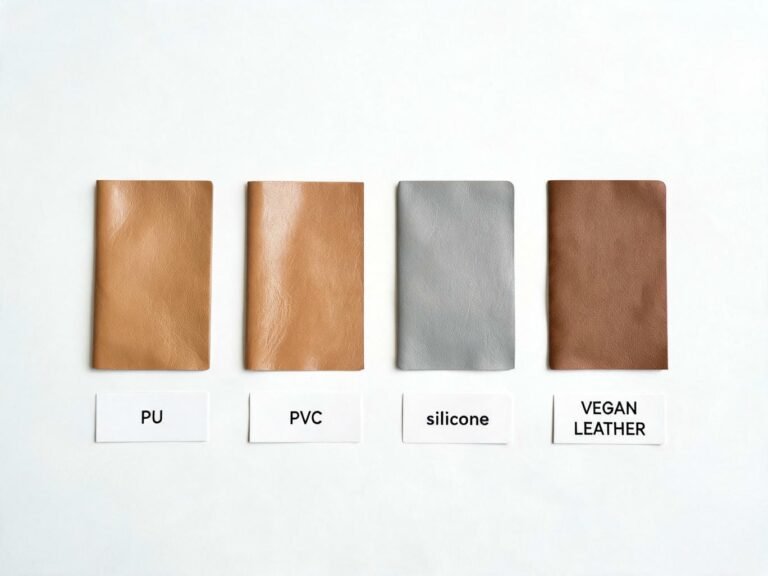
Here’s what the four dominant marine fabric types look like when tested against the three failure modes — and what happens to each one by year five on a vessel that sees real ocean use:
| Material | Salt Spray (B117) | UV Hours | Mildew Resistance | 5-Year Verdict |
|---|---|---|---|---|
| Marine vinyl (PVC) | 200–400h | 300–500h | Moderate (treated) | Replace by year 3 |
| PU marine leather | 300–500h | 300–500h | Good | Replace by year 4 |
| Silicone leather | 1,000h+ | 2,000h+ | Inherent | Survives year 5+ |
| Solution-dyed acrylic | N/A (water-resistant) | 2,000h+ | Low (absorbs moisture) | Replace by year 4 (mildew) |

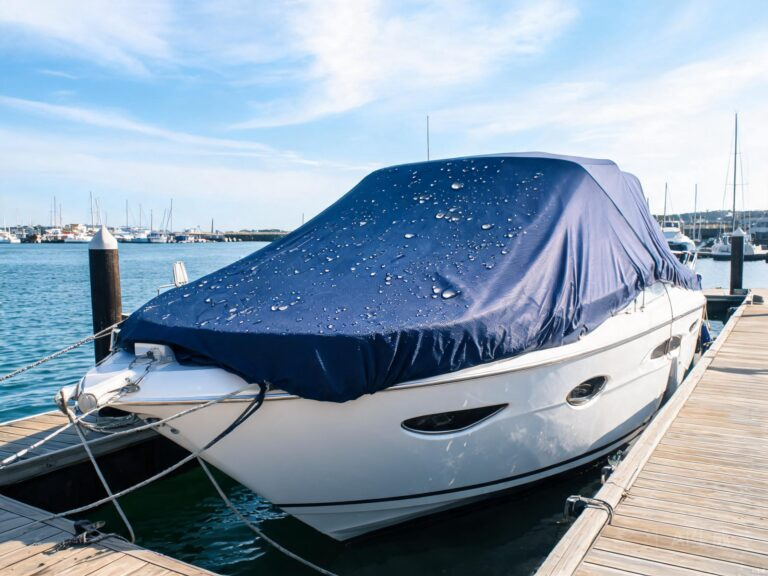
Light-colored marine fabric must resist both water penetration and UV yellowing — silicone leather passes both without surface treatment.
The pattern is clear: UV and salt spray are the two metrics that predict outdoor marine survival. Indoor yacht cabins face less direct UV but still battle salt intrusion and humidity. A material that can’t clear 500 hours on either test will not survive a five-year ownership cycle in any marine environment. For a deeper breakdown of how silicone compares to PU specifically, see our silicone vs PU comparison.
The Real Cost of Reupholstering a Yacht
Here’s where the unit-price comparison falls apart. Let’s walk through the actual numbers for a 40-foot yacht with 10 seats — a common specification for mid-range vessels.
Marine vinyl runs $30–80 per yard. Silicone leather runs $50–120 per yard. On paper, vinyl looks 40–60% cheaper. But material is roughly 30% of a marine reupholstery invoice. Labor — tearing out old seats, rebuilding foam cores, re-stitching, reinstalling hardware — accounts for the remaining 70%. A full reupholstery on a 40-foot vessel runs $8,000–25,000 per cycle regardless of whether you chose the cheap fabric or the expensive one. The fabric choice only changes whether you do it once or three times.

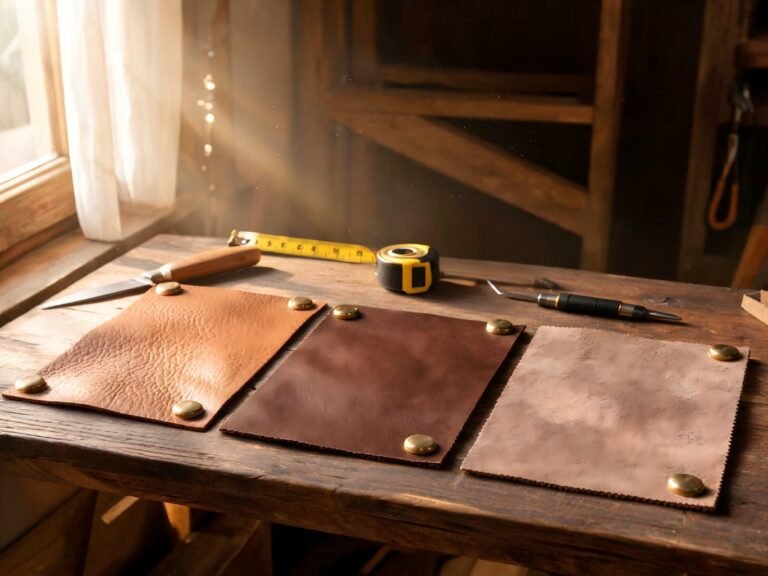
Abrasion and scratch testing — marine fabric must withstand boarding traffic, fishing gear, and salt-sand abrasion beyond UV and water exposure.
The 10-year math: PVC marine vinyl requires 3 reupholstery cycles over 10 years = $24,000–75,000 total. Silicone leather requires at most 1 replacement = $8,000–25,000 total. Even at 2–3x the unit price, silicone leather costs less over the ownership cycle because you reupholster once instead of three times.
How to Specify Marine Fabric That Outlasts the Warranty
We’ve seen procurement teams source marine fabric based on a spec sheet that lists “marine grade” and “UV resistant” — and nothing else. Those terms have no technical definition. Here’s the specification checklist we use with yacht builders and marine OEMs:
- Salt spray data (ASTM B117): Require minimum 500 hours for marine use. If the supplier can’t produce a test report, the “marine grade” claim is unverified.
- UV test data (ISO 4892-2 or ASTM G154): Require minimum 1,000 hours with a Delta E value. No ΔE = no real UV data.
- Mildew resistance source: Confirm whether resistance is inherent to the material or a surface treatment that wears off. Silicone is inherently antimicrobial; vinyl depends on chemical additives that leach out.
- Cold-crack performance: Marine fabric must stay flexible at -10°F (-23°C). PVC vinyl cold-cracks below this threshold; silicone stays flexible to -40°F.
- Seam and stitching integrity: Salt water penetrates through stitching. Specify marine-grade thread and sealed seams, and verify the fabric doesn’t fray at stitch holes.
Outdoor weather resistance testing — see how silicone marine fabric performs under simulated salt spray, UV, and temperature cycling.
One of our marine OEM clients was specifying PVC vinyl at $35/yard for a 50-foot yacht line. After two warranty seasons of fading and mildew claims, they ran the TCO and found they were spending more on warranty reupholstery than the entire fabric budget saved. They switched to silicone leather for their marine and outdoor applications, eliminated warranty claims in that category, and reduced their 10-year upholstery cost by 60% despite the higher unit price.
The Long-Term View on Marine Fabric
Marine fabric is one of the few material decisions where the purchase price is the smallest number in the equation. The cost that matters is the replacement cost — labor, downtime, warranty exposure, and brand reputation when a yacht interior fails mid-season. Silicone leather costs more per yard than PVC vinyl. It also survives salt spray three times longer, resists UV four times longer, and stays inherently antimicrobial without chemical additives that leach into the ocean. Over a five-year ownership cycle, the math is simple: one reupholstery with silicone beats three with vinyl. The right marine faux leather buying guide starts with that question — not which material is cheapest, but which one makes the second reupholstery unnecessary.
About TOPSUN
TOPSUN supplies marine-grade silicone leather to yacht builders and marine OEMs who need upholstery that survives salt spray, UV, and humidity without scheduled replacement cycles. Our silicone leather is tested to 1,000+ hours of ASTM B117 salt spray and 2,000+ hours of xenon-arc UV exposure.
ISO 10993 biocompatibility certified | REACH 247 SVHC compliant | PAHs-free | FDA food-contact safe | Inherent antimicrobial — no chemical additives required