Leather upholstery for sofa buyers face a confusing market. Two sofas can both say “genuine leather” and differ by $5,000 in price. One might last 30 years and develop a beautiful patina. The other might start peeling at the seams in year three. The difference isn’t the label — it’s the grade of leather, the quality of the frame underneath, and the finish applied to the surface.
For furniture brands, hospitality operators, and contract specifiers, getting this right is critical. A sofa upholstery specification that saves 20% upfront but requires reupholstering in year five isn’t a savings — it’s a cost increase. This guide walks through the five main grades of leather upholstery for sofas, what you actually get at each price point, and where high-performance synthetic alternatives are now competitive with natural leather on both quality and value.
Explore Sofa Upholstery Materials
5 Grades of Leather Upholstery for Sofas
Not all leather sofas are created equal. The grade of leather used is the single biggest factor in both price and lifespan. Here’s how the five main grades compare for sofa upholstery:
| Leather Grade | Typical Sofa Price | Expected Lifespan | Cost Per Year |
|---|---|---|---|
| 1. Full-Grain Leather | $3,500-$8,000+ | 25-30+ years | ~$115-$260 |
| 2. Top-Grain Leather | $2,000-$4,500 | 15-20 years | ~$100-$225 |
| 3. Corrected-Grain Leather | $1,200-$2,500 | 10-15 years | ~$80-$165 |
| 4. Split (Genuine) Leather | $800-$1,500 | 5-8 years | ~$100-$190 |
| 5. Bonded Leather | $500-$1,000 | 2-5 years | ~$200-$250 |

Top-grain leather sofas offer a balance of durability and refined appearance for residential settings
The cost-per-year analysis is revealing. Full-grain leather has the highest sticker price but actually delivers good long-term value — about $115 per year over a 30-year lifespan. Bonded leather, despite being the cheapest upfront, has the worst cost-per-year because it fails so quickly. The sweet spot for many buyers — both residential and light commercial — is top-grain leather, which offers most of full-grain’s durability at a significantly lower price point.
Watch out for: “Genuine leather” sofas in the $800-$1,200 range. They’re almost certainly made from split leather with a heavy PU coating — and the coating is the first thing to peel. Always ask: which grade of genuine leather?
Leather Sofa Upholstery: What Maintenance Actually Costs
The purchase price is only part of the story. Leather upholstery for sofas requires ongoing maintenance — and the cost and effort vary dramatically by grade. Here’s what you can expect:
| Maintenance Task | Frequency | Cost / Effort | What Happens If You Skip It |
|---|---|---|---|
| Dusting | Weekly | Low — soft cloth | Dull appearance; dust can abrade surface over time |
| Conditioning | Every 6-12 months | Medium — $15-$40/year in products | Drying, cracking, and splitting at stress points |
| Stain Treatment | As needed | Medium-High — professional cleaning $100-$300 | Permanent staining; accelerated wear in soiled areas |
| UV Protection | Continuous | Low — window treatments, rotation | Fading, discoloration, and surface degradation |

Water beading on a finished leather surface — but spills can still penetrate if not wiped quickly
The good news about leather upholstery is that day-to-day cleaning is fast — a quick wipe with a dry or slightly damp cloth is usually enough for routine dusting and most spills. The bad news is that conditioning is non-negotiable, especially in dry climates or homes with forced-air heating. Leather is a natural material that needs moisture to stay flexible. Skip conditioning for a few years and you’ll start seeing cracks at the seat edges and armrests — the areas that flex the most.
For commercial applications like hotel lobbies and office reception areas, the maintenance calculus is different. With high traffic and multiple users, the wear is more aggressive and spills are more frequent. Many contract furniture buyers find that the maintenance burden of natural leather — plus the risk of visible damage from a single incident — pushes them toward synthetic alternatives that require less day-to-day care.
Leather vs. Synthetic Upholstery for Sofas
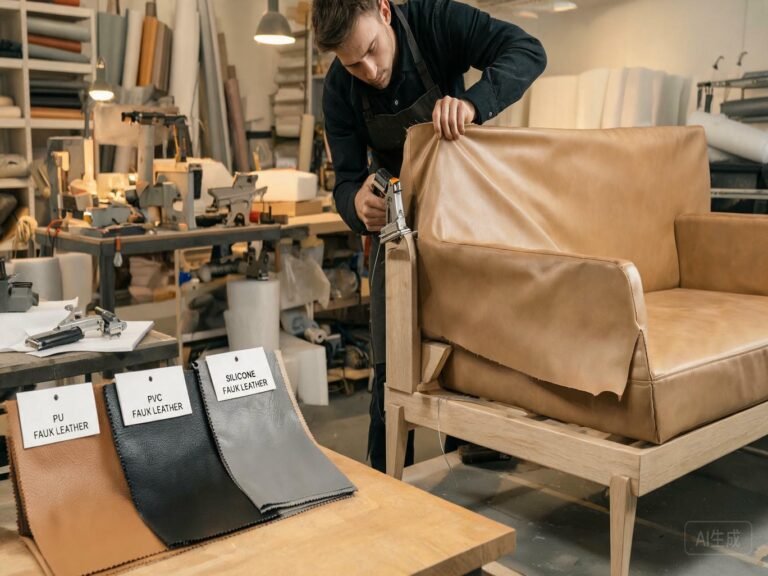
The sofa upholstery market has changed dramatically in the last five years. High-performance synthetic leathers — particularly silicone leather — have reached a quality level where they compete head-to-head with natural leather in many applications. Here’s how they compare side by side:
| Factor | Top-Grain Leather Sofa | Silicone Leather Sofa | PU Faux Leather Sofa |
|---|---|---|---|
| Initial Cost (3-seat sofa) | $2,000-$4,500 | $1,500-$3,500 | $600-$1,500 |
| Expected Lifespan | 15-20 years | 10-15+ years | 3-7 years |
| Stain Resistance | Moderate (absorbs if not wiped quickly) | Excellent (non-porous) | Fair (surface stains set in) |
| Maintenance Required | Conditioning 2x/year | None (wipe clean) | Occasional cleaning |
| UV / Sun Resistance | Poor (fades, dries out) | Excellent (no fading) | Poor (cracks, discolors) |
| Abrasion (Martindale) | Variable (natural hide) | 200,000+ cycles | 20,000-50,000 cycles |
| Consistency | Variable (natural hide variation) | Perfect (uniform rolls) | Good |

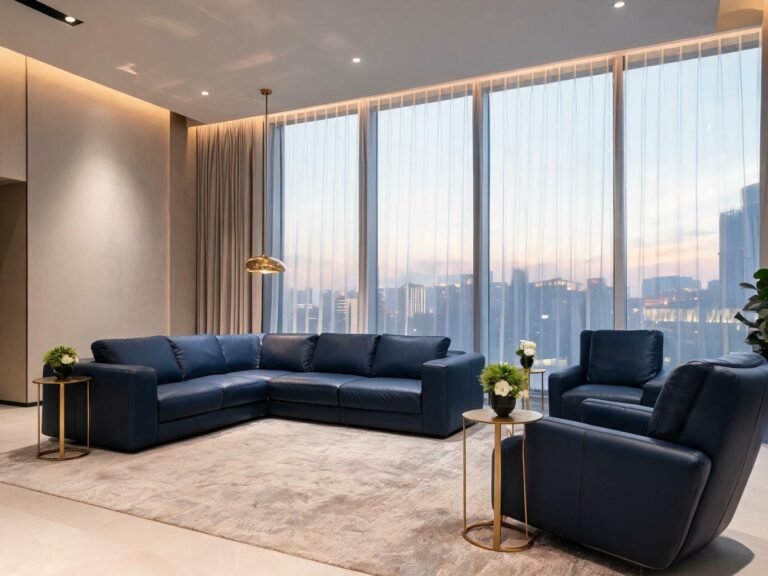
High-performance silicone leather sofas offer natural leather aesthetics with superior stain and UV resistance
In our experience working with furniture manufacturers and hospitality operators, the decision usually comes down to use case. For luxury residential and boutique hotel suites, top-grain or full-grain leather is often the right choice — the prestige and natural patina are part of the value proposition. But for high-traffic commercial spaces — hotel lobbies, restaurant seating, office common areas, senior living facilities — silicone leather consistently delivers lower total cost of ownership because it eliminates the maintenance burden and resists the kinds of damage that shorten a natural leather sofa’s life.
Luxury furniture upholstery materials that combine premium aesthetics with commercial-grade durability
How to Specify Sofa Upholstery Material Like a Pro
Whether you’re specifying natural leather or a high-performance synthetic, these are the criteria that separate professional specs from vague requests that lead to disappointment:
- Define the use environment first. Is it sunny? Humid? High-traffic? Pets or kids? Food and drink nearby? The environment dictates the performance requirements, which should drive the material choice — not the other way around.
- Specify the test standard, not just the claim. “Durable” is meaningless. “100,000+ Martindale abrasion cycles” or “Grade 4+ light fastness per ISO 105-B02” tells your supplier exactly what you need and gives you something to verify against.
- Get performance data in writing. Reputable material suppliers can provide independent test reports for abrasion, tear strength, color fastness, flammability, and UV resistance. If a supplier can only provide marketing brochures, that’s a red flag.
- Order physical samples and test them. Digital images and spec sheets are useful, but nothing replaces touching the material, seeing it in your actual lighting, and testing it with real-world conditions — spill some coffee, rub it with a damp cloth, bend it to see how the surface flexes.
- Calculate total cost of ownership, not just initial price. The cheapest sofa is rarely the cheapest over its lifetime. Factor in maintenance costs, expected replacement frequency, and downtime for reupholstering when comparing options.
One of the most common mistakes we see is buyers choosing leather upholstery for a sofa because they think it’s the “premium” option, without considering whether it’s actually the best fit for their environment. A top-grain leather sofa in a sunny Florida beach house will fade and dry out much faster than the same sofa in a Pacific Northwest living room with diffuse natural light. In high-sun environments, a UV-stable synthetic material will look better for longer with less maintenance.
Request Sofa Upholstery Samples
Making the Right Choice
Leather upholstery for sofas remains a timeless choice — when it’s the right grade for the right application. Full-grain and top-grain leather sofas offer a level of natural character and prestige that synthetic materials haven’t fully replicated, and for buyers who value that character, they’re worth the investment. But for many commercial applications and practical-minded residential buyers, the balance has shifted. High-performance synthetic leathers like silicone now match or exceed natural leather in the performance categories that matter most — durability, cleanability, UV resistance — while offering better consistency and lower total cost of ownership.
The best approach is to start with your requirements, not your assumptions. Define how the sofa will be used, what environment it will live in, and what your budget looks like over the full lifecycle — then find the material that checks those boxes, whether it’s natural leather or a modern alternative.
Get a Sofa Upholstery Consultation
About TOPSUN
TOPSUN supplies premium silicone leather upholstery for sofa manufacturers, hospitality operators, and contract furniture specifiers worldwide. Our materials combine the look and feel of top-grain leather with commercial-grade durability, stain resistance, and zero-maintenance performance.
200,000+ Martindale abrasion cycles, 100% waterproof, UV stable, and REACH/PAHs certified. Custom grain patterns, colors, and backing fabrics available for OEM furniture programs of any scale.