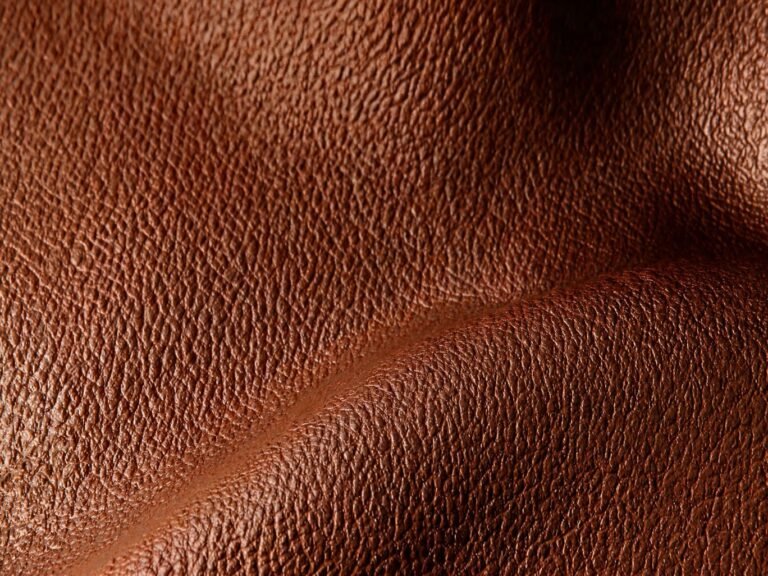
TFL’s Colour Trends report for Spring-Summer 2026 names “earth” as the defining color direction, describing “warm shades ranging from gold to a sumptuous ochre” as the season’s most rewarding leather tones. At LINEAPELLE 2026 in Milan, the Trend Area confirmed this direction, showcasing yellow brown leather as a centerpiece for furniture, automotive interiors, and hospitality design. For B2B buyers sourcing yellow brown leather, this trend creates both opportunity and risk: the color is in demand, but conventional PU leather in warm pigments fades noticeably within 18 months of real-world UV exposure.
The problem isn’t the trend — it’s the material. Warm yellow brown tones are the most UV-vulnerable colors in the leather palette. This article explains why yellow brown PU leather loses its warmth, how color fastness is actually measured, and why silicone leather maintains its golden-amber depth for a decade without dye topcoats.

Why Yellow Brown Leather Dominates 2026 Design Palettes
The 2026 color direction toward earth tones reflects a broader design shift. After a decade of cool greys and minimal whites dominating interiors, designers and consumers are gravitating toward warmth, tactility, and visual depth. Yellow brown leather sits at the intersection of this shift — it carries the sophistication of brown with the warmth and optimism of gold. TFL’s trend report specifically highlights this range as “a throwback to cosmetics from the 1980s” that “acts to lighten the grain of the leather in warm shades.”
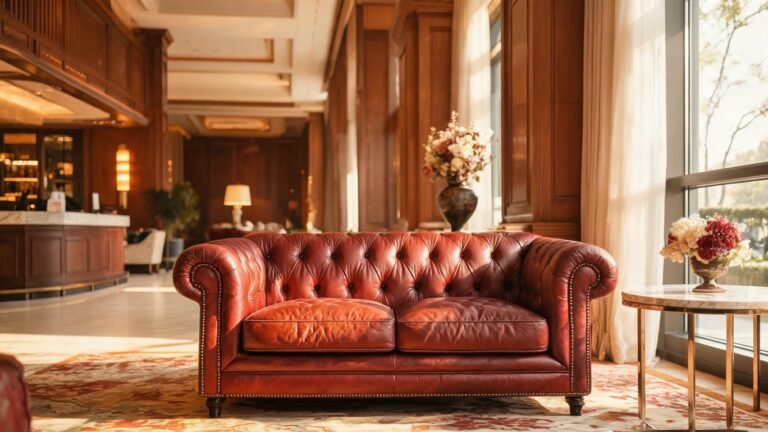
For B2B applications, yellow brown leather translates across multiple industries. In furniture, it signals warmth and approachability — think Chesterfield-inspired seating, hospitality lounge chairs, and restaurant booth upholstery. In automotive interiors, amber and ochre tones create cabin environments that feel premium without the austerity of black or grey. In fashion accessories, yellow brown leather evokes the patina of well-worn heritage goods. The color’s versatility is exactly why sourcing teams are scrambling to find materials that hold this shade long-term.
The Hidden Problem: Color Fading in Warm-Tone PU Leather
Here is what most suppliers won’t tell you: yellow brown is the hardest color to maintain in synthetic leather. Warm pigments — particularly yellows, ambers, and ochres — have molecular structures that absorb high-energy UV photons more readily than cool-tone pigments. When UV radiation strikes a yellow brown PU leather surface, it breaks down the chromophore bonds in the dye, causing the warm yellow component to fade first. The result is a color shift toward a dull, muddy brown within 12–18 months of sun exposure.
PU leather achieves yellow brown coloring through a surface dye layer applied after the polyurethane film is formed. This dye sits on top of the polymer, not integrated within it. UV exposure oxidizes this dye layer, and thermal cycling accelerates the migration of dye molecules away from high-exposure areas. The color doesn’t just fade uniformly — it shifts unevenly, creating visible patches where sunlight hits the surface at different angles.
Silicone leather solves this through through-color pigmentation. Color is integrated into the silicone polymer matrix during production, not applied as a surface treatment. There is no dye layer to oxidize, no chromophore bonds to break, no pigment migration under thermal cycling. The yellow brown tone you specify at production is the yellow brown tone you see after 10 years.

Yellow Brown Leather Color Fastness: The Blue Wool Scale Explained
Color fastness in leather is measured against the Blue Wool Scale (ISO 105-B08), which uses eight standardized wool dyed samples — Grade 1 (most fugitive) through Grade 8 (most lightfast) — to rate UV resistance. Each grade represents approximately double the lightfastness of the grade below it. A Grade 3 leather fades roughly eight times faster than a Grade 6 leather under identical UV exposure.
For yellow brown leather specifically, the pigment chemistry creates an inherent disadvantage. Warm yellow and amber dyes typically achieve Blue Wool ratings of 2–4 in PU leather applications, compared to 5–6 for darker browns or blacks. This isn’t a manufacturing defect — it’s a chemical limitation of the chromophore structures used in these pigments.
The following table compares color fastness performance across leather types in warm earth-tone applications:
| Property | Genuine Leather | PU Leather | Silicone Leather |
|---|---|---|---|
| Blue Wool Scale (warm tones) | Grade 3–5 | Grade 2–4 | Grade 6+ |
| Color shift after 1,200 kWh/m² UV (ΔE) | > 3.0 (visible) | > 5.0 (significant) | < 1.5 (minimal) |
| Color application method | Surface dye + topcoat | Surface dye on PU film | Through-color in polymer matrix |
| Pigment migration risk | Moderate | High (thermal cycling) | None |
| Pantone/RAL matching tolerance | ±1.5 ΔE | ±2.0 ΔE | ±1.0 ΔE |
A ΔE value above 3.0 means the color difference is visible to the human eye. PU leather in yellow brown tones typically exceeds this threshold within 18 months, while silicone leather stays well below it for the full product lifecycle.

Silicone Leather: Inherent Color Stability Without Dye Topcoats
The fundamental difference between silicone leather and PU leather in color performance comes down to where the pigment lives. In PU leather, pigment is applied as a coating on top of a pre-formed polymer film — like painting a wall. In silicone leather, pigment is dispersed throughout the silicone polymer before curing — like coloring concrete all the way through.
This through-color approach means there is no surface layer to wear away, oxidize, or migrate. UV photons that strike the surface encounter the same pigmented polymer throughout the material’s thickness. The silicone polymer itself is UV-transparent at the wavelengths that degrade organic dyes, meaning the pigment is protected not by a sacrificial topcoat but by the inherent stability of the silicon-oxygen backbone.
For B2B buyers, this translates into practical advantages: hospitality upholstery that maintains its warm tone through years of guest use, restaurant booth seating that doesn’t develop faded patches near windows, and outdoor furniture leather that keeps its golden-amber depth under direct sun.
Sourcing Yellow Brown Leather: What B2B Buyers Must Specify
When issuing purchase orders for yellow brown leather, procurement teams should move beyond Pantone references and include these technical specifications:
- Lightfastness rating: Require Blue Wool Scale Grade ≥6 for indoor applications and ≥7 for outdoor or sun-exposed applications. Request ISO 105-B02 test certificates, not supplier self-declarations.
- Color shift tolerance: Specify maximum ΔE after 1,200 kWh/m² UV exposure per ISO 4892-2. Accept ≤1.5 for premium applications, ≤3.0 for standard commercial use.
- Color application method: Confirm whether color is through-pigmented or surface-dyed. Through-color eliminates migration and fading risks entirely.
- Finish adhesion: Per EN ISO 11644, require ≥2N/10mm dry finish adhesion. If the leather has a surface finish, it must survive the full UV exposure period without delamination.
- Flex resistance after UV aging: Per EN ISO 5402-1, require ≥20,000 cycles with no finish damage cracks after UV conditioning. Materials that pass flexing new but fail after UV aging are unsuitable for yellow brown applications.
- Pantone/RAL matching: Specify tolerance as ±1.0 ΔE from the reference standard, measured with a spectrophotometer under D65 illuminant.
Suppliers who cannot provide test data for lightfastness and color shift should be disqualified from yellow brown leather sourcing, regardless of price competitiveness. The cost of premature fading — replacement, brand damage, customer complaints — always exceeds the cost of specifying the right material upfront.
About TOPSUN
TOPSUN manufactures silicone leather with through-color pigmentation technology, allowing precise Pantone and RAL color matching for yellow brown and warm earth-tone applications. Our silicone leather achieves Blue Wool Scale Grade 6+ lightfastness without surface dyes or protective topcoats. The solvent-free production process ensures consistent color depth across production batches, with color tolerance controlled to ±1.0 ΔE. We serve furniture manufacturers, automotive interior suppliers, and hospitality design firms worldwide, offering custom texture development, pattern customization, and OEM-specific color matching. FDA food-contact certification and ISO 10993 biocompatibility certification confirm that our yellow brown silicone leather meets safety standards far beyond standard commercial requirements.
FAQ
What is yellow brown leather used for?
Yellow brown leather is used across furniture upholstery, automotive interiors, hospitality seating, restaurant booths, and fashion accessories. The warm earth-tone range is trending in 2026 design palettes, particularly for applications where warmth and sophistication are desired without the austerity of darker colors.
Does yellow brown leather fade?
Yes, if made from PU or genuine leather with surface dye. Warm pigments (yellows, ambers, ochres) are the most UV-vulnerable colors, typically fading within 12–18 months of sun exposure. Silicone leather avoids this through through-color pigmentation integrated into the polymer matrix, achieving Blue Wool Scale Grade 6+ with minimal color shift over 10+ years.
How do you match yellow brown leather to a specific color?
Use a spectrophotometer to measure the target color under D65 illuminant and specify the tolerance as a ΔE value. For premium applications, require ±1.0 ΔE matching. Silicone leather can be Pantone or RAL matched during production through through-color pigmentation, ensuring the entire material thickness carries the specified color.
Is yellow brown silicone leather more expensive than PU?
Upfront, yes — silicone leather carries a higher initial cost than PU. However, when accounting for replacement costs from fading (typically within 18 months for PU in warm tones), warranty claims, and brand damage from visible color degradation, silicone leather’s 10+ year color stability delivers a lower total cost of ownership.
Specify Color That Lasts Beyond the Trend Cycle
Yellow brown leather is the color direction for 2026 — but only if it stays yellow brown. If your current supplier cannot provide Blue Wool Scale test data, documented UV aging results, and through-color pigmentation, you’re specifying a color that will fade before the trend cycle ends. Explore our silicone leather color range or contact our color matching team to request yellow brown swatches and lightfastness test reports.
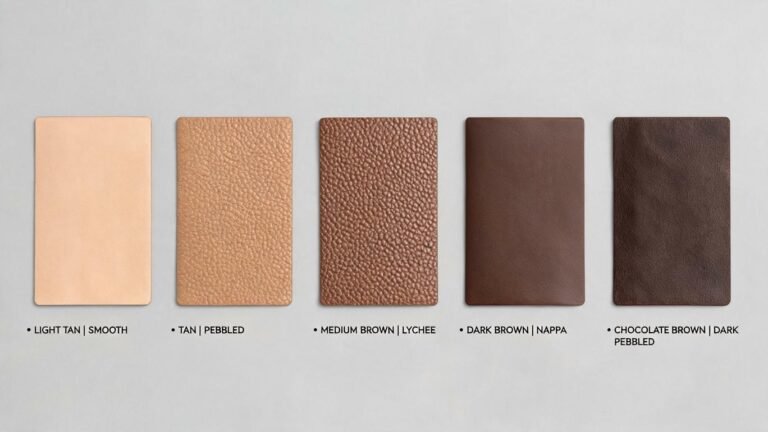
topsun-silicone-leather-texture-variety-intro