The numbers tell an uncomfortable story. China’s cattle inventory dropped 4.2% year-over-year in Q1 2026, pushing raw hide costs up 8 to 12%. Vegetable tanning—the eco-compliant method—adds another 15 to 20% on top. Meanwhile, EU REACH and tightening PFAS restrictions are narrowing the chemical compliance window for chrome-tanned hides. For B2B buyers sourcing upholstery leather hides, genuine animal hide is becoming a supply chain liability, not just a material choice. Here is the data behind that shift and what the alternative looks like.
Request Hide Specification Sheet
Why Upholstery Leather Hides Cost More in 2026
A full cowhide for upholstery runs 36 to 50 square feet and costs between $1.80 and $2.56 per square foot at wholesale—before tanning, finishing, and shipping. Italian premium hides reach €500 per piece. The price floor is set by livestock economics: fewer cattle means fewer hides, and China’s 4.2% inventory decline compounds with global beef herd contraction trends. When upholstery leather hides wholesale pricing per square foot swings 8 to 12% within a single quarter, production costing models break down.
Then comes the compliance premium. Chrome tanning—the industry standard for 80% of global hide production—faces increasing regulatory scrutiny. REACH SVHC additions now target specific chromium VI compounds. Vegetable tanning avoids the chrome issue but costs 15 to 20% more and produces hides with lower water resistance. There is no tanning method that is simultaneously cheap, compliant, and durable. That triangle is getting harder to close every year. The leather hide market data for 2026 confirms what procurement teams are already feeling in their PO pricing.

Silicone leather starts from silica (sand), not livestock—eliminating the agricultural supply chain volatility inherent in hide sourcing.
Hide Grading and Consistency: What B2B Buyers Actually Get
A natural hide is an organic product. No two are identical. Each varies in thickness (±0.3 mm across the same hide), color (dye lot shifts between batches), surface defects (insect bites, barbed wire scars, brand marks), and stretch direction. Top-grain hides—the premium grade—last 10 to 15 years but carry a price premium that puts them out of range for mid-market furniture lines. Genuine leather, the grade most B2B buyers actually source, lasts 3 to 5 years and often arrives heavily coated to disguise surface imperfections.
When reviewing upholstery leather hides thickness and grade specifications, the reality is that a hide’s usable area shrinks once you cut around defects. A “50 square foot” hide might yield 35 usable square feet after marking around brand marks, neck wrinkles, and belly stretch. That 30% waste factor rarely appears in the unit price calculation but shows up directly in your material yield and scrap cost. The leather hide supply chain risk goes well beyond price volatility into production planning reliability.

Color fastness testing quantifies what hide buyers discover too late: natural hide dye lots shift between batches, while silicone rolls hold Pantone tolerance across full production runs.
Silicone Upholstery Leather Hides: Consistent Rolls vs Variable Natural Hide
The fundamental difference between a upholstery leather hide and a silicone leather roll is not aesthetic—it is dimensional. A natural hide arrives in irregular shapes with variable thickness and color. A silicone leather roll arrives in consistent width, uniform thickness (±0.05 mm), and Pantone-matched color that holds across the entire length. For automated cutting and CNC nesting software, that consistency translates directly into material yield improvement.
The eco-friendly silicone leather alternative also eliminates the compliance question entirely. Silicone is derived from silica—sand—not animal tissue or petroleum. No tanning process is involved. No chromium compounds. No plasticizers. No phthalates. The material is inherently REACH SVHC compliant, passes ISO 10993 biocompatibility testing, and maintains color fastness beyond 1,500 hours of QUV testing. Natural hides cannot match that compliance profile at any price point.

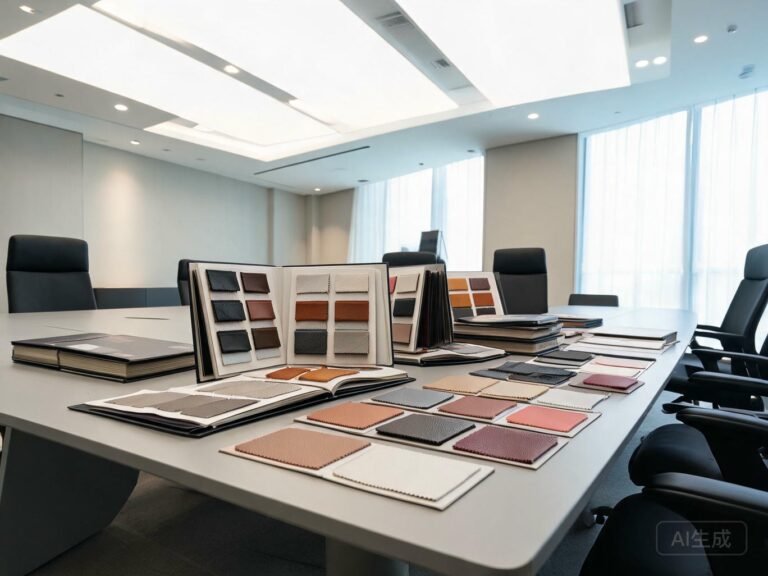
A swatch wall of silicone leather options—each color holds Pantone tolerance across production runs, unlike natural hide dye lots that shift batch to batch.

When you compare total lifecycle cost, silicone leather’s stable pricing and 10+ year lifespan close the gap with genuine hide’s volatile sourcing.
| Property | Genuine Hide | Silicone Leather Roll | PU Coated Fabric |
|---|---|---|---|
| Unit Format | Full hide (36–50 sqft) | Continuous roll (custom) | Roll (fixed width) |
| Thickness Tolerance | ±0.3 mm across hide | ±0.05 mm across roll | ±0.1 mm across roll |
| Color Consistency | Dye lot variation | Pantone-matched | Moderate batch shift |
| Chemical Compliance | Chrome/REACH risk | REACH SVHC compliant | Plasticizer risk |
| Price Stability | Volatile (±8–12% YoY) | Stable formulation | Moderate |
| Usable Yield | 65–75% (defect cutting) | 95%+ (uniform roll) | 90–95% |
| Commercial Lifespan | 10–15 yr (top grain) | 10+ years | 3–5 years |
See how TOPSUN’s silicone leather eliminates tanning chemicals entirely—certified through REACH, ISO 10993, and eco-compliance testing.
Spec Data: What to Demand from Any Upholstery Leather Source
Whether you source genuine hides or synthetic alternatives, the same specification framework applies. The silicone leather introduction outlines the full technical profile, but here is the procurement checklist:
- Thickness tolerance: Demand ±0.1 mm or better across the full unit. Natural hides cannot meet this—silicone rolls can.
- Color fastness data: Require QUV test hours (ASTM D4329 or ISO 105-B02). Accept nothing below 1,000 hours for commercial upholstery.
- Chemical compliance dossier: REACH SVHC report, ISO 10993 biocompatibility (for healthcare/hospitality), and heavy metal analysis. Chrome-tanned hides carry inherent Cr(VI) risk.
- Usable yield percentage: Factor waste into unit cost. A hide at $2/sqft with 70% yield costs $2.86 per usable sqft—a number most sourcing models miss.
- Abrasion data: Martindale or Taber test report. Genuine top-grain hide achieves 10,000–30,000 cycles. Silicone leather clears 200,000+.
One of our hospitality clients in Southeast Asia replaced genuine hide with silicone leather for a 2,000-room hotel furniture refresh. The consistent roll format cut their nesting waste from 28% to under 5%, and the Pantone-matched color eliminated the batch variation that had driven 12% of their rework orders. The material cost per square meter was higher. The project cost was lower.
Frequently Asked Questions
Are silicone upholstery leather hides REACH compliant?
Yes. Silicone leather contains no substances of very high concern (SVHC) listed under REACH. It requires no tanning process, so there is no chromium VI risk, no formaldehyde, and no phthalate exposure. Every TOPSUN roll ships with a current REACH SVHC compliance report. You can review our hydrolysis-resistant silicone leather page for additional chemical stability data.
How does hide size affect upholstery production efficiency?
Natural hides come in irregular shapes averaging 36 to 50 square feet, with 25 to 35% lost to defects and edge trimming. CNC nesting software works more efficiently with continuous rectangular rolls—silicone leather yields 95%+ usable material. For a production run of 1,000 sofa backs, that yield difference can mean 15 to 20 fewer material units ordered, which compounds into significant freight and waste savings.
What Changes When You Stop Sourcing Hides
Genuine upholstery leather hides served the furniture industry well for decades. But the supply chain math has shifted. Cattle inventories are declining. Tanning compliance is tightening. Hide grading inconsistency drives 25 to 35% material waste. For B2B buyers who need price stability, chemical compliance, and production predictability, the silicone leather roll is not a compromise—it is an upgrade. The data is available. The question is whether your current supplier can match it.
Compare Silicone vs Genuine Hide
About TOPSUN
TOPSUN produces silicone-based upholstery leather hides as continuous rolls—eliminating the size variation, grading inconsistency, and chemical compliance risk inherent in natural hide sourcing for furniture, hospitality, and automotive interior applications.
Every roll ships with REACH SVHC compliance data, ISO 10993 biocompatibility certification, and verified QUV color fastness reports exceeding 1,500 hours—so your compliance dossier is complete before the PO closes.