The Hidden Cost of Cheap Mouse Pad Leather
Every procurement manager who has sourced mouse pad leather in bulk knows the cycle: the first batch looks premium out of the box — smooth surface, rich texture, satisfying hand-feel. By month four, edges start curling. By month six, the surface peels near the wrist zone. By month eight, your corporate client is filing complaints about “cheap-looking desk accessories” with visible flaking.
This is not a quality control failure at your factory. It is a material chemistry problem. The vast majority of leather-look mouse pads on the market use PVC or low-grade PU coatings applied in layers as thin as 0.3–0.5 mm over a fabric or rubber base. Under the daily assault of wrist friction, palm heat, hand moisture, and cleaning chemicals, these coatings break down at a molecular level — the plasticizers migrate out, the surface embrittles, and the coating delaminates from the substrate.
For B2B buyers sourcing desk accessories, corporate gifts, or OEM keyboard mats, the question is not whether leather-look materials look good on day one. They all do. The question is: which chemistry maintains its surface integrity after 50,000 hours of palm contact?
Key Insight: Industry testing shows that budget-tier PU mouse pads need replacement every 6–18 months, while premium non-degrading surfaces last 36+ months — a 3× to 6× lifecycle difference that directly impacts warranty claims and brand reputation.
Material Showdown: What Actually Goes Into Mouse Pad Leather
The “leather” in mouse pad leather is almost never genuine animal hide in the B2B accessories market — it is a synthetic coating applied over a base substrate. Four material families dominate, and each has a radically different degradation profile under daily desktop use.
| Property | PVC Leather | PU Leather | Genuine Leather | Silicone Leather |
|---|---|---|---|---|
| Coating thickness | 0.3–0.5 mm | 0.4–0.8 mm | 1.2–2.0 mm | 0.5–1.0 mm |
| Peeling onset | 3–6 months | 6–12 months | 12–24 months* | 36+ months |
| Abrasion (Martindale) | ~2,000 cycles | ~5,000 cycles | ~10,000 cycles | up to 150,000 cycles |
| Stain resistance | Moderate | Good | Poor (porous) | Excellent (Class 5) |
| Waterproof | Yes | Yes | No | 100% waterproof |
| Skin safety (ISO 10993) | Not tested | Variable | Chrome tanned | Cytotoxicity L1, Sensitization L0 |
| Cost index (1=lowest) | 1.0× | 1.3× | 3.5× | 1.8× |
*Genuine leather degrades through different mechanisms — drying, cracking at creases, and permanent staining rather than coating delamination.
The data tells a clear story. PVC and PU coatings fail because their polymer chains are held together by plasticizers that migrate under heat and pressure — exactly the conditions a palm generates during 8 hours of daily use. Silicone leather’s crosslinked Si-O backbone is thermally stable up to 250°C and contains no migrating plasticizers, which is why it does not embrittle or peel even after years of continuous contact.

Why Mouse Pad Leather Peels: The Chemistry of Failure
Understanding why mouse pad leather peels is essential for B2B buyers who need to explain material selection to their own product teams. The failure mechanism differs by material type:
PVC Coating: Plasticizer Migration
PVC (polyvinyl chloride) is rigid by nature. To make it soft enough for a mouse pad surface, manufacturers add 20–40% plasticizers — typically phthalates. Under the sustained warmth of a human palm (32–35°C) and friction-generated heat, these plasticizers slowly migrate to the surface and evaporate. The coating loses flexibility, turns brittle, and micro-cracks form at the wrist contact zone. Within 3–6 months of daily use, the cracked coating begins flaking off the fabric base. This is why budget PVC mouse pads develop that telltale “white powder” around the edges.
PU Coating: Hydrolytic Breakdown
PU (polyurethane) leather performs better initially — it is softer, more flexible, and has better abrasion resistance than PVC. However, PU is susceptible to hydrolysis: the ester bonds in the polyurethane chain react with moisture from the air and from hand perspiration. Over 6–12 months, the coating’s molecular weight drops, it becomes tacky or brittle depending on humidity conditions, and eventually delaminates from the base fabric. This is accelerated in humid climates — a mouse pad that lasts 12 months in Arizona might fail in 6 months in Singapore.
Silicone: The Non-Degrading Alternative
Silicone leather’s chemical backbone is fundamentally different. The Si-O (silicon-oxygen) bond energy is 452 kJ/mol — significantly higher than the C-C bond (347 kJ/mol) in PU and PVC. This means silicone does not break down under the thermal, oxidative, or hydrolytic conditions a desktop surface encounters. There are no plasticizers to migrate, no ester bonds to hydrolyze, and no chlorine to release. The material maintains its surface properties for years, not months.
Bottom Line: If your mouse pad surface is peeling within the first year, the material chemistry was wrong from the start — no amount of QC or thicker coating will fix a fundamentally unstable polymer. The only solution is selecting a material whose molecular structure resists the degradation pathway.
Surface Texture and Mouse Tracking Precision
For buyers sourcing mouse pads for professional, creative, or gaming applications, surface texture is not just an aesthetic choice — it directly affects mouse sensor performance. Optical and laser mouse sensors rely on micro-imperfections on the tracking surface to calculate movement. Too smooth, and the sensor loses tracking at high speeds. Too rough, and the cursor jitter makes precision work impossible.
The ideal mouse pad surface maintains a consistent micro-texture across the entire usable area, with a coefficient of friction that balances glide speed against control. Leather-look surfaces offer a unique advantage here: the embossed grain pattern (lychee, pebbled, or satin finish) creates a uniform micro-structure that sensors can read reliably.
However, the degradation problem returns here. As PU and PVC surfaces wear down, the embossed texture flattens in high-contact zones (directly under the wrist path) while remaining intact in low-contact zones. This creates inconsistent tracking speed across the pad — the mouse moves faster in the worn center and slower at the edges. Users compensate by adjusting their hand movements, leading to accuracy drift over time.

Silicone leather solves this by maintaining dimensional stability of the embossed pattern. The crosslinked surface does not flatten under palm pressure, so the tracking consistency on day 1,000 matches day 1. For procurement teams specifying mouse pads for design studios, financial trading desks, or esports facilities, this consistency is a measurable quality metric, not a subjective preference.
B2B Sourcing Guide: Mouse Pad Leather Specifications
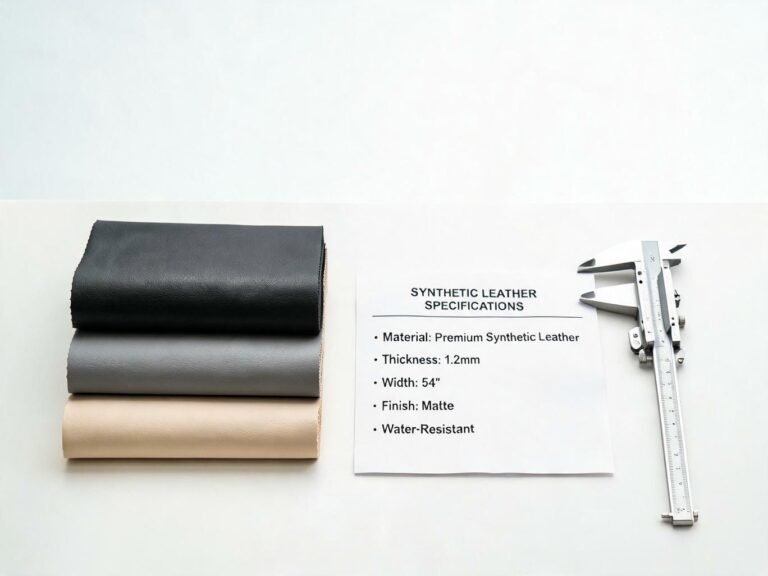
When evaluating mouse pad leather suppliers for OEM/ODM production, procurement teams should specify material requirements at the chemistry level — not just the visual level. The following specification sheet covers the critical parameters:
| Specification | Budget PU | Premium PU | Silicone Leather |
|---|---|---|---|
| Total thickness | 1.5–2.0 mm | 2.0–3.0 mm | 2.0–3.5 mm |
| Martindale abrasion | 2,000 cycles | 5,000 cycles | 100,000+ cycles |
| Hydrolysis resistance | 3–4 weeks (ASTM D3980) | 7–8 weeks | 14 weeks (full pass) |
| Color fastness (rubbing) | Class 3–4 | Class 4 | Class 5 (ISO 105-X12) |
| UV stability | 200 hours | 500 hours | 1,500 hours (ASTM D329) |
| Skin biocompatibility | Not certified | Partial | ISO 10993-5/10 certified |
| Stain resistance | Coffee, tea only | + oil, sauce | Oil pen, lipstick, all common stains |
| Temperature range | -10°C to 60°C | -15°C to 80°C | -40°C to 250°C |
For corporate gifting programs and promotional product buyers, the key decision point is warranty cost vs. unit cost. A PU leather mouse pad at $4–8 per unit may seem attractive on a purchase order, but when 15–20% of units require replacement within the warranty period due to peeling, the true cost rises significantly. A silicone leather pad at $8–15 per unit with a near-zero replacement rate delivers lower total cost of ownership for any program exceeding 12 months.
Applications Beyond the Mouse Pad: Desk Mat Synergy
The material chemistry that makes mouse pad leather durable also applies to the broader desk mat and desk pad category. Modern B2B procurement increasingly sources full-desk mats (typically 800×400mm or 900×430mm) rather than standalone mouse pads, as the larger format protects desk surfaces, provides a unified tracking area for keyboard and mouse, and elevates the visual standard of corporate workspaces.
Full-desk leather mats face the same degradation challenges as mouse pads — actually worse, because the wrist-rest and keyboard contact zones create concentrated wear points over a larger area. When the surface material is PVC or PU, the full-desk mat develops visible wear tracks within months, undermining the entire investment in desk aesthetics.

For buyers sourcing corporate desk accessory sets — mouse pad, desk mat, wrist rest, coaster — using a single material across the set ensures uniform aging behavior and consistent appearance over the product lifecycle. Silicone leather’s dimensional stability means a five-piece desk set will look identical on day 1 and day 1,000, which is exactly the visual consistency that corporate facility managers and interior designers demand.
Customization and OEM Capabilities
For B2B buyers, material selection is only the first step. The ability to customize mouse pad leather surfaces for branding, corporate identity, or product differentiation is where the procurement value lies. Key customization parameters to evaluate with suppliers include:
- Embossed texture options: Lychee, pebbled, satin, smooth, or custom-developed grain patterns that define the tactile identity of the product line
- Color matching: Pantone or custom color development — critical for corporate gift programs requiring brand-color consistency across thousands of units
- Logo application: Hot stamping, silk screen printing, or embossed/debossed logos — each method has different durability characteristics on the surface material
- Size flexibility: Standard sizes (250×210mm, 300×250mm, 400×350mm) plus custom cut-to-size for full-desk mats and non-standard shapes
- Edge finishing: Stitched, heat-sealed, or molded edges — silicone leather accepts all three, while PU/PVC often delaminates at stitched edges due to needle penetration breaking the coating continuity
- Base layer integration: Anti-slip rubber backing, magnetic attachment, or adhesive mounting — the base material must bond chemically with the surface layer to prevent delamination
Scratch resistance test — the surface maintains integrity under repeated abrasion, a critical parameter for mouse pad applications where daily palm friction is the primary wear mechanism.
Stain Resistance: The Office Reality Check
Mouse pads live on desks, and desks are environments where coffee spills, ink transfer, food residue, and hand oils are daily occurrences. For procurement teams evaluating mouse pad leather for high-traffic office environments, stain resistance is not a luxury feature — it is a maintenance cost driver.
The TOPSUN silicone leather surface achieves the highest stain resistance rating (Class 5 per ISO 105-X12) against common office contaminants including:
- Coffee, tea, and colored beverages
- Ballpoint pen and permanent marker ink
- Lipstick and cosmetic transfer
- Hand sanitizer and disinfectant wipes
- Sunscreen and lotion residue
- Tomato sauce and food oils
Each of these substances causes permanent staining or surface degradation on PU and PVC leather. On genuine leather, they penetrate the porous surface and require professional cleaning. On silicone leather, they sit on the non-porous surface and wipe off with a damp cloth — no chemical cleaners required.
For corporate buyers specifying products for environments with strict hygiene protocols — medical offices, shared workstations, financial trading floors — this cleanability is not just about appearance. It is about sanitary surface compliance. Silicone leather’s non-porous surface does not harbor bacteria, does not absorb contaminants, and can be disinfected with standard hospital-grade cleaners without surface damage.
Environmental and Regulatory Compliance
B2B procurement increasingly requires materials that meet environmental and safety regulations across multiple jurisdictions. For mouse pad leather, the key compliance frameworks include:
| Standard | Scope | PVC/PU Status | Silicone Status |
|---|---|---|---|
| REACH (EU) | Chemical safety | Phthalate restrictions | Full compliance |
| RoHS | Heavy metals | Lead, cadmium risk | No restricted substances |
| CA Prop 65 | California safety | Warning labels required | No warning needed |
| FDA 21 CFR | Food contact | Not applicable | Compliant |
| ISO 10993 | Biocompatibility | Rarely certified | Cytotoxicity L1, Sensitization L0 |
For products that will be in prolonged skin contact — and a mouse pad is in palm contact for 6–10 hours daily — ISO 10993 biocompatibility certification is the gold standard. Silicone leather passes both cytotoxicity (ISO 10993-5) and skin sensitization (ISO 10993-10) testing at the highest safety levels, making it suitable for products used by individuals with sensitive skin or dermatological conditions.
About TOPSUN: Silicone Leather Manufacturing for B2B Partners
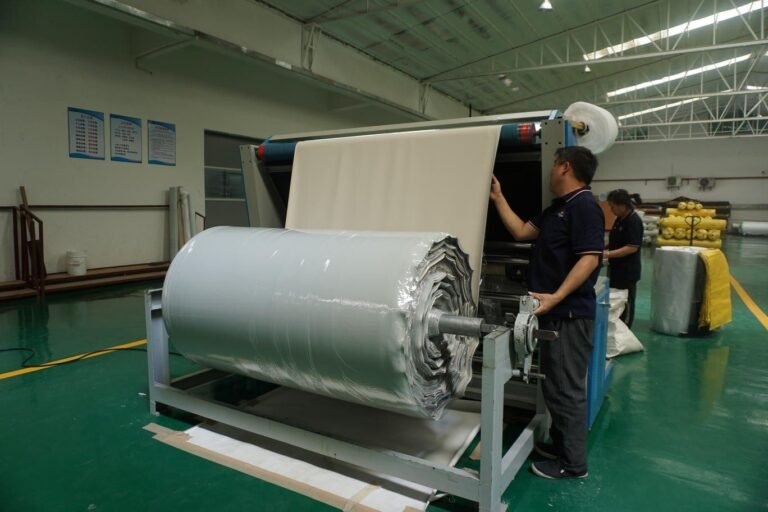
TOPSUN has specialized in silicone leather manufacturing for over 8 years, serving B2B clients across 30+ countries with applications spanning automotive interiors, furniture upholstery, medical surfaces, marine decking, consumer electronics, and corporate accessories. Our silicone leather is produced through a solvent-free coating process on textile substrates, yielding a material that combines the tactile appeal of genuine leather with the chemical stability of silicone polymer.
For mouse pad leather applications specifically, we offer:
- Custom embossed textures optimized for mouse sensor tracking — lychee, pebbled, satin, or proprietary patterns developed with your product team
- Pantone-matched color development with Class 5 color fastness to rubbing (ISO 105-X12) — ensuring logo colors and brand colors remain stable through years of daily contact
- Thickness configurations from 0.5 mm to 3.5 mm, engineered to balance surface durability with the flexibility needed for rolled packaging and shipping
- Anti-slip base layer integration — chemical bonding between silicone surface and rubber/magnetic backing, eliminating the delamination failure mode common in PU/PVC constructions
- Full ISO 10993 biocompatibility certification — relevant for products marketed as skin-safe, hypoallergenic, or suitable for sensitive-skin users
- REACH, RoHS, and CA Prop 65 compliance documentation included with every shipment — streamlining your import customs clearance and regulatory filings
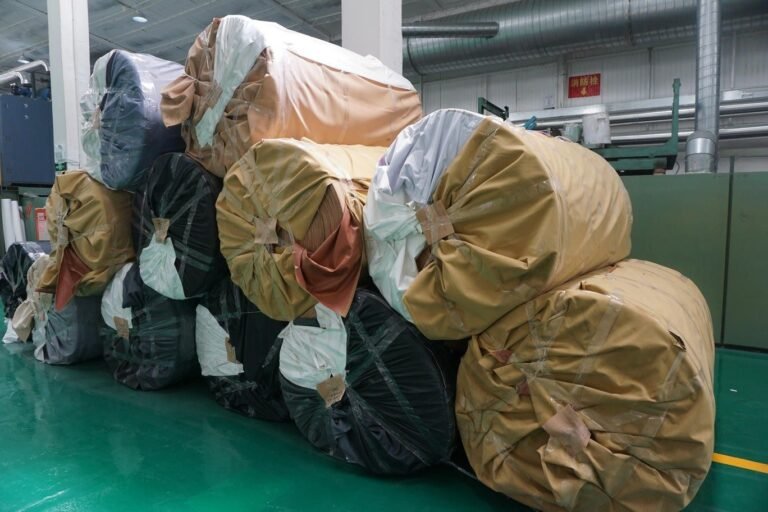
Our manufacturing facility supports MOQs from 500 linear meters for sampling and pilot runs to full container loads for volume production. Typical lead time for custom-developed mouse pad leather is 15–25 days for first-article approval and 20–30 days for bulk production, depending on texture complexity and color matching requirements.

Frequently Asked Questions
What is the best material for a leather mouse pad?
The best material depends on your product’s expected lifespan and price point. For products targeting the premium corporate or professional market where longevity matters, silicone leather offers the highest abrasion resistance (100,000+ Martindale cycles), full stain resistance, and ISO 10993 skin safety certification. For budget-tier promotional products with a short expected lifespan, PU leather provides acceptable performance at lower cost.
How long does mouse pad leather last before peeling?
PVC leather mouse pads typically begin peeling within 3–6 months of daily use due to plasticizer migration. PU leather lasts 6–12 months before hydrolytic breakdown causes surface degradation. Silicone leather does not peel — its crosslinked polymer structure is thermally and hydrolytically stable, maintaining surface integrity for 36+ months under identical conditions.
Can silicone leather be used for full-desk mats?
Yes. Silicone leather is available in widths up to 1,400mm and can be cut to any desk mat size. Its dimensional stability prevents the edge-curling and surface-wear tracking that affects PU/PVC desk mats. The material’s temperature resistance (-40°C to 250°C) also makes it compatible with heated desk surfaces and laptop docking stations.
What is the MOQ for custom mouse pad leather?
TOPSUN supports MOQs from 500 linear meters for sampling and pilot production runs. Full-container production typically requires 3,000–5,000 linear meters depending on width and thickness specifications. Custom color development and proprietary texture tooling may require a separate development MOQ — contact our B2B team for project-specific quoting.
Is silicone leather mouse pad waterproof?
Yes, silicone leather is 100% waterproof. The non-porous surface prevents liquid penetration — coffee, tea, ink, and other common office spills sit on the surface and wipe clean with a damp cloth. Unlike genuine leather (which absorbs liquids and stains permanently) or PU leather (which can delaminate when exposed to moisture over time), silicone leather maintains both its appearance and structural integrity after liquid exposure.
Making the Right Material Choice
The mouse pad leather you specify today determines the warranty claims, replacement costs, and brand reputation you manage for the next 1–3 years. The material chemistry is not negotiable — PVC will plasticizer-migrate, PU will hydrolyze, and genuine leather will stain and crack. These are not quality defects; they are the inherent degradation pathways of those polymer systems.
Silicone leather is the only surface material in the mouse pad category whose molecular structure was designed to resist every degradation force a desktop surface encounters: palm heat, wrist friction, hand moisture, UV exposure, chemical cleaning, and daily staining. The 30× abrasion resistance advantage over PVC and 20× advantage over PU translates directly to a 3–6× longer product lifespan — a calculation that any procurement professional can take to their finance team.
For B2B buyers who need to deliver desk accessory products that maintain their premium appearance through years of daily use, the material decision is clear. The question is not whether silicone leather costs more per unit — it is whether the lifecycle cost savings, reduced warranty claims, and elevated brand perception justify the investment. For most corporate, professional, and premium consumer applications, the answer is yes.
Ready to specify silicone leather for your mouse pad or desk mat product line? Contact TOPSUN’s B2B team to request material samples, technical specification sheets, and custom development quotes. Our engineering team will work with your product designers to optimize texture, thickness, and color for your specific application — from corporate gift programs to professional gaming surfaces. Visit topsunsiliconeleather.com to start the conversation.
Related Reading: Why Leatherette Seats Crack & Fail | Leather Fabric Black: Color Stability Guide | What is Silicone Leather?