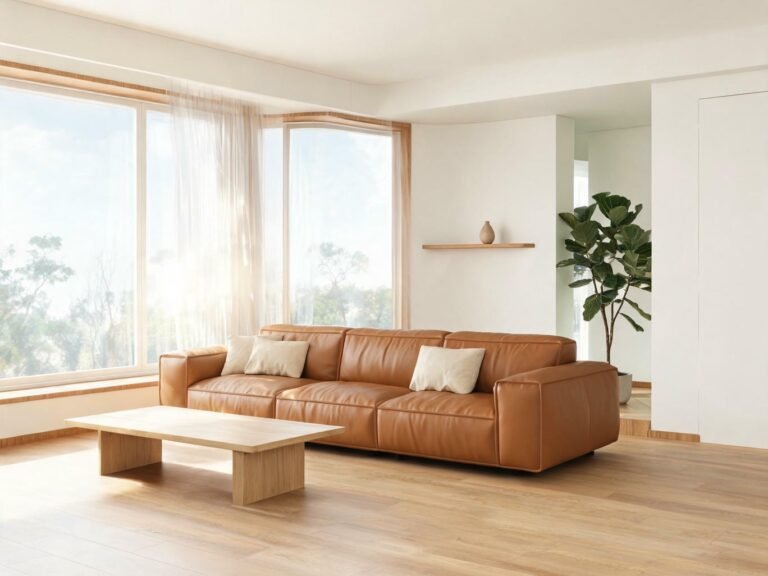
As a specifier, you know the moment a client runs their hand across a sofa and forms an instant opinion. Touch dictates perceived quality more than any spec sheet. But the material for sofa upholstery that feels luxurious on day one can crack, peel, or fade by year three — and no amount of design intent rescues a sofa that looks tired. Here’s how to choose upholstery material that stays as good as it feels on day one, and why the wrong choice costs more than the right one.
Request Sofa Upholstery Samples
What Specifiers Look for in Material for Sofa Upholstery
Five criteria determine whether a material succeeds or fails in sofa applications: touch (hand feel, softness, drape), durability (Martindale abrasion, flex resistance), cleanability (stain resistance, chemical wash-down), color stability (UV fastness, no yellowing), and compliance (VOC, fire safety, hypoallergenic). Most specifiers prioritize touch first — and that’s where PU leather wins the initial sale but loses the long game.
PU feels soft because plasticizers keep the polyurethane flexible. But those same plasticizers migrate out over time, leaving the coating stiff, brittle, and prone to cracking. When evaluating material for sofa upholstery comparison types, the question isn’t just “How does it feel now?” but “How will it feel after 10,000 hours of use, 200 cleaning cycles, and three years of humidity?”

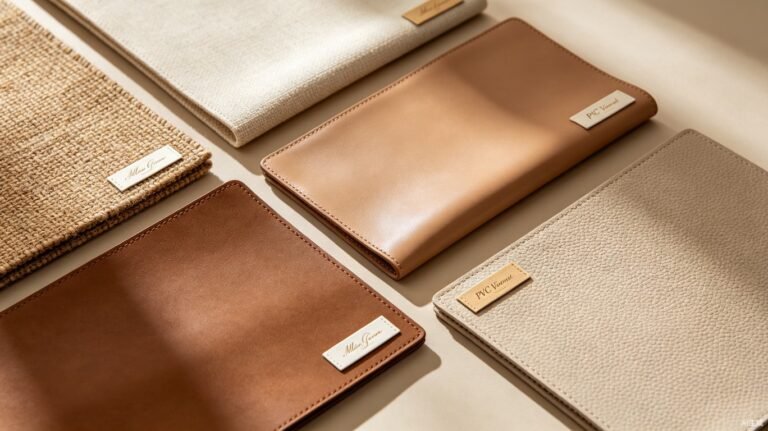
Softness and drape evaluation — silicone leather maintains this hand feel after years of use; PU does not
For furniture and sofa applications, the specifier’s job is to balance aesthetics with performance. A material that looks stunning in a showroom but fails after one season of commercial use is not a successful specification — it’s a liability.
The PU Failure Timeline: What Happens in Year 3
PU leather follows a predictable failure trajectory. Year one: the surface looks and feels acceptable. Plasticizers are still migrating, but slowly. Year two: the hand feel stiffens noticeably. In humid environments, hydrolysis begins at the ester bonds — the coating starts to separate from the backing fabric at stress points (seat edges, armrest curves). Year three: visible cracking appears. The surface develops a chalky residue, pigment flakes off at flex points, and the exposed backing fabric absorbs dirt that cannot be cleaned.
This isn’t a quality control issue — it’s a chemistry issue. The ester bonds in PU are inherently susceptible to hydrolysis. No amount of manufacturing care changes the molecular fact that water breaks those bonds. When comparing sofa upholstery material durability Martindale ratings, PU typically tests at 30,000–50,000 cycles when new. After two years of environmental aging, that same material drops to 15,000–20,000 cycles — below the threshold for commercial use.

Flex resistance testing — the machine that reveals whether a material will crack at stress points over time
Designer’s reality check: A sofa specified with PU leather will need full reupholstery by year 4–5. That means the client pays for materials, labor, and downtime twice in a 10-year period. The silicone vs PU comparison isn’t about upfront cost — it’s about whether you want to explain to a client why their $15,000 sofa needs replacing after three years.
Silicone Leather as Sofa Upholstery Material: A Designer’s Perspective
From a design perspective, silicone leather solves the problem that PU creates: it delivers the soft hand feel and drape of premium upholstery without the chemical instability. The Si–O–Si backbone is thermally stable from -40°C to 250°C, inherently hydrolysis-resistant, and UV-stable — meaning the color, texture, and softness you specify on day one are the same ones the client experiences in year ten.

Texture and color options — silicone leather accepts lychee, pebbled, smooth, and custom embossed patterns with Pantone-matched precision
For specifiers working with silicone leather sofa upholstery material, the design freedom is significant. Over 55 texture patterns are available — from classic lychee to bespoke embossed designs. Color matching achieves Delta E ≤1.0 against any Pantone reference, meaning brand-specific color programs are feasible. Thickness ranges from 0.8mm to 2.0mm for sofa applications, with backing options including fleece, foam, and knitted fabric for different drape characteristics.
Touch, Texture, and Color: Aesthetic Specs That Matter
The tactile experience of a sofa is determined by three factors: surface friction (how the material grips or slides against skin), thermal conductivity (how warm or cool it feels on contact), and recovery (how quickly the surface returns to shape after compression). Genuine leather scores well on all three but requires conditioning and is expensive. PU leather scores well initially but degrades on all three metrics as plasticizers migrate.
Silicone leather maintains stable surface friction, low thermal conductivity (feels warm, not cold), and excellent compression recovery throughout its service life. For material for sofa upholstery easy clean stain resistant performance, the non-porous silicone surface repels liquids, coffee, ink, and bodily fluids — wiping clean with water alone, no solvents required. This is why cleaning and maintenance costs for silicone leather sofas run 80% lower than PU over a five-year period.

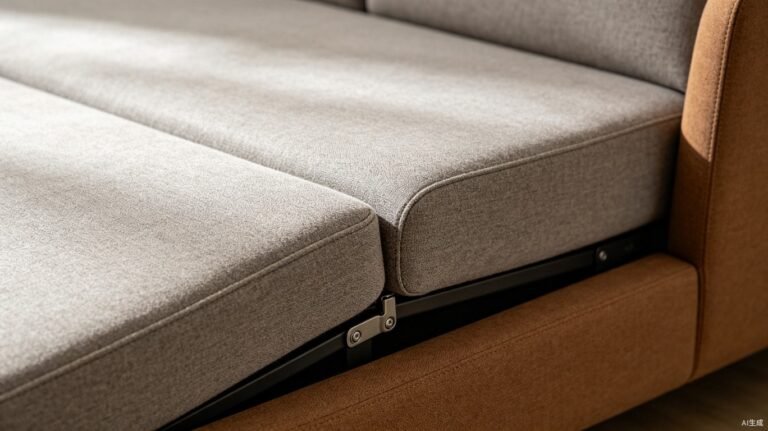
Commercial sofa installation — high-traffic environments where material failure translates directly to replacement cost and guest complaints
Material for Sofa Upholstery: 5-Year TCO by Type
Total cost of ownership is where the material comparison stops being academic and starts affecting budgets. The table below maps five common sofa upholstery materials against their expected lifespan, abrasion performance, failure mode, and 5-year cost — including replacement if the material fails before year five.
| Material Type | Expected Lifespan | Martindale Cycles | Primary Failure Mode | 5-Year TCO |
|---|---|---|---|---|
| Genuine Leather | 15–20 years | 25,000+ | Drying, requires conditioning | High initial, low maintenance |
| PU Leather | 3–5 years | 30,000–50,000 | Hydrolysis, cracking, peeling | Low initial, 2x replacement |
| PVC Leather | 5–8 years | 20,000–40,000 | Plasticizer migration, stiffening | Low initial, 1x replacement |
| Silicone Leather | 10+ years | 200,000+ | No hydrolysis, no cracking | Mid initial, zero replacement |
| Fabric (polyester) | 5–7 years | 15,000–30,000 | Staining, pilling, tearing | Low initial, 1x replacement |

Silicone leather sofa in durability testing — maintaining surface quality after accelerated wear cycles that would destroy PU upholstery
See how silicone leather performs on commercial sofa frames — flexibility, stain resistance, and color stability demonstrated
When a sofa upholstery material guide recommends PU as “cost-effective,” it’s only counting the purchase price. Add replacement, labor, and downtime, and PU becomes the most expensive option over five years. Silicone leather’s 10+ year service life means it survives the full warranty period with zero reupholstery — a claim no PU or PVC material can make. The ASTM International standards referenced throughout this comparison provide the testing framework that makes these lifespan claims verifiable.
Frequently Asked Questions
Which sofa upholstery material is easiest to clean?
Silicone leather. Its non-porous PDMS surface repels liquids, coffee, ink, and grease — wiping clean with water alone, no detergents or solvents required. Genuine leather requires conditioning products to prevent drying. PU leather’s surface coating degrades with repeated solvent cleaning. Fabric absorbs liquids and requires professional cleaning for most stains. For commercial environments where daily cleaning is standard, silicone leather’s cleanability alone can offset its higher purchase price within 18 months.
Is silicone leather suitable for high-end residential sofas?
Yes. Silicone leather achieves the soft hand feel, natural drape, and color depth that designers associate with premium upholstery. With 55+ texture patterns, Pantone-matched colors (Delta E ≤1.0), and thickness options from 0.8–2.0mm, it offers the same design flexibility as top-grain leather — with the added benefits of zero VOC emissions, inherent flame retardancy, and 10+ year service life. Several premium furniture brands have already transitioned their flagship sofa lines to silicone leather for exactly these reasons.
Specify for Year Ten, Not Year One
The right material for sofa upholstery is the one that looks and feels as good in year ten as it did on delivery day. PU leather fails this test — its chemistry guarantees it. PVC lasts longer but degrades through plasticizer migration. Genuine leather endures but demands maintenance and carries a premium price. Silicone leather is the only synthetic material that combines premium aesthetics, structural durability, zero maintenance, and 10+ year service life in a single specification. When you specify for year ten, you protect both the client’s investment and your own reputation.
Download Material Comparison Sheet
About TOPSUN
TOPSUN supplies silicone leather as material for sofa upholstery to furniture manufacturers and hospitality brands across 50+ countries, with custom texture development and Pantone-matched color programs for residential and commercial seating.
200K+ Martindale cycles · 55+ texture patterns · Delta E ≤1.0 color matching · Zero VOC (ISO 16000-6) · EN 13773 Class 4 flame retardant · 10+ year service life