In our testing lab, we’ve watched synthetic leather PU samples crack, peel, and hydrolyze across thousands of flex cycles — while silicone leather samples beside them barely flex. The performance gap isn’t marginal. PU leather holds 57.8% of the global faux leather market in 2026 for good reasons: soft hand-feel, versatile processing, and accessible pricing. But when B2B procurement teams audit field failures, the same material reveals five failure modes that silicone leather simply doesn’t have. Here’s what the test data shows — and what to specify instead.
Request Free PU vs Silicone Samples
What Is Synthetic Leather PU? Composition and Manufacturing
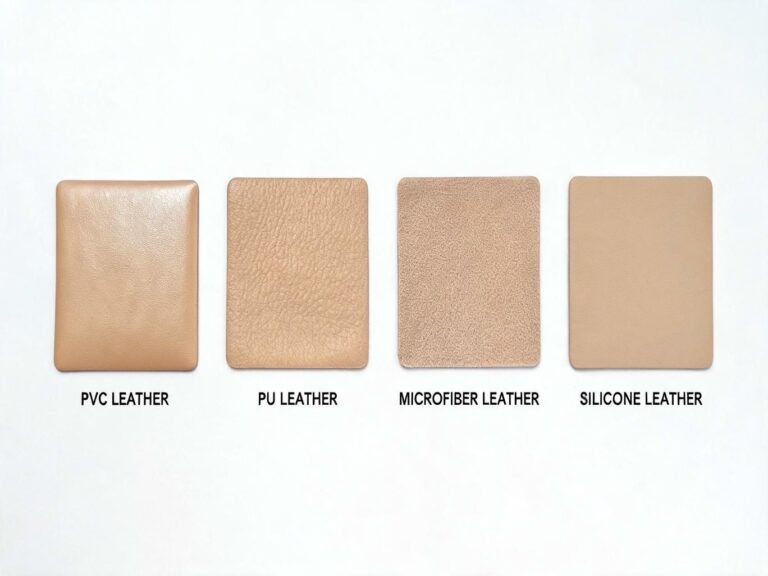
Synthetic leather PU — polyurethane-coated fabric — starts with a base layer of polyester, cotton, or microfiber. Manufacturers apply a liquid polyurethane coating onto this substrate, then emboss the surface to replicate natural grain patterns. Two processes dominate the industry: the dry process (direct coating and drying) produces thinner, lighter material for fashion and accessories; the wet process (coagulation in a water bath) creates a microporous structure that mimics genuine leather’s breathability.
The result is a material that balances softness, visual appeal, and cost efficiency — which explains why footwear, automotive interiors, and furniture manufacturers adopted it so widely. But synthetic leather PU is a broad umbrella. Performance varies enormously depending on coating thickness, base fabric density, and whether the manufacturer uses solvent-based or water-based PU chemistry. For a deeper look at how silicone leather differs from PU at the molecular level, see our silicone leather introduction.
Where Synthetic Leather PU Fails Under Real-World B2B Stress
In our testing lab, we’ve run PU leather through Martindale abrasion rounds, flexing tests at sub-zero temperatures, and hydrolysis chambers simulating years of humid exposure. Five failure modes show up consistently — and none of them appear on supplier spec sheets unless you ask.
Here’s what we’ve observed firsthand:
- Hydrolysis breakdown: PU coatings absorb moisture over time. In environments above 60% humidity, the polyurethane layer begins to decompose, turning sticky and brittle. One of our furniture clients specified PU upholstery for a 500-unit hotel project; within 18 months, 40% of the seating showed hydrolysis damage in humid coastal conditions. After switching to our hydrolysis-resistant silicone leather, the replacement rate dropped to near zero over the same period.
- Flex cracking at low temperatures: Standard PU leather cracks below -10°C. In cold-chain logistics or outdoor applications, this means visible surface fractures within months. Silicone leather shows no cracking at -40°C.
- Abrasion wear-through: PU leather typically rates 10,000–30,000 Martindale cycles. That sounds adequate until you compare it to silicone leather’s 200,000+ cycles — a 7–20x gap in PU leather abrasion resistance. Martindale testing reveals this difference clearly.
- VOC off-gassing: Solvent-based PU production leaves residual DMF (dimethylformamide) in the material. In enclosed automotive cabins or medical environments, this off-gassing continues for months. REACH regulations now restrict many of these chemicals, but compliance varies by supplier.
- Color fade under UV: PU’s polyurethane coating degrades under prolonged UV exposure, causing noticeable color shift within 1–2 years of outdoor use.

Flex cracking test: PU samples fracture at -10°C while silicone remains intact at -40°C

Martindale abrasion testing reveals the 7–20x durability gap between PU and silicone leather
For more on the specific problems buyers encounter with PU materials, our PU leather hidden problems guide breaks down each failure mode in detail.
PU vs Silicone Leather: The Performance Gap by the Numbers
The fastest way to understand the gap is to put the numbers side by side. We test both materials using identical international standards:
| Property | PU Leather | Silicone Leather | Gap Factor |
|---|---|---|---|
| Flex Cycles to Failure | 20,000–60,000 | 100,000+ | 2–5x |
| Low-Temp Cracking | Cracks below -10°C | No cracking at -40°C | Critical |
| Martindale Abrasion | 10,000–30,000 cycles | 200,000+ cycles | 7–20x |
| Hydrolysis Resistance | Poor (decomposes in humidity) | Excellent | Critical |
| Typical Lifespan | 2–5 years | 10–15+ years | 3–5x |
| VOC Emissions | Moderate (DMF residue) | Zero (solvent-free) | Critical |

Tensile strength testing: standardized equipment used to evaluate both PU and silicone leather
Watch how PU and silicone leather perform under identical testing conditions — the difference is visible
These aren’t marketing claims — they’re results from standardized lab testing that any B2B buyer can request before signing a purchase order. Our detailed silicone vs PU comparison walks through every specification line by line.
For buyers comparing all three major synthetic options, our synthetic leather vs PU analysis covers PVC trade-offs as well.
When PU Still Makes Sense for B2B Projects
Let’s be honest — PU leather isn’t the wrong choice for every project. If your product lifecycle is under 3 years, the cost-per-unit advantage of PU can be substantial. Promotional items, seasonal fashion accessories, and budget furniture segments often don’t need 10-year durability.
Water-based PU leather represents a genuine improvement over solvent-based formulations. It eliminates DMF from the production process, reduces VOC emissions significantly, and aligns with tightening EU regulations like REACH compliance. Brands sourcing water-based PU leather in 2026 are making a responsible step — though the durability gap with silicone remains structural, not just chemical.
The decision comes down to lifecycle economics. If you’re specifying materials for automotive interiors, medical equipment, or public seating that needs to last a decade, the math favors silicone. If you’re producing fast-fashion accessories with a 12-month shelf life, PU’s lower cost-per-yard makes commercial sense.

PU leather sofa upholstery: cost-effective for short-lifecycle residential furniture
Frequently Asked Questions
Is PU leather safe for automotive interiors?
Standard solvent-based PU leather can off-gas residual DMF for weeks after installation, which is why major OEMs are shifting toward water-based PU or silicone alternatives. Always request VOC test reports (VDA 278 or equivalent) before approving PU for enclosed cabin applications.
Can water-based PU leather match silicone leather’s durability?
Water-based PU eliminates the VOC problem but doesn’t change the fundamental polyurethane chemistry. It still hydrolyzes in humidity and cracks at low temperatures. The durability gap with silicone leather remains structural — polyurethane coatings break down at the molecular level in ways silicone doesn’t.
What B2B Buyers Should Specify Next
Synthetic leather PU remains the volume leader in the coated fabric market — and for short-lifecycle applications, it should. But the five failure modes we’ve documented in our lab (hydrolysis, flex cracking, abrasion wear-through, VOC off-gassing, and UV fade) translate directly into warranty claims, replacement costs, and brand damage for products that need to last. Before your next sourcing cycle, request material test reports for Martindale abrasion, flex cracking at -20°C, and hydrolysis resistance. The numbers will tell you whether PU is sufficient — or whether it’s time to specify silicone leather instead.
Get a Custom Quote for Silicone Leather
About TOPSUN
TOPSUN engineers solvent-free silicone leather for automotive, furniture, medical, and public transport applications where synthetic leather PU’s failure modes — hydrolysis, flex cracking, VOC off-gassing — are commercially unacceptable.
Our materials are tested to 200,000+ Martindale cycles and 100,000+ flex cycles, certified to ISO 10993, REACH, FDA, and FAR 25.853, and manufactured in a vertically integrated facility with zero DMF emissions.