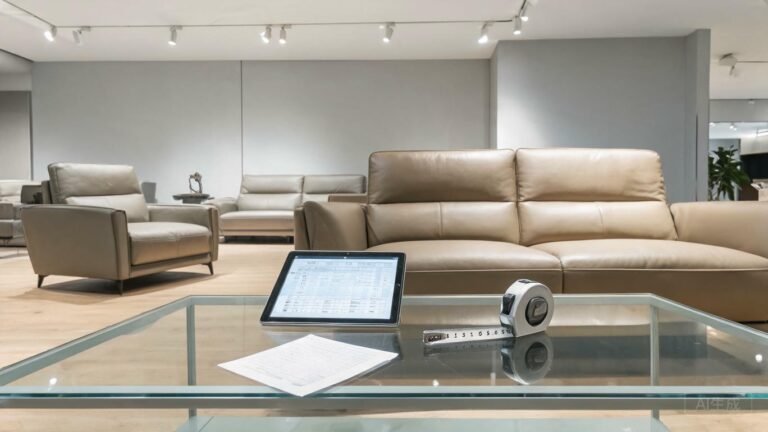
A procurement director at a European furniture brand recently told us she was managing 11 separate suppliers for a single leather sofa line: a tannery in Bangladesh, a coating facility in China, a cutting house in Vietnam, a stitching workshop in India, three freight forwarders, two testing laboratories, a customs broker, and a quality inspection agency. When a batch failed REACH compliance, it took three weeks just to identify which supplier introduced the non-compliant chemical. That’s not a supply chain — it’s a liability chain.
The concept of leather as a service exists because this fragmentation has become unsustainable. Borrowing from the “as-a-service” models that transformed lighting, software, and furniture procurement, the idea is simple: instead of buying leather from a tannery and managing every downstream step yourself, you contract with a single partner who owns the entire process — from raw material sourcing through testing, customization, logistics, and compliance documentation. You pay for outcomes — certified material delivered to spec, on time — not for the privilege of coordinating 11 suppliers.
Request Integrated Sourcing Consultation
What “Leather as a Service” Actually Means for B2B Buyers
The term “leather as a service” doesn’t refer to a single product or subscription. It describes a procurement model where a manufacturer provides end-to-end leather supply chain management as an integrated service. The buyer defines specifications — material chemistry, certifications, color, texture, volume, delivery schedule — and the service provider handles everything else: raw material sourcing, production, in-house testing, batch traceability, compliance documentation, and logistics.
This model has emerged organically from the pain points B2B buyers experience with traditional sourcing. According to industry data, the global leather goods repair and maintenance services market alone is projected to reach $3.3 billion by 2030, growing at 7.5% CAGR — evidence that post-purchase service demand is already a significant market. But leather as a service goes further: it prevents the problems that repair services exist to fix by controlling quality from the source.
For a more detailed look at what distinguishes a real manufacturer from a trading company in this context, our manufacturer verification guide covers the material-level proofs that matter.

Integrated production capacity under one roof — the physical foundation of leather as a service.
The Fragmented Sourcing Problem Leather as a Service Solves
Traditional B2B leather sourcing follows a fragmented path: buyer sources hides from a tannery, ships them to a coating facility, sends coated material to a cutter, forwards cut pieces to a stitcher, then manages separate testing and compliance vendors. Each handoff introduces risk — inconsistent material grading, cutting errors, documentation gaps, and customs delays. When something goes wrong, accountability diffuses across multiple entities, each pointing at the next.
A leather as a service model collapses this chain. The service provider owns the tannery relationship (or produces material in-house), runs the coating line, maintains in-house testing equipment, and manages logistics. When a batch fails a test — and with real testing, some will — the provider identifies the root cause within hours, not weeks, because every step happens under their control. This is the fundamental difference between buying leather and buying leather as a service.
| Dimension | Traditional Sourcing | Leather as a Service |
|---|---|---|
| Supplier count | 5–11 entities | 1 contracted partner |
| Quality accountability | Diffused — each blames the next | Single owner — full traceability |
| Compliance documentation | Buyer assembles from multiple sources | Provider delivers complete package |
| Issue resolution time | 2–4 weeks (cross-supplier) | 24–48 hours (in-house) |
| Testing | Third-party, post-production | In-house, every batch pre-shipment |

Quality inspection at the production line — integrated testing eliminates the delay of third-party lab coordination.
5 Service Layers That Define a Leather as a Service Provider
Not every supplier who claims to offer “full service” actually delivers leather as a service. A genuine service model includes five integrated layers:
Layer 1 — Raw Material Control. The provider either manufactures the base material in-house or holds direct, audited relationships with source tanneries. No trading company intermediaries. This ensures the polymer chemistry — whether traditional chrome-tanned leather or silicone-based synthetic — is known and controlled from the start. Our factory production overview details what this looks like in practice.
Layer 2 — In-House Testing. Every production batch is tested before shipment using calibrated equipment — Martindale abrasion, flex endurance, color fastness, tensile strength. Third-party verification supplements in-house testing but doesn’t replace it. A provider without in-house testing capability is selling material, not service.
Layer 3 — Batch Traceability. Every roll carries a unique identifier linked to raw material lot, coating formulation version, test report number, production line, and inspection result. When a warranty claim arises, the provider can trace the issue to a specific batch in minutes — a capability that traditional multi-supplier sourcing cannot match.
Layer 4 — Compliance Documentation. The provider delivers a complete compliance package with every shipment: REACH, ISO 10993, PAHs, OEKO-TEX, and any application-specific certifications (FAR 25.853 for aviation, EN 13773 for fire safety). The buyer doesn’t chase certificates from multiple vendors — they arrive with the material.
Layer 5 — Logistics and Customization. Custom color matching, texture development, and roll-to-roll consistency are part of the service, not change orders. The provider manages shipping, customs documentation, and delivery scheduling. For buyers evaluating suppliers, this quality leather sourcing guide provides a structured evaluation framework.

A finished goods warehouse with batch-traceable inventory is the physical proof of integrated service delivery.
Furniture as a Service: The Leather Upholstery Subscription Model
Leather as a service extends beyond material sourcing into the broader furniture-as-a-service (FaaS) movement. Companies like CORT and Fernish have built businesses around furniture subscription models, where commercial clients pay monthly for furnished spaces rather than purchasing depreciating assets. According to circuly, any product can be converted to an as-a-service business model — and the EU’s Ecodesign for Sustainable Products Regulation is accelerating this shift by mandating durability, repairability, and recyclability.
For leather upholstery specifically, the subscription model only works if the underlying material is durable enough to survive multiple tenants and use cycles. This is where silicone leather’s 10–15 year service life and zero-maintenance properties create a structural advantage: a sofa upholstered with silicone leather can serve three subscription cycles without re-upholstery, while PU leather would require replacement after each cycle. The leather goods repair services market, projected at $3.3 billion by 2030, exists largely because the wrong materials were specified in the first place — leather as a service prevents that problem upstream.

Custom color matching as part of the service — not a premium add-on — is what distinguishes a service provider from a material supplier.
Inside TOPSUN’s production capacity — the infrastructure that makes leather as a service physically possible.
How Leather as a Service Cuts Lead Times and Compliance Risk
The measurable benefits of leather as a service cluster around two metrics that procurement teams track: lead time and compliance risk. In a fragmented model, lead time is the sum of each supplier’s production time plus inter-supplier shipping, customs, and coordination delays. A typical leather sofa material order flowing through five suppliers takes 12–16 weeks from PO to delivery. An integrated service provider with in-house production can compress this to 6–8 weeks — because the material never leaves the facility until it’s tested, certified, and ready to ship.
Compliance risk follows the same pattern. In a fragmented chain, REACH compliance is verified by assembling certificates from multiple suppliers — each testing different materials at different times. If one supplier changes their formulation mid-order (which happens), the compliance documentation is silently invalidated. Leather as a service eliminates this risk because the provider tests the specific material in your specific batch and delivers batch-specific compliance documentation. For more on this evaluation process, see our B2B sourcing guide.
The buyer who switches from fragmented sourcing to leather as a service doesn’t just save time — they transfer the risk of quality, compliance, and coordination failure to a partner whose business model depends on managing it.
Frequently Asked Questions
Is “leather as a service” the same as furniture leasing?
No. Furniture leasing is an end-user model where consumers or businesses rent finished furniture. Leather as a service is a B2B procurement model where a manufacturer provides integrated material sourcing, testing, compliance, and logistics — the buyer still owns the finished product. The two concepts intersect when furniture-as-a-service companies source their upholstery through a leather-as-a-service provider, creating a fully integrated supply chain from raw material to end-user subscription.
What’s the minimum order volume for leather as a service?
It varies by provider. Traditional sourcing has lower MOQs because trading companies aggregate demand. Integrated service providers typically require higher minimum volumes — often 500+ meters for custom formulations — because the service layers (in-house testing, batch traceability, compliance documentation) have fixed costs that only make economic sense at scale. However, providers with strong production capacity can offer lower MOQs on standard formulations while reserving full service integration for custom orders.
About TOPSUN
TOPSUN operates as an integrated leather as a service provider, manufacturing silicone-based synthetic leather with in-house testing, batch traceability, and complete compliance documentation delivered with every shipment.
From raw silicone polymer through coating, testing, and logistics — every step happens under one roof, giving B2B buyers a single accountable partner instead of a fragmented supplier chain.