A 500-seat hotel lobby reupholstered in genuine leather needs roughly 150 liters of leather cream for furniture per year. At $25 per liter, that is $3,750 in consumables alone — before labor, before equipment, before the downtime when seating is pulled from rotation for treatment. Multiply that across a 10-year furniture lifecycle, and the cream costs more than the leather itself. Yet most procurement specs list maintenance as a footnote, if they list it at all.
The global leather protection cream market reached $562.4 million in 2025 and is growing at 5.24% CAGR through 2032. The furniture and home decor segment accounts for 27% of that — $151.92 million in annual cream sales that exist solely because genuine leather dries out. Here is what that recurring cost looks like when you run the numbers, and why B2B buyers are specifying materials that eliminate the cream cycle entirely.
Request Furniture Upholstery Samples
What Leather Cream for Furniture Actually Costs Over 5 Years
Procurement teams typically compare material prices per square meter. That number — $40 to $60 for silicone leather versus $50 to $120 for genuine leather — makes genuine leather look competitive, even cheaper at the low end. But the purchase price is step one of a ten-step cost chain.
The best leather cream for furniture is not a one-time purchase. It is a consumable that recurs every 3 to 6 months for commercial furniture, more frequently in hospitality settings with daily guest turnover. The cost stack looks like this:
- Cream product: $15–30/m²/year (premium conditioner, 3–4 applications)
- Application labor: $8–15/m²/year (trained staff, 30 min per piece)
- Downtime cost: $5–12/m²/year (revenue loss during treatment)
- Annual total: $28–57/m²/year, every year, for the life of the furniture

Martindale abrasion testing verifies whether furniture upholstery will need cream treatments — or survive without them.
Over a 5-year period, a 200-seat restaurant with genuine leather booths spends $14,000 to $28,500 on cream and application alone. That is before any repair patches, reupholstery, or replacement. A 10-year horizon pushes the figure past $57,000 — and genuine leather in commercial use rarely lasts 10 years without reupholstery anyway.
The Chemistry Problem: Why Leather Needs Cream in the First Place
Genuine leather is animal skin. Once tanned, it retains oils that slowly evaporate and oxidize. Without replenishment, the collagen fibers lose flexibility, the surface micro-cracks, and the finish begins to flake. Leather cream exists to replace those lost oils — but the cream itself introduces a new set of problems.
Industry testing shows the average leather cleaner or conditioner emits 120 g/L of VOCs. Products certified under the EPA Safer Choice program emit less than 0.1 g/L — a 1,200-fold difference. Yet most commercial furniture teams use whatever cream the supplier recommends, without checking the VOC content. Synthetic fragrances in these products typically contain 100 to 350 chemical components, including benzene, acetaldehyde, and phthalates. For buyers sourcing non-toxic leather conditioner for furniture, the supply chain is opaque at best.

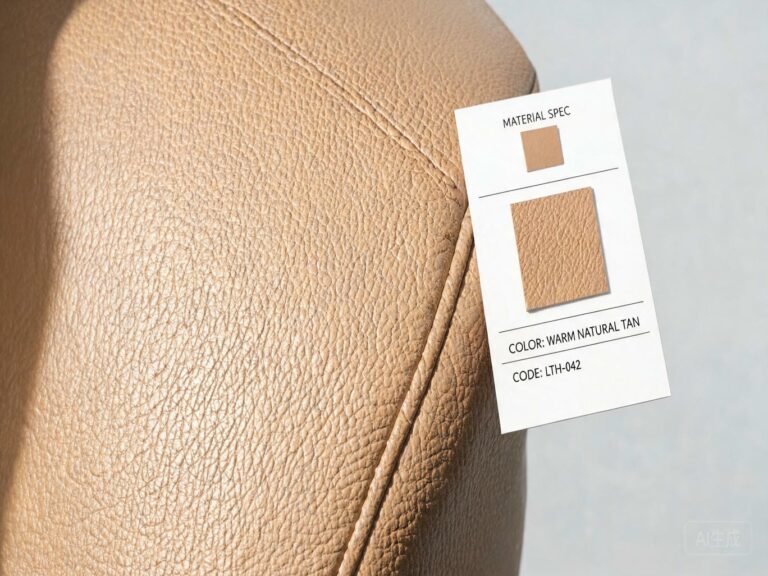
Commercial furniture in hospitality settings requires frequent leather cream application — a recurring cost most buyers overlook at spec stage.
The regulatory direction is unambiguous. EU REACH restrictions on SVHC substances are tightening annually. California Prop 65 adds new chemicals to its warning list every quarter. A furniture specification that depends on chemical-laden cream for longevity is a liability waiting to be flagged — and the cost of switching to compliant cream formulations only adds to the recurring expense.
Leather cream is not a maintenance cost — it is a design flaw tax. The material itself is failing, and the cream is the patch. The real fix is specifying a material that does not fail.
How Silicone Leather Eliminates the Cream Cycle Entirely
Silicone leather does not need cream because it has no oils to lose. The silicone polymer — an inorganic Si-O-Si backbone — does not oxidize, does not evaporate, and does not dry out. Its surface is non-porous, meaning stains, liquids, and body oils sit on top rather than penetrating. A damp cloth removes coffee, wine, ink, and sunscreen without any chemical assistance.
For procurement teams evaluating whether to switch from furniture sofa applications that require leather restoration cream for furniture to a material that does not, the maintenance difference is structural:
- Conditioning: none needed (no animal oils to replenish)
- Stain removal: water and mild detergent only (no solvent-based cleaners)
- UV protection: inherent (1,500+ hours xenon-arc, Grade 4+ color fastness)
- Disinfection: bleach and quaternary ammonium compatible (no surface degradation)
- Annual maintenance cost: $5–10/m²/year versus $28–57 for cream-treated leather

Tensile strength testing confirms that silicone leather’s structural integrity does not degrade over time — eliminating the need for cream-based reinforcement.
In one of our hospitality client projects, a 180-room hotel switched from genuine leather to silicone leather for lobby and restaurant seating. The first-year maintenance budget dropped from $14,200 to $2,800 — an 80% reduction. By year three, the savings had offset the higher initial material cost, and the furniture still looked new. No cream, no conditioner, no special-order cleaning chemicals.
See why silicone leather sofa upholstery resists stains without any cream or conditioner — just water and a cloth.
Leather Cream for Furniture vs Silicone Leather: The 10-Year TCO Verdict
When procurement teams run a furniture leather conditioner cost comparison against silicone leather, the numbers make the decision obvious. The table below models a 100-seat commercial furniture installation (restaurant booths, hotel lobby chairs, and waiting area seating) over a 10-year period:
| Cost Component (10-Year) | Genuine Leather + Cream | Silicone Leather (No Cream) |
|---|---|---|
| Initial material (per m²) | $50–120 | $40–60 |
| Cream/conditioner (10 yr) | $150–300 | $0 |
| Application labor (10 yr) | $80–150 | $0 |
| Replacement cycle | 5–8 years (reupholster) | 10–15+ years (no replace) |
| 10-year total (per m²) | $200–540+ | $90–160 |
The gap widens further when you factor in downtime — genuine leather furniture pulled from service for cream treatment generates zero revenue during treatment. Silicone leather stays in service because maintenance is a 30-second wipe, not a 4-hour conditioning session.

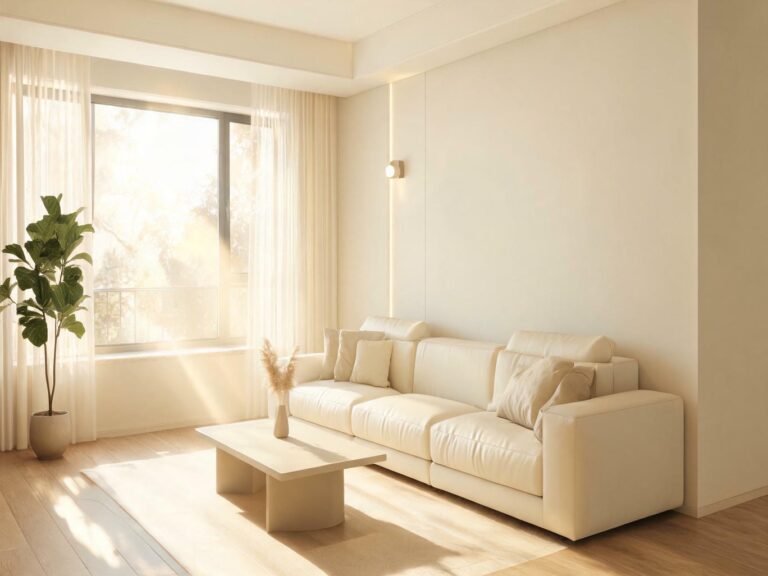
Silicone leather delivers genuine-leather softness without the oil dependency — no cream needed to maintain this hand feel.
Frequently Asked Questions
Does silicone leather need any cream or conditioner?
No. Silicone leather’s polymer structure does not contain the animal oils that genuine leather loses over time. Its non-porous surface resists staining, UV fading, and drying without any topical treatment. Maintenance consists of wiping with water and mild detergent — no specialized products required, ever.
How much does leather cream cost per year for commercial furniture?
For commercial-grade genuine leather furniture, expect $28 to $57 per square meter per year when you include cream product, application labor, and downtime. A 100-seat restaurant with genuine leather booths typically spends $8,400 to $17,100 annually on leather cream and related maintenance. Silicone leather eliminates this cost entirely, reducing annual maintenance to $1,500 to $3,000 for basic cleaning supplies.
Stop Buying Cream — Start Specifying the Right Material
Leather cream for furniture is a $562 million market that exists because the underlying material is failing. Every liter of conditioner applied is an admission that the upholstery cannot sustain itself. Silicone leather changes the equation: a material that maintains its own surface for 10 to 15 years, with zero cream, zero conditioners, and zero VOC exposure.
For procurement teams writing furniture specifications for 2026 and beyond, the question is not which cream to buy — it is whether the material on the spec sheet should need cream at all.
Get a Furniture TCO Comparison
About TOPSUN
TOPSUN supplies silicone leather for furniture upholstery to hospitality, residential, and commercial furniture manufacturers across European and North American B2B markets.
Maintenance-free surfaces verified at 200,000+ Martindale cycles, zero-VOC formulation passing EU REACH and FDA 21 CFR standards, and 100+ custom textures — with full OEM color matching from our in-house coating line.