A furniture OEM picks synthetic leather upholstery based on a $4.50/m² price gap — and loses $180,000 in warranty replacements five years later. That is not a hypothetical. It is the procurement trap that costs more than any unit-price negotiation saves. When you compare PU, PVC, and silicone on acquisition cost alone, PVC always wins. But PVC cracks at year three. PU peels at year four. Silicone lasts ten. The real metric is not what you pay per meter — it is what each meter costs over the contract lifecycle. Here is the TCO breakdown procurement teams need before signing the next upholstery purchase order.
Request Upholstery TCO Sample Kit
Why Acquisition Price Misleads Synthetic Leather Upholstery Buyers
Most procurement departments structure upholstery sourcing around a single metric: cost per square meter. PVC synthetic leather upholstery comes in at $2.80–$4.20/m², PU at $4.50–$8.00/m², and silicone at $9.00–$15.00/m². On that spreadsheet, PVC looks like the clear winner. But that number captures roughly 15% of the actual cost picture — it ignores replacement cycles, maintenance labor, warranty claim rates, and end-of-life disposal. When you run the full silicone vs PU vs PVC comparison through a TCO model, the ranking reverses.
The missing cost driver is replacement frequency. A 500-unit hotel furniture refresh using PVC upholstery at $3.50/m² costs $17,500 in material. But PVC’s 2–5 year service life means the hotel replaces it twice within a 10-year contract — pushing material cost to $52,500, plus $28,000 in reupholstery labor. Silicone leather at $12.00/m² costs $60,000 upfront but survives the full decade with zero replacement. The “expensive” option is 14% cheaper over the contract term.

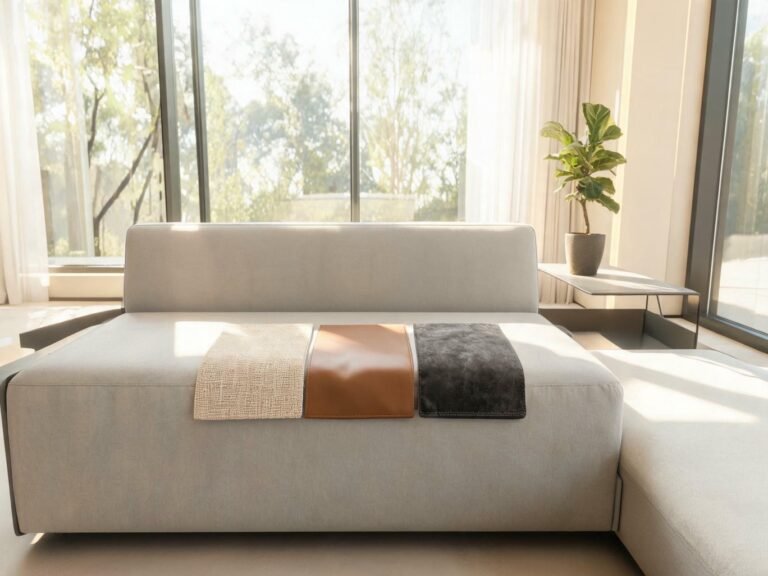
Martindale abrasion testing determines how many wear cycles a synthetic leather upholstery surface survives before visible degradation.
Warranty claims tell the same story from the liability side. A commercial furniture brand we worked with tracked five years of field returns across three upholstery materials. PVC-backed warranty claims ran at 12.4% annually — mostly cracking and plasticizer migration. PU claims sat at 7.8% — predominantly peeling at stress points. Silicone leather claims were under 1.2%, limited to stitching failures rather than surface degradation. When warranty reserve allocations are factored in, the commercial furniture upholstery TCO gap widens further.
Synthetic Leather Upholstery Durability: 10-Year Cost Reality
Durability is the single largest TCO variable for synthetic leather upholstery. Three lab metrics predict field performance accurately: Martindale abrasion cycles, hydrolysis resistance hours, and UV stability hours. Together they explain why PVC fails at year three, PU at year four, and silicone at year ten — and the numbers are not close.
| Material | Martindale Cycles | Hydrolysis (hrs) | UV Resistance (hrs) | Service Life | 10-Yr Cost/m² |
|---|---|---|---|---|---|
| Silicone leather | 100,000+ | 1,000+ | 500+ | 10+ years | $12.00 |
| PU leather | 30,000–50,000 | 200–400 | 100–200 | 3–7 years | $14.00–$24.00 |
| PVC leather | 20,000–40,000 | 150–300 | 200–300 | 2–5 years | $10.50–$21.00 |
TCO takeaway: PVC’s $3.50/m² acquisition advantage evaporates by year five. At the 10-year mark, PVC costs up to 75% more than silicone per square meter when replacement cycles and labor are included. PU falls in between — cheaper than PVC on lifespan but still 17–100% more expensive than silicone over a decade.
Hydrolysis resistance is the metric most buyers underestimate. In humid environments — coastal resorts, tropical markets, indoor swimming pool furniture — PU’s ester bonds break down when exposed to moisture over 200–400 hours. The surface turns tacky, then peels. PVC loses plasticizers to humidity, turning brittle and cracking along stress lines. Silicone’s silicon-oxygen backbone is inherently hydrolysis-immune, which is why furniture OEMs switching to silicone leather see the most dramatic TCO improvements in high-humidity regions.

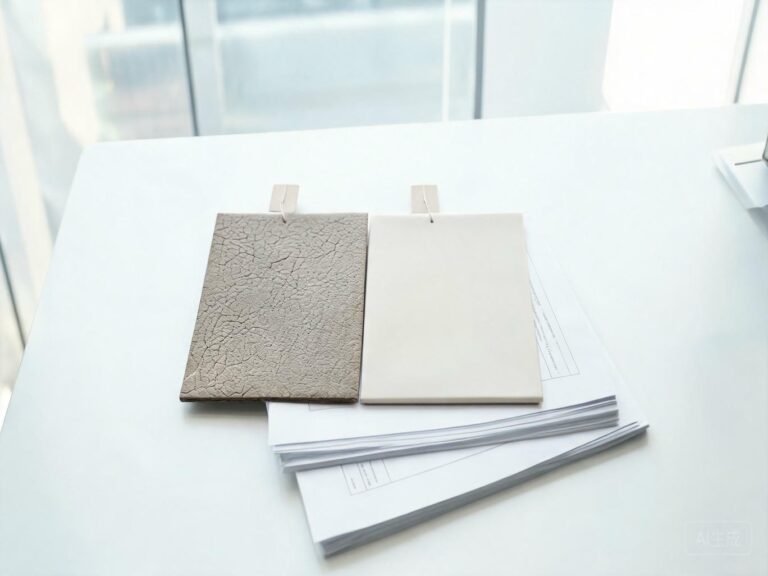
Scratch resistance testing validates whether upholstery surfaces survive daily commercial wear without visible marking.
VOC and Compliance: What Enclosed Cabin Specs Demand
VOC compliance is no longer optional for synthetic leather upholstery — it is specified in contract furniture standards, automotive interior regulations, and healthcare procurement requirements. PVC off-gasses phthalates throughout its lifecycle. PU releases unreacted isocyanate residues and DMF solvent traces during the first 6–18 months of installation. Both fail the indoor air quality thresholds that the U.S. EPA defines for volatile organic compounds in enclosed environments.
Silicone leather emits zero VOCs — not because of a post-treatment scrubber, but because the platinum-cured addition reaction produces no chemical byproducts. There is nothing to off-gas. For automotive cabin interiors, this means passing OEM VOC standards (VDA 278, JAMA) without engineering workarounds. For healthcare and senior living furniture, it means meeting silicone leather compliance standards without chemical sensitivity risk to patients or residents.

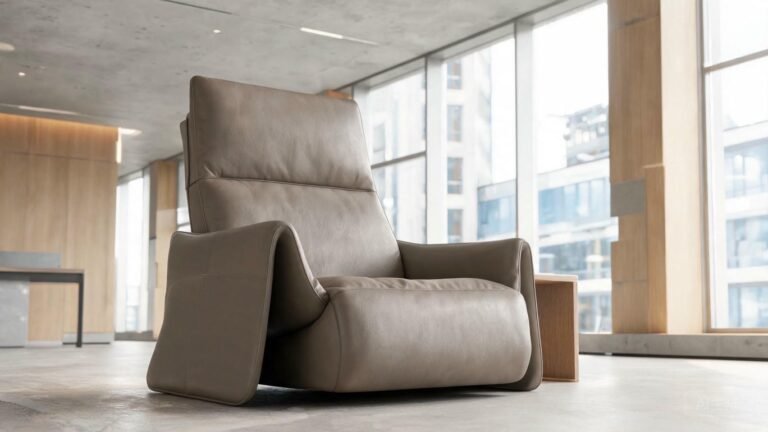
Commercial furniture upholstery in contract environments demands both durability and VOC compliance for indoor air quality certification.
For EU markets, REACH and PAHs registration adds another compliance layer. PVC leather typically requires phthalate declarations under REACH regulation — and many PVC formulations still use restricted phthalates (DEHP, BBP, DBP) that require substitution. Silicone leather carries REACH registration with zero restricted substances, simplifying the compliance documentation chain for furniture and automotive buyers shipping into the EU.
Watch the durability comparison test showing how silicone, PU, and PVC upholstery respond to identical abrasion, scratch, and hydrolysis stress.
Specifying Upholstery That Survives Contract Warranties
Contract furniture warranties expose weak upholstery material faster than any lab test. A 10-year furniture warranty backed by PVC upholstery is a financial liability — the material will not survive the warranty period. A 10-year warranty backed by silicone leather is an asset, because the material outlasts the contract. When procurement teams write upholstery specifications into RFPs, these are the four data points that determine whether the warranty holds:
1. Martindale abrasion minimums. Specify ≥50,000 cycles for commercial upholstery, ≥100,000 for high-traffic contract seating. PVC tops out at 40,000; PU reaches 50,000 on its best grades; silicone leather exceeds 100,000. Set the threshold and let materials qualify or disqualify themselves.
2. Hydrolysis resistance hours. For humid or tropical markets, demand ≥500 hours. Only silicone leather passes this threshold reliably. PU degrades at 200–400 hours; PVC plasticizer loss begins at 150 hours. Without this spec in the RFP, suppliers will ship material that fails in monsoon climates.
3. VOC emission certification. Require third-party VOC test reports — not supplier self-declarations. For automotive, specify VDA 278 compliance. For healthcare furniture, demand GREENGUARD Gold or equivalent. Silicone leather product specifications include zero-VOC documentation by default because the chemistry produces nothing to emit.
4. Flame retardancy inherent vs additive. PVC is self-extinguishing but achieves it through halogenated additives that release toxic smoke. PU requires separate flame-retardant treatment. Silicone leather is inherently flame-retardant — it self-extinguishes without additives, producing minimal smoke and no halogen gases. For custom upholstery texture specifications, this means flame compliance without sacrificing surface quality.

Color fastness testing verifies that upholstery surfaces retain visual quality through UV exposure and cleaning cycles — critical for warranty defense.
Frequently Asked Questions
Which synthetic leather upholstery lasts the longest?
Silicone leather lasts 10+ years in commercial upholstery applications, verified by 100,000+ Martindale abrasion cycles and 1,000+ hours of hydrolysis resistance. PU leather typically lasts 3–7 years before peeling or surface degradation. PVC leather lasts 2–5 years before cracking and plasticizer migration. In real-world contract furniture deployments, silicone is the only material that consistently outlasts the warranty period.
Is silicone leather upholstery cost-competitive with PU and PVC?
On acquisition cost, no — silicone leather runs $9–$15/m² versus PU at $4.50–$8.00 and PVC at $2.80–$4.20. On 10-year total cost of ownership, yes — silicone is 14–75% cheaper than PVC and 17–100% cheaper than PU when replacement cycles, labor, and warranty reserves are included. For contracts under 5 years, PU may deliver adequate value. For anything beyond 7 years, silicone’s TCO advantage is decisive.
What warranty period should I specify for contract furniture upholstery?
For commercial furniture, specify a 10-year warranty against surface cracking, peeling, and color degradation — but only if the upholstery material can survive it. PVC-backed warranties above 5 years are a liability. PU-backed warranties above 7 years carry risk. Silicone leather-backed 10-year warranties are defensible because the material’s service life exceeds the contract term. Match the warranty period to the material’s verified durability data, not to market expectations.
Stop Sourcing on Unit Price Alone
Synthetic leather upholstery procurement has been trapped in a unit-price spiral for too long. The material that costs the least per meter on the quote sheet costs the most over the contract lifecycle — every time. PVC’s $3.50/m² advantage becomes a $10.50/m² liability by year ten. PU’s middle-ground position looks reasonable until warranty claims and humidity-driven peeling erode the savings. Silicone leather’s higher upfront cost is an investment in a replacement-free decade. When your furniture contract, automotive interior program, or healthcare facility refresh spans more than five years, the TCO math is unambiguous — and it favors the material that survives.
About TOPSUN
TOPSUN manufactures solvent-free silicone leather for contract furniture, automotive interior, and healthcare upholstery applications — delivering 100,000+ Martindale cycles, zero VOC emissions, and 10+ year service life that fundamentally changes the total cost of ownership equation for B2B procurement teams.
100,000+ Martindale abrasion cycles · 1,000+ hours hydrolysis resistance · Zero VOC (platinum-cured, solvent-free) · REACH and PAHs registered · Inherent flame retardancy (no halogen additives) · 8+ years serving 30+ countries