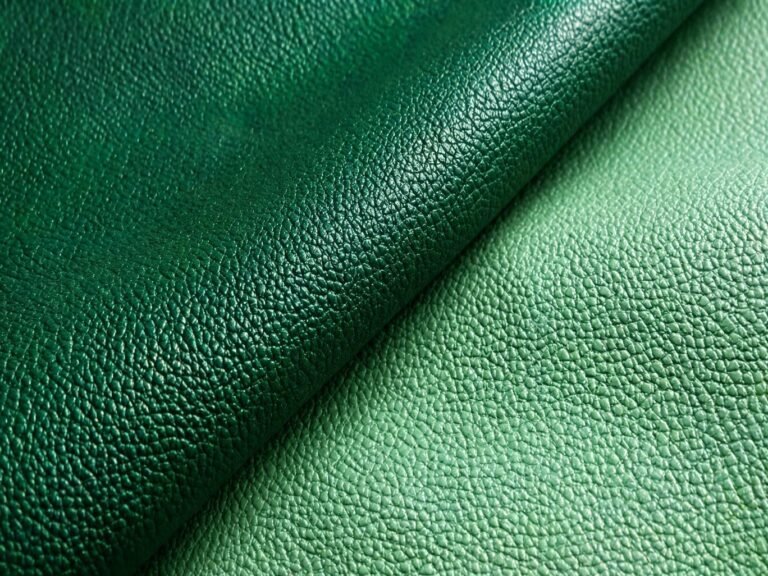
A procurement team receives a sample labeled “e leather” from a new supplier. The datasheet claims 70% recycled content, zero waste, and “eco-friendly” status. On paper, it looks like a win for sustainability targets and cost reduction alike. But here’s the catch — without ISO 14040 lifecycle data and third-party certification, those numbers are marketing copy, not verified performance. The term “e leather” covers a surprisingly broad range of engineered, recycled, and eco-branded leather materials, and not all of them perform the same way under real-world conditions.
This guide breaks down what e leather actually is, how it’s manufactured, where it performs well, and where it falls short — so you can make sourcing decisions based on data rather than claims. We’ll also compare it directly against silicone leather to help you evaluate which material fits your application’s compliance and durability requirements.
Download Material Comparison Guide
What Is E Leather? Defining the Engineered Leather Category
The term “e leather” doesn’t refer to a single standardized material. It’s an umbrella label that B2B buyers encounter across at least three distinct product categories: engineered leather (rebonded leather fibers bound with polymers), eco-branded leather (genuine leather marketed with sustainability credentials), and recycled leather (post-industrial or post-consumer leather waste reconstituted into sheet material). Understanding which version a supplier is offering is the first step in any sourcing evaluation.
Engineered leather — the most common interpretation — is manufactured by recovering leather fibers from tannery offcuts, trimmings, and shavings that would otherwise go to landfill. These fibers are mechanically processed, mixed with a binding polymer (typically polyurethane or acrylic-based), and pressed into continuous sheets that mimic the look and feel of genuine leather. The result is a material that contains real leather fiber but is fundamentally a reconstituted composite, not a natural hide.

Raw material lifecycle tracking is essential for verifying recycled content claims in e leather sourcing
The distinction matters because material composition directly determines performance. A product with 70% leather fiber and 30% PU binder behaves differently from one with 50% fiber and 50% binder. Yet many suppliers present “e leather” as a single category without disclosing the fiber-to-binder ratio — making it difficult for procurement teams to compare options apples-to-apples. When evaluating what e leather is for your application, always request the full material composition breakdown, not just the recycled content percentage.
How E Leather Is Made: The Manufacturing Process Explained
The e leather manufacturing process typically follows four stages. First, tannery waste — shavings, trimmings, and offcuts — is collected and sorted by fiber type and quality. Second, the waste is mechanically defibrated, breaking solid leather pieces down into individual fibers. Third, these fibers are blended with a water-based polymer binder and formed into a web or mat using hydroentanglement or needle-punching techniques. Finally, the material is dried, pressed, and finished with a surface coating to enhance durability and appearance.

Production process documentation helps buyers verify manufacturing claims and quality consistency
The sustainability story is legitimate — diverting tannery waste from landfill is a real environmental benefit. But the process introduces a critical variable: the binding polymer. Most e leather products use PU-based binders, which means they inherit some of PU’s well-documented weaknesses, including hydrolysis susceptibility and VOC emissions. The recycled leather manufacturing process varies between suppliers, and the binder chemistry is rarely disclosed in standard product literature.
Key insight: The polymer binder in e leather typically represents 20–40% of the final material weight. This binder determines the material’s hydrolysis resistance, flexibility retention, and aging behavior — yet it’s the least documented component in most supplier datasheets.
See how certified eco-friendly leather materials are tested and verified in factory conditions
E Leather Durability and Performance: What Testing Reveals
In our experience testing reconstituted leather materials, the initial hand-feel and appearance of e leather can be genuinely impressive. The problem emerges after 6–18 months of real-world use. The polymer binder that holds the leather fibers together is the Achilles’ heel of the entire material category. When exposed to moisture, UV radiation, or repeated flexing, the binder begins to degrade — causing fiber separation, surface cracking, and loss of structural integrity.

Physical testing reveals the gap between initial appearance and long-term performance in engineered leather
One of our furniture manufacturing clients tested an e leather product for a contract sofa project. Initial Martindale abrasion results showed 25,000 cycles — acceptable for residential use. But after 500 hours of UV exposure testing (ISO 105-B02), the surface showed visible cracking and color shift that genuine leather and silicone leather did not exhibit under identical conditions. The binder had photodegraded, undermining the fiber matrix. This is the kind of failure mode that doesn’t show up in a standard datasheet but determines whether a product survives three years in a commercial lobby.
The eco leather category faces similar challenges. Water resistance is another concern: while the leather fibers themselves absorb moisture, the polymer binder can delaminate under prolonged humidity exposure. For applications in hospitality, healthcare, or marine environments, this limitation is significant.

Cost-per-year analysis reveals that lower upfront pricing doesn’t always translate to better lifecycle value
E Leather vs Silicone Leather: A Compliance-Focused Comparison
When B2B buyers evaluate e leather against silicone leather and other alternatives, the comparison often comes down to lifecycle performance rather than initial cost. E leather wins on sustainability narrative (it uses waste material) and typically offers a lower upfront price point. But silicone leather wins decisively on the metrics that determine long-term value in demanding applications.
| Attribute | E Leather | Genuine Leather | Silicone Leather |
|---|---|---|---|
| Material origin | Recycled leather fibers + polymer binder | Animal hide (chrome or vegetable tanned) | 100% silicone polymer on fabric substrate |
| Recycled content | 60–80% (varies by supplier) | 0% | 0% (but fully recyclable) |
| Hydrolysis resistance | Poor to moderate (binder-dependent) | Moderate | Immune |
| UV stability | Moderate (binder photodegrades) | Moderate to good | Excellent |
| VOC emissions | Variable (binder-dependent) | Low (post-tanning) | Zero (solvent-free process) |
| Typical commercial lifespan | 3–6 years | 8–15 years | 10–15+ years |
The data tells a clear story. E leather’s polymer binder creates a structural vulnerability that doesn’t exist in silicone leather. Silicone’s Si-O backbone is inherently resistant to hydrolysis, UV radiation, and chemical exposure — properties that come from the material’s molecular structure, not from surface treatments or coatings that can wear off. For applications where replacement costs are high (aviation seating, automotive interiors, medical furniture), this difference translates directly into total cost of ownership.
Sourcing E Leather: Certifications, Cost & Supply Chain Verification
If you’re evaluating e leather for your sourcing portfolio, here’s what to verify before placing a purchase order. The sustainability claims that make e leather attractive are only as credible as the certifications behind them.
First, request an ISO 14040-compliant lifecycle assessment (ISO 14040 standard). This provides a cradle-to-grave environmental impact analysis and verifies that the recycled content and waste reduction claims are independently audited, not self-reported. Second, check for Leather Working Group (LWG) certification (LWG certification directory), which audit environmental stewardship across the leather supply chain. Third, demand full disclosure of the binder chemistry — specifically whether it’s solvent-based or water-based, and what VOC emissions profile it carries.

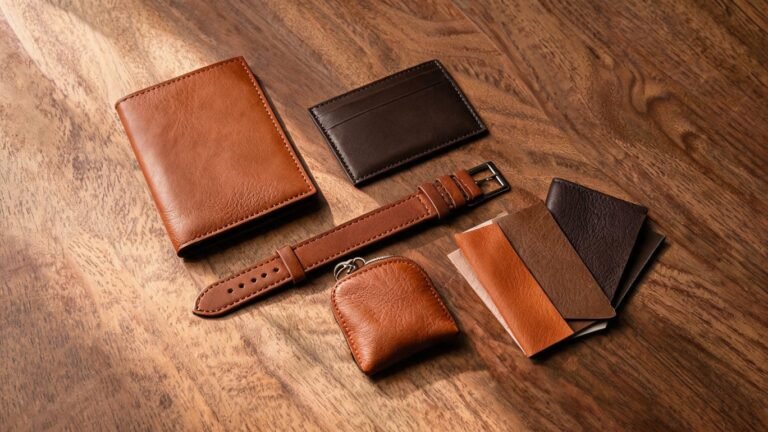
Comprehensive swatch evaluation allows buyers to assess color consistency, texture quality, and material uniformity
Cost-wise, e leather typically lands between PVC leather and mid-grade PU leather on a per-yard basis. The pricing advantage over genuine leather is real — but calculate cost per year of service life, not just cost per yard. A material that costs 30% less upfront but lasts half as long isn’t a saving. For a sustainable leather industry that’s moving toward circular economy principles, lifecycle cost is the metric that matters.
Frequently Asked Questions
Is e leather the same as bonded leather?
They share a similar manufacturing concept — both reconstitute leather fibers with polymer binders — but bonded leather typically contains lower-quality fibers and higher binder ratios, resulting in inferior durability. E leather generally positions itself as a premium engineered product with higher fiber content and more controlled manufacturing. However, there’s no industry standard defining the boundary between the two, so always verify the actual fiber-to-binder ratio rather than relying on the product name.
Can e leather be used for outdoor or marine applications?
Not recommended. The polymer binders in e leather are susceptible to UV degradation and moisture absorption, making them unsuitable for sustained outdoor or marine exposure. For these environments, silicone leather is the appropriate choice due to its inherent UV stability, hydrolysis immunity, and salt-water resistance.
Making the Right Material Decision
E leather represents a genuine step forward in material sustainability — diverting tannery waste from landfill and reducing reliance on virgin leather is a real environmental benefit. But sustainability claims must be weighed against performance realities. For low-stress applications with short product lifecycles (fast fashion, promotional items, disposable goods), e leather can be a sound choice. For demanding B2B applications where material failure means costly replacement, regulatory non-compliance, or brand damage, the polymer binder vulnerability makes it a riskier proposition.
The most effective sourcing strategy is to evaluate e leather and silicone leather as complementary materials, not competitors. Use e leather where its sustainability story and cost advantage align with your product’s lifespan expectations. Choose silicone leather where hydrolysis resistance, UV stability, and verified compliance data are non-negotiable. The key is making that decision with full transparency on material composition, testing data, and certification documentation — not on marketing labels alone.
Request Performance Data Sheets & Samples
About TOPSUN
TOPSUN manufactures solvent-free silicone leather for B2B applications requiring verifiable long-term performance in automotive interiors, contract furniture, and medical equipment — delivering the compliance documentation that engineered leather alternatives often lack.
Our materials undergo ISO 12947 abrasion testing (100,000+ cycles), ISO 105-B02 UV color fastness verification, REACH SVHC compliance, and zero-VOC emission certification — providing the independent test data your procurement team needs.