As brands and consumers increasingly demand sustainable materials, the environmental cost of faux leather polyurethane fabric is coming under closer scrutiny. What was once marketed as a cruelty-free alternative to genuine leather now faces questions of its own — about plastic pollution, toxic chemical additives, microplastic shedding, and end-of-life disposal. For sustainability managers trying to navigate the complex landscape of material choices, the question is no longer “leather or faux leather?” It’s “which alternative actually has the lower environmental footprint?”
In this deep dive, we’ll examine the environmental challenges of PU-based faux leather, compare it with other material options, and explore what genuinely sustainable alternatives look like for brands committed to reducing their environmental impact.
View Our Sustainability Commitment
What Is Faux Leather Polyurethane Fabric?
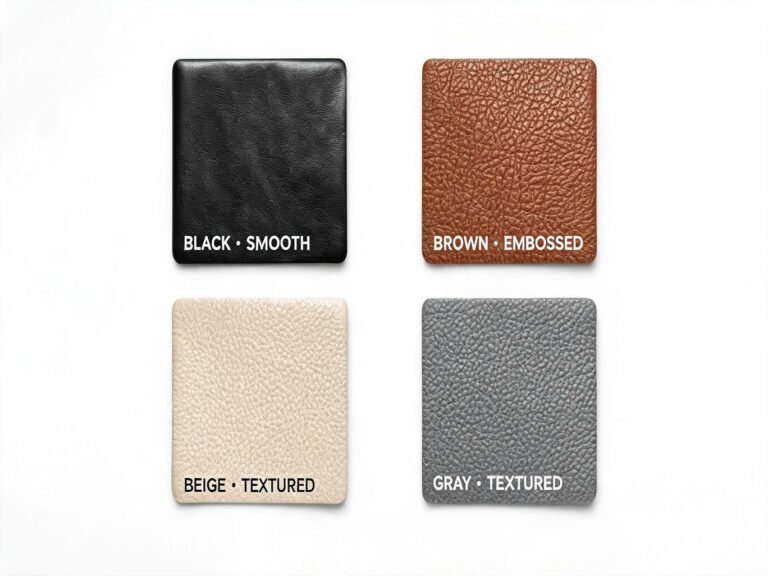
Before we get into the environmental impact, let’s clarify what we’re talking about. Faux leather polyurethane fabric — often called PU leather, vegan leather, or artificial leather — is a synthetic material made by coating a fabric backing (usually polyester or cotton) with a layer of polyurethane. The PU layer is embossed with a leather-like grain pattern and treated with various chemical additives to achieve the desired feel, color, and performance properties.
There are two main categories of PU faux leather:
- Solvent-based PU: The traditional production method uses DMF (dimethylformamide) and other solvents to dissolve the polyurethane resin before coating it onto the fabric. This is the most common type but also the most environmentally problematic.
- Water-based PU: A newer formulation that uses water instead of organic solvents. It’s better for factory workers and local air quality, but the base polymer is still polyurethane plastic — so the end-of-life issues remain.
It’s important to note that “vegan leather” is a marketing term, not a material definition. It can refer to PU, PVC, cork, pineapple leather, mushroom leather, or any number of other materials. The environmental impact varies enormously depending on which one you’re actually talking about.

Modern automated production for sustainable materials — cleaner manufacturing processes are an important part of reducing overall environmental impact.
The Environmental Problems with PU Faux Leather
PU faux leather has several significant environmental issues that are often overlooked in marketing materials. Let’s go through them one by one.
It’s Plastic — and It Doesn’t Go Away
Polyurethane is a type of plastic. Like all plastics, it’s made from fossil fuels, and it doesn’t biodegrade. When a PU faux leather product reaches the end of its life, it goes to a landfill where it will persist for hundreds of years, slowly breaking down into smaller and smaller pieces — but never truly going away. The “vegan” label might make you feel better about not using animal products, but from a plastic pollution perspective, PU faux leather is essentially the same as any other plastic product.
Microplastic Shedding During Use
A less discussed but potentially more insidious problem is microplastic shedding. Every time you sit on a PU sofa, wear a PU jacket, or clean a PU bag, tiny particles of polyurethane break off and enter the environment. These microplastics end up in our water systems, our soil, and eventually our food chain. Research is still emerging on the full extent of this problem, but early studies suggest that synthetic textiles are one of the largest sources of microplastic pollution in the oceans.
Toxic Chemical Additives
PU faux leather isn’t just polyurethane — it’s a complex cocktail of chemical additives. Plasticizers to make it flexible. Flame retardants for safety compliance. Pigments and dyes for color. UV stabilizers to prevent fading. Biocides to prevent microbial growth. Many of these additives are known or suspected endocrine disruptors, carcinogens, or reproductive toxins. Some — like certain phthalate plasticizers — have already been banned in children’s products but are still used in adult furniture and accessories. These chemicals can leach out during the product’s life and end up in household dust, skin contact, and eventually the broader environment.
Solvent Pollution from Manufacturing
Traditional solvent-based PU production uses DMF (dimethylformamide), a chemical that’s toxic to factory workers and harmful to the environment when released as air or water pollution. While many factories in developed countries have DMF recovery systems, factories in lower-cost manufacturing regions may not — meaning the “cheap” PU products you buy are often cheap because someone else is paying the environmental and health cost. Water-based PU is better in this regard, but it’s still less common and often more expensive.
Sustainability data point: A 2023 lifecycle analysis study compared the environmental impact of genuine leather, PU faux leather, and silicone leather across multiple categories including carbon footprint, water use, toxic chemical release, and end-of-life impact. PU performed poorly across multiple metrics, particularly in toxic chemical use and plastic pollution. The full study, published in the Journal of Cleaner Production, is worth reading if you’re evaluating material options for a sustainability program.
Comparing Sustainable Alternatives
So if PU faux leather isn’t as sustainable as the marketing suggests, what are the alternatives? The answer depends on your priorities — whether you’re optimizing for animal welfare, carbon footprint, plastic reduction, toxic chemical elimination, or durability. Let’s compare the main options.
| Material | Plastic-Free? | Low Chemical? | Durability | Recyclable? |
|---|---|---|---|---|
| Genuine leather | Yes | Moderate (tanning) | High (10-20+ years) | Biodegradable |
| PU faux leather | No (100% plastic) | Low (many additives) | Low-Med (2-5 years) | No |
| PVC vinyl | No (worse plastic) | Very low (phthalates) | Medium | No |
| Cork / pineapple | Partially (PU binder) | Moderate | Low (fashion use only) | Partially |
| Silicone leather | No (inorganic polymer) | High (inert, no plasticizers) | Very high (10+ years) | Limited (some grades) |
A few important observations from this comparison: first, there’s no perfect material — every option involves trade-offs. Second, PU faux leather doesn’t win on any environmental metric except perhaps being animal-free — and even there, the environmental cost is significant. Third, the most sustainable choice depends heavily on your specific use case and priorities.

Sustainable material selection requires looking at the full lifecycle — from raw material extraction through manufacturing, use, and end-of-life disposal.
Eco-friendly material innovation — how silicone leather is reducing environmental impact compared to traditional PU and PVC alternatives.
Why Silicone Leather Is a Better Environmental Choice
Silicone leather isn’t a perfect material — no material is — but it addresses many of the environmental problems that plague PU faux leather. Here’s how it compares on the key sustainability metrics.
Inert Chemistry Means No Toxic Additives
Silicone is an inorganic polymer made from silica (sand), oxygen, carbon, and hydrogen. It’s inherently stable and inert, which means it doesn’t need plasticizers, stabilizers, biocides, or other chemical additives to perform. What you see is what you get — pure silicone with pigment for color. This is a huge difference from PU, which relies on a complex cocktail of additives to achieve its performance characteristics. Fewer chemicals in the material means fewer chemicals released into the environment during production, use, and disposal.
Longer Lifespan = Less Material Overall
One of the most underrated environmental benefits of silicone leather is its durability. A product made with silicone leather might last 2–3 times longer than the same product made with PU faux leather. When you factor in that longer lifespan, the per-year environmental impact drops dramatically. It’s the classic “buy less, buy better” principle applied to material selection. For brands focused on circular economy goals, extending product lifespan is one of the highest-leverage moves you can make.
Low VOC and Clean Manufacturing
Silicone leather production doesn’t require the heavy solvents that traditional PU production does. The manufacturing process is cleaner, with lower VOC emissions and less hazardous waste. This is better for factory workers, better for local communities, and better for the global environment. It also means the finished product off-gasses essentially nothing — which is why silicone leather is increasingly specified for indoor air quality-focused projects like hospitals, schools, and premium office buildings.
Food-Safe and Hypoallergenic
Because silicone is so chemically inert, it’s widely used in food contact applications (think baking mats, baby bottle nipples, kitchen utensils). This food-safe level of purity means silicone leather products don’t leach chemicals into the environment or onto people’s skin. For products that have close skin contact — like furniture, bags, footwear, and baby play mats — this is both an environmental benefit and a human health benefit.
Honest caveat: Silicone leather is still a synthetic material, and it’s not biodegradable in the traditional sense. It won’t break down in a landfill the way genuine leather or cotton would. However, because it lasts so much longer than PU, and because it doesn’t shed toxic microplastics or chemical additives, its per-year environmental impact is typically lower. The ideal material for any application depends on your specific priorities and use case — we’re happy to walk you through the trade-offs for your project.
Sustainability Is About Trade-Offs, Not Perfect Solutions
The uncomfortable truth about sustainable materials is that there’s no perfect choice. Every material — whether animal-based, plant-based, or synthetic — has environmental impacts. The job of a sustainability manager isn’t to find a mythical “zero-impact” material; it’s to understand the trade-offs and make the best choice for the specific application and brand values.
What we can say with confidence is that PU faux leather’s reputation as a sustainable material is largely undeserved. It’s plastic, it’s full of chemical additives, it doesn’t last very long, and it pollutes throughout its lifecycle. If your brand is moving away from PU for sustainability reasons, silicone leather is one of the strongest alternatives available — especially for applications where durability, cleanability, and low chemical content matter.
If you’d like to discuss the environmental trade-offs for your specific application or get detailed lifecycle data for our materials, our sustainability team is available to help.
Talk to Our Sustainability Team
About TOPSUN
TOPSUN is committed to transparency in material sustainability. We provide detailed environmental data and work with brands to help them make informed material choices that align with their sustainability goals.
REACH-compliant formulations, RoHS-certified materials, low-VOC per ISO 10580 and VDA 277, food-contact safe grades per FDA and LFGB, third-party lifecycle analysis available, ongoing R&D into recyclable and circular material solutions.