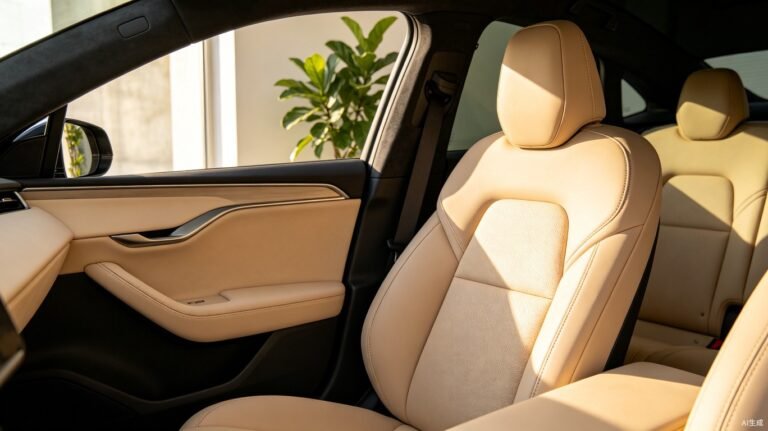
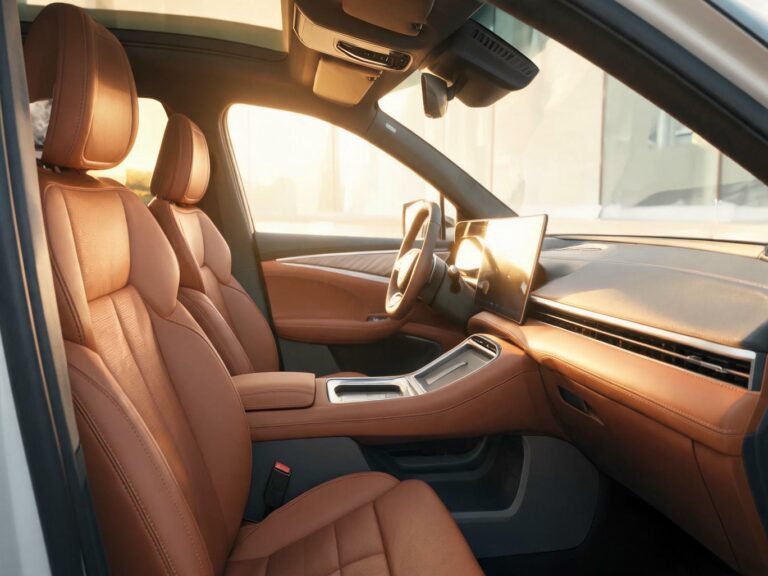
The automotive industry’s sustainability push has moved well beyond powertrains. As EV adoption accelerates, OEMs are realizing that the interior is the next major frontier for environmental improvement. Sustainable car interior materials now influence brand perception, regulatory compliance, and even resale value. Tesla’s decision to eliminate leather entirely wasn’t just a marketing move — it signaled a broader industry direction that material suppliers need to understand.
What “Sustainable” Actually Means for Car Interiors
Sustainability in automotive interiors isn’t one thing — it’s a matrix of environmental considerations:
- Material composition — is it free from harmful chemicals (PVC, plasticizers, heavy metals)?
- Manufacturing emissions — how much energy and CO₂ goes into production?
- Service life — does the material last the vehicle’s lifetime, or does it need replacement?
- End-of-life recyclability — can the material be recycled or will it go to landfill?
- In-cabin air quality — does the material emit VOCs or formaldehyde?

According to the Ellen MacArthur Foundation, the automotive sector is one of the largest contributors to material waste — and interior components account for a significant share of that. The eco-friendly attributes of silicone leather address several of these sustainability dimensions simultaneously.
Request Sustainable Material Samples
How Interior Materials Compare on Sustainability
| Dimension | Silicone Leather | Genuine Leather | PU/PVC |
|---|---|---|---|
| PVC / Plasticizer Free | Yes | Yes (but tanning chemicals) | PVC contains plasticizers |
| VOC Emission | Near zero | Low (after curing) | Moderate (off-gassing) |
| Service Life | 10–15 years | 8–12 years | 3–7 years |
| Animal-Derived | No | Yes | No |
| REACH / RoHS Compliant | Yes | Yes | PVC may have SVHCs |
The service life argument: Sustainability isn’t just about what goes into the material — it’s about how long it lasts. A material that needs replacement at year 5 generates twice the environmental impact of one that lasts 10 years, even if the 5-year material starts with a “greener” composition. Silicone leather’s longevity is itself a sustainability advantage.
In-Cabin Air Quality: The Hidden Sustainability Metric

Interior air quality is increasingly regulated — and for good reason. The European REACH regulation restricts over 200 substances in automotive interiors, and China’s GB/T 27630 sets strict VOC limits for new vehicles.
PU and PVC materials are the primary contributors to in-cabin VOCs because their manufacturing involves solvents and plasticizers that slowly off-gas. In hot weather, this off-gassing accelerates — exactly when occupants are most affected. Silicone leather’s inorganic chemistry means no solvent evaporation and no plasticizer migration. The zero VOC properties make it a straightforward compliance choice.
For vegan car interior programs, silicone leather checks both the sustainability and animal-free boxes. It provides a premium feel without the environmental footprint of animal agriculture or the chemical concerns of PVC.
What Sourcing Teams Should Prioritize in 2026
If you’re building a sustainable interior material specification, here’s a practical evaluation framework:
- Start with regulatory compliance — REACH, RoHS, GB/T 27630, and any market-specific requirements. Non-compliant materials are non-starters regardless of other sustainability claims
- Request full material declarations (FMD) — understand every substance in the material stack, not just the surface layer
- Evaluate total lifecycle impact — manufacturing footprint + service life + end-of-life. A longer-lasting material often has a lower total environmental cost
- Ask about the supplier’s own sustainability practices — energy use, waste management, wastewater treatment. The leather industry sustainability landscape is shifting rapidly
Download Sustainable Material TDS
 Frequently Asked Questions
 Frequently Asked Questions
Is silicone leather biodegradable?
No. Like most synthetic materials, silicone leather is not biodegradable. However, its long service life (10–15 years) means less frequent replacement and lower cumulative waste. The sustainability case for silicone leather rests primarily on durability, non-toxicity, and VOC-free performance rather than biodegradability.
How does silicone leather compare to bio-based materials like Piñatex or mushroom leather?
Bio-based materials have strong sustainability narratives but often face challenges in automotive durability testing, consistency at scale, and cost. They’re excellent for fashion and accessories. For automotive interiors — where 10+ year durability, fogging compliance, and batch consistency are required — silicone leather currently offers a more production-ready solution.
Can sustainable materials meet luxury car interior standards?
Absolutely. The definition of “luxury” in automotive interiors is shifting from “genuine animal leather” to “premium feel with environmental responsibility.” Several luxury brands now position non-animal materials as a premium choice, not a compromise. Silicone leather’s soft-touch feel, rich color depth, and consistent quality meet or exceed the tactile expectations of luxury buyers.
Sustainability Is Now a Sourcing Requirement, Not a Differentiator
The shift toward sustainable car interior materials isn’t optional anymore. Regulatory pressure, consumer expectations, and OEM sustainability targets are all moving in the same direction. The question for sourcing teams isn’t whether to adopt greener materials — it’s which ones deliver on their promises without compromising performance, cost, or production feasibility.
Silicone leather occupies a practical middle ground: it’s not marketed as a miracle “eco-material,” but it delivers measurable sustainability benefits — zero VOC, no PVC/plasticizers, long service life, and animal-free composition — while meeting every technical requirement for automotive interior use.
Explore Our Sustainable Interior Solutions
About TOPSUN
TOPSUN manufactures zero-VOC, PVC-free silicone leather for automotive interiors. Our production process is solvent-free, and we provide full material declarations and REACH compliance documentation for every product line.
Certifications: REACH, RoHS, ISO 9001, FDA (for food-contact applicable grades). Testing: DIN 75201, QUV weathering, ISO 12947 abrasion.