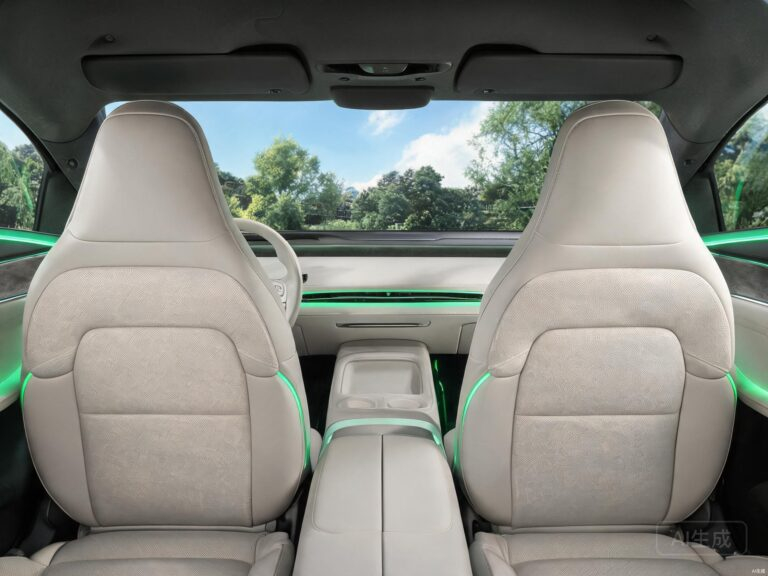
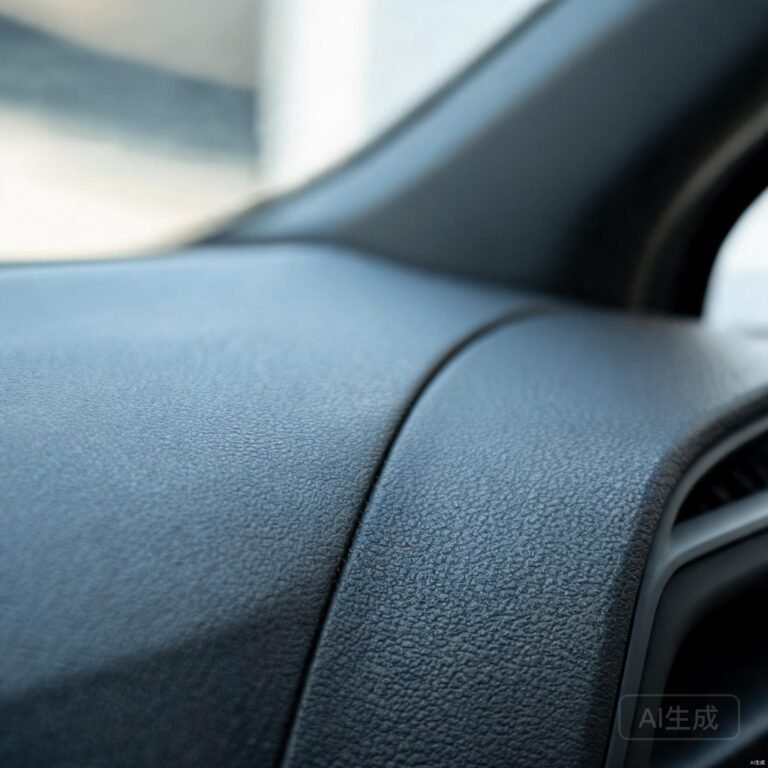
Interior wrapping has moved from the aftermarket customization world into mainstream OEM design. Automakers now routinely wrap interior surfaces that were once hard plastic — center consoles, door upper panels, instrument cluster surrounds, and even B-pillar trim. The car interior wrapping material you choose determines whether those surfaces look like a premium upgrade or a quick fix that peels within a year.
OEM Wrapping vs. Aftermarket: Different Rules
Before diving into material comparisons, it’s worth clarifying that OEM interior wrapping and aftermarket wrapping operate under completely different constraints.

- OEM wrapping — done at the factory during assembly. Materials must pass automotive-grade testing (fogging, UV, abrasion, chemical resistance). Adhesive systems are specified for the substrate. Production volumes are in the tens of thousands
- Aftermarket wrapping — applied by trim shops or dealers. Shorter service life is often acceptable. Focus is on visual transformation and perceived value. Volume is low and customization is high
This article primarily addresses OEM and ODM buyers who need materials for production-scale interior wrapping. If you’re sourcing for automotive interior programs, the testing and compliance requirements are non-negotiable.
Request Wrapping Material Samples
Wrapping Material Comparison: What Actually Stays Put
| Property | Silicone Leather | PU Skin | Vinyl Wrap |
|---|---|---|---|
| Adhesion Longevity | 5–10 years | 3–5 years | 1–3 years |
| Edge Lifting at Curves | Rare | Common after 2 years | Frequent issue |
| Temperature Range | -40°C to 200°C | -20°C to 80°C | -10°C to 70°C |
| Chemical Resistance | Excellent | Moderate | Poor (plasticizers migrate) |
| Soft-Touch Quality | Premium | Good | Thin, plasticky |
Why edge lifting matters: The most common wrapping failure isn’t the surface — it’s the edges. Where the material wraps around a contour, the adhesive bond is stressed by thermal cycling and the material’s natural tendency to return to its flat state. Silicone leather’s dimensional stability means less internal stress at wrapped edges, reducing the chance of lifting over time.
Substrate Compatibility: PP, ABS, and TPO

Automotive interior trim substrates are primarily injection-molded plastics: PP (polypropylene), ABS (acrylonitrile butadiene styrene), and TPO (thermoplastic olefin). Each has different surface energy characteristics that affect adhesive bonding.
PP and TPO are notoriously difficult to bond due to their low surface energy. Successful wrapping on these substrates typically requires either a primer coat or a plasma/flame treatment before adhesive application. Silicone leather itself doesn’t solve the substrate bonding challenge — but it doesn’t make it worse either. The adhesive system and surface preparation are what determine bond quality.
When evaluating silicone leather for automotive interiors, ask your supplier for peel adhesion test data on your specific substrate. A 90° peel test per ASTM D3330 with values above 4 N/cm generally indicates a production-viable bond.
Design Flexibility: Color, Texture, and Finish

One of the main reasons automakers are moving toward wrapped interiors is design flexibility. Hard plastic trim limits you to the substrate’s inherent color and texture. Wrapping opens up a much wider palette — and this is where silicone leather has a real advantage over alternatives.
Silicone leather can be produced in virtually any color with excellent color consistency across production batches. Its color customization range matches Pantone and RAL references. Texture options include smooth, fine-grain, medium-grain, lychee, and embossed patterns. For matching existing interior design themes, this flexibility is valuable.
Vinyl wraps, by contrast, offer many colors but struggle with realistic leather textures. The surface feels thin and plasticky under finger contact — which is fine for external vehicle wraps but problematic for interior surfaces that passengers touch directly.
Download Wrapping Material TDS
Frequently Asked Questions
Can silicone leather be used for dashboard wrapping in hot climates?
Yes. Silicone leather’s thermal stability (service temperature up to 200°C) makes it suitable for dashboard surfaces in any climate. It won’t bubble, warp, or degrade at the temperatures reached inside a parked car in direct sun.
How does wrapping compare to in-mold decoration (IMD)?
IMD embeds the decorative film into the plastic during injection molding, which eliminates edge lifting entirely. However, IMD is limited to flat or gently curved surfaces and requires expensive mold modifications. Wrapping works on complex 3D geometries and doesn’t require new tooling — making it more flexible for mid-cycle design updates.
What’s the minimum order quantity for custom-colored wrapping material?
At TOPSUN, custom color MOQs start at 500 meters for custom leather production. For standard colors from our catalog, MOQs are lower. We recommend requesting physical samples in your target color before committing to a production run.
Wrapping as a Strategic Interior Design Tool
Interior wrapping isn’t just about covering plastic — it’s about creating a cohesive cabin environment. When the dashboard, center console, door panels, and trim pieces all use a consistent car interior wrapping material, the result is a unified premium feel that hard plastic alone can’t achieve.
The material you specify determines whether that feeling lasts. Silicone leather’s combination of UV stability, thermal resistance, and tactile quality makes it a strong choice for production-scale interior wrapping — especially for vehicles with 5+ year design cycles where long-term appearance retention matters.
Start Your Wrapping Material Project
About TOPSUN
TOPSUN is a silicone leather manufacturer providing OEM/ODM solutions for automotive interior wrapping, seat upholstery, and trim applications. We offer full color, texture, and thickness customization with production capacity to support large-volume automotive programs.
Certifications: REACH, RoHS, ISO 9001. Adhesion testing per ASTM D3330. Fogging per DIN 75201. UV weathering per QUV/Accelerated Weathering standards.