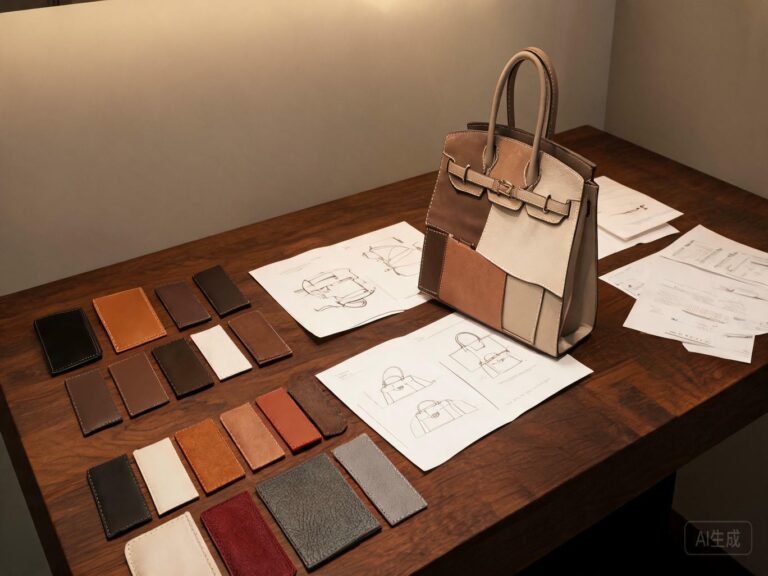
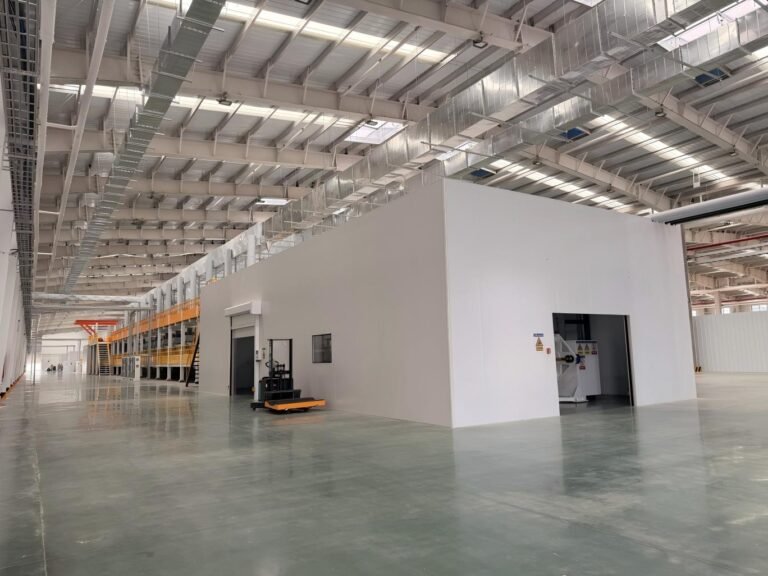
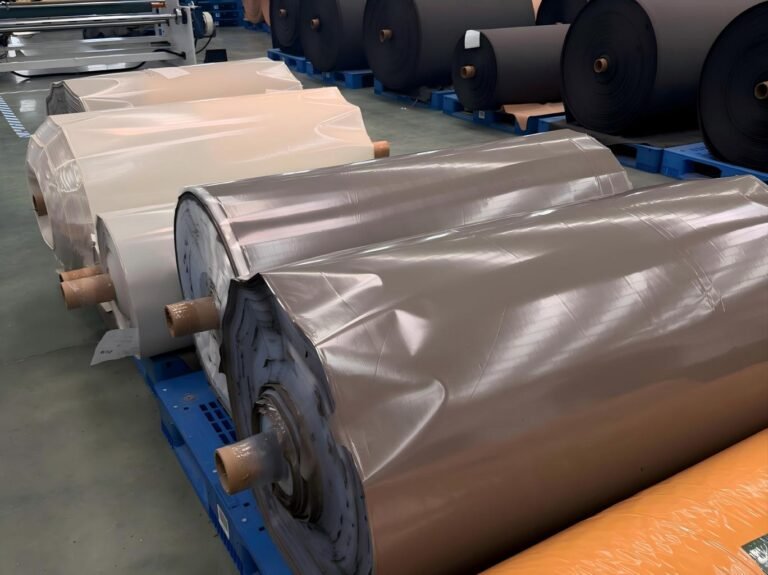
Whether you’re launching a private-label accessories line, developing a proprietary material specification for an automotive program, or simply need a unique texture that no one else offers, custom leather production is the path from concept to finished material. But the process involves more than sending a Pantone number and hoping for the best.
Having worked with hundreds of B2B buyers through the custom development cycle — from initial inquiry to first production run — we’ve seen what makes the difference between a smooth project and one that stalls. This guide covers the practical aspects that actually matter: how to brief your supplier, what to expect at each stage, and where projects most commonly go wrong.
Start Your Custom Material Project
What “Custom” Actually Means in Leather Production
Before diving in, it’s worth clarifying the scope. Custom leather production typically falls into three categories:
- Custom color — Matching a specific color from a reference sample or Pantone code. This is the most common and most straightforward type of customization. Most manufacturers can turn around color samples within 3–5 working days.
- Custom texture — Creating a new surface pattern through embossing rollers or engraving. This requires tooling (engraved cylinders), which adds cost and lead time but allows genuinely unique surface designs.
- Custom specification — Developing an entirely new material specification including substrate selection, coating formulation, thickness, and performance requirements. This is a full R&D project and typically takes 4–12 weeks depending on complexity.
Most projects start with color customization and expand from there. The key is being clear with your supplier about which level of customization you need — and understanding that each level has different timelines and cost structures.
The Custom Development Process: Step by Step

Here’s what a typical custom project looks like from the manufacturer’s side — and what you should expect at each stage.
Step 1: Brief and Requirements Gathering
The quality of your initial brief directly predicts the quality of the final result. The best briefs include: target application (what product will the material be used for?), performance requirements (flex resistance, abrasion rating, flame retardancy, etc.), reference samples or images, target color with Pantone reference, target thickness range, and estimated annual volume.
In our experience, the projects that go smoothly are the ones where the buyer specifies what the material needs to do rather than what it should be made of. Let the manufacturer recommend the technical approach based on your performance requirements.
Step 2: Lab Sampling
After receiving your brief, the manufacturer produces lab-scale samples for evaluation. These are typically small swatches (A4 size or smaller) that allow you to assess color, texture, hand feel, and basic flexibility. Lab samples are usually free or available at nominal cost.

This is where most back-and-forth happens. Color adjustments are common — expect 1–3 rounds of refinement before the color matches your reference to an acceptable tolerance. Most manufacturers aim for ΔE ≤ 1.0 under D65 light source, which is considered an excellent visual match.
Step 3: Bulk Sample Run
Once the lab sample is approved, the next step is a production-line sample — a full roll produced under actual manufacturing conditions. This is critical because lab samples and production samples can differ in thickness uniformity, surface consistency, and color evenness.
At this stage, your supplier should provide a full technical data sheet documenting the material’s physical properties. If your project has specific performance requirements (e.g., automotive flammability standards, healthcare biocompatibility), this is when formal testing should be conducted by an independent lab.

Step 4: Production and Quality Control
With the bulk sample approved, production can begin. For standard color and texture customization, lead times are typically 15–25 working days depending on order volume. For entirely new specifications, the first production run may take 30–45 days.
Quality control should include: incoming inspection of raw materials, in-line thickness and width monitoring, color comparison against the approved standard at roll start, mid-roll, and end, and outgoing inspection reports with test data.
Where Custom Projects Most Often Go Wrong
After years of working with buyers on custom projects, we’ve noticed patterns in the things that cause delays, cost overruns, or disappointing results. Here are the most common pitfalls — and how to avoid them.
| Common Mistake | Consequence | How to Avoid |
|---|---|---|
| Vague color reference | Multiple revision rounds, 2-4 week delays | Provide physical sample + Pantone code + acceptable tolerance |
| Skipping bulk sample stage | Inconsistent first production run, rejection at QC | Always require production-line sample before full order |
| Unclear performance specs | Material fails in application, warranty issues | Define minimum performance requirements upfront with test standards |
| Low volume, custom spec | High unit cost, supplier reluctance | Start with catalog product, add custom color/texture incrementally |
| No long-term volume commitment | Supplier may deprioritize your project | Share realistic annual volume estimates to build the partnership |
The single most impactful thing you can do: Provide a physical reference sample (not just a photo) and be specific about your application. The more context you give your manufacturer, the faster and more accurately they can deliver.
Customization Options: What’s Available
For buyers considering bespoke leather production, here’s a practical overview of what customization options exist and the relative complexity of each.
- Custom color — Any color achievable with silicone or PU pigments. Lead time: 3–5 days for samples. Complexity: Low.
- Custom embossed texture — Requires engraved roller (one-time tooling cost). Lead time: 10–15 days for first samples. Complexity: Medium.
- Custom printed pattern — Digital or screen printing on leather surface. Lead time: 5–10 days. Complexity: Medium.
- Custom thickness — Adjusting coating thickness or substrate weight. Lead time: 5–10 days. Complexity: Low-Medium.
- Custom substrate — Selecting different base fabrics (polyester, cotton, blends). Lead time: 10–20 days. Complexity: Medium-High.
- Custom performance grade — Formulating for specific requirements (flame retardancy, antimicrobial, UV resistance). Lead time: 15–30 days. Complexity: High.
Minimum Order Quantities and Pricing
One of the first questions every buyer asks is about MOQs. The honest answer depends on the type of customization:
- Custom color on existing spec — MOQ typically 300–500 meters (one production roll). Some manufacturers will accept lower quantities with a small surcharge.
- Custom texture on existing spec — MOQ typically 500–1,000 meters due to the one-time tooling cost for the embossing cylinder.
- Entirely new specification — MOQ typically 1,000–3,000 meters for the first run, with significantly lower MOQs on repeat orders.
On pricing: expect custom color to add 5–15% to the standard catalog price. Custom texture typically adds 10–20% on the first order (the tooling cost is amortized over the order volume). Full custom specifications are priced on application — but they’re often more competitive than buyers expect, especially at volumes above 1,000 meters.
Making Your Custom Project Succeed
The most successful custom leather production projects we’ve been part of share a few common traits: the buyer provides thorough upfront requirements, they’re willing to invest time in the sampling stage rather than rushing to production, they maintain realistic expectations about MOQs and timelines, and they treat the supplier as a technical partner rather than just a vendor.
Custom material development is an investment — but it’s one that pays dividends in product differentiation, supply chain stability, and margin protection. When your material specification isn’t available from any competitor’s catalog, that’s a genuine competitive advantage.
Discuss Your Custom Project With Us
Frequently Asked Questions
How long does custom leather development take from start to first production?
For a custom color on an existing specification: 3–4 weeks total. For a custom texture: 5–8 weeks. For a completely new material specification: 8–16 weeks depending on complexity and testing requirements.
Can I order custom samples before committing to a production quantity?
Absolutely. Lab samples (small swatches) are typically provided at low or no cost. Production-line samples (full rolls) are available with a nominal fee that’s usually credited against your first production order. This is strongly recommended — never skip the bulk sample stage.
What information do I need to provide for a custom leather quote?
At minimum: target application, color reference (Pantone code or physical sample), texture reference, thickness range, and estimated annual volume. Performance requirements (flex resistance, flame retardancy, etc.) help the manufacturer recommend the right technical specification.
Do you offer OEM manufacturing for branded products?
Yes. TOPSUN provides full OEM/ODM services for silicone leather materials, including custom specifications produced under your brand’s requirements. We maintain strict confidentiality agreements and can accommodate proprietary formulation requests.
About TOPSUN
TOPSUN is a silicone leather manufacturer specializing in custom material development for automotive, furniture, fashion, and industrial applications. Our OEM/ODM capabilities include custom colors, textures, printed patterns, and performance-grade formulations — supported by ISO 9001 quality management and solvent-free production processes.
Capabilities: Custom color matching | Embossed texture design | Printed patterns | Performance formulations | OEM/ODM production