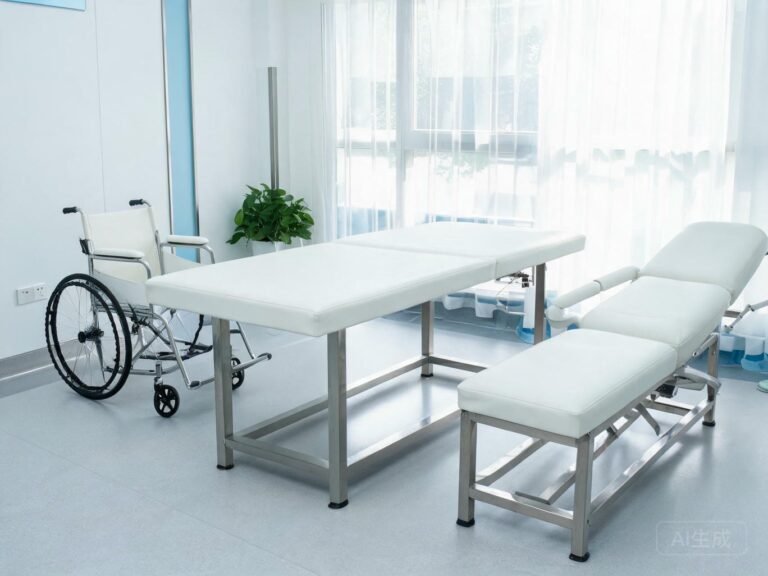
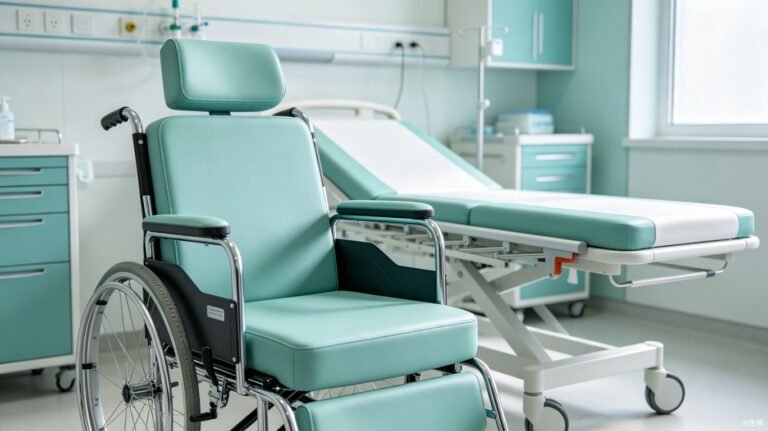
For the estimated 3.3 million wheelchair users in the United States alone, sitting isn’t just a position — it’s a sustained medical challenge. Prolonged pressure on bony prominences restricts blood flow, and without the right wheelchair cushion material, tissue breakdown begins within hours. Pressure injuries affect up to 34% of terminal-stage wheelchair users, according to clinical consensus data from the CDC, making material selection one of the most consequential decisions in mobility aid design. This article examines how modern upholstery materials address the dual demands of pressure relief and infection control — and why silicone-based fabrics are reshaping the rehabilitation equipment landscape.

The Pressure Injury Problem
Pressure injuries — also called pressure ulcers or bedsores — develop when soft tissue is compressed between bone and a surface for extended periods. For wheelchair users, the ischial tuberosities (sit bones) bear the brunt of this pressure. The National Pressure Injury Advisory Panel (NPIAP) classifies these injuries from Stage 1 (non-blanchable redness) through Stage 4 (full-thickness tissue loss with exposed bone).
What does this mean for material spec? The upholstery layer directly contacts the user’s skin for 8–16 hours daily. It must manage three things simultaneously: distribute pressure, wick away moisture, and resist bacterial colonization. Traditional wheelchair upholstery — typically coated nylon or PU leather — struggles with all three. It traps heat, becomes brittle after cleaning, and its smooth surface offers little friction reduction at the skin interface.
Clinical Reality: Pressure injury prevalence among wheelchair users ranges from 12% to 34% depending on patient acuity level. Treatment costs for a single Stage 4 ulcer can exceed $70,000 — far more than the cost differential between standard and premium upholstery materials.

Material Options for Mobility Aid Surfaces
Wheelchair upholstery involves two distinct material layers: the structural cover (what you see and touch) and the cushioning substrate (what provides pressure relief). Both matter. Let’s break down the options:
| Material | Skin-Friendly | Cleanability | Durability | Best For |
|---|---|---|---|---|
| Silicone Leather | Excellent (ISO 10993) | Wipe + disinfect | 10+ years | Long-term users |
| Coated Nylon | Moderate | Wipe only | 1–3 years | Budget models |
| PU Leather | Fair | Mild soap | 2–4 years | Short-term use |
| PVC Vinyl | Poor (heat trap) | Wipe + mild disinfect | 2–3 years | Institutional |
The pattern is clear. Materials designed for short-term or institutional use prioritize low cost over skin health. But for users who spend their waking hours in a wheelchair, the calculus flips — comfort, breathability, and biocompatibility become non-negotiable.
Why Silicone Outperforms for Long-Term Seating
Silicone-based rehabilitation equipment fabric offers a combination of properties that other materials simply can’t match. The key advantage isn’t any single metric — it’s the absence of trade-offs. Silicone leather delivers skin compatibility, durability, and cleanability simultaneously, rather than sacrificing one for another.
Here’s why this matters for wheelchair users specifically:
- Hypoallergenic surface: ISO 10993-5 certified non-cytotoxic — no plasticizers, no latex proteins, no phthalate migration against skin
- Breathability without porosity: Silicone’s surface resists fluid penetration but allows vapor transmission, reducing moisture accumulation at the skin interface
- Thermal stability: Remains pliable from -40°C to 250°C — no stiffening in cold storage, no softening in hot vehicles
- Antibacterial matrix: 99.9% reduction against E. coli and S. aureus, without relying on coatings that wear off with cleaning
- Flex endurance: ≥100,000 flex cycles (ISO 5402) — critical for articulated seating and tilt-in-space mechanisms
In our experience working with rehabilitation equipment manufacturers, the switch to silicone upholstery addresses a recurring complaint: users reporting that their old PVC cushions felt “sticky” and “sweaty” after a few hours. Silicone’s low surface energy means it feels dry to the touch even after prolonged contact — a subtle but significant quality-of-life improvement.
Flex testing demonstrates silicone leather’s ability to withstand repeated bending — essential for wheelchair articulation and foldable frames
Explore High-Performance Collection

Designing for the Cushion-Cover System
Effective pressure relief isn’t just about the cover material — it’s about how the cover interacts with the cushion substrate beneath. A common design mistake is specifying a high-performance cushion (gel, air, or viscoelastic foam) and then covering it with a material that negates its benefits. PVC covers, for instance, create a vapor barrier that traps moisture against the skin, undermining even the best cushioning technology.
Silicone leather works as a system enabler. Its breathability allows the cushion substrate to function as designed, while its smooth, low-friction surface reduces shear forces during transfers and repositioning. The material also conforms to contour without wrinkling — important for custom-molded seating systems where surface irregularities can create localized pressure points.
For manufacturers developing medical cushion fabric systems, key design considerations include:
- Thickness selection: 0.5–0.8 mm for conforming covers, 1.0–1.5 mm for structural seat backs
- Skin-side surface finish: matte texture reduces sliding without creating abrasion
- Seam construction: high-frequency welding compatible — no stitching holes for fluid ingress
- Color stability: UV and disinfectant exposure won’t cause yellowing or fading (Grade 4–5, ISO 105-B02)
Frequently Asked Questions
How does silicone leather compare to gel cushions for pressure relief?
They serve different functions. Gel cushions provide the actual pressure distribution — silicone leather is the cover material that protects the gel while maintaining skin health. The two work together: gel handles immersion and envelopment, while the silicone cover manages moisture, friction, and hygiene. Using silicone as a cover over a gel or air cushion is a common and effective combination.
Can silicone upholstery withstand incontinence exposure?
Yes. Silicone leather is inherently fluid-resistant and can be cleaned with standard hospital disinfectants after contamination. Unlike fabric covers that absorb liquids, silicone’s non-porous surface allows complete wipe-down. For users with incontinence concerns, seamless construction with HF-welded seams eliminates fluid ingress paths.
Is silicone leather too hot for summer use?
Actually, silicone leather tends to feel cooler than PVC vinyl because it doesn’t trap heat the same way. Its vapor-permeable structure allows moisture evaporation, which is the body’s natural cooling mechanism. Users transitioning from PVC to silicone covers frequently report improved thermal comfort, particularly in warm climates.
What is the lead time for custom wheelchair upholstery orders?
Standard production runs of 500+ meters typically ship within 7–15 days. For medical-grade silicone leather with custom colors or textures, allow 2–3 weeks for sampling and 2–4 weeks for bulk production. Trial quantities can be arranged through the samples center for evaluation before committing to volume orders.
The Future of Mobility Aid Materials
The wheelchair cushion material market is evolving beyond the old cost-versus-comfort binary. Manufacturers are recognizing that material choices have downstream clinical consequences — and that investing in better upholstery reduces the total cost of care by preventing pressure injuries, reducing cleaning labor, and extending equipment service life.
For procurement teams and OEM designers, the takeaway is straightforward: specify materials that solve multiple problems at once. Silicone leather addresses skin health, infection control, durability, and cleanability in a single layer. When you’re designing for users who depend on their wheelchair for daily mobility, that comprehensive performance isn’t a luxury — it’s a clinical necessity.
About TOPSUN
TOPSUN supplies silicone leather to rehabilitation equipment manufacturers and mobility aid OEMs worldwide. Our materials undergo rigorous biocompatibility and durability testing to meet the demands of long-term clinical seating applications.
Relevant Certifications: ISO 10993-5:2009 (non-cytotoxic) · FDA 21 CFR 175.300 · REACH SVHC Compliant · PAHs (AfPS GS 2019:01) · Zero VOC (ISO 16000-6) · Antibacterial 99.9%