Every gram counts when you are building a motorhome. Fuel efficiency, payload capacity, and cabin comfort all hinge on the materials you choose — and few decisions matter more than seating and wall coverings. For B2B procurement teams sourcing rv upholstery material, the challenge is finding something that is lightweight, survives brutal temperature swings, and still looks premium after years of use. Silicone leather answers all three. According to the Recreation Vehicle Industry Association (RVIA), over 98% of RVs in North America are built by member manufacturers governed by strict material and fire-safety standards — which makes spec compliance non-negotiable. In this guide, we break down why silicone outperforms traditional fabrics and PVC, and what specs to verify before placing a bulk order.
Lightweight RV Furniture Fabric: Less Weight, More Miles
Weight directly impacts how an RV handles, brakes, and burns fuel. A typical Class C motorhome carries hundreds of kilograms of interior trim, and upholstery is a surprising contributor. Conventional marine vinyl can weigh 700–900 g/m², while silicone-coated fabric lands at 400–800 g/m² — a saving that compounds across dinettes, sofa beds, cab seats, and bunk mattresses.
For procurement managers, that gap matters. Shedding one to two kilograms per square meter across a full interior may not sound dramatic. But over dozens of units in production, it translates into measurable fuel savings and payload headroom for the accessories buyers actually want.
Silicone leather also trims installation effort. Its flexibility — verified to ≥100,000 flex cycles under ISO 5402 — lets it drape over compound curves and staple channels without pre-heating. That means faster trimming on the line and fewer reject panels. If you are specifying rv furniture fabric for furniture and sofa applications or travel trailer seating, prioritize weight-per-square-meter early in the spec sheet, not as an afterthought.

Why RV Upholstery Material Must Survive Temperature Extremes
A parked RV is a harsh environment. Interior cabin temperatures can soar past 65°C (149°F) on a summer afternoon, then plunge below freezing overnight. Many traditional upholstery materials simply cannot keep up.
PVC cracks when plasticizers migrate out under sustained heat. PU coatings delaminate after repeated thermal cycling. The result is premature failure — cracking seams, sticky surfaces, and warranty claims that erode your margin.
Silicone chemistry is different. It is stable from -40°C to 250°C, which means the same seat cover handles a Death Valley summer and a Minnesota winter without losing flexibility. In our own cold-crack testing, we observed no brittle failure even after prolonged exposure at -40°C — a result that aligns with ASTM G154 UV-aging data showing no cracking or fading. This thermal resilience is exactly why rv upholstery material based on silicone is increasingly specified as the motorhome interior material of choice in premium European and North American builds.
The takeaway for sourcing teams: a single material that handles both extremes eliminates the need to stock separate “summer” and “winter” upholstery lines — simplifying your BOM and reducing inventory cost.

Key Technical Specifications at a Glance
When evaluating silicone leather for RV production, the following ISO and ASTM benchmarks are the ones that actually matter for long-term field performance. We have consolidated them below for quick reference during supplier comparison.
| Property | Specification | Test Standard |
|---|---|---|
| Thickness | 0.8–2.0 mm | ISO 2286-2 |
| Weight | 400–800 g/m² | ISO 2286-2 |
| Martindale Abrasion | ≥200,000 cycles | ISO 12947-2 |
| Flex Resistance | ≥100,000 cycles | ISO 5402 |
| Tensile Strength | ≥15 N/mm | ISO 3376 |
| Temperature Range | -40°C ~ 250°C | — |
| UV Resistance | No cracking / fading | ASTM G154 |
| Cold Crack Resistance | Excellent | — |
| VOC Emission | Zero | ISO 16000-6 |
| Water Resistance | Excellent | AATCC 127 |
| Service Life | 10+ years | — |
Need the full lab report? Download our technical data sheet for complete certificates and test methods.
UV and Weather Resistance for the Recreational Vehicle Interior
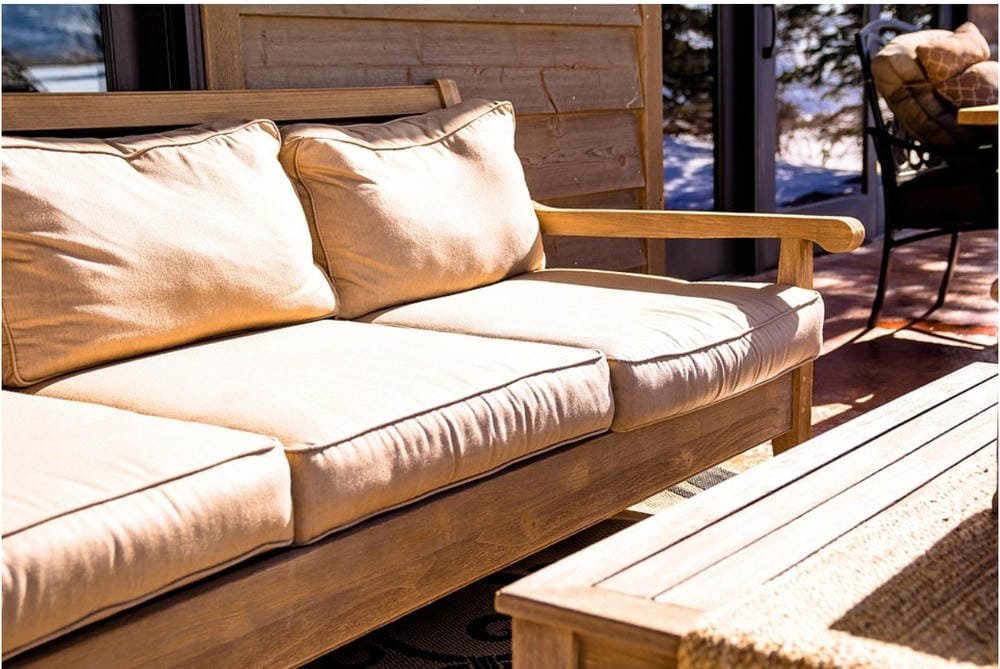
RV windows let in beautiful views — and relentless ultraviolet radiation. In a moving home, every surface is exposed to sunlight that traditional dyes and topcoats cannot withstand over time.
Silicone leather’s UV stability comes from its molecular structure, not an applied coating that wears off. Under ASTM G154 accelerated weathering, TOPSUN silicone shows no cracking, peeling, or color shift — the kind of performance that keeps interiors looking new through a decade of cross-country trips. Water resistance matters just as much. Condensation, spilled drinks, and rain-soaked hikers are daily realities in an RV. With an Excellent rating under AATCC 127 hydrostatic head testing, silicone leather sheds water rather than absorbing it.


We have seen firsthand how this plays out in the field. A European OEM we supply switched their rv leather specification from coated PVC to silicone after accelerated aging tests showed PVC failing at under 2,000 hours, while silicone showed no visible degradation. That is why silicone is now a top choice for recreational vehicle interior applications where long-term appearance retention is non-negotiable — a benefit it shares with our marine and outdoor-grade materials, which face similar UV and salt exposure.
Easy Cleaning, Mold Resistance, and Space-Saving Versatility
RV interiors are compact, multi-use spaces. A dinette seat becomes a bed. A sofa stores gear underneath. Every surface gets touched, spilled on, and slept against — so cleanability is not a luxury. It is a daily necessity.
Silicone leather is non-porous, which means spills bead up rather than soak in. Coffee, sunscreen, ketchup — most wipe away with a damp cloth and mild soap. No special cleaners, no conditioning treatments, no annual maintenance kit. That same non-porous surface also resists mold and mildew. In the humid, poorly ventilated environment of a closed camper, this is a genuine health concern. Unlike fabric-backed materials that trap moisture, silicone does not support fungal growth.

For camper upholstery and travel trailer seating, the versatility extends to design. Available in 0.8–2.0 mm thicknesses, silicone leather works equally well on slim-profile captain’s chairs and plush sofa beds. It folds, wraps, and pleats without creasing — giving designers the freedom to create compact, multi-functional interiors. This combination of durability and cleanability is also why silicone performs so well in marine upholstery and high-traffic furniture applications.
Frequently Asked Questions
Is silicone leather safe for enclosed RV cabins?
Yes. TOPSUN silicone leather emits zero VOCs under ISO 16000-6 testing, making it safe for the small, enclosed air volume of an RV cabin. This is a critical spec for manufacturers targeting health-conscious buyers.
How does the Martindale abrasion rating apply to RV use?
With ≥200,000 cycles (ISO 12947-2), the material withstands the repeated entry-and-exit friction typical of RV dinettes and cab seats. In practical terms, that translates to a 10+ year service life under normal family use.
What is the MOQ and lead time for B2B orders?
The minimum order quantity is 500 meters, with a lead time of 7–15 days. This works for both sample runs and full production batches, letting you scale from prototype to volume without switching suppliers.
Which certifications apply to RV applications?
TOPSUN silicone leather carries REACH, FDA, and PAHs certifications — relevant for both North American and European RV markets. These cover chemical safety, skin contact, and hazardous-substance limits that procurement teams must verify.
Choosing RV Upholstery Material for Long-Term Value
Sourcing the right rv upholstery material means balancing weight, durability, and environmental resilience — without compromising on cabin aesthetics or air quality. Silicone leather delivers on all four. It is lighter than marine vinyl, survives temperature extremes that crack PVC, resists UV and moisture for a decade, and cleans with a damp cloth. For procurement teams building RVs for demanding customers, that combination is hard to beat. Specify it early, verify the ISO test data, and your interiors will look — and perform — better for years.
About TOPSUN
TOPSUN is a specialized manufacturer of silicone-coated leather, serving B2B customers across automotive interiors, furniture, marine, and outdoor applications. Our materials are engineered for OEMs and procurement teams who need certified, durable, and fully customizable upholstery — backed by in-house testing and a 7–15 day production lead time.
Certifications: REACH · FDA · PAHs · ISO 2286-2 · ISO 12947-2 · ISO 5402 · ISO 3376 · ISO 16000-6 · ASTM G154 · AATCC 127