Parents and regulators are pushing harder than ever for safe, non-toxic materials in juvenile products, and the surfaces that matter most are the ones a child touches every day. A baby’s skin is in constant contact with stroller upholstery, and infants explore the world by chewing, drooling, and spilling on whatever sits within reach. Most conventional synthetic leathers rely on plasticizers, phthalates, and solvent-based coatings that can leach over time. Baby stroller leather material made from silicone polymer avoids these additives entirely, offering an inherently safe surface from the first use. We’ve examined the broader case for faux leather in baby products elsewhere; here we focus on what stroller procurement teams need to verify before specifying upholstery.
What Parents and Regulators Expect
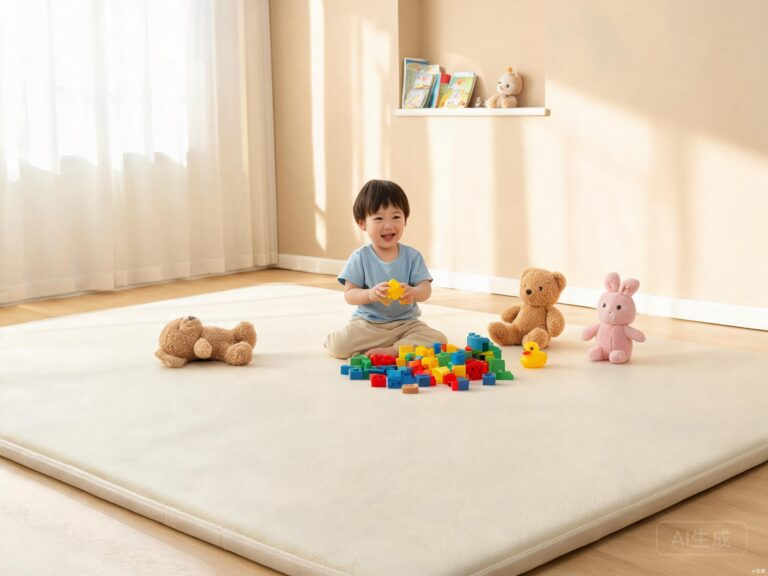
Every stroller fabric surface sees heavy daily exposure. Babies drool, chew on straps, and rest their cheeks against the seat for hours; parents wipe those surfaces dozens of times a week. Any material that sheds plasticizers or retains moisture becomes a sustained source of contact risk rather than a one-time concern.
Regulators have responded with increasingly strict frameworks. In the United States, the CPSIA sets hard limits on lead and phthalates in children’s products. Europe enforces EN 71 for toy safety and REACH for chemical registration, both of which apply to accessible stroller components. Procurement teams sourcing for global markets must satisfy all three frameworks simultaneously, which rules out materials that pass one region but fail another.
Why Silicone Leather Works for Strollers
Silicone leather is built on a Si-O-Si backbone — the same chemistry as glass and silica sand — deposited as a 100% pure silicone polymer onto a fabric substrate. The coating process is solvent-free, so there are no residual solvents to off-gas into a closed stroller canopy or infant seat. For a deeper look at the chemistry, our silicone leather introduction covers the molecular structure in detail.
For baby carriage material applications, the relevant properties are what the chemistry lacks: zero plasticizers, zero phthalates, zero BPA, and zero heavy-metal stabilizers. Softness is inherent to the polymer rather than added through oily plasticizers, so the hand feel does not degrade as those additives migrate out over months of use. ISO 10993-5 biocompatibility testing confirms the surface is non-cytotoxic, and the material is FDA 21 CFR 177.2600 compliant for repeated food-contact use — a meaningful benchmark for surfaces an infant may mouth.

Safety Standards and Compliance
Procurement specs for pram upholstery should reference specific numeric thresholds, not just the name of a standard. Under CPSIA, lead content must not exceed 100 ppm in substrate materials and 90 ppm in paint or surface coatings; the three phthalates DEHP, DBP, and BBP are restricted to no more than 0.1% each in accessible childcare articles. EN 71 covers three complementary domains: Part 1 addresses mechanical and physical properties (small parts, sharp edges, finger traps), Part 2 governs flammability, and Part 3 sets migration limits for 19 heavy elements including antimony, arsenic, barium, cadmium, chromium, lead, mercury, and selenium.
The U.S. Consumer Product Safety Commission publishes the authoritative reference for these requirements at their Business & Manufacturing portal. TOPSUN’s silicone leather supports compliance across all three frameworks: REACH testing covers 247 SVHC substances, each confirmed below the 0.1% w/w threshold, and full SGS-verified documentation is available through our certificates library.
Key compliance data — CPSIA lead ≤100 ppm substrate / ≤90 ppm paint; phthalates (DEHP, DBP, BBP) ≤0.1%; REACH 247 SVHC all <0.1% w/w; EN 71-1/2/3 tested; FDA 21 CFR 177.2600 compliant; ISO 10993-5 non-cytotoxic.
Comfort and Cleanability
Safety gets a stroller through certification; comfort and cleanability determine whether parents keep using it. Silicone leather’s Shore A hardness is adjustable within the 0.23-1.2mm thickness range used for infant seat material, letting manufacturers tune the hand from plush to firm without adding foam backers that trap moisture.
The surface is hydrophobic by nature, not by coating. Water, milk, and juice bead off rather than soak in, so a single wipe with a damp cloth removes most spills. Because the polymer does not absorb liquid, there is no damp core where bacteria can colonize — a real advantage over fabric and PU, which both wick moisture into their backing layers. The material is also dimensionally stable across a -40°C to 250°C range, so a stroller left in a hot car will not emit odors or become tacky to the touch.

Watch how silicone leather repels water and common stains in a single wipe — critical for daily stroller maintenance.
Comparing Baby Stroller Leather Material Options
No single baby carrier material is right for every product, so procurement teams usually weigh four candidates. The table below summarizes how silicone, PVC, PU, and woven fabric compare on the criteria that matter most for juvenile products.
| Material | Safety / Toxicity | Cleanability | Durability | Softness | Certifications |
|---|---|---|---|---|---|
| Silicone leather | No plasticizers, phthalates, BPA; ISO 10993 biocompatible | Wipe-clean; non-absorbent | 10-15+ yrs; 200,000+ Martindale | Adjustable Shore A | FDA 21 CFR 177.2600; REACH; EN 71 |
| PVC | Phthalate plasticizers; chloride off-gas | Wipe-clean | 3-5 yrs; cracks and peels | Plasticizer-dependent | Limited; Prop 65 flags |
| PU | Solvent residues; hydrolyzes over time | Wipe-clean (surface degrades) | 2-5 yrs; peeling common | Soft when new | Variable by supplier |
| Woven fabric | Generally safe; absorbs liquid | Machine wash; stains set in | 1-3 yrs before fading | Soft, breathable | Depends on dyes and finishes |

Customization for Stroller Manufacturers
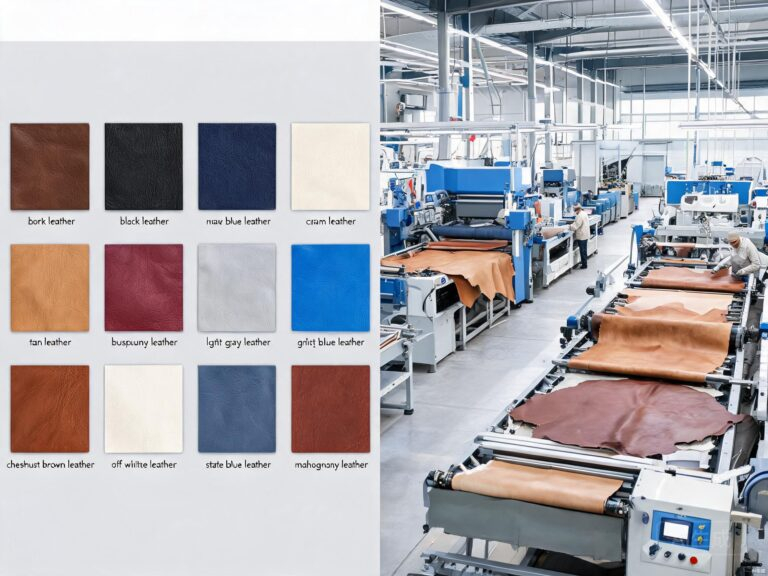
Stroller brands need children stroller fabric that fits a defined product architecture, not a generic stock roll. TOPSUN produces silicone leather from 0.23mm up to 1.2mm for juvenile applications, with unlimited Pantone-matched colors and textures ranging from smooth to fine pebble grain. Lightweight constructions keep overall stroller weight down, and custom embossing can carry a brand logo or pattern directly into the surface.
Production runs start at a 500-meter MOQ with a 7-15 day lead time (5-7 days for urgent orders), and sample swatches ship in 3-5 days. Color matching and physical sampling happen before any production commitment, so engineering teams can validate drape, seam behavior, and frame adhesion on real tooling. For a broader look at how the same material performs across nursery and juvenile categories, see our baby and kids application page.
In our experience working with juvenile product manufacturers, the biggest concern isn’t just passing lab tests — it’s ensuring the material remains safe after years of UV exposure, spit-up, and daily wiping. We’ve seen PU samples that passed initial phthalate screening fail re-tests after six months of accelerated UV aging, as plasticizers migrated to the surface. Silicone’s crosslinked structure does not behave that way, which is why we recommend it for any surface an infant can reach.
Frequently Asked Questions
Is silicone leather safe for babies to chew on?
Silicone leather contains no plasticizers, phthalates, BPA, or heavy-metal stabilizers, and it passes ISO 10993-5 cytotoxicity testing (MTT assay, L929 cells). While no upholstery material is intended as a teething toy, the surface meets the same biocompatibility benchmark used for medical-grade skin-contact products, so incidental mouthing does not introduce harmful substances.
How does it handle spills and stains?
The surface is inherently hydrophobic, so milk, juice, and food bead off rather than absorb. A damp cloth removes most spills in one pass, and because nothing soaks into the backing layer, there is no damp environment for bacteria to grow. Stubborn stains can be cleaned with mild soap without damaging the polymer.
Can it be customized for our stroller brand?
Yes. Thickness from 0.23-1.2mm, unlimited Pantone color matching, smooth or pebble textures, and custom brand embossing are all available. MOQ is 500 meters with a 7-15 day lead time, and physical samples ship in 3-5 days so your engineering team can validate the spec before committing to production.
Choosing Baby Stroller Leather Material for the Smallest Users
The margin for error in juvenile products is narrow. A material that passes a single lab test but degrades under real-world UV, spit-up, and daily wiping is a liability, not a solution. Silicone leather’s value for baby stroller leather material is that its safety profile is structural — built into the polymer chemistry rather than dependent on additives that can leach, migrate, or fail over time. For procurement teams accountable to CPSIA, EN 71, and REACH at once, that structural safety is the simplest path to confident specification.
About TOPSUN
TOPSUN has manufactured silicone leather since 2018 from a 60,000+ m² facility with 6 million m/year capacity, serving 100+ global clients across juvenile, medical, automotive, and furniture markets. All testing is SGS-verified under IAF/ILAC mutual recognition.
Relevant certifications: FDA 21 CFR 177.2600, EN 71 (toy safety), REACH (247 SVHC <0.1%), ISO 10993-5 biocompatibility (non-cytotoxic).