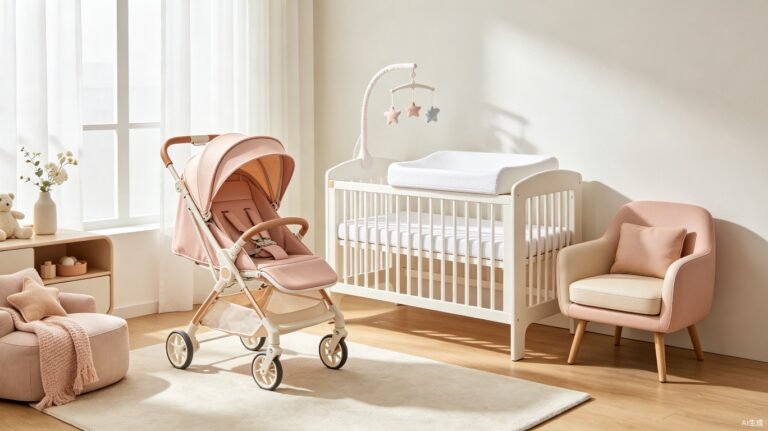
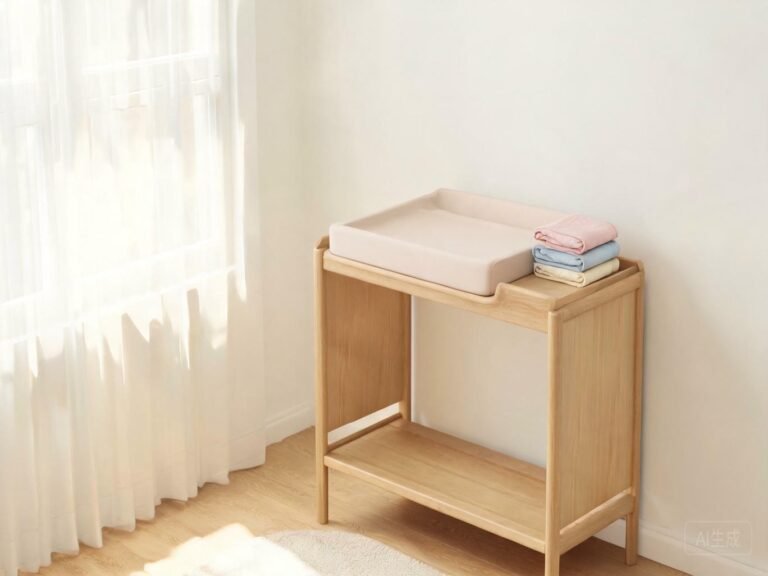
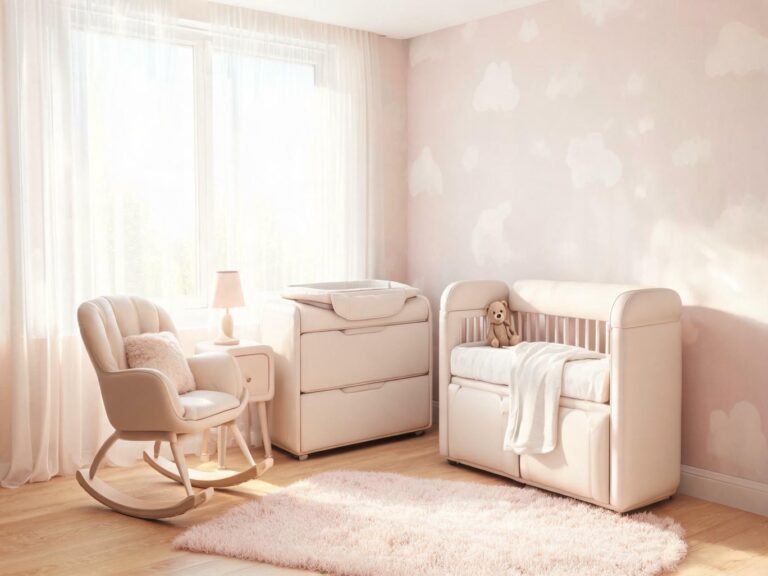
When it comes to products that babies touch, chew, and sleep on, material safety isn’t a feature—it’s a non-negotiable requirement. Parents are more informed than ever about what goes into nursery furniture, strollers, and play equipment. For manufacturers and brands, specifying silicone leather for baby products is one of the most impactful decisions you can make for both safety and market positioning.
The reality is that many conventional materials used in children’s products contain chemicals that parents are increasingly unwilling to accept. Here’s what makes silicone leather fundamentally different—and why it’s becoming the preferred choice for baby-safe products.
What Makes a Material Truly Baby-Safe?
Let’s be honest about what “baby-safe” actually means. It’s not just about meeting a regulatory checkbox—it’s about the full lifecycle of the material: what it’s made from, what it releases over time, and how it responds to the realities of baby use (chewing, spilling, and frequent cleaning).
A truly baby-safe material must satisfy multiple criteria simultaneously:
- No toxic chemicals: Zero phthalates, BPA, PVC, formaldehyde, heavy metals, or plasticizers
- Hypoallergenic: Won’t cause skin irritation or allergic reactions, even with prolonged contact
- Oral safety: Safe if mouthed or chewed, which is inevitable for babies and toddlers
- Odor-free: No off-gassing or chemical smells that could irritate developing respiratory systems
- Easy to sanitize: Withstands frequent cleaning and disinfection without degrading
TOPSUN’s silicone leather has achieved FDA 21 CFR 175.300 certification for food contact safety—the same standard applied to baby bottle nipples and pacifiers. This means the material is safe even if a baby puts it in their mouth.
The Problem with Traditional Baby Product Materials
Here’s the thing most parents don’t realize: many conventional baby products use materials that are legal but far from ideal. PVC leather, commonly used in stroller seats and changing pads, contains phthalate plasticizers that have been linked to developmental issues. PU leather, while phthalate-free, often requires solvent-based manufacturing that leaves residual VOCs.
In our experience working with baby product manufacturers, the three most common concerns we hear are:
- Chemical leaching: “We can’t be sure what’s in the material and what might migrate out over time”
- Durability under cleaning: “After a few months of sanitizing wipes, the surface starts to crack”
- Odor complaints: “Customers return products because of the chemical smell”
Silicone leather addresses all three. The material is chemically inert, meaning nothing leaches out. It withstands thousands of cleaning cycles without surface degradation. And it has zero odor—from day one through years of use.
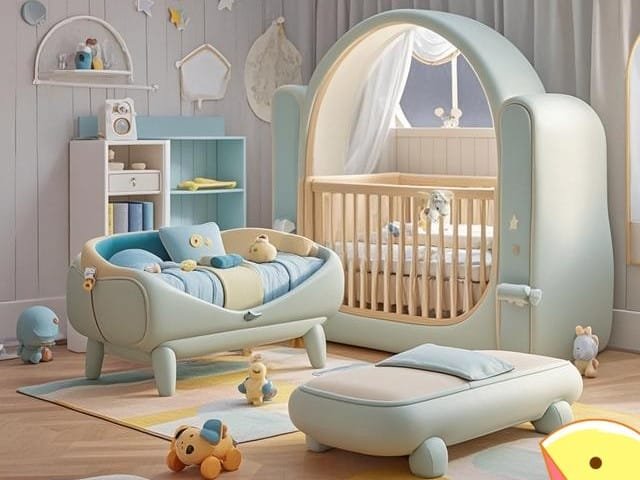
A modern nursery furnished with silicone leather baby products
Key Certifications for Baby-Grade Materials
When evaluating baby safe material options, certifications are your objective proof of safety. Here’s what the leading standards require and how silicone leather performs:
| Certification | What It Covers | Silicone Leather Status |
|---|---|---|
| FDA 21 CFR 175.300 | Food contact safety; migration limits in food simulants | Passed |
| REACH (EU) 1907/2006 | 247 SVHC substances + 7 potential SVHCs | All ≤0.1% |
| PAHs (AfPS GS 2019:01) | 8 controlled polycyclic aromatic hydrocarbons | All undetected |
| ISO 10993-5 | Cytotoxicity (cell viability ≥70%) | 74.58% viability |
| EN 71 (EU Toy Safety) | Mechanical, flammability, and chemical safety for toys | Compliant |
All certifications are verified by independent third-party testing labs including SGS and Intertek, with full reports available upon request. You can view our complete certification portfolio here.
Practical Applications: From Strollers to Nursery Furniture
Silicone leather’s versatility makes it suitable for virtually every baby product category where upholstery or surface covering is needed. Here are the most common applications we support:
- Strollers and car seats: Silicone leather handles the temperature extremes of parked cars, resists sun fading, and wipes clean after every snack-time disaster
- Nursery furniture: Cribs, changing tables, nursing chairs, and play mats covered in silicone leather stay hygienic with minimal effort
- High chairs and booster seats: The non-porous surface prevents food and liquid absorption, eliminating the breeding ground for bacteria that fabric seats create
- Baby carriers and diaper bags: Lightweight, waterproof, and sweat-resistant properties make silicone leather ideal for on-the-go baby gear
- Play mats and activity centers: Floor-level products benefit from the antimicrobial properties and easy-to-sanitize surface

Silicone leather stroller upholstery: waterproof, stain-resistant, and safe for mouth contact
Cleaning and Maintenance: Why It Matters for Parents
If you’ve ever tried to clean baby food out of fabric upholstery, you know the struggle. One of the biggest practical advantages of silicone leather is how it transforms the cleaning experience for parents.
The non-porous surface means spills sit on top rather than soaking in. A simple wipe with a damp cloth removes everything from formula to mashed bananas. For deeper sanitization, the material withstands alcohol-based wipes, hydrogen peroxide, and even diluted bleach solutions—all without surface degradation.
For parents of children with allergies or asthma, the hypoallergenic properties are particularly valuable. Unlike fabric upholstery that traps dust mites, pet dander, and mold spores, silicone leather’s smooth surface doesn’t harbor allergens. A quick wipe removes whatever might have settled on the surface.
See how silicone leather handles spills and stains in seconds
Frequently Asked Questions
Is silicone leather really safe if a baby puts it in their mouth?
Yes. TOPSUN’s silicone leather has passed FDA 21 CFR 175.300 food contact migration testing, which simulates the material’s behavior when in contact with food-like substances. The same standard is applied to baby bottle nipples and pacifiers. No detectable migration was found in any of the three food simulant types tested.
Does silicone leather contain PVC, phthalates, or BPA?
No. Silicone leather is manufactured without PVC, phthalates, BPA, formaldehyde, heavy metals, or any restricted plasticizers. This is verified through independent REACH and PAHs testing by SGS, with full certification reports available.
How does silicone leather compare to fabric for baby products?
Fabric absorbs liquids, harbors bacteria, traps allergens, and requires machine washing. Silicone leather is non-porous, antimicrobial, and cleans with a single wipe. For baby products where hygiene is critical—strollers, high chairs, changing pads—silicone leather offers a significant practical advantage.
Making the Switch to Safer Materials
The baby product industry is evolving. Parents are demanding greater transparency about materials, and regulators are tightening standards. Silicone leather for baby products represents a material choice that aligns with both market trends and genuine safety priorities.
For manufacturers, the switch to silicone leather isn’t just about safety—it’s a competitive differentiator. When parents are comparing two similar strollers and one uses FDA-certified, hypoallergenic silicone leather while the other uses conventional PU, that distinction matters. It’s the kind of feature that drives purchase decisions and builds brand loyalty.
We work with baby product brands to develop custom formulations that match their specific requirements—whether that’s a particular color, texture, thickness, or performance characteristic. Learn more about faux leather options for baby products and how they compare.
Request Baby-Safe Material Samples
About TOPSUN
TOPSUN is a silicone leather manufacturer specializing in baby-safe, non-toxic materials for children’s products. We hold FDA, REACH, PAHs, and ISO 10993 certifications verified by SGS and Intertek. Our materials are zero-VOC, phthalate-free, and hypoallergenic—designed for the most sensitive applications.
Certifications: FDA 21 CFR 175.300, REACH, PAHs, ISO 10993-5, EN 71 Compliant