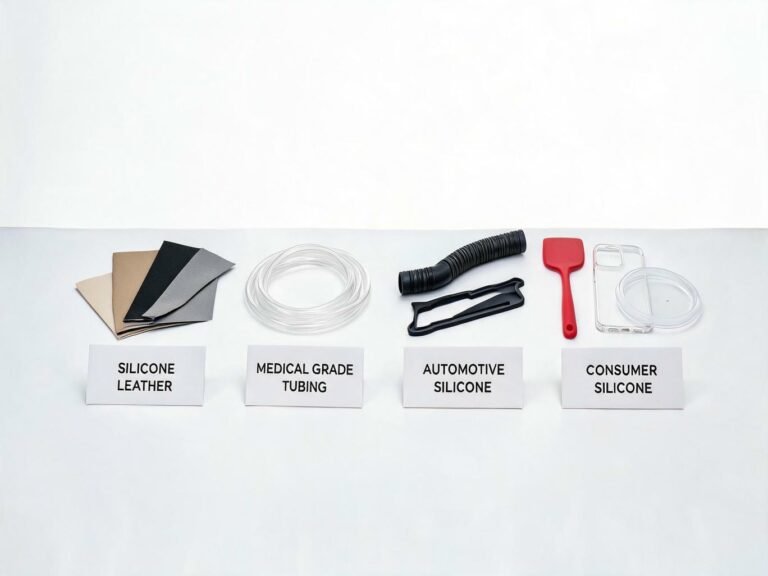
Modern product design demands more than single-material construction. Overmolding lets engineers combine rigid substrates with soft silicone surfaces. This creates parts that are strong, flexible, and visually refined all at once.
The global liquid silicone rubber market reached $10.67 billion in 2025. It is expected to grow at a CAGR of 8.1% through 2032. Much of this growth comes from silicone overmolding demand in automotive, electronics, and medical industries.
This guide explains the overmolding process, compares methods, and shows how it benefits product design. Whether you are an OEM buyer or a design engineer, this article will help you evaluate your options.
What Is Silicone Overmolding?
Silicone overmolding is a manufacturing process. It bonds liquid silicone rubber onto a pre-formed substrate. The substrate can be plastic, metal, fabric, or leather. The result is a single part with two distinct material layers.
Rubber overmolding combines the best properties of both materials. The rigid substrate provides structural support. The silicone layer adds softness, grip, and environmental resistance.
The process works in two main stages:
- Substrate molding or preparation – The base component is injection-molded or pre-fabricated
- Silicone injection – Liquid silicone is injected over or around the substrate, bonding as it cures
The bond between materials is critical. Proper adhesion requires clean substrate surfaces, compatible material chemistry, and precise mold design. Some processes use mechanical interlocks, chemical primers, or both to ensure strong bonding.
For a broader understanding of silicone materials, visit our silicone leather introduction page.

LSR Overmolding vs Traditional Methods
Not all overmolding processes are equal. LSR overmolding uses liquid silicone rubber injected at high precision. Traditional methods rely on compression or transfer molding of solid silicone. The choice affects quality, speed, and cost.
Liquid Silicone Rubber Overmolding
Liquid silicone rubber overmolding is the preferred method for high-volume, tight-tolerance production. It offers several key advantages:
- Superior dimensional accuracy – Parts meet strict tolerances with minimal flash
- Fast cycle times – LSR cures in seconds, not minutes
- Excellent adhesion – Chemical bonding creates strong inter-material grip
- Multi-cavity capability – High-volume production with consistent quality
- Clean processing – No waste material or secondary trimming needed
Traditional Compression and Transfer Molding
Compression molding presses pre-formed silicone onto the substrate. Transfer molding uses a plunger to force silicone into a closed mold. These methods work well for low-volume runs and large, simple geometries.
| Feature | LSR Overmolding | Compression / Transfer |
|---|---|---|
| Cycle Time | 15-60 seconds | 3-10 minutes |
| Dimensional Accuracy | Very high | Moderate |
| Material Waste | Minimal | Moderate to high |
| Best Volume | Medium to high | Low to medium |
| Adhesion Quality | Excellent chemical bond | Good (primer-assisted) |
| Tooling Cost | Higher initial investment | Lower initial investment |
For OEM buyers planning high-volume production, LSR overmolding delivers the best return on investment. Lower per-unit costs and consistent quality offset the higher tooling expense over time.
Applications Across Industries
Co molding technology serves a wide range of industries. Each application leverages the unique combination of rigid support and soft silicone surface.
Automotive Interiors
The automotive sector is the largest adopter of silicone rubber overmolding. Overmolded components appear in steering wheels, dashboard panels, gear shift covers, and seat controls. Silicone provides a soft-touch feel, UV resistance, and easy cleaning.
Electric vehicle manufacturers use overmolding for battery pack seals and thermal interface components. The silicone layer handles temperature cycling without degrading. See how silicone leather fits automotive interiors on our automotive interiors page.

Consumer Electronics
Smartphone cases, wearable bands, keyboard covers, and headphone pads all use overmolding. The rigid plastic core protects electronics. The silicone outer layer provides grip, drop protection, and water resistance.
Premium electronics brands specify overmolded parts for their flagship products. The seamless finish and refined texture elevate product perception.
Medical and Healthcare
Medical devices require biocompatible, sterilizable materials. Silicone overmolding meets these demands. Applications include surgical grips, sensor housings, wearable monitors, and drug delivery device components.
Medical-grade LSR complies with ISO 10993 and USP Class VI standards. This ensures safety for patient contact applications. Explore our medical healthcare applications for more details.
Baby and Children’s Products
Safety is the top priority for children’s products. Overmolded bottle nipples, pacifier covers, and toy grips use food-grade silicone. The material is non-toxic, hypoallergenic, and free of BPA, phthalates, and PVC.
Marine and Outdoor Equipment
Marine hardware, outdoor gear, and sports equipment face harsh conditions. Saltwater, UV exposure, and temperature extremes test material durability. Silicone overmolding provides exceptional resistance to all these factors. Learn about our marine and outdoor solutions.

Benefits for Product Design and Durability
A professional overmolding service delivers measurable benefits across the product lifecycle. Here are the key advantages that drive OEM adoption:
Enhanced Product Durability
Overmolded parts resist impact, abrasion, and environmental stress far better than single-material alternatives. The silicone layer absorbs shocks and prevents surface damage. Products last longer, reducing warranty claims and replacement costs.
Improved Ergonomics and User Experience
Soft-touch surfaces improve grip and comfort. Users prefer the tactile feel of silicone over hard plastic or metal. This is critical for handheld devices, tools, and vehicle controls where user experience matters.
Design Flexibility
Overmolding enables complex geometries that single-material processes cannot achieve. Designers can combine different colors, textures, and hardness levels in one part. This reduces assembly steps and part counts.
Cost Efficiency at Scale
While tooling costs are higher initially, per-unit costs drop significantly at volume. Eliminating secondary assembly steps further reduces total cost. Many OEM buyers report 15-30% savings compared to traditional multi-part assembly.
Environmental Resistance
| Resistance Property | Performance Level |
|---|---|
| Temperature Range | -60°C to 230°C (-76°F to 446°F) |
| UV Resistance | Excellent, no yellowing or cracking |
| Chemical Resistance | Resistant to oils, solvents, and acids |
| Waterproof Rating | Achieves IP67+ with proper design |
| Saltwater Resistance | No corrosion or degradation |
| Fire Resistance | Self-extinguishing, low smoke emission |
These properties make overmolded silicone components ideal for demanding environments. According to research from ScienceDirect, LSR materials maintain mechanical properties under prolonged thermal and chemical exposure.
Why Partner With a Specialized Supplier
Successful overmolding requires deep technical expertise. Material selection, mold design, process parameters, and quality control all demand specialized knowledge. Working with an experienced supplier reduces risk and accelerates time to market.
What should buyers look for in an overmolding partner?
- Material expertise – Knowledge of LSR grades, substrate compatibility, and adhesion science
- Advanced tooling capabilities – Multi-cavity molds, precision machining, rapid prototyping
- Comprehensive testing – Pull-strength testing, environmental aging, biocompatibility validation
- Quality management – ISO 13485 for medical, IATF 16949 for automotive, ISO 9001 for general
- Custom development support – Design consultation, DFM analysis, material recommendations
TOPSUN brings extensive experience in silicone leather and multi-material solutions. Our engineering team supports customers from concept through mass production. We provide material testing data, design optimization, and full traceability for every production batch.
Discover our factory capabilities and quality systems on the factory production page. Read our guide on liquid silicone rubber molding for more technical details on the LSR process.
Conclusion
Silicone overmolding is a proven technology for creating superior multi-material products. It combines the strength of rigid substrates with the comfort and durability of silicone. From automotive interiors to medical devices, the applications continue to grow.
LSR overmolding stands out for its precision, speed, and bonding quality. For OEM buyers, choosing the right manufacturing partner is as important as choosing the right process. Look for material expertise, proven quality systems, and strong technical support.
TOPSUN is ready to support your next overmolding project. Our team offers free consultation, sample development, and full production services. Contact us to explore how we can bring your design to life.
Frequently Asked Questions
What materials can be used as substrates in silicone overmolding?
Common substrates include thermoplastics (PC, ABS, PA, PBT), metals (aluminum, stainless steel), fabrics, and leather materials. The substrate must withstand the LSR curing temperature without deforming.
How does LSR overmolding differ from standard rubber molding?
LSR overmolding injects liquid silicone at precise ratios. It cures in seconds using heat. Standard rubber molding uses pre-formed solid compounds with longer cure times and less precise control over material distribution.
What is the minimum order quantity for overmolded parts?
Minimum order quantities vary by complexity and tooling requirements. Typically, LSR overmolding projects start at 5,000-10,000 units. Lower volumes are possible with shared tooling or prototype molds.
Is silicone overmolding suitable for medical devices?
Yes. Medical-grade LSR meets ISO 10993 and USP Class VI standards. Overmolded medical components are widely used in wearable sensors, surgical tools, and drug delivery devices. Cleanroom production is available.
Can overmolded silicone parts be colored?
Absolutely. LSR accepts pigmentation in virtually any color. Pantone matching is available for brand-specific requirements. Multi-color overmolding is possible with specialized mold designs.
What industries benefit most from silicone overmolding?
Automotive, consumer electronics, medical devices, baby products, and marine equipment benefit most. Any industry that needs a combination of structural strength and soft-touch surface quality is a good candidate.
TOPSUN is a specialized silicone leather manufacturer offering custom overmolding solutions for global OEM buyers. Our materials serve automotive interiors, 3C electronics accessories, baby and kids products, and fashion and sports goods. Our ISO-certified factory ensures consistent quality and reliable delivery worldwide.