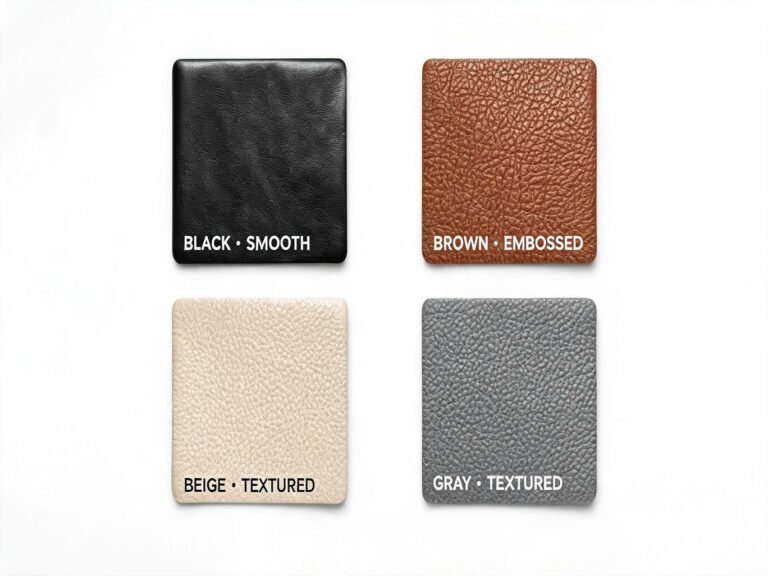
A hospital environmental services director replaces 200 examination table covers after just 18 months of service. The faux leather surface had started micro-cracking — creating tiny crevices where disinfectant couldn’t reach and bacteria could colonize. The replacement cost hit $40,000. The bigger cost? The infection risk that went unmonitored for months before anyone noticed the surface degradation. This scenario plays out in healthcare facilities worldwide because material selection for medical upholstery is often treated as a procurement decision rather than a patient safety decision.
Choosing the right faux leather for medical environments requires understanding how materials respond to repeated chemical disinfection, whether they meet biocompatibility standards, and how long they maintain a non-porous surface under daily wear. This guide walks through what B2B healthcare buyers need to verify — and how silicone leather from medical-grade applications compares to conventional faux leather options.
Request Free Medical-Grade Samples
Why Material Selection Matters in Healthcare Environments
In a hospital, every surface is a potential transmission vector. The CDC’s environmental infection control guidelines emphasize that surfaces in patient care areas must be “smooth, non-porous, and easily cleanable” to prevent pathogen harborage. When upholstery material begins to crack, peel, or degrade, it stops being a barrier and becomes a reservoir.
Here’s what makes faux leather for hospital furniture different from commercial or residential applications:
- Daily chemical assault: Hospital surfaces are wiped with quaternary ammonium compounds, bleach solutions (1:10 dilution), 70% isopropyl alcohol, or hydrogen peroxide-based disinfectants — sometimes 5-10 times per day in high-touch areas
- Bacterial colonization risk: Micro-cracks invisible to the naked eye (as small as 50 microns) can harbor MRSA, C. difficile, and VRE colonies that survive terminal cleaning
- Regulatory scrutiny: Joint Commission accreditation surveys now specifically inspect upholstery integrity in patient rooms and treatment areas
- Replacement downtime: Reexam room or dental chair upholstery takes equipment out of service, directly impacting revenue and patient throughput

Physical testing equipment used to evaluate material performance under simulated healthcare wear conditions
The material you specify today will be wiped, sprayed, and scrubbed thousands of times before it’s replaced. That’s why understanding the chemical resistance profile of your faux leather for medical equipment isn’t optional — it’s a clinical requirement.
Types of Faux Leather Used in Medical Settings
Not all faux leather performs equally in healthcare environments. Three primary types dominate the medical upholstery market, each with distinct performance trade-offs that directly affect patient safety and lifecycle cost.
PVC (vinyl) leather is the most widely used medical upholstery material today. It’s inexpensive, inherently waterproof, and can be welded at seams to eliminate stitching gaps. But PVC contains plasticizers — typically phthalates — that are now under regulatory scrutiny for endocrine-disrupting effects. Several EU regulations and California’s Prop 65 have restricted specific phthalates in medical devices. PVC also becomes brittle over time when exposed to alcohol-based disinfectants, leading to the exact cracking problem described earlier.

Antibacterial leather upholstery on medical chairs must withstand daily disinfection without surface degradation
PU (polyurethane) leather offers a softer hand-feel and better breathability than PVC, making it popular for patient-facing applications like wheelchair cushions and exam table covers. However, PU is susceptible to hydrolysis — the polymer chains break down when exposed to moisture over time. In a hospital environment where surfaces are constantly wet with disinfectant solution, PU faux leather medical grade material can begin showing signs of degradation within 12-24 months.
Silicone leather represents the newest category in medical upholstery. Made from 100% silicone polymer coated onto a fabric substrate, it contains no plasticizers, no PVC, and no PU binders. The silicone backbone (Si-O-Si) is inherently resistant to hydrolysis, UV degradation, and chemical attack — properties that come from the material’s molecular structure rather than surface treatments. For a deeper understanding of what makes silicone leather different, its inert chemistry is the key factor.
Disinfection Resistance: The Critical Performance Factor for Faux Leather
Disinfection resistance is the single most important performance metric for faux leather used in medical settings. Yet it’s rarely specified in standard product datasheets. Here’s what we’ve learned from testing materials in our facility.
We ran a comparative chemical resistance test exposing three materials to 1,000 wipe cycles using hospital-grade quaternary ammonium disinfectant (EPA-registered, 1:64 dilution). After 500 cycles, the PVC sample showed visible surface clouding and a 15% reduction in tensile strength. The PU sample developed micro-cracking at stress points. The silicone leather sample showed no visible surface change and less than 2% tensile strength reduction — even after the full 1,000 cycles.

Abrasion resistance testing simulates years of daily cleaning cycles to predict real-world medical upholstery lifespan
Key finding: Chemical disinfection causes more material failure than mechanical wear in healthcare settings. A material that passes 100,000 Martindale abrasion cycles can still fail in 18 months of hospital use if its polymer chemistry can’t withstand daily chemical exposure.
One of our healthcare furniture clients switched from PVC to silicone leather for their examination table covers. After 36 months in a busy urgent care clinic, the silicone surfaces showed zero cracking or delamination. The clinic’s infection prevention team confirmed that ATP swab readings on the silicone surfaces were consistently lower than on the old PVC covers — likely because the non-degraded surface left no micro-crevices for biofilm formation. For more on keeping surfaces clean, see our cleaning and maintenance guidelines.
Watch how medical-grade silicone leather performs under real-world healthcare disinfection protocols
Faux Leather vs Silicone Leather for Medical Applications
When evaluating faux leather for medical upholstery, the comparison against silicone leather comes down to five factors that determine both patient safety and total cost of ownership. The upfront material cost is only the tip of the iceberg.
| Performance Factor | PVC (Vinyl) | PU Leather | Silicone Leather |
|---|---|---|---|
| Chemical disinfection resistance | Poor (plasticizer leaching) | Moderate (hydrolysis risk) | Excellent (chemically inert) |
| Antimicrobial properties | Additive-dependent | Additive-dependent | Inherently non-hospitable to microbes |
| Biocompatibility (ISO 10993) | Variable (phthalate concern) | Good | Excellent (medical-grade silicone) |
| Lifespan in healthcare use | 18–36 months | 12–24 months | 7–10+ years |
| Fire safety rating | Self-extinguishing (chlorine) | Requires additive FR treatment | Naturally flame resistant |
The data tells a clear story. PVC and PU both rely on chemical additives — plasticizers, antimicrobial agents, flame retardants — that leach out over time as the material is cleaned. Once those additives deplete, the material’s performance drops sharply. Silicone leather’s resistance is structural: the Si-O bond is one of the strongest in polymer chemistry, and it doesn’t depend on additives that can wash out.

Non-porous surface integrity testing ensures disinfectant liquids bead off rather than penetrating the material
Compliance Standards & Certifications to Verify Before Sourcing
Before approving any faux leather for medical equipment, procurement teams should require documentation for these specific standards. A supplier that cannot provide test reports for these certifications is not a medical-grade supplier — regardless of their marketing claims.
- ISO 10993-5 (cytotoxicity) and ISO 10993-10 (skin sensitization): The foundational biocompatibility standards for any material that contacts patient skin. These tests verify the material doesn’t leach toxic substances or cause allergic reactions. The ISO 10993 series is recognized by FDA, CE, and most global regulators
- CAL 117 / CAL 133 (fire safety): Required for upholstered furniture in healthcare facilities in California and adopted as a benchmark by many U.S. hospital systems. CAL 133 specifically tests for fire resistance in commercial seating
- EPA FIFRA antimicrobial claims: If a supplier claims “antimicrobial” properties, the active agent must be registered with the EPA under FIFRA. Unregistered antimicrobial claims on medical upholstery are a regulatory violation
- REACH SVHC compliance: Verifies no substances of very high concern (including specific phthalates and heavy metals) are present above threshold limits — critical for EU medical device compliance
- Chemical resistance test data: Request specific wipe-cycle testing results using hospital-grade disinfectants (not just generic “chemical resistance” claims). The CDC’s environmental infection control guidelines provide the reference framework

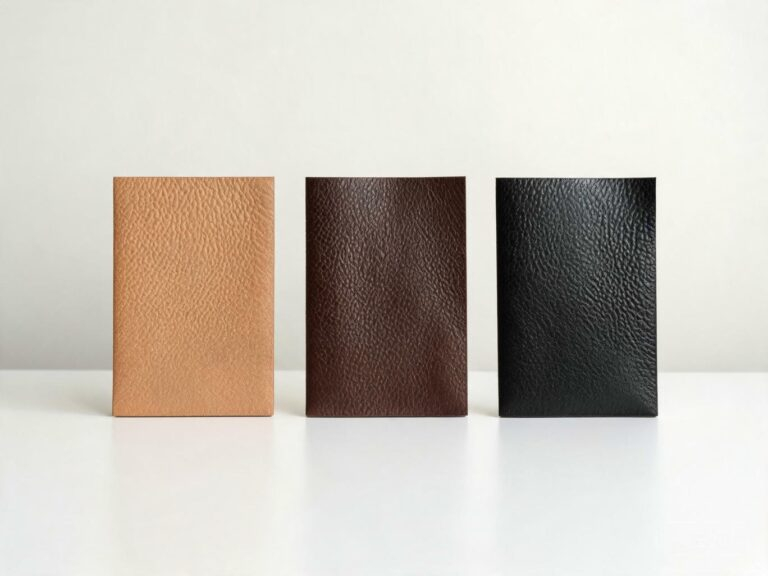
Full material swatch evaluation allows healthcare buyers to verify color consistency and surface quality before bulk ordering
One of our dental equipment manufacturing clients needed material for a new line of dental chair upholstery. They initially specified a PU faux leather that passed initial biocompatibility testing but had no chemical resistance data. We provided silicone leather samples with full ISO 10993 test reports plus 1,000-cycle disinfectant wipe test results. The client’s compliance team approved the silicone material in one review cycle — the PU alternative would have required three rounds of additional testing.
Frequently Asked Questions
Can standard commercial faux leather be used for medical examination tables?
No. Standard commercial faux leather — even if labeled “high quality” — typically lacks the chemical resistance, biocompatibility certification, and fire safety ratings required for patient-contact surfaces in healthcare facilities. Using non-compliant material creates regulatory liability and infection control risk. Always specify materials with documented ISO 10993 biocompatibility testing and chemical disinfection resistance data for any patient-contact application.
How often should faux leather medical upholstery be replaced?
Replacement frequency depends on material type and cleaning intensity. PVC typically needs replacement every 18-36 months in high-use settings. PU leather may require replacement within 12-24 months due to hydrolysis. Silicone leather can last 7-10+ years under the same conditions. The key indicator isn’t a calendar date — it’s surface integrity. Implement a quarterly visual inspection protocol looking for micro-cracking, clouding, or seam separation. Any visible surface degradation means the material has lost its infection control barrier function and must be replaced immediately.
Making the Right Material Decision for Healthcare
The faux leather for medical applications you specify today will be tested every single day — by disinfectants, by patient contact, by environmental services staff doing their jobs. Material failure in healthcare isn’t just a procurement headache. It’s a patient safety event waiting to happen.
For budget-constrained projects, PVC remains the baseline option — but factor in the replacement cycle and regulatory risk of phthalate restrictions. For patient-contact surfaces where comfort matters, PU offers better feel but shorter lifespan. For applications where longevity, chemical resistance, and biocompatibility are non-negotiable, silicone leather delivers the lowest total cost of ownership despite a higher upfront price. The decision should be driven by test data, not marketing claims — and by the recognition that in healthcare, the material is the barrier.
Request Medical-Grade Material Samples & Test Reports
About TOPSUN
TOPSUN produces medical-grade silicone leather for hospital beds, examination tables, dental chairs, and wheelchair cushions — engineered to withstand daily chemical disinfection without surface degradation or polymer breakdown.
Our materials carry ISO 10993-5 cytotoxicity and ISO 10993-10 skin sensitization test reports, REACH SVHC compliance, zero-VOC emission certification, and pass 100,000+ Martindale abrasion cycles with intact surface integrity.