For procurement teams, yacht cabin upholstery must solve problems that surface materials on land never face. Below-deck humidity, condensation cycles, and enclosed-air fire safety requirements create a unique set of risks. The wrong fabric traps moisture, accelerates mold, or fails flame-spread tests at the worst moment. This guide explains how to evaluate boat cabin fabric for these specific below-deck challenges and where silicone leather can reduce warranty exposure without adding maintenance burden.
Download Material Specifications
Below-Deck Humidity and Fire Safety for Cabin Interiors
Cabin upholstery fails differently than open-deck seating because it lives in a sealed, humid envelope. Condensation forms on hull sides overnight, bilge moisture rises, and ventilation is limited. For boat cabin fabric, the buyer should look beyond color charts and ask how the material behaves after months of humidity cycling, whether it resists mold growth, and whether it carries valid fire-safety documentation for enclosed marine spaces.
Accelerated weathering methods such as ASTM G154 UV exposure practice still matter for cabins with ports and hatches, but the more critical tests for below-deck use are hydrolysis resistance and fire retardancy validation. These do not replace shipyard inspection, but they help purchasing teams filter out materials that will soften, delaminate, or emit toxic smoke if ignition occurs in a confined berth or lounge.
Enclosure level matters. A master suite on a 40-meter yacht, a crew cabin on a commercial vessel, and a guest day-cabin on a charter boat may all be called cabin spaces, but each has different occupancy hours, ventilation capacity, and fire-inspection frequency. Good specifications describe the real humidity load and fire-risk class, not only the product name. This prevents over-specifying decorative fabrics in low-risk utility cabins and under-protecting high-occupancy accommodation areas.

Fire retardant testing — yacht cabin materials must meet strict marine fire safety standards.
Waterproofing in Condensed Spaces
Waterproofing below deck serves a different purpose than on open flybridges. A silicone leather surface can block liquid absorption from spills and condensation drip while the full seating system manages air circulation in a space where natural drying is slow. This is important for yacht cabin liner because trapped moisture in foam and backing is the primary reason cabin cushions develop odor, mildew, or structural weakness during seasonal storage.
In our discussions with marine outfitters, the most useful cabin specification is practical: a surface that wipes clean without leaving residue, color that does not shift under LED or halogen lighting, no cold clammy feel when humidity spikes, and seams that hold shape after repeated compression. Materials installed near salt-air intake ducts or machinery spaces should also carry corrosion-relevant coating documentation for any metal support structures, since enclosed cabins concentrate both humidity and airborne salt.

Waterproof surface test — below-deck cabins face humidity and condensation challenges.
Color and Texture for Luxury Marine Living
Below-deck interiors cannot look like utilitarian industrial spaces. Owners and charter guests expect refined grain, tonal depth, and a tactile warmth that matches wood joinery and polished metalwork. Silicone leather allows interior teams to develop pearl grays, warm taupes, deep navies, or custom accent colors without relying on woven textiles that absorb moisture and harbor odor. The result is a cohesive interior scheme that remains cleanable and hygienic.
There is also a practical reason to choose a stable synthetic surface in cabins. Night passages, multi-day charters, and seasonal lay-up all subject accommodation seating to food spills, damp swimwear, and cleaning chemicals. A material that recovers quickly from red wine or sunscreen contact protects guest satisfaction and reduces turnaround labor between charters. In our experience, buyers who test stain release, condensation exposure, and common cabin cleaners before approval avoid the replacement costs that typically appear after the first season.
| Decision Area | What to Specify | Best Fit |
|---|---|---|
| Fire safety | Require marine fire standard compliance and smoke-toxicity data | Enclosed cabins, passenger accommodation |
| Humidity resistance | Specify hydrolysis-stable surfaces and quick-dry backing systems | Below-deck berths, crew cabins, heads |
| Mold prevention | Select non-absorbent surfaces and antimicrobial foam substrates | Long-range cruisers, charter yachts |
| Interior coordination | Request custom color matching and grain consistency across batches | Luxury yacht salons, owner suites |
TOPSUN Marine Interior Solutions
TOPSUN supplies silicone leather for yacht cabins, passenger accommodation, crew quarters, and enclosed marine living spaces where humidity and fire safety create demanding material requirements. Our marine and outdoor silicone leather applications page shows where waterproof, low-emission surfaces are commonly used in interior fit-outs. Buyers comparing cabin upholstery alternatives can also review our marine faux leather guide and outdoor furniture waterproof leather for related exterior seating guidance.
For custom interior projects, the practical starting point is the cabin environment: humidity cycling range, ventilation rate, fire-class requirement, foam substrate type, and cleaning protocol. Once these are documented, TOPSUN can adjust hydrolysis resistance, flame-retardant formulation, grain texture, and color tolerance to match the production schedule and interior design scheme.

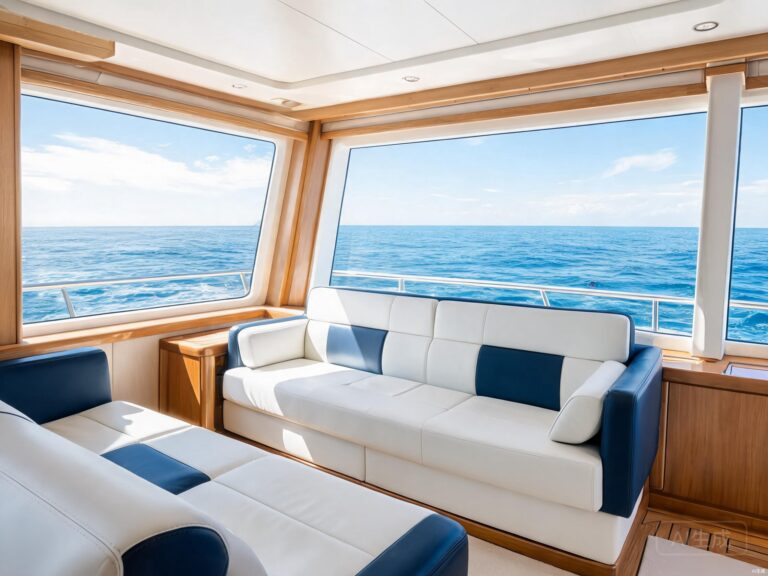
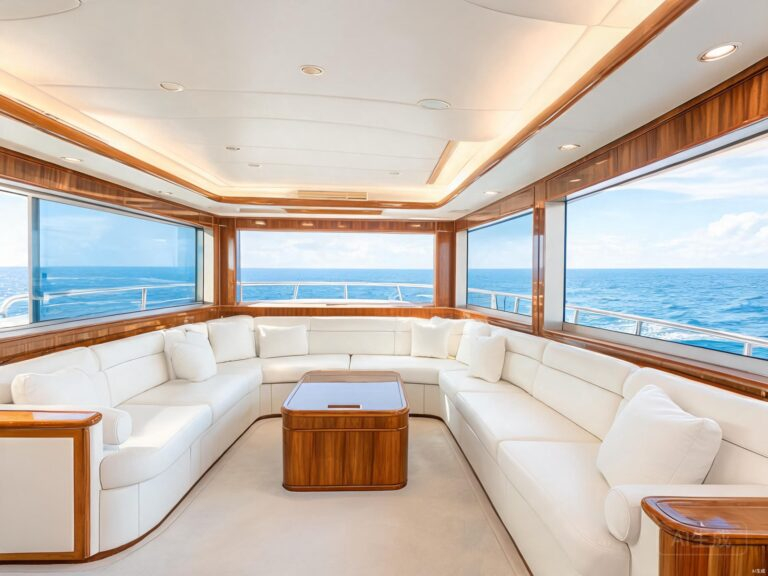
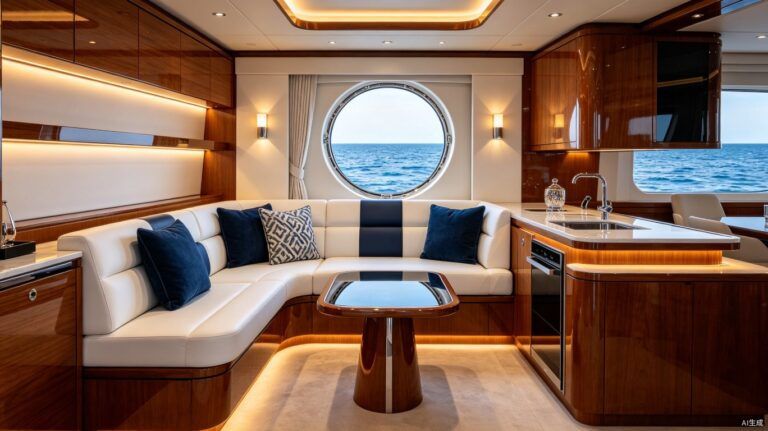
Yacht cabin interior — silicone leather creates a premium, low-maintenance below-deck environment.
Flame retardant certification — essential fire safety standards for enclosed marine spaces.
Specifying Yacht Cabin Upholstery for Production
Include cabin layout drawings, target color references, fire-class requirement, expected cleaning chemicals, and required sample size in the RFQ. If the project involves passenger vessels or charter yachts, request additional documentation on smoke-toxicity data, hydrolysis resistance, and mold-inhibition performance. A small pre-production trial in a humid-environment chamber often prevents costly replacement after the first lay-up period.
For large marine interior programs, approve both appearance and fabrication behavior under real cabin constraints. Ask the workshop to cut, wrap, stitch, and clean the sample in the same lighting and humidity conditions the finished vessel will experience. If the material shows seam slippage around tight berth corners or color variation under LED dimming, adjust the backing, grain, or batch tolerance before issuing the purchase order.
Next Step for Buyers
Yacht cabin upholstery must deliver luxury aesthetics in a confined marine environment with salt air, humidity, and temperature swings. TOPSUN develops marine-grade silicone leather with low VOC emission, hydrolysis resistance, and custom grain matching for interior design schemes. We support OEM color development, flame-retardant formulations, and batch consistency for production runs.
About TOPSUN
TOPSUN develops marine-grade silicone leather for yacht interiors, cabin seating, and enclosed salon applications.
Relevant capabilities include IMO/MED fire-retardant formulation, low VOC emission for confined spaces, hydrolysis resistance, and custom grain matching for interior design schemes.