A VR headset is the most intimate piece of technology most people own. It presses against your forehead, cheeks, and nose bridge for hours at a time — in an environment that’s 35°C+, humid with sweat, and dark enough that bacteria feel right at home. The padding material between the rigid headset shell and the user’s face is not just a comfort component. It’s a skin-contact medical-adjacent surface that determines hygiene, dermatological health, thermal comfort, and product longevity. Yet most VR headset manufacturers — including major brands — still ship with open-cell polyurethane foam that absorbs sweat, breeds bacteria within 30 days of regular use, and structurally degrades within 3–6 months. VR headset padding leather isn’t a cosmetic upgrade. It’s the material decision that separates a headset people use daily from one that causes skin irritation, acne breakouts, and premature replacement.
Request 3C Electronics Leather Samples

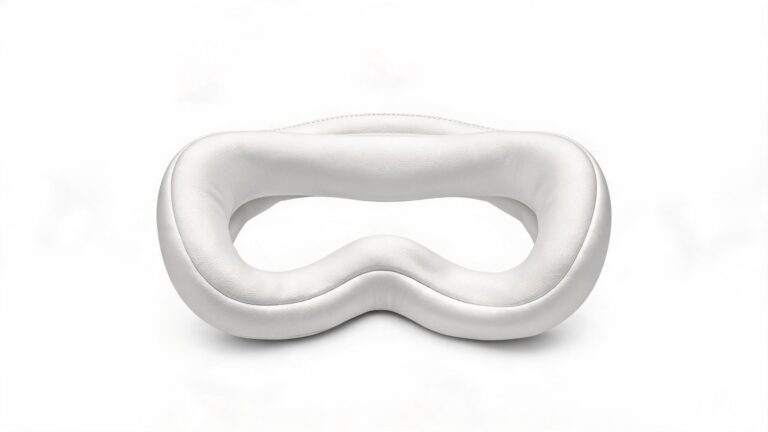
Soft silicone leather — the flexibility and skin-contact quality required for VR headset face cushion applications
The Foam Problem: Why VR Headset Padding Needs Leather
The stock foam pad shipped with most VR headsets fails across three dimensions simultaneously. Understanding each failure mode is essential for specifying a replacement material that actually solves the problem.
Failure 1: Bacterial Colonization
Open-cell PU foam is essentially a sponge with a pore structure designed to absorb impact — and moisture. When a user sweats during a VR session, the foam absorbs sweat, sebum, and skin cells. The warm, dark, moist environment inside the foam is ideal for bacterial and fungal growth. Testing on used VR headset foam pads has shown bacterial counts exceeding 100x the baseline after 30 days of regular use — including Staphylococcus aureus and Corynebacterium species that cause body odor and skin infections. The foam can’t be effectively disinfected because disinfectant doesn’t penetrate the full pore structure, and trapped bacteria recolonize the surface within hours of cleaning.
Failure 2: Structural Degradation
PU foam compresses permanently after 3–6 months of regular use. The cellular structure collapses under repeated facial pressure, reducing the pad’s thickness by 20–40%. This creates three cascading problems: reduced cushioning causes forehead pressure pain, the compressed pad allows light leakage (destroying VR immersion), and the deformed shape creates gaps where sweat pools instead of evaporating. The headset shell — a $500+ device — remains functional, but the $5 foam pad forces premature replacement of the entire interface.
Failure 3: Thermal Discomfort
Foam is a thermal insulator — it traps body heat against the face. Internal temperature inside a VR headset with foam padding reaches 38–42°C within 20 minutes of active use. This heat accelerates sweating, which the foam absorbs, which accelerates bacterial growth — a feedback loop that makes longer sessions progressively less comfortable. Users report needing to remove the headset every 20–30 minutes to wipe sweat and cool down, breaking immersion in applications where continuity matters.

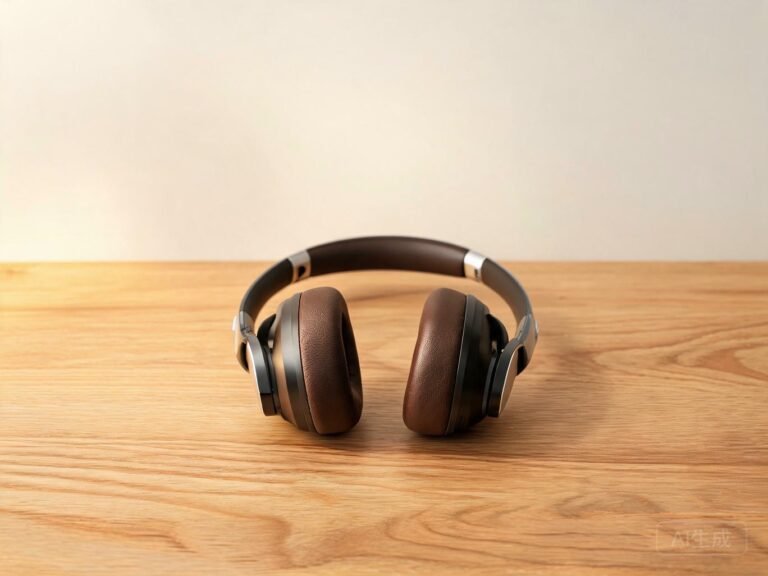
Leather for 3C electronics — VR headset padding requires skin-safe, antibacterial, thermally managed material
VR Headset Padding Leather: Material Comparison
Three material approaches dominate the VR headset padding replacement market. Here’s how they compare across the dimensions that actually matter for skin-contact wearables:
| Property | PU Foam (Stock) | PU Leather + Foam | Silicone Leather |
|---|---|---|---|
| Sweat Absorption | High — sponge effect | Low surface, foam core absorbs | Zero — non-porous surface |
| Bacterial Resistance | None — harbors bacteria | Moderate — surface cleanable, foam harbors | Inherent — antimicrobial without additives |
| Skin-Contact Safety | No certification | Not tested for biocompatibility | ISO 10993-5 certified |
| Thermal Behavior | Insulator — traps heat | Insulator — foam core traps heat | Thermally neutral — doesn’t trap heat |
| Cleaning Method | Damp cloth — incomplete | Wipe with disinfectant | Wipe with alcohol, bleach-safe |
| Service Life | 3–6 months | 6–12 months (foam degrades) | 3–5+ years |
| Softness (Shore A) | Variable — compresses over time | Firm surface, soft foam core | Adjustable — 0.23mm ultra-thin to 2.0mm |
| Allergen Risk | Chemical additives, latex contamination | DMF residue, plasticizers | Hypoallergenic — zero odor, non-toxic |
The data makes the case: PU leather + foam is a half-measure that improves the surface cleanability without solving the foam core’s moisture retention problem. Silicone leather eliminates the failure modes entirely — no absorption, no bacterial harborage, no thermal insulation, no allergen risk. The trade-off is per-unit cost: silicone leather padding costs 3–5x more than PU leather + foam. But at 5x the service life and zero replacement cost, the lifecycle economics favor silicone for any headset used more than 6 months.
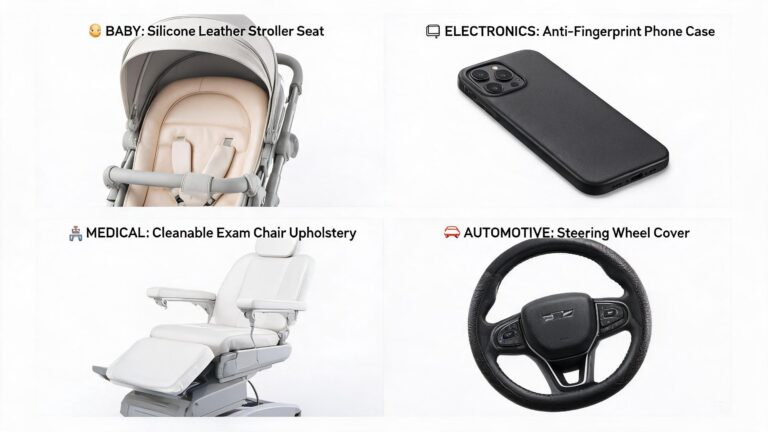
Silicone leather for 3C electronics — skin-contact safe material technology for wearable devices
VR Headset Padding Leather: 6 Specification Requirements
If you’re specifying VR headset padding leather for a headset product — whether for OEM production or aftermarket accessories — these six requirements define a skin-contact safe, hygienically sound, durable face cushion:
- ISO 10993-5 biocompatibility certification — This is the international standard for medical device cytotoxicity testing. Materials that pass this test are certified safe for direct, prolonged skin contact without causing cell damage or irritation. If your VR padding leather doesn’t carry this certification, you’re shipping a skin-contact surface that hasn’t been tested for biological safety — a liability in markets with consumer protection regulations.
- Non-porous, non-absorbent surface — The material surface must not absorb sweat or sebum. This means no open-cell foam, no fabric backing exposed at edges, and no coating that degrades into a porous surface. Test method: place a 0.5ml water droplet on the surface; it should bead and roll off within 5 seconds at a 15° tilt angle.
- Alcohol disinfectant compatibility — VR headsets used in commercial settings (arcades, training facilities, medical VR) must be disinfected between users with 70% isopropyl alcohol. The padding material must show no surface degradation, discoloration, or tackiness after 1,000 wipe cycles with alcohol. Silicone leather passes; PU leather develops surface tackiness after 200–300 alcohol wipes.
- Thermal conductivity ≥ 0.15 W/m·K — The padding must not trap heat against the face. Materials with low thermal conductivity (like foam at 0.03 W/m·K) create a thermal barrier. Silicone leather at 0.15–0.20 W/m·K allows some heat dissipation, reducing face temperature by 3–5°C compared to foam padding.
- Thickness range 0.5–1.5mm — VR padding needs to be thick enough for cushioning but thin enough to maintain the headset’s optical alignment. Thicker padding moves the eyes further from the lenses, reducing field of view and causing edge distortion. Specify 0.8–1.2mm for adult headsets, 0.5–0.8mm for children’s headsets where facial dimensions are smaller.
- Hypoallergenic declaration — The material must be free of known sensitizers: latex, phthalates, DMF, BPA, and formaldehyde. Require a chemical content declaration backed by REACH compliance testing. Materials that off-gas VOCs or have detectable odor are unacceptable for a device pressed against the face for hours.
About TOPSUN: VR Headset Padding Material Supply
TOPSUN’s ultra-thin silicone leather collection (0.23–0.8mm) is engineered for skin-contact wearable applications including VR headset padding. Our material holds ISO 10993-5:2009 biocompatibility certification (tested by SGS-CSTC Guangzhou), confirming non-cytotoxic performance for prolonged skin contact. The silicone polymer matrix provides inherent antimicrobial properties without chemical additives, and the non-porous surface is compatible with alcohol disinfectants, bleach, and hospital-grade cleaning protocols. Available in 100+ textures and unlimited Pantone-matched colors, the material can be die-cut or CNC-cut to any headset interface geometry. Monthly capacity of 500,000+ meters means we scale from prototype to mass production within 7–15 days. Explore our 3C electronics applications or read our VR headset face cushion material guide.
VR Headset Padding Leather: Market Context
The VR headset market is projected to reach 50+ million units annually by 2028, with each unit requiring at least one replaceable face cushion. The aftermarket accessories market for VR padding — replacement pads, hygiene covers, comfort upgrades — is already a $200M+ segment growing at 25% annually. The material specification trend is clear: PU leather + foam is the current standard, silicone leather is the premium upgrade, and the gap between them is closing as silicone leather production scales and prices decline. Brands that specify silicone leather padding now gain a comfort and hygiene differentiation that competitors using foam can’t match — and avoid the warranty and return issues that foam degradation causes within the first year of use.
VR Headset Padding Leather: Frequently Asked Questions
Is silicone leather safe for direct skin contact on VR headsets?
Yes. TOPSUN’s silicone leather passes ISO 10993-5:2009 biocompatibility testing (cytotoxicity, MTT assay), confirming it is non-toxic and safe for prolonged direct skin contact. The material is also hypoallergenic — free of latex, phthalates, DMF, BPA, and formaldehyde.
How do you clean silicone leather VR headset padding?
Wipe with 70% isopropyl alcohol, bleach solution (1:10 dilution), or soap and water. The non-porous surface shows no degradation after 1,000+ cleaning cycles. For commercial VR arcades or medical VR training, the material can be disinfected between users with standard hospital wipes — no removal or machine washing needed.
How long does silicone leather VR padding last?
3–5+ years of regular use, compared to 3–6 months for stock foam and 6–12 months for PU leather + foam. The silicone polymer doesn’t compress permanently, doesn’t degrade from sweat or UV, and doesn’t lose surface integrity from repeated cleaning.
What thickness is best for VR headset padding leather?
0.8–1.2mm for adult headsets, 0.5–0.8mm for children’s headsets. The material provides cushioning while maintaining optical alignment — thicker padding increases eye-to-lens distance, reducing field of view. TOPSUN’s ultra-thin collection covers 0.23–0.8mm for precision applications.
The Bottom Line
VR headset padding is the most undervalued material specification in the wearable technology stack. Brands spend billions on display resolution, tracking accuracy, and processor speed — then ship a $2 foam pad that causes skin irritation, bacterial growth, and structural failure within 6 months. The padding is the only component that touches the user’s skin for hours, and it deserves material science proportional to that responsibility. Silicone leather padding, certified to ISO 10993-5, solves every failure mode of foam: no absorption, no bacteria, no heat trapping, no degradation. It costs more per unit — and less per year of use. Specify it for any headset expected to last more than 6 months, and you’ve eliminated the most common source of user complaints, warranty claims, and premature product abandonment.
Need skin-safe VR headset padding material?
TOPSUN supplies ISO 10993-5 certified silicone leather for VR headset padding — ultra-thin, hypoallergenic, alcohol-disinfectant compatible. Free A4 test swatches shipped worldwide via DHL/FedEx. Contact info@topsunsiliconeleather.com or WhatsApp +44 744 461 7933.
Related: VR Headset Face Cushion Material | Silicone Leather for 3C Electronics | 3C Accessories Applications | Ultra Thin Collection