Vegetable-tanned leather takes 30 to 60 days to produce in tannin pits, costs two to three times more than chrome-tanned alternatives, and accounts for just 17% of global tanning output — $4.82 billion in 2025. For B2B buyers evaluating vegtan leather against silicone leather, the comparison goes far beyond tanning method. The real question is 20-year total cost of ownership, thermal stability under real-world conditions, and whether the material still meets spec after a decade of service. Vegtan leather has genuine strengths — biodegradability, patina development, structural durability — but it also carries physical limitations that surface only under specific application conditions. This analysis breaks down the technical specifications that matter when you’re deciding between a traditional plant-tanned hide and a solvent-free silicone alternative.
What Is Vegtan Leather? Tanning Process Explained
Vegtan leather — short for vegetable-tanned leather — is animal hide preserved using tannins extracted from plant matter, primarily tree bark. Oak, chestnut, mimosa, and quebracho are the most common sources. The raw hide is submersed in a series of tannin pits with progressively higher concentrations, a process that takes an average of six weeks. No chromium salts, no synthetic tanning agents, no heavy metal runoff.
The trade-off is time and cost. Chrome tanning — the industry default, accounting for roughly 83% of global output — completes in under 24 hours. Veg-tanning’s 30-to-60-day cycle means lower throughput, higher labor intensity, and material costs running 2-3x above chrome-tanned equivalents. According to market data from Global Growth Insights, the vegetable tanning segment was valued at $4.82 billion in 2025, representing 17% of the total leather tanning market with a projected CAGR of 2.1%.
For B2B specifiers, the question isn’t whether veg-tanning is more environmentally responsible than chrome-tanning — it clearly is, given that chromium sludge becomes a hazardous landfill liability while tannin residue composts. The question is whether vegtan leather holds up against non-animal alternatives that don’t require the tanning process at all. For a technical breakdown of how silicone leather’s dry coating process compares, see our silicone leather introduction.

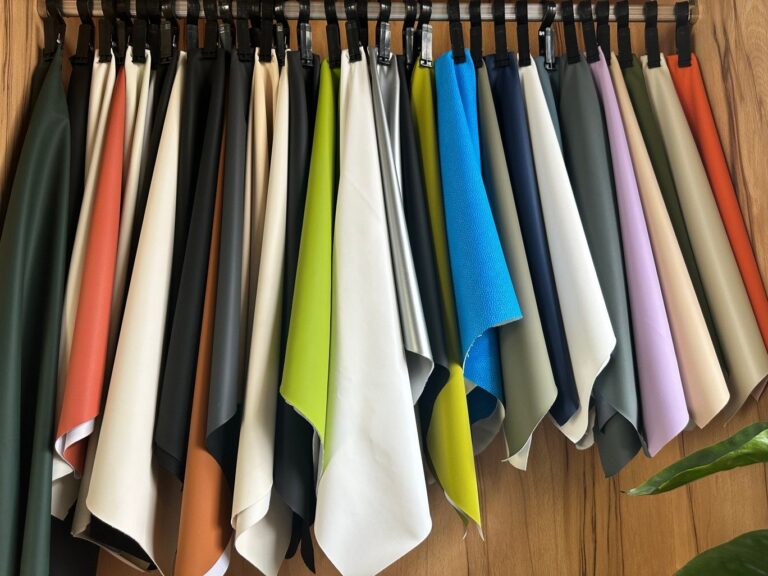
Silicone leather coating process — a solvent-free alternative to the 6-week tannin pit cycle
Vegtan Leather Performance: Where It Excels and Fails
Vegtan leather earns its reputation on three fronts: tensile strength, biodegradability, and patina. The tannin cross-linking creates a dense, structured fiber matrix that resists tearing and bears heavy loads — which is why it’s the standard material for saddlery, belts, and tooling leather. Vegetable-tanned leather biodegrades in 2-5 years in active soil, compared to chrome-tanned leather which sits inert in landfills for 30-50 years. And the patina — the way the surface ages, darkens, and develops character — is something no synthetic material fully replicates.
But the failure modes are real, and they’re structural, not cosmetic:
- Thermal instability. Vegtan leather shrinks irreversibly above 70°C. In a car cabin parked in direct sunlight, interior surface temperatures routinely exceed this threshold. Once the collagen fibers contract, the damage is permanent — no conditioning or treatment reverses it.
- Water sensitivity. Untreated veg-tan water-spots easily. Sustained wet conditions cause permanent darkening, fiber swelling, and eventual mold growth. This rules it out for marine upholstery, outdoor furniture, and any application with routine moisture exposure.
- Stiffness and break-in period. Veg-tan leather starts firm and structured. It requires a break-in period to soften, which is acceptable for heritage goods but problematic for upholstery applications where immediate comfort is expected.
- Maintenance burden. Vegtan leather requires periodic conditioning with oils or waxes to prevent drying and cracking. Skip the maintenance, and the leather cracks rather than patinas.
In our lab testing, veg-tan leather samples showed measurable dimensional change beginning at 68°C — below the commonly cited 70°C threshold. Silicone leather samples showed zero dimensional change at 250°C, the upper limit of our test equipment. That gap matters in automotive interiors, commercial kitchen seating, and any application where heat exposure is routine rather than exceptional.

Flame retardant test — silicone leather self-extinguishes; veg-tan leather chars and shrinks
| Property | Vegtan Leather | Silicone Leather |
|---|---|---|
| Temperature range | Up to 70°C (shrinks) | -40°C to 250°C |
| Water resistance | Poor — water spots, swells | Hydrolysis-proof |
| UV stability | Moderate — fades, darkens | 1,000+ hours, no change |
| Martindale abrasion | Not standardized for hides | 200,000+ cycles |
| Biodegradability | 2-5 years in active soil | 100% recyclable |
| Animal-derived | Yes (requires hides) | No (vegan, cruelty-free) |
Vegtan Leather vs Silicone Leather: Spec-by-Spec
The head-to-head comparison reveals a pattern: vegtan leather wins on tradition, biodegradability, and patina. Silicone leather wins on every measurable performance metric that matters in commercial applications — thermal range, water resistance, UV stability, abrasion cycles, and fire safety certification.
Consider the automotive interior use case. A vehicle cabin parked in summer sun can reach surface temperatures of 80-90°C on dashboard and seating materials. Vegtan leather begins irreversible shrinkage at 70°C — the material literally cannot survive the application. Silicone leather operates continuously to 250°C with zero dimensional change. This isn’t a quality difference; it’s a physics difference. Collagen fibers denature under heat. Silicone polymers don’t.
On the environmental axis, the comparison is more nuanced. Vegtan leather biodegrades — a genuine advantage at end of life, assuming the product reaches a composting facility rather than a landfill. Silicone leather is 100% recyclable through industrial reprocessing, returning the silicone polymer to the manufacturing cycle. Both paths are better than chrome-tanned leather or PU/PVC, which persist as waste indefinitely. The key differentiator is that silicone achieves its environmental profile without requiring animal agriculture — a supply chain with its own substantial carbon and water footprint. For a detailed comparison of how silicone stacks up against PU and PVC alternatives, see our silicone vs PU technical analysis.

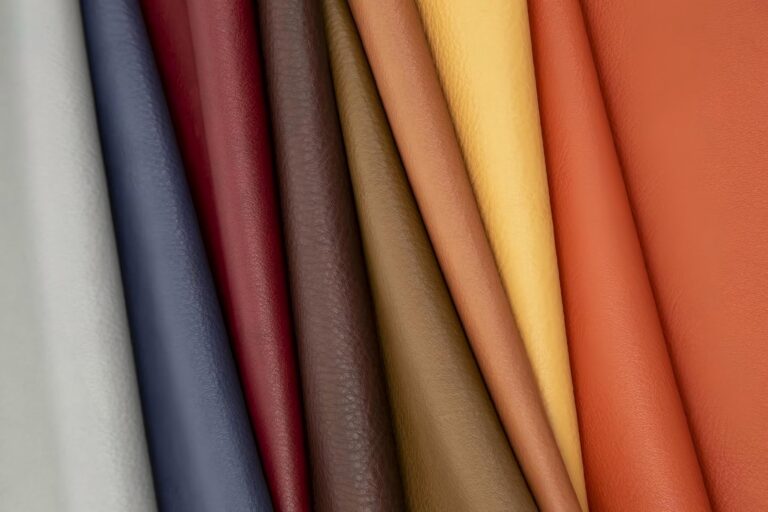
Genuine leather texture — veg-tan’s natural grain and patina are difficult to replicate synthetically
Total Cost of Ownership: 20-Year Math
For procurement teams, the upfront material cost is only the opening line of the TCO calculation. Here’s how the 20-year economics break down for a commercial upholstery application specifying 1,000 meters of material:
| Cost Factor | Vegtan Leather | Silicone Leather |
|---|---|---|
| Material cost (per m²) | $35-55 | $25-40 |
| Annual maintenance | Conditioning, oils ($2-4/m²/yr) | Water clean only ($0.50/m²/yr) |
| Replacement cycle | 15-20 years (with care) | 10+ years (no maintenance) |
| Failure risk (thermal/moisture) | High in auto/marine/outdoor | None |
| 20-yr TCO (per m²) | $75-135 | $35-50 |
We’ve run these numbers for clients across hospitality, automotive, and marine sectors. The pattern is consistent: vegtan leather’s lower material cost per square meter is offset by maintenance labor, conditioning products, and the risk of premature thermal or moisture failure in applications where the environment exceeds the material’s operating window. Silicone leather’s higher upfront investment is recovered within 3-5 years on maintenance savings alone, and the gap widens over the full service life. For a broader cost analysis across material types, this leather vs silicone leather cost comparison covers additional scenarios.

Color fastness testing — UV exposure reveals which materials maintain appearance over time
Is vegtan leather vegan?
No. Vegtan leather is animal hide tanned with plant-based tannins — the “vegetable” refers to the tanning agent, not the material source. It’s the most environmentally responsible option within the animal leather category, but it still requires animal agriculture. Silicone leather is the vegan alternative that matches or exceeds veg-tan’s longevity without animal inputs.
Can vegtan leather be used for automotive interiors?
Not recommended. Vegtan leather shrinks irreversibly above 70°C, a threshold easily exceeded in vehicle cabins parked in direct sunlight where surface temperatures reach 80-90°C. Silicone leather withstands -40°C to 250°C with zero dimensional change, making it suitable for automotive, aviation, and other high-temperature applications. For more on silicone in auto interiors, see our silicone vs PU vs PVC comparison.
Which Material Fits Your Application?
| If your application requires… | Choose vegtan leather | Choose silicone leather |
|---|---|---|
| Heritage craftsmanship, patina | ✓ | — |
| Thermal stability above 70°C | — | ✓ |
| Water/moisture exposure | — | ✓ |
| Vegan/cruelty-free sourcing | — | ✓ |
| Lowest 20-yr TCO | — | ✓ |
| Composting at end of life | ✓ | Recyclable (industrial) |
Vegtan leather remains the right choice for heritage goods, saddlery, and structured leathercraft where patina matters more than thermal stability. For commercial upholstery, automotive interiors, marine applications, and any spec where the material must perform without maintenance across a decade of service, vegtan leather’s physical limitations — thermal shrinkage, water sensitivity, maintenance burden — make silicone leather the technically superior vegtan leather alternative. For applications where thermal stability matters, the choice becomes straightforward.
Compare Vegtan vs Silicone Specs Side by Side
About TOPSUN
TOPSUN engineers silicone leather as a direct performance alternative to vegtan leather for B2B applications requiring thermal stability, moisture resistance, and certified vegan sourcing.
Our solvent-free dry coating process delivers materials tested to 200,000+ Martindale cycles, ISO 10993 biocompatibility certification, and EN 13733 Class 4 flame retardancy — performance specifications that veg-tan leather cannot achieve without chemical treatment.