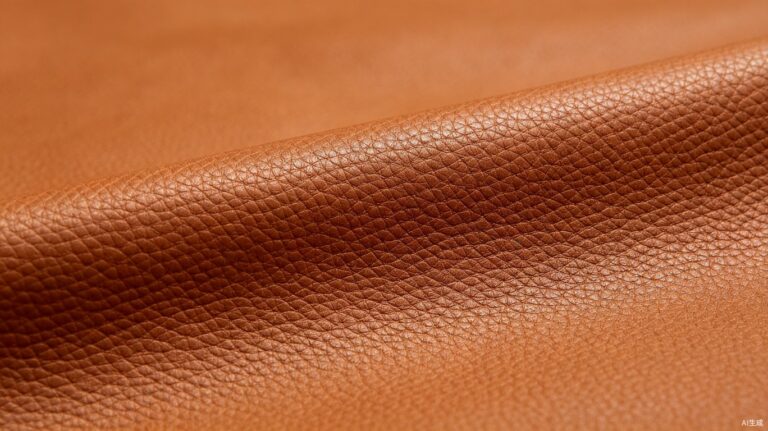
At 6:40 this morning, a 1,200-meter order went onto our coating line. The material was lychee grain, bound for a handbag brand in Spain. By noon it had been mixed, coated, cured and printed with its texture. By evening it was tested and rewound for shipping. Every stage it passed through is part of the vegan leather process. That holds whether the resin on the line is fossil PU, bio-based PU or silicone. Most buyers only see the swatch. Here is what the line does to earn it.
This guide walks the full journey in six steps. It then compares the three process routes that compete for the same product.
What the Vegan Leather Process Really Means
Strip the marketing and vegan leather is a layered composite: a textile backing, a polymer surface layer, and a finish. Industry explainers converge on a five-step skeleton. It runs: select a base material, prepare the surface layer, bond the layers, texture and finish. Our line splits that skeleton into six controllable steps, because the sixth, quality control, is where orders quietly fail.
The commercial stakes are large. The synthetic leather market is projected to reach $71.86 billion by 2031. It starts from $45.22 billion in 2025, an 8.03% annual rate. Within that market, water-based PU coating and solvent-free PU systems are tracked as separate technologies. The market split tells you how much the solvent question matters. Bio-based PU leather alone is forecast to nearly double, from $785.42 million in 2025 to $1.36 billion by 2032.
That growth attracts new suppliers fast, and not all of them run a disciplined line. The process, however, is public knowledge. What separates factories is how tightly each step is controlled and documented. Buyers who understand the six steps can audit a supplier in one visit. Buyers who do not must trust the swatch alone.
Steps 1 and 2: Backing Fabric and Surface Formulation
Step 1 is the base. A woven or knitted backing, usually polyester, cotton or nylon, is mounted on the unwinding stand. It is inspected for flaws and set under even tension. A weak backing limits every layer above it. Substrate choice is the first quality decision, not the last.
Backings differ by job. A knit gives softness and drape for fashion goods. A woven base adds dimensional stability for furniture and automotive panels. Microfiber backings push abrasion and hydrolysis performance further, which is why premium coated goods specify them. Whatever the choice, moisture content and surface cleanliness are checked before the roll enters the coater.
Step 2 is the recipe. The surface layer starts as a polymer system blended with stabilizers, pigments and softening agents. The polymer itself can be PU, bio-based PU or silicone. This is the point where process routes diverge. Solvent-based PU carries DMF and other volatile carriers that must be driven off in the oven. Water-based PU replaces them with water. Silicone needs no solvent at all, because the polymer is already a liquid that cures into its final form.

Formulation station: polymer, pigment and additives are metered before anything touches the line.
Steps 3 and 4: Coating and Curing
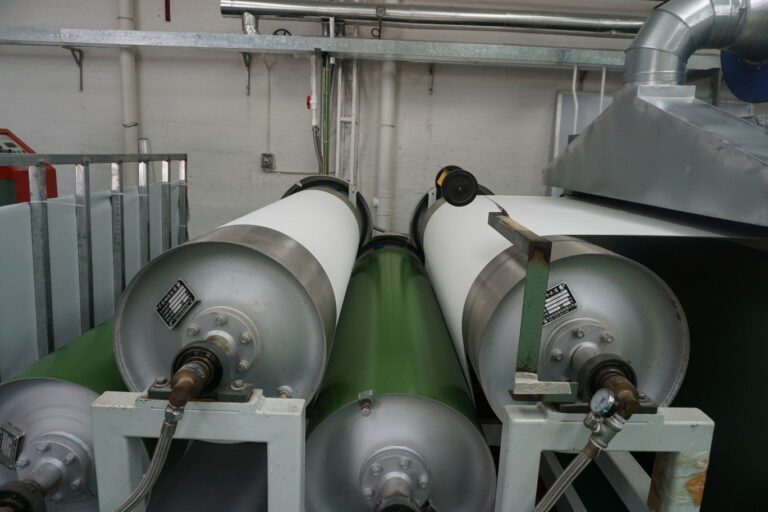
Step 3 moves the recipe onto the fabric. Direct coating spreads the liquid through a knife gap straight onto the backing. Transfer coating works the other way. The polymer is first cast onto release paper that carries the grain pattern. The backing is then laminated onto it, and the paper is peeled away. Transfer coating gives the finest grain control, and the release paper runs through many cycles before retirement.

Release paper on the unwinding stand: the grain you feel on the finished roll is cast here first.
The release process on camera: casting, laminating and peeling in one continuous pass.
Step 4 is the oven. Curing drives off carriers and locks the polymer network in place. Temperature and dwell time are tuned per formulation. The difference shows immediately. A rushed cure traps volatiles that surface later as odor. A controlled cure leaves nothing to evaporate. On our line the silicone system cures clean, with non-detect VOC results per ISO 16000-6 chamber testing. You can see the full setup in our factory production overview.
Oven control also sets the pace of the whole line. Too hot, and the surface skins before the body cures. Too cool, and the web exits tacky and off-gassing later. Modern lines zone their ovens in stages, so each millimeter of coating cures on its own schedule.

A prime coating pass on the laminator: gap setting and speed decide thickness within microns.
Steps 5 and 6: Finishing and the QC Gate
Step 5 is appearance. With transfer coating, the grain arrives from the release paper. Direct coating lines run the web through an embossing roller instead. A top coat then adds sheen control, water resistance and abrasion margin. Color is checked against the approved standard. Our bench records Delta E readings against the Pantone or RAL reference for every batch.
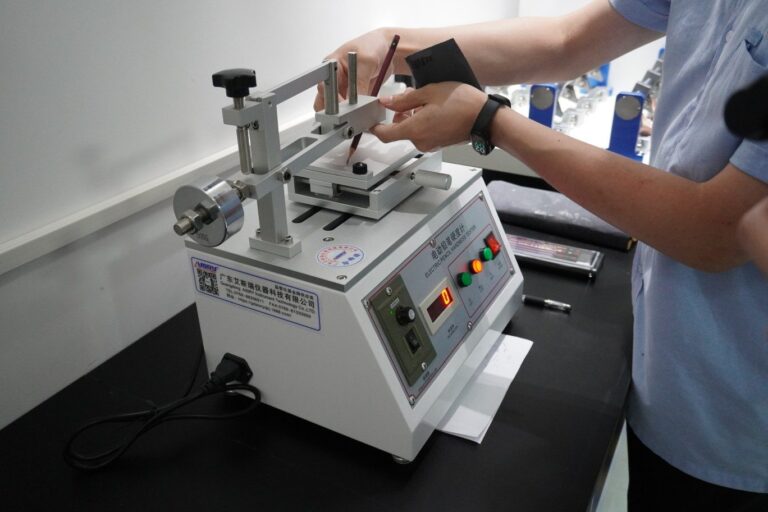
Step 6 decides what ships. Peel strength, flex cycles, abrasion and hydrolysis sampling run per order spec. Third-party inspection is welcome before rewinding. The Spanish order from this morning cleared all four tests by late afternoon. A 1,200-meter order leaves the line only when its documents can. That paper trail is what a buyer is really purchasing.
What do those bench tests actually measure? Peel strength predicts delamination risk at seams. Flex cycles predict cracking at fold points on bags and upholstery. Hydrolysis sampling predicts how the material survives humid years, which is where PU coatings traditionally age first. Each number goes into the batch file beside the material itself.
Three Routes Through the Same Six Steps
The steps are constant. The chemistry is not. Solvent PU is the incumbent. It offers cheap tooling and a mature supply chain, but solvent recovery and VOC management are permanent costs. Water-based PU cuts the solvent load sharply and suits indoor goods well. Solvent-free silicone skips the carrier entirely and buys longevity. Its 10 to 15 year service life is what replacement math favors.
| Route | Carrier | Strengths | Watch-outs |
|---|---|---|---|
| Solvent-based PU | DMF and volatile solvents | Low cost, mature tooling | VOC management, odor risk, tightening rules |
| Water-based PU | Water | Low emissions, indoor-friendly | Slower drying, hydrolysis limits |
| Solvent-free silicone | None | Non-detect VOC, 10-15 year life, hydrolysis stable | Higher unit price |
For buyers, the decision narrows to application. What silicone leather is made of explains the construction in detail. In short, a silicone surface on a stable backing trades a higher unit price for fewer replacement cycles. It also buys cleaner air in the cabin or showroom.
Price gaps between routes look smaller once service life enters the math. A seat cover replaced twice in a decade costs more than a dearer cover installed once. The same logic applies to warranty exposure and to indoor air compliance. This is why European buyers now ask for process documentation first and negotiate price second.
Where Plant-Based Leathers Enter the Picture
Plant-based versions reroute the start of the process rather than inventing a new one. Cactus, apple, pineapple leaf and mushroom inputs are processed into mats or pulps. They are then bonded to a textile backer, often with a bio-based or conventional binder. Corn-based polyols already hold 39.9% of the bio-based PU market, and footwear takes 34.6% of its output. The same five-step skeleton applies; only the resin tap changes.
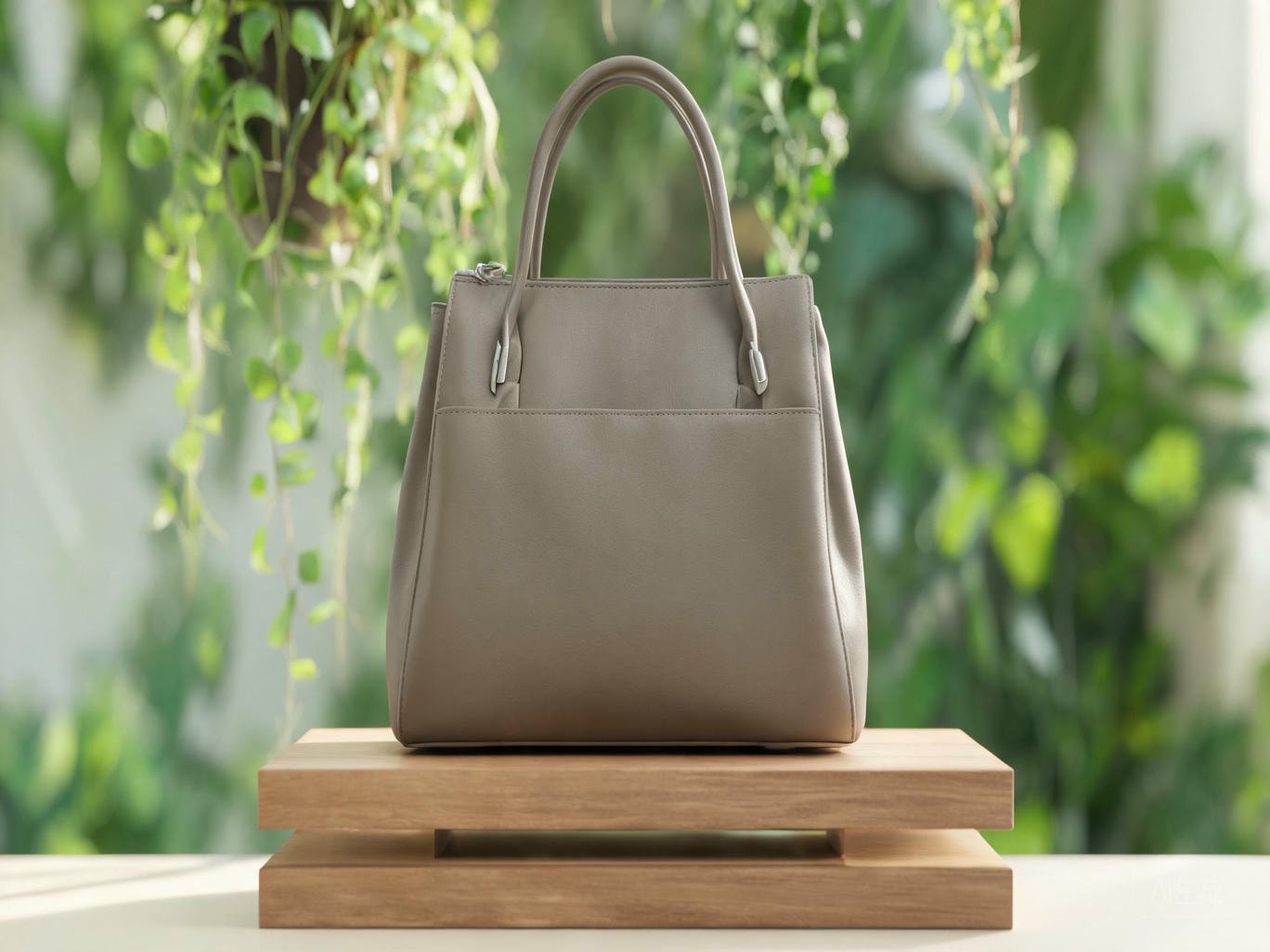
Mushroom-based material: the same bonding and finishing logic, a different feedstock.
Honesty helps here. Many commercial plant leathers still carry a polymer fraction for durability. Asking what percentage of the sheet is truly bio-based is a fair question for any supplier.
Volume tells the same story. Bio-based PU capacity is concentrated in Asia Pacific, and corn polyol supply chains are maturing quickly. Buyers who need a bio claim should ask which share of the polymer, not just the surface, comes from renewable carbon.
Which Vegan Leather Process Route Fits Your Product
Match route to exposure. Indoor, low-wear goods suit water-based PU, which balances cost and cleanliness. High-contact, high-moisture or long-warranty products earn their price from solvent-free silicone across the service life. Legacy lines with existing tooling stay workable on solvent PU. Budget for solvent recovery and VOC reporting though, because regulation keeps moving against it.
Two practical questions close the gap. First, ask how the grain is applied, because transfer coating holds pattern fidelity far longer than light embossing. Second, ask what happens to off-spec web, since a factory that reworks and retests openly will treat your order the same way.
Send Us Your Application Brief
One sentence settles it: the vegan leather process is six repeatable steps, and the step that separates suppliers is the chemistry they pour at step two.
Is vegan leather always plastic?
No, but the label hides nuance. Plant-based versions exist, yet many commercial sheets still carry a conventional polymer binder for strength and print quality. Ask for the composition breakdown in percentages, not the marketing category.
What is transfer coating with release paper?
It is a two-stage casting method. The polymer layer is first cast onto an engraved release paper. The fabric backing is laminated onto the wet layer. The paper is peeled away once cured. The method delivers the sharpest grain definition, and one paper roll can imprint many production runs.
How can I verify a clean process before ordering?
Ask for three things with the sample. Demand VOC chamber results per ISO 16000-6, a solvent declaration, and third-party inspection rights. A supplier with nothing to hide sends documents alongside the swatch, not after the purchase order.
Request Samples With Process Documents
References
- https://www.cuindependent.com/what-is-vegan-lea… — Five-step vegan leather manufacturing skeleton: base material selection, surface layer prep, layer bonding, texturing and embossing, finishing and coating
- https://www.mordorintelligence.com/industry-rep… — Synthetic leather market USD 45.22B (2025) to USD 71.86B (2031), CAGR 8.03%; water-based PU coating and solvent-free PU systems tracked as manufacturing technologies
- https://pmarketresearch.com/chemi/bio-based-pu-… — Bio-based PU leather USD 785.42M (2025) to USD 1.36B (2032), CAGR 8.12%; corn-based polyols 39.9% share; footwear 34.6% of application demand