A three-year-old EV came through our partner’s reconditioning bay last spring with 61,000 km on it. The vegan leather interior still photographed well — until you touched the driver’s bolster, where the surface had crazed into a web of hairline cracks no conditioner can fix. The retrim quote ate most of the trade-in margin. If you run fleets, dealerships, or any program that holds vehicles past year three, that is the vegan leather interior conversation that matters: what the label actually promises, when the material gives out, and how to specify one that doesn’t.
Order Free Vegan Interior Swatches
What a Vegan Leather Interior Actually Promises
“Vegan” certifies origin, not performance. It tells you the material contains no animal inputs — and nothing whatsoever about abrasion cycles, hydrolysis resistance, VOC emissions, or how the surface ages. That distinction is getting expensive to ignore. The vegan leather market is estimated at $32.8 billion in 2026 and projected to reach $86.66 billion by 2035 at an 11.4% CAGR, with automotive interiors among the leading drivers, according to Morgan Reed Insights. Volvo has publicly committed to leather-free interiors by 2030, Tesla ships synthetic cabin trim as standard, BMW pushes Sensatec, Porsche offers Race-Tex, and Mercedes went as far as an independently certified vegan interior in the EQXX.
For buyers, the boom means more suppliers and a much wider quality spread, because the label does not rank anything. Two materials can both be honestly vegan while one lasts three years and the other ten. Before comparing candidates, it helps to understand how silicone leather is built and why it qualifies as vegan — the construction explains most of the aging differences you will see below.

Most premium EVs now ship a vegan cabin as standard — the question is which polymer is underneath.
Where a Vegan Leather Interior Shows Its Age: The Year-4 Data
Published industry testing of high-grade PU vegan leather — the material inside most current vegan cabins — shows 45,000–65,000 crack-resistance cycles and color drift of ΔE 3.2–5.8 after 2,000 hours of UV exposure, per comparative cabin-material testing. In-service lifespan runs 3–7 years, with visible cracking common after year 4 in hot, dry climates. The matching OEM warranties run two to four years and exclude “normal wear” — which is precisely what a crazed bolster gets classified as when the claim comes in.
| Material | Wear evidence | UV fade | In-service lifespan | Warranty reality |
|---|---|---|---|---|
| High-grade PU | 45,000–65,000 crack cycles | ΔE 3.2–5.8 after 2,000 hrs | 3–7 years; cracking common past year 4 in hot climates | 2–4 years, excludes “normal wear” |
| PVC (leatherette) | Hardens as plasticizers migrate out | Poor; cracks within 1–2 years of sun exposure | 2–3 years in demanding use | Shortest coverage tier |
| Mycelium / bio-based | 28,000–35,000 crack cycles; limited field data | ΔE 2.4–3.9 | 5–8 years (early programs) | ~3 years in early programs |
| Silicone | 200,000+ Martindale cycles (ISO 12947-2)* | Grade 4–5 fastness; UV-stable 1,000+ hrs | 10+ years | 12-month material warranty; 5× PU lifespan in side-by-side testing |
*Crack-cycle figures and Martindale counts come from different test methods and are not directly comparable — the point is the order of magnitude and what each supplier can document.
Heat is only half the story. Detailers were among the first to document that vegan surfaces decline faster when maintained with products formulated for animal hide: vegan trim is less porous, and alcohol- or solvent-heavy cleaners strip PU topcoats years early. The known failure pattern of PU vegan leather follows the same logic — it is chemistry the surface cannot shrug off, repeated weekly, in a cabin that bakes.

Strength and wear benches like this one generate the numbers your spec sheet should demand.
Specifying Vegan Interiors: The Clauses That Keep Programs Whole
So how do you buy a vegan interior that outlives both its warranty and your holding period? You write clauses, not adjectives. Five have proven worth their negotiating weight:
- Per-construction wear data: ISO 12947-2 Martindale count and flex/crack cycles for the exact build you are buying, with the test lab named.
- UV stability as a number: ΔE after a stated exposure, or a light-fastness grade — Grade 4–5 is the defensible floor for sun-exposed cabins.
- Hydrolysis class for humid markets: PU’s weakest joint, and the one that rarely appears in brochures.
- Warranty duration that matches your holding period, with the wear exclusions read before signing, not after the first claim.
- Vegan documentation if the claim is customer-facing: a material declaration, and something concrete behind the word “vegan” on the spec sticker.
A seat-cover brand we supply ran our vegan silicone construction beside their PU incumbent through accelerated heat-humidity aging; the PU samples showed measurable surface change while the silicone samples came through visually unchanged. Numbers like that belong in your spec sheet. And because a vegan claim deserves environmental receipts too, our eco-friendly silicone leather profile documents the solvent-free process behind the material — worth reviewing if your program markets sustainability alongside animal-free sourcing.

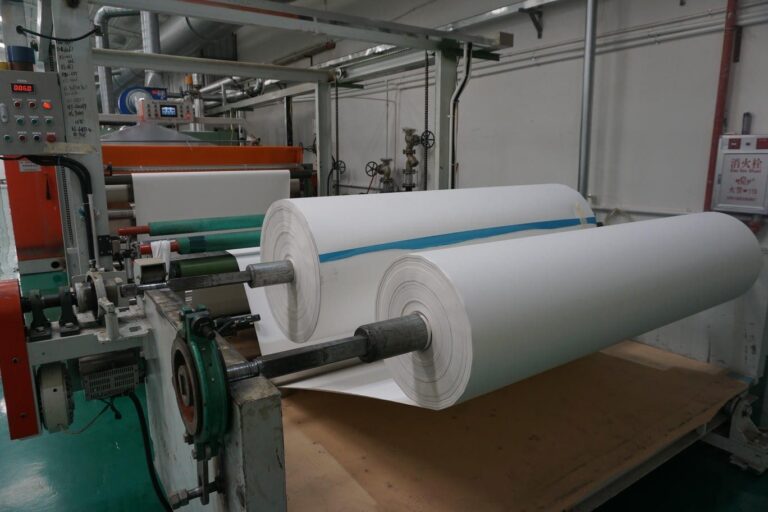
Inspection benches like this back the paperwork — per-batch checks before any roll ships.
Watch two interior materials age side by side — the divergence starts earlier than most spec sheets admit.
Frequently Asked Questions
Do vegan leather interiors last as long as real leather?
Well-maintained genuine leather can run 15–20 years; premium vegan interiors reach 7–10; commodity PU often shows wear within 3–7. The spread inside the vegan category is now bigger than the gap to leather itself — which is the strongest argument for buying the spec, not the label.
Is vegan leather just PU with better marketing?
Often, but not always. Vegan describes origin only. PU and PVC are vegan by default, and so are silicone and bio-based materials — with very different aging behavior. The useful question is what the material is made of, not whether it is vegan.
Why do vegan interiors crack in hot, dry climates?
PU hydrolyzes — heat and moisture break the polymer bonds — while UV drives plasticizer loss that stiffens the surface until flexing cracks it. Heat accelerates both mechanisms at once. An inorganic silicone backbone has no such bonds to break, which is why it stays flexible from -40 °C to 250 °C.
Buy the Spec Sheet, Not the Sticker
The vegan leather interior boom is real, and so is the year-4 cliff waiting for buyers who treat “vegan” as a quality grade. The label tells you what a material isn’t — animal-based — while the spec sheet tells you what it is: crack cycles, UV drift, hydrolysis class, warranty length. Demand all four before the next program signs, and hold every vegan leather interior candidate to the same numbers, whatever its origin story. Your reconditioning budget will notice the difference by year three.
Download the Wear Test Data Sheet
About TOPSUN
TOPSUN supplies vegan, cruelty-free silicone leather for EV cabins, seat-cover programs, and hospitality interiors, produced without animal inputs and without solvents on a dry coating line.
Zero-VOC material with 200,000+ Martindale cycles and a 10+ year service life, Grade 4–5 color fastness, and free A4 swatches shipped worldwide by DHL or FedEx.