You’ve found a vegan leather company that promises eco-friendly materials at competitive prices. Their website checks every box — “sustainable,” “plant-based,” “zero waste.” But when you request test reports, the conversation goes quiet. Here’s what we’ve learned after 8 years of supplying silicone leather to procurement teams across 30+ countries: the gap between marketing claims and verified performance is where most B2B purchases go wrong. This checklist will help you separate suppliers who can back their specs from those who can’t.
What Actually Qualifies as “Vegan Leather”?
The term “vegan leather” covers any material that mimics genuine leather without using animal hides. That definition is broad — and intentionally so. It includes four fundamentally different material families, each with distinct performance profiles, cost structures, and compliance levels.
For B2B buyers, the critical distinction isn’t whether a material is “vegan” — it’s whether the material can deliver the durability, safety, and consistency your end product demands. A cactus-based leather might score well on sustainability narratives but fall short on abrasion resistance for automotive seating. A PVC-based option might pass initial cost benchmarks but fail REACH compliance within 18 months.

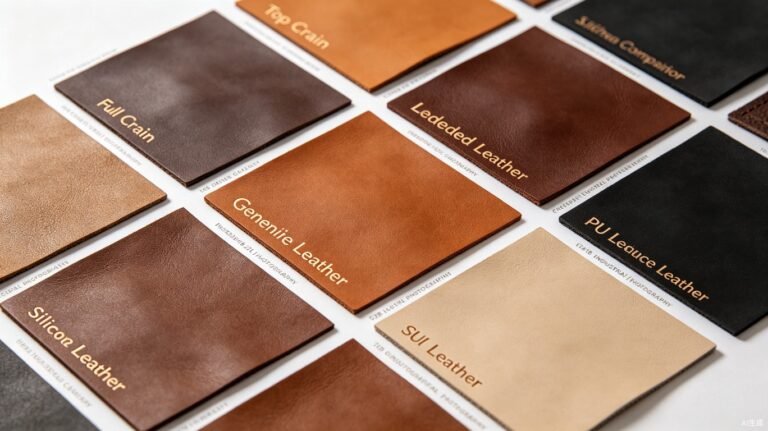
Multi-color silicone leather swatches — one of 200+ texture options from TOPSUN
The most established vegan leather company operations today produce four primary types: PU (polyurethane), PVC (polyvinyl chloride), silicone polymer, and emerging plant-based composites. Each serves different market segments, and each carries trade-offs that only become visible when you look beyond the spec sheet.
The 4 Major Vegan Leather Types — And Where Each Falls Short
Understanding material chemistry matters when you’re evaluating a vegan leather company’s product range. Here’s a performance breakdown based on what we’ve verified through testing and customer feedback across furniture, automotive, medical, and marine applications:
| Property | PU Leather | PVC Leather | Silicone Leather | Plant-Based |
|---|---|---|---|---|
| Service Life | 2–5 years | 3–7 years | 10–15+ years | 1–3 years |
| Martindale Cycles | 20,000–50,000 | 30,000–60,000 | 100,000–200,000+ | 5,000–15,000 |
| VOC Emissions | Low–Moderate | Moderate–High | Zero | Low |
| REACH Compliant | Varies by supplier | Often fails | Yes (verified) | Varies |
| Hydrolysis Resistance | Poor | Good | Excellent | Poor |
| Price Range (per meter) | $ | $ | $$–$$$ | $$$ |
The table reveals a pattern: PU and PVC win on upfront cost but carry hidden replacement and compliance risks. Plant-based options impress on sustainability storytelling but struggle with durability at scale. Silicone leather sits at a higher price point but delivers a 5-year TCO that undercuts cheaper alternatives when you factor in replacement cycles and warranty claims.
Key insight for procurement teams: The cheapest vegan leather company quote often becomes the most expensive purchase within 3 years. Always calculate TCO — not unit price.
7-Point Sourcing Checklist for Evaluating Any Vegan Leather Company
After reviewing supplier documentation for hundreds of B2B inquiries, we’ve distilled the evaluation process into seven non-negotiable checkpoints. Use these before signing any bulk order:
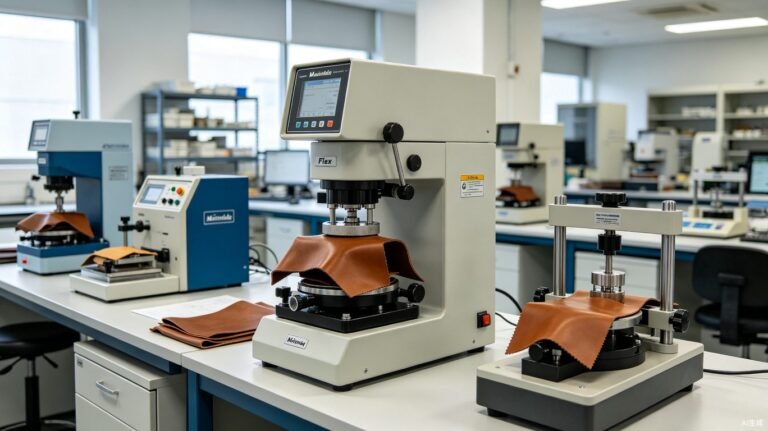
1. Third-party test reports. Ask for SGS or Intertek certificates — not in-house test results. A credible vegan leather company will have ISO 10993 (biocompatibility), REACH, and FDA reports readily available. If a supplier hesitates, that’s your first red flag.
2. Martindale abrasion data. Request the exact cycle count, not just “high durability.” For furniture applications, you need 30,000+ cycles. For automotive and public seating, 100,000+ is the minimum threshold.
3. Hydrolysis resistance rating. This is the #1 cause of premature leather failure in humid climates. PU leather hydrolyzes within 2–3 years in tropical conditions. Silicone-based materials are inherently immune — but you need the supplier to confirm this in writing.

Quality inspection on the production floor — every batch should come with documented QC data
4. Production capacity and lead times. A reliable vegan leather company should comfortably share monthly output figures. For context, a mid-scale operation runs 500,000+ meters per month. If they can’t tell you their capacity, they likely can’t guarantee your delivery schedule.
5. Customization capabilities. Color matching, texture embossing, width options, and substrate flexibility matter when you’re sourcing for branded products. The best partners offer OEM/ODM services with dedicated sample centers — like TOPSUN’s custom color program.
6. Fire safety compliance. Depending on your application — public seating, automotive, aviation — you may need EN 13773, FAR 25.853, or TB 117-2013. Not every vegan leather company invests in fire-rated formulations. Verify before you commit.
7. Total cost of ownership. Unit price is just the starting point. Factor in expected service life, replacement frequency, warranty exposure, and compliance risk. A silicone-based vegan leather at $15/meter lasting 12 years will always beat a $6/meter PU lasting 3 years in total spend.
See inside TOPSUN’s 60,000㎡ manufacturing facility — one of the largest vegan leather production networks in China
Why Silicone Leather Is Becoming the Preferred Choice for Spec-Driven Buyers
The vegan leather market is projected to reach $536 million by 2030, growing at a 14% CAGR. Within that expansion, silicone leather is capturing share from both PU and plant-based alternatives — and the reason is straightforward: it’s the only vegan leather type that simultaneously delivers 10+ year durability, zero VOC emissions, full REACH/FDA compliance, and inherent hydrolysis resistance.
In our manufacturing facility spanning 60,000㎡ across three production bases, we’ve seen the shift firsthand. Automotive OEMs that specified PU in 2020 are now requesting silicone samples. Hotel chains that replaced leather every 3 years are seeing 8+ year service life with silicone upholstery. The broader vegan leather alternatives market is evolving fast, but silicone remains the only option that checks every technical box.

TOPSUN’s automated coating production line — 10+ lines across three manufacturing bases
The silicone vs PU comparison becomes even more striking when you look at end-of-life costs. PU leather peels, cracks, and hydrolyzes. Silicone leather maintains its structural integrity through temperature extremes (-40°C to 200°C), UV exposure, and chemical contact. For brands that can’t afford warranty claims or reputation damage, the material choice becomes obvious.
Real-world data point: One of our hospitality clients replaced their PU sofa covers every 2.5 years across 12 properties. After switching to silicone leather in 2022, their longest-installed covers are still performing at spec — 3+ years in with zero hydrolysis complaints.
Common Questions B2B Buyers Ask About Vegan Leather Companies
Which vegan leather type lasts the longest in high-traffic applications?
Silicone leather consistently outperforms other vegan leather types in durability testing. With Martindale abrasion resistance exceeding 200,000 cycles and inherent resistance to hydrolysis, UV, and temperature extremes, it delivers 10–15+ years of service life in commercial settings. PU typically lasts 2–5 years; plant-based options 1–3 years.
What certifications should I require from a vegan leather company?
At minimum, request third-party REACH compliance (tested by SGS or Intertek), ISO 10993 for biocompatibility, and fire safety certifications relevant to your application (EN 13773 for public seating, FAR 25.853 for aviation). For food-contact or medical applications, FDA certification is essential. Any supplier who can’t provide these within 48 hours isn’t ready for B2B supply.
Can a vegan leather company produce custom colors and textures at scale?
Established manufacturers offer full OEM/ODM services including custom color matching (Pantone or physical sample), texture embossing from 200+ patterns, and substrate customization. Minimum order quantities vary — typically 500–1000 meters per color for custom runs. Always request lab dips before approving bulk production.
Making the Right Call on Your Next Vegan Leather Partner
Choosing the right vegan leather company comes down to one question: can they prove what they promise? Test reports, production transparency, certification depth, and willingness to share TCO data — these separate serious manufacturers from marketing-driven resellers. Whether you’re sourcing for automotive interiors, hospitality furniture, or medical equipment, the 7-point checklist above will protect your investment and your brand reputation.
About TOPSUN
TOPSUN develops and manufactures silicone-based vegan leather for B2B buyers in automotive, furniture, medical, marine, and consumer electronics — serving clients in 30+ countries with full OEM/ODM customization.
ISO 10993 · REACH · FDA · EN 13773 · FAR 25.853 certified | 60,000㎡ factory | 500,000+ m monthly capacity | 200+ texture options