Why are furniture, fashion and automotive brands switching materials faster this decade than any decade before it? And which of the claimed vegan leather benefits actually survive a purchase review? Most lists answer with adjectives: cruelty-free, eco-friendly, modern. A founder signing a production PO needs numbers, certificates and yields, not adjectives. The short answer: the case rests on six benefits, each with evidence you can file:
- A 12.5× carbon gap
- 95% water savings
- Predictable cutting yields
- Stable pricing
- Third-party safety certificates
- A brand story consumers demonstrably pay for
The table below puts all six side by side against animal leather. The sections that follow show where each number comes from.
| Benefit | Animal Leather Reality | Silicone-Based Vegan Leather | Evidence to File |
|---|---|---|---|
| 1. Carbon | 187 kg CO2e per kg finished hide | Polymer routes run 6–22 kg CO2e per kg | ACS journal LCA (Cornell/NYU) |
| 2. Water & land | ~14,000 L water per kg; heavy land use | Up to 95% less water, 80% less land | Industry LCA summaries |
| 3. Cutting yield | Scars, bites and growth marks reduce usable area | Uniform sheet; nesting is predictable | Factory cutting records |
| 4. Price stability | Hide prices track livestock and energy cycles | Formulation-based pricing, steadier quotes | Supplier quotations |
| 5. Safety & compliance | Chrome tanning carries CrVI management burden | REACH 247 SVHC, ISO 10993-5, EN 71, FDA files | SGS report numbers |
| 6. Brand story | “Natural” narrative increasingly challenged | Quantified claims shoppers reward | Wharton/First Insight survey |
Vegan Leather Benefits 1 and 2: The Carbon and Water Ledger
The strongest environmental numbers now come from a 2026 life-cycle assessment published in ACS Sustainable Chemistry & Engineering by Cornell and NYU researchers. Cow-derived leather carries a footprint of 187 kg CO2e per kilogram of finished material, 12.5 times the 15 kg average for vegan alternatives. Even the highest-emitting vegan route lands 54% below animal leather’s tanning phase alone.
The same literature puts synthetic routes at up to 95% less water and 80% less land than bovine production. Every 100 m² of tanned hide leaves roughly 200 kg of non-biodegradable solid waste behind.
On the production side we add our own line item. The solvent-free coating process runs with VOC results non-detectable under ISO 16000-6, so the environmental claim extends past the raw material into the factory air. The full paper trail behind those process claims lives in the eco-compliance documentation your sustainability team can cite directly.
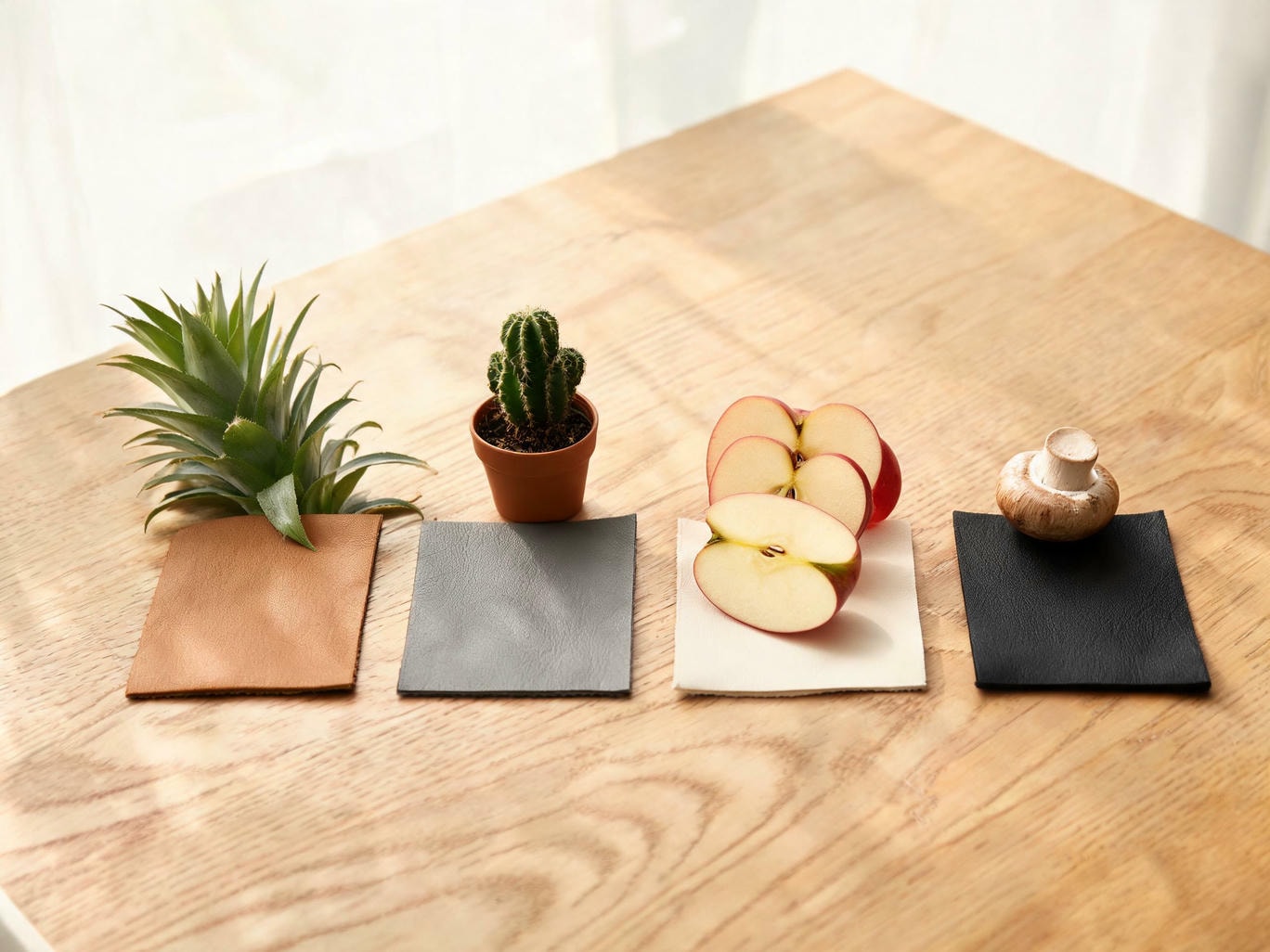
Environmental claims only count when they arrive with a methodology — and a report number.
Vegan Leather Benefit 3: Yield, Consistency and Price Stability
Operations teams care about a benefit rarely listed on consumer blogs: yield. A natural hide is a non-uniform surface. Scars, insect bites and growth marks mean the cutter nests around defects, and usable yield varies hide by hide. A uniform coated sheet nests the same way every time, which is why small-goods manufacturers highlight predictable cutting yields as a core advantage of the category.
Price behaves similarly: hide markets track livestock cycles and tanning energy costs. Polymer-based materials quote from formulation and volume. When we model replacements, the steady-state comparison that matters is against PU specifically. The silicone versus PU breakdown shows why the lifespan multiplier changes that math rather than just the unit price.

Batch-to-batch consistency is the quiet benefit: what you approve on the swatch is what ships in bulk.
Vegan Leather Benefits 4–6: Compliance, Skin Safety and the Story That Sells
The compliance benefit is the one procurement can bank immediately. Chrome tanning leaves a hexavalent-chromium management obligation. Our silicone-based build arrives instead with:
- REACH screening across 247 SVHC substances
- Skin-contact cytotoxicity testing under ISO 10993-5 (74.58% cell viability at 100% extract against a 70% pass threshold)
- EN 71 toy safety
- FDA food-contact files, each carrying an SGS report number
That paperwork converts directly into the fifth benefit, market access. Baby, medical and food-adjacent categories are gated on exactly these documents. The sixth benefit is commercial. Wharton’s Baker Retailing Center and First Insight found roughly 90% of Gen X consumers would pay at least 10% more for sustainable products, which turns a materials decision into a merchandising asset. For buyers weighing graded material options, the full-silicone versus semi-silicone comparison shows how the certificate stack differs by tier.

A certificate stack is a market key: the same material, unlocked for more categories.
The property stack behind the six benefits, demonstrated on camera.
Request the Six-Benefit Evidence Pack
Which Benefit Leads Your Next Line? A Decision Path
Prioritize the vegan leather benefits by product line, and the sourcing brief writes itself:
- Selling into the EU → lead with carbon and REACH documentation; both face regulatory pull.
- Baby and kids products → lead with ISO 10993-5 and EN 71; skin contact decides the category.
- High-traffic furniture or automotive → lead with the lifespan multiplier and TCO math.
- Consumer brand growth → lead with the quantified story: 12.5×, 95%, and the willingness-to-pay data.
Frequently Asked Questions
Is vegan leather as durable as real leather?
Premium full-grain hide still wins on decades of heavy use. But within typical product lifecycles the comparison flips: PU cracks in two to five years. Documented silicone-based programs run 10–15 years with abrasion rated at 200,000+ Martindale cycles — outlasting most products they cover.
Do customers actually pay more for vegan leather products?
Survey data says yes when the claim is specific. The Wharton/First Insight research found roughly 90% of Gen X respondents willing to pay a 10%+ premium for sustainable products. Materially lower footprints are exactly the kind of quantified claim that justifies it at the shelf.
About TOPSUN
TOPSUN manufactures silicone-based vegan leather for furniture, automotive, baby-products, medical and fashion brands in more than 30 countries — three production bases, 60,000+ m², monthly capacity above 500,000 meters, MOQ from 500 meters and 7–15 day lead times, with vegan certification, REACH and SGS-tested skin-contact documentation supplied per lot.
Six benefits, six kinds of evidence — that is the whole difference between a materials pitch and a materials case. When the vegan leather benefits on your shortlist arrive with a report number attached, the decision stops being a belief statement and becomes a line item your finance and compliance teams can both approve.
Get Certified Vegan Leather Swatches
References
1. https://www.greenqueen.com.hk/leather-environmental-… — Green Queen report on the ACS Sustainable Chemistry & Engineering LCA: cow leather 187 kg CO2e/kg vs vegan 15 kg (12.5×)
2. https://softlinebrandpartners.com/what-is-vegan-leat… — Softline Brand Partners on vegan leather benefits: cutting yields, cost dynamics and the Wharton/First Insight willingness-to-pay survey