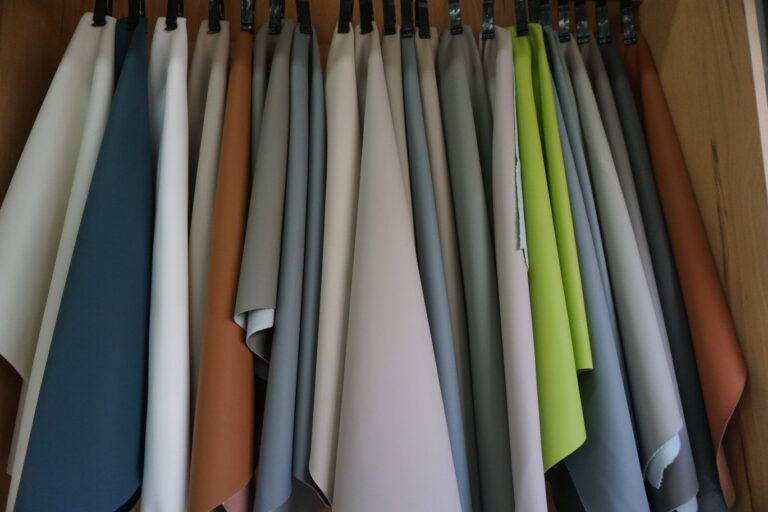
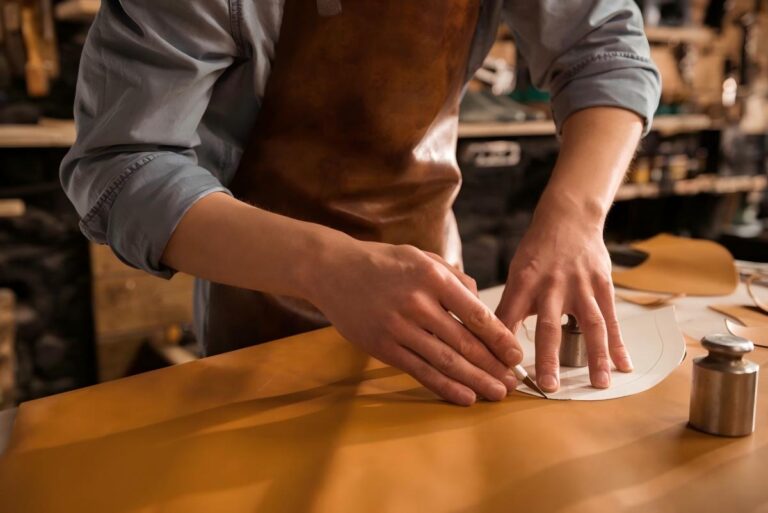
What holds a coated fabric together when the surface is scratched, heated, or soaked? The answer sits one layer down. Buyers ask us about coating chemistry first. Yet the und fabric, the textile under the coating, decides most of what happens next.
Which base wins on peel strength? Which one survives a 150°C oven without moving? And where does the cheap option quietly cost more? This guide answers those questions with the numbers we check at the unwinder every morning.
| Base Fabric | Where It Wins | Watch-Out | Best Programs |
|---|---|---|---|
| Polyester woven | Low stretch and high dimensional stability through heat curing | Smooth filaments need a compatible coating chemistry | Furniture, automotive, marine |
| Cotton | Bonds well with water-based systems and dyes evenly | Needs pretreatment and shows the lowest peel strength in lab comparisons | Workwear, apparel-adjacent lines |
| Poly-cotton blend | Balanced cost with decent tear strength | Blend ratio drifts batch to batch unless it is specified | Mid-price furniture lines |
| Nonwoven / microfiber | Even structure with no weave telegraphing through thin skins | Needs a bonding resin and tighter roll-consistency checks | 3C accessories, footwear |
What “Und Fabric” Means Under a Silicone Coating
On our line, the und fabric is the substrate roll that enters the coater. It carries the tensile strength and tear resistance of the finished sheet. The coating adds color, texture, and chemical resistance. The base fabric decides how the whole laminate behaves under load. Our substrate rolls run 1,350 to 1,400 mm wide, and every downstream step inherits whatever tension history they carry.
The distinction matters when quotes arrive. Full silicone builds put the polymer work in the coating; semi builds share it with the base. Our full versus semi silicone leather page breaks that split down. Read it before comparing prices across suppliers.

The weave you never see is the one doing the structural work in every coated sheet.
Ask Our Engineers About Substrate Options
Adhesion: Where Weave Density Beats Chemistry
Peel strength starts in the weave. A peer-reviewed study on coated textiles measured the highest peel strength on nylon and the lowest on cotton. The structure explained it: nylon carried the lowest weft density, so the coating could anchor through open space. Tight cotton weaves left less room for mechanical bonding.
Chemistry still matters. Polyester filaments are smooth, so the coating must be formulated for that surface. Porous bases accept mechanical anchoring; slick ones depend on chemical bonds. We run peel checks on every substrate lot before it reaches the coater. The weft count goes into the roll record.

Every substrate lot passes a peel check at the unwinder. The result travels with the roll record through the whole run.
Stability: The GSM Window Every Und Fabric Must Hold
Dimensional stability is a numbers game. Weight is verified with circular cutters and precision balances, and a well-run mill holds GSM within ±3% of spec. Width consistency gets checked along the roll, with edge-to-edge variation inside ±5 mm. Our own incoming inspection mirrors both checks before a roll is released to coating.
Heat is the second test. A 150°C exposure for 15 minutes reveals residual shrinkage that later shows up as coating wrinkles. Fabrics that pass the oven test hold flat through heat-cured coating lines. Fabrics that fail it will telegraph every degree of cure temperature into the finished surface.

Rolls rest in climate-controlled storage until GSM and shrinkage records clear them for the line.
Watch how substrate choice changes what the same coating can deliver across collections.
Cost and Weight: Matching the Base to the Program
Weight drives price more than any surface finish. Upholstery work typically sits between 180 and 280 GSM. Below that window, buyers save on the roll and pay later. Upholstery stretches unevenly, seats sag under daily load, and a weak base lets go of the coating early.
Thinner programs flip the logic. A 0.23 mm skin for 3C accessories wants a light, even base. That is where silicone microfiber leather earns its slot. Heavy rigid panels want the opposite: a dense weave that resists flex fatigue. Match the base to the duty cycle, not to the quote. Substrate handling also differs by fiber, and our factory production page shows where each roll type enters the line.

The finished face hides the base fabric. The spec sheet should never do the same.
The Verdict: Matching Your Requirement to the Right Base
Judge the und fabric the way the coater sees it. It is the layer that either carries the laminate or quietly undoes it. Four numbers settle most debates. Peel strength comes from the weave. GSM holds within three percent. Width holds within five millimeters. Shrinkage gets settled before the roll is cut.
| Your Requirement | Better Base | Why |
|---|---|---|
| Maximum peel strength | Open-weave synthetic | Mechanical anchoring through open weft space |
| Hot curing lines | Heat-set polyester | Holds flat through a 150°C exposure |
| Natural hand and dye depth | Cotton or poly-cotton | Accepts dye evenly once pretreatment is done |
| Tight budgets at volume | Poly-cotton blend | Balanced cost with acceptable tear strength |
Request Substrate Swatches With Roll Data
Frequently Asked Questions
Why is cotton harder to coat than polyester?
Cotton needs pretreatment before most coatings bond reliably. Its tight weaves also leave less room for mechanical anchoring, so peel strength lands lower in side-by-side tests.
What GSM should I demand for upholstery?
Stay between 180 and 280 GSM for seating work. Verify the mill holds variance within ±3%, and require the 150°C shrinkage result with the roll paperwork.
References
1. https://www.chinasofafabric.com/news/what-makes… — Base fabric QC numbers: GSM variance held within ±3%, edge-to-edge width inside ±5 mm, and residual shrinkage tested at 150°C for 15 minutes.(2026)
2. https://abbottfab.com/how-to-choose-wholesale-r… — Typical upholstery base weights of 180-280 GSM and the delamination risk of underweight bases.(2025)
3. https://www.mdpi.com/1420-3049/25/14/3238 — Coating adhesion study: the lowest weft density showed the highest peel strength, and tight cotton weaves the lowest.(2020)