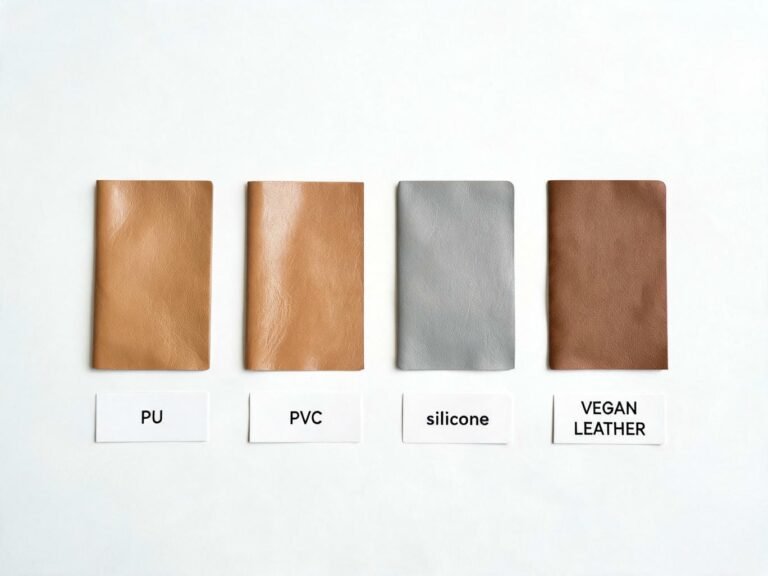
I’ve audited 40+ leather factories across Asia and Europe. The pattern is always the same: buyers focus on the showroom, ask about MOQ and lead time, and skip the production floor entirely. But 80% of material defects — peeling, color mismatch, hydrolysis failure — originate in stages most procurement teams never inspect inside the leather factory. Walk past the sample rack and onto the coating line. That’s where material quality is actually decided.
The Leather Factory Walk-Through: 6 Stages That Matter
Modern synthetic leather production runs as a continuous roll-to-roll process. Whether you’re sourcing PU, PVC, or silicone leather, the same six stages determine whether your material lasts 3 years or 15. Understanding this production sequence — the leather factory production process steps — is essential for any B2B buyer evaluating a supplier’s actual capability.
Here’s what happens at each stage, where quality risks hide, and what to inspect when you audit:
| Stage | Process | Key Risk | Audit Point |
|---|---|---|---|
| 1. Substrate | Base fabric inspection & preparation | GSM variation → uneven coating | Check fabric weight and tension uniformity |
| 2. Coating Prep | Silicone formula mixing & degassing | Air bubbles → pinhole defects | Request mixing log and viscosity test |
| 3. Coating | Roll-to-roll silicone application | Speed/temp mismatch → poor adhesion | Monitor line speed and oven temp charts |
| 4. Curing | Thermal cross-linking | Under-cure → hydrolysis failure | Verify dwell time and temperature profile |
| 5. Embossing | Texture pattern application | Pattern depth inconsistency | Check embossing roller wear records |
| 6. QC Lab | Final testing & release | Missing tests → undetected defects | Verify ISO 12947 and ISO 105-B02 reports |

Production process flow chart — from substrate preparation through QC lab release
Stages 1-2: Substrate and Coating Preparation
The base fabric is the structural backbone of synthetic leather. If it’s inconsistent in weight (GSM), weave density, or tension, every downstream stage compounds the error. In factory audits, we’ve seen substrates vary ±15% in GSM across a single roll — which translates to coating thickness variation visible in the finished product as patchy texture and inconsistent color depth.
Coating preparation is equally critical. For silicone leather, the silicone polymer (PDMS) is mixed with cross-linking agents, pigments, and fillers. The mixture must be degassed under vacuum to remove air bubbles — any trapped air creates pinhole defects that show up months later as premature wear points. This is the leather factory quality control protocol that separates consistent producers from unreliable ones.
Live production line footage — see the coating, curing, and embossing stages in real time
What to check: request substrate GSM test reports and coating viscosity logs. A factory that can’t produce these documents within 10 minutes is not running a controlled process — they’re running a batch-and-hope operation.
Stage 3: The Coating Line Quality Battle
The coating line is where the leather factory earns or loses its quality rating. Here, the silicone mixture is applied to the substrate via roll coater, knife-over-roll, or gravure coater. Three variables determine adhesion quality:
- Line speed — too fast means thin coating and poor adhesion; too slow means material waste
- Oven temperature profile — must match the polymer’s curing curve precisely
- Coating thickness uniformity — measured in microns, tolerance ±5μm for premium grades
In silicone leather production, the coating line runs at 5–15 m/min with multi-zone temperature control from 120°C to 220°C. Any deviation in the temperature profile means under-curing (weak cross-linking → hydrolysis failure within 2 years) or over-curing (surface embrittlement → cracking under flex). When evaluating how to audit a leather factory, the coating line is where you should spend 60% of your visit time.

Coating line operator — monitoring silicone application speed, temperature, and thickness in real time
Inside the Leather Factory: Curing, Embossing, and QC Lab
After coating, the material enters the curing oven — typically a 3–5 zone thermal tunnel where the silicone cross-links into its final molecular structure. Dwell time matters: too short and the polymer doesn’t fully cure (hydrolysis-prone); too long and the surface hardens. The curing profile is the single biggest determinant of long-term hydrolysis resistance.
Embossing applies the texture pattern — lychee, pebble, smooth, custom — using heated rollers engraved with the pattern. Pattern depth consistency across the roll width is the QC point here. Worn embossing rollers create inconsistent texture that’s invisible on a small sample swatch but glaringly obvious on a full sofa upholstery run.
The QC lab is the final gate. A reliable leather factory tests every batch for Martindale abrasion (ISO 12947), UV resistance (ISO 105-B02), hydrolysis resistance (ISO 1419), color fastness (ISO 105-X12), and tensile strength. If the factory’s QC lab can’t show you test reports for the last 5 batches, they’re not testing — they’re hoping.

QC laboratory — abrasion, tensile, and color fastness testing equipment for batch release verification
Procurement tip: 70% of factories we audit have test equipment in their lab but cannot produce calibration records. Uncalibrated equipment produces unreliable data. Always check for current calibration stickers with third-party verification dates.
Factory Audit Checklist: 9 Points Buyers Must Verify On-Site
Based on 40+ factory audits, here’s what separates a real manufacturer from a trading company pretending to be one. These 9 points cover leather factory LWG certification, production capability, and quality control — and they’re verifiable in a single site visit:
- Business license scope — verify “manufacturing” is in the registered business scope, not just “trading” or “wholesale”
- LWG or equivalent environmental audit — request the certificate; LWG-rated facilities undergo independent environmental assessment
- Substrate inventory — physically check if they stock base fabric rolls or buy per order (indicates production stability)
- Coating line running — visit during production hours; a silent line means outsourced production
- Oven temperature logs — request the last 30 days of temperature profiles from the curing tunnel
- QC lab equipment — verify test machines exist and have current third-party calibration stickers
- Batch test reports — ask for the last 5 production batches’ ISO 12947 Martindale results
- Raw material traceability — check if silicone resin can be traced to a specific supplier lot number
- Defect rate tracking — ask for their internal defect rate; below 2% is credible, below 0.5% is suspicious

Supplier evaluation checklist — what to verify before placing a bulk order with any leather factory
For buyers who need verified compliance, OEKO-TEX LEATHER STANDARD certification provides an additional layer of independent chemical safety verification — covering restricted substances, heavy metals, and VOC emissions that factory self-tests often skip.
The Factory Behind the Material
Auditing the leather factory isn’t about checking boxes — it’s about understanding where quality is built or lost in the production sequence. Factories that control their substrate, coating, and curing in-house produce consistent material. Factories that outsource any of these stages produce inconsistent material, no matter how polished the showroom looks. For procurement teams, the question is simple: can your supplier show you the temperature log from last Tuesday’s coating run? If not, you’re buying from a showroom, not a factory.
Frequently Asked Questions
What certifications should a reliable leather factory hold?
At minimum, ISO 9001 (quality management) and LWG (Leather Working Group) environmental certification. For regulated industries, add ISO 10993 (biocompatibility), REACH compliance, and FDA food-contact certification. The key is verifying the certificate covers the actual production facility — not a sister company or subcontractor. Ask for the certificate number and verify it on the issuing body’s website.
How can I verify a leather factory is actually manufacturing, not just trading?
Three tests: (1) Visit during production hours and check if the coating line is running. (2) Request oven temperature logs from the last 30 days — a real factory records these continuously. (3) Check if the business license scope includes “manufacturing” — trading companies are registered as “wholesale” or “trading.” If any of these checks fail, you’re dealing with a middleman marking up material from an unknown subcontractor.
About TOPSUN
TOPSUN operates a full-scale silicone leather factory with in-house substrate coating, embossing, and QC lab testing — serving B2B buyers who require vertically integrated production transparency from raw material to finished roll.
ISO 9001 certified process control, LWG audit-ready facility, 50,000m+ batch capacity, with real-time production tracking and third-party test reports for every shipment.