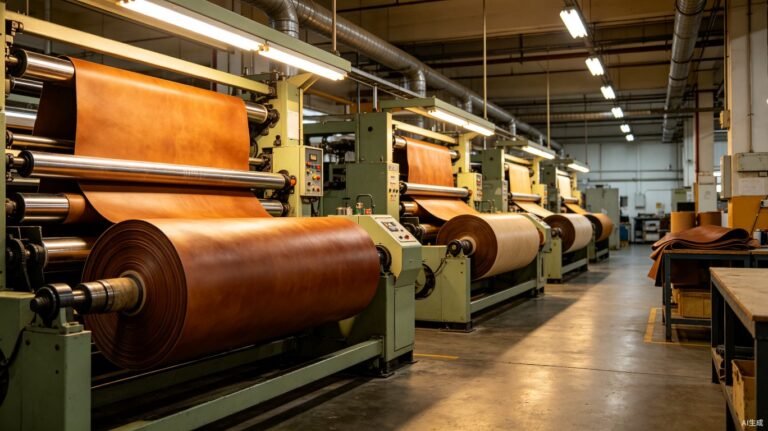
Why does one laminated fabric pass a 20,000 mm hydrostatic test yet crack at the seam after two winters? The answer rarely sits in the base cloth. It sits in the textile film, the thin functional layer bonded onto or between fabric plies. That layer blocks water, carries the flex life, and answers for every fogging and flammability standard the program must meet.
This guide explains what a textile film is and how its performance is measured. It then compares where each film chemistry wins or fails. It closes with the failure modes a buyer should demand test data for before signing a laminate program.
What a Textile Film Is: The Layer That Does the Work
A textile film is a thin, continuous polymer layer bonded to cloth. It adds a function the weave cannot deliver on its own. The Chemical Fabrics and Film Association describes coated fabrics as multi-ply composites. The stack runs top finish, solid film layer, sometimes foam, and adhesive. All plies bond to a flexible substrate. For upholstery, the top finish and film layer are the minimum pair bonded to the fabric.
The division of labor is simple once you see the cross section. The base fabric supplies tensile strength and tear resistance. The film supplies the function: liquid-water resistance, moisture-vapor transfer, surface protection, or bonding between plies. Layer counts carry their own shorthand. Two-layer builds put film on one side of the cloth. Three-layer builds sandwich the film between shell and liner, which protects it from abrasion on both faces.

Release film on the line: the surface texture it carries becomes the grain you sell.
Bonding method splits the family in two. Coating lays liquid polymer onto the cloth and cures it in place. Lamination bonds a pre-made film with heat or adhesive. The difference sounds academic until a program needs washability or weldable seams. Then the choice decides the bill of materials.
How Textile Film Is Measured: Head, Vapor, and Flex
Waterproofness is quoted as hydrostatic head, the water column pressure a fabric resists before leak-through. Technical references put laminated membranes between 5,000 and 20,000 mm and higher for extreme grades. Breathability is quoted as MVTR, the moisture vapor transmission rate that moves sweat out from the body side. Elasticity and softness round out the hand-feel trio.
Regulated programs add a second tier of tests, and this is where film chemistry stops being a catalog detail. Automotive interiors screen for fogging, odor, and thermal aging. A cabin bakes the film at temperatures no garment ever sees. Flammability standards such as FMVSS 302 govern burn rate in vehicle cabs. EN 13773 Class 4 marks the super flame-retardant tier for contract interiors. Our lab also runs ISO 16000-6 chamber work, where solvent-free silicone construction reads as non-detect VOC.
Flex life sits underneath all of it. A film can pass every static test and still split along a crease after ten thousand bends. In our testing, cured silicone layers clear 200,000 Martindale cycles. The Ultra Thin collection also passes 360° bending. That margin separates a spec sheet from a service record.
Film Chemistry Compared: PVC, PU, TPU, and Silicone
CFFA lists four polymer families for the film layer: PVC, polyurethane, silicone, and thermoplastic elastomers. Each brings a different balance of cost, comfort, and aging. The table condenses the trade-offs we walk buyers through.
| Film Chemistry | Where It Wins | Where It Breaks |
|---|---|---|
| PVC (vinyl) | Low cost, weldable, flame-retardant formulations | Plasticizer migration; stiffens in cold; chlorine in the stream |
| PU | Soft hand, breathable builds, garment drape | Hydrolysis; service life of 3-5 years in humid use |
| TPU | Thermoplastic processing, weldable, recyclable stream | General-purpose duty; thermal aging limits in hot cabins |
| Silicone (cured) | -40°C to 250°C window, zero hydrolysis, non-detect VOC | Higher upfront price per meter |
Thermoplastic films earn their market share on processing economics. Industry comparisons note that TPU melts and reforms, which simplifies manufacturing and recycling compared with thermoset systems. Gore-Tex membranes hold the benchmark for breathable waterproofing in apparel. A cured silicone layer plays a different game. It cross-links into a network the way an elastomer does. There is no plasticizer to lose and no hydrolysis clock ticking. Program length decides which economics win. Our silicone leather manufacturing team prices that trade-off per project, not per yard.
Where Film-Layer Failure Starts in Service
Four failure modes account for most premature laminate retirements. Hydrolysis attacks PU films from humid heat inward, which is why marine and medical programs spec against it early. Plasticizer migration slowly embrittles vinyl until the surface cracks at flex points. Adhesive delamination separates ply from ply long before either layer fails. Thermal aging discolors and stiffens films that were never rated for cabin heat.
Each mode has a lab proxy, and demanding it costs nothing. In our hydrolysis chamber, silicone-coated material holds through 14 weeks at 85°C and 85% relative humidity. There is no delamination, strength loss, or surface degradation. Salt-spray ratings above 1,000 hours cover the marine side. UV cabinets verify 1,500+ hours without fading. Buyers who ask for these four numbers filter out most laminate risk in one email.

The coating head: film thickness and cure here decide the aging curve later.
Two film-layer duties on one bench: water beading off, claws leaving no trace.
The substrate matters as much as the film, because the two age as one body. Our base-fabric options and the builds on them are mapped across the application industries we serve. The company background page covers the production line behind those constructions.

Base fabric up close: the weave carries load while the film above it carries the function.
Regulated Programs: Where a Textile Film Spec Meets the Law
Some programs do not leave film chemistry to buyer preference. Automotive and contract work writes it into law and test protocols. FMVSS 302 sets the burn-rate ceiling for materials in vehicle cabs. EN 13773 Class 4 defines the super flame-retardant tier for curtains and contract interiors. A film that cannot clear the flame test is out of the bid before price is discussed.
Cabin heat raises a second wall of tests. A dashboard surface can reach temperatures that soften lesser films. Three screens follow. Fogging checks whether volatile content clouds the windshield. Odor panels grade the smell a hot cabin releases. Thermal aging measures what heat cycling does to flexibility and color. Plasticized PVC struggles here, because the plasticizer itself is the volatile that fogs glass and carries smell. A cured silicone film has no plasticizer to give off. Our ISO 16000-6 chamber results read as non-detect VOC for that reason.
Temperature windows tell the same story from the other side. Our Rigid Substrate line is rated from -40°C up to 250°C. Classic and Designer collections carry a -40°C to 200°C window.
The cold end matters for door seals and outdoor covers that must stay supple in frost. The hot end matters for cabins, kitchens, and any surface near a heat source. A film specified inside its thermal window ages on schedule. One specified outside it fails early no matter what the price was.
We treat these regulated screens as pass or fail gates in-house. Flammability, fogging behavior, and thermal aging run alongside the mechanical bench work before a collection is released. Third-party inspection by SGS, BV, or TÜV is welcome on the same files. If your program carries a compliance annex, send it with the sample request. Our compliance team will map each clause to a test file.
Specifying the Film Layer: A Short Working List
A complete textile film specification fits on one page. Fix the duty first: traffic, cleaning chemistry, temperature window, and the standards the program must clear. Then fix the numbers: hydrostatic head or wipe-clean class, flex cycles, and the aging tests that match the service environment. Finally fix the evidence: batch test reports, not leaflet claims.
The through-line of this guide is that the film layer is the working part of a laminate. Base cloth carries load, but the film answers for water, flex, chemistry, and fire. Specified with its own test data, a textile film becomes a component you can hold to account. Specified by price alone, it becomes the layer that quietly decides when the program re-covers. Our construction guides under the applications page match film-class builds to duty. Sample yardage ships with the reports that back each number.
Request Textile Film Samples With Test Data
Frequently Asked Questions
Is a silicone layer a coating or a film?
In industry terms it is a cured coating that performs the film-layer role in the composite. It is applied as a liquid and cross-linked in place. The cured layer behaves like a continuous membrane without thermoplastic welding.
What hydrostatic head does upholstery need?
Seating programs rarely need garment-grade numbers. Wipe-clean surface classes and seam sealing matter more than 20,000 mm columns. Match the rating to the actual exposure.
How does a film layer fail first in humid climates?
Hydrolysis leads. PU films lose chain length in damp heat and delaminate within a few years. Cured silicone shows no hydrolysis mechanism, which is why 14-week chamber data has become a procurement ask.
References: https://www.cffaperformanceproducts.org/content… | https://www.nashefabrics.com/news/why-laminated… | https://www.zonglitex.com/news/laminated-fabric…