“Tex leather” is not a material. It is a label applied to at least four different composite structures, each with radically different performance, compliance, and service-life profiles. For B2B buyers writing specifications, this ambiguity is a liability: a supplier can ship PU-coated polyester under the name tex leather and meet the letter of a purchase order while failing every performance requirement that justified the material choice. Understanding what tex leather actually is — and which coating chemistry determines whether it lasts three years or ten — starts with deconstructing the term itself.
What Is Tex Leather? Four Materials, One Name
The term tex leather covers four distinct material categories that share nothing but a name:
1. Engineered composite leather. A precision-manufactured material combining a fabric substrate — polyester, nylon, or microfiber — with a polymer coating (PU, silicone, or bio-based). This is the broadest and most common interpretation, and the most variable in performance. The same “tex leather” label can describe a 200,000-cycle Martindale silicone composite or a 15,000-cycle commodity PU that peels in two years.
2. Branded performance materials. Products like LEATHERTEX® (a Japanese specialty fleece with leather-like hand-feel) or Nike’s TECHLEATHER (an engineered athletic footwear material) use “tex leather” as a proprietary label. Their formulations are not interchangeable with commodity tex leather — a fact that PO specifications rarely account for.
3. TPU-coated textiles. Automotive-grade materials like Volkswagen’s V-Tex — a TPU-coated textile engineered to OEM standards. These materials meet specific OEM specifications but are routinely confused with cheaper PVC alternatives marketed under similar-sounding names [$TOPSUN](https://carinterior.alibaba.com/tips/vw-trim-material-comparison).
4. Bonded or reconstituted leather. Shredded leather fibers mixed with adhesives and backed with fabric. Sometimes sold as “tex leather” or “textile leather,” this category has the lowest durability of the four and is not suitable for commercial or high-wear applications. For a broader primer on synthetic material categories, see our guide on what faux leather actually is.

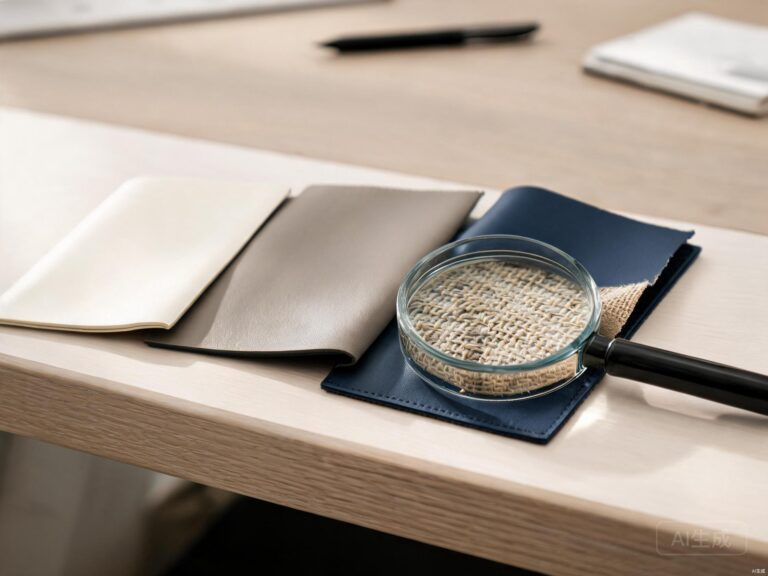
Fabric inspection station — substrate quality (fiber type, tex range, weave density) determines whether the final tex leather meets spec or fails in service.
The Tex Measurement: How Linear Density Relates to Leather Spec
In textile engineering, “tex” is an ISO-standard unit of linear density — grams per 1,000 meters of fiber or yarn, defined under ISO 2060 and ASTM D885. It quantifies fiber fineness, which directly affects the base fabric’s tensile strength, tear resistance, and coating adhesion. A finer tex (lower number) produces a denser, more uniform substrate; a coarser tex (higher number) creates a more open structure that absorbs more coating but may have inconsistent surface quality [$TOPSUN](https://www.astm.org/d0861-07r24e01.html).
When specifying tex leather, the substrate’s tex measurement is a baseline quality indicator that most buyers overlook. Premium tex leather uses fine-denier microfiber substrates (0.5–0.9 dtex) that replicate the three-dimensional fiber structure of genuine leather. Commodity grades use coarser polyester (3–5 dtex) that lacks the structural density for high-wear applications — and the difference is invisible until the material fails at year two instead of year ten.
Tex Leather vs Genuine Leather: Structure Dictates Performance
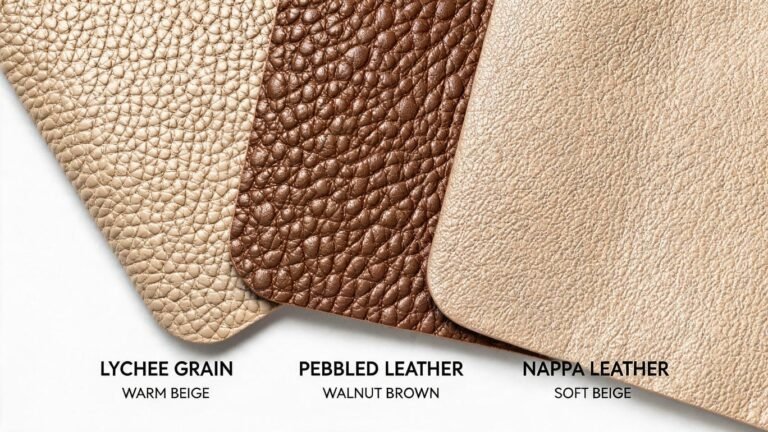
Genuine leather’s collagen fibers form a three-dimensional random network — irregular, interlocked, and self-reinforcing. This structure flexes without cracking because stress distributes across millions of randomly oriented fibers. Tex leather’s woven or knitted substrate is regular and directional. Stress concentrates along fiber alignment lines, which is why tex leather fails at seam edges and stress points where genuine leather would distribute the load.
The coating chemistry determines how the substrate responds to environmental stress over time. PU-coated tex leather hydrolyzes at the ester bonds. PVC-coated tex leather loses plasticizers to evaporation. Silicone-coated tex leather — with its Si–O–Si backbone — resists hydrolysis, UV, and thermal cycling indefinitely. The silicone vs PU comparison breaks down these molecular-level differences across specific test protocols.

Cross-section comparison — the woven substrate’s directional fiber alignment creates stress concentration points that genuine leather’s random collagen network avoids.
Silicone-Coated Tex Leather: The Only Variant That Solves Hydrolysis
Among the four tex leather categories, only silicone-coated composite leather eliminates the failure modes that destroy PU and PVC variants. The silicone coating bonds to the textile substrate without solvents, creating a surface that is hydrolysis-proof, UV-stable for 1,000+ hours, and thermally stable from -40°C to 250°C. Unlike PU, there are no ester bonds for water molecules to break. Unlike PVC, there are no plasticizers to migrate and evaporate.
TOPSUN manufactures silicone-coated tex leather using a solvent-free dry process for B2B buyers who need engineered composite leather with verified ISO and ASTM test data. The silicone leather manufacturing process produces zero VOC emissions — a compliance advantage that matters for automotive interiors (VDA 277), medical equipment (ISO 10993-5), and indoor air quality (EU E1).
| Spec Dimension | Tex Leather (PU) | Tex Leather (PVC) | Tex Leather (Silicone) | Genuine Leather |
|---|---|---|---|---|
| Substrate tex range | 3–5 dtex | 3–5 dtex | 0.5–2.0 dtex | Collagen (variable) |
| Hydrolysis resistance | Poor — ester bonds break | Moderate — plasticizer leaches | Excellent — no ester bonds | Good with conditioning |
| UV stability (hrs to cracking) | 500–800 hrs | 300–500 hrs | 1,000+ hrs, no cracking | 200–400 hrs (untreated) |
| VOC emission | Solvent residues | Plasticizer off-gassing | Zero / Near-zero | Minimal (tanned) |
| Service life | 3–5 years | 2–3 years | 10+ years | 10–20 years |
| Batch consistency | ±15% variation | ±20% variation | Delta E ≤ 1.0 | Each hide unique |
Specifying Tex Leather: What Your Purchase Order Must Include
Because “tex leather” is an unregulated term, your purchase order must specify the following to prevent supplier substitution:
1. Coating chemistry. State “silicone-coated” or “PU-coated” explicitly. Do not accept “tex leather” as a standalone spec — it gives the supplier legal room to ship any composite and still fulfill the PO.
2. Substrate type and tex range. Specify the fiber type (microfiber, polyester, nylon) and the tex/dtex range. Fine-denier microfiber (≤1.0 dtex) is required for applications mimicking genuine leather’s hand-feel and structural strength.
3. Test standards and minimum values. Require ISO 12947-2 (Martindale ≥ 200,000 cycles), ISO 11507 (hydrolysis ≥ 8 weeks at 70°C/95% RH), ASTM G154 (UV ≥ 1,000 hrs), and ISO 16000-6 (VOC = E1 compliant). Without these, the supplier’s “tex leather” is undefined. Request the full technical data sheet before committing.
4. Certification stack. For automotive — ELV Directive + FMVSS 302 + VDA 277. For medical — ISO 10993-5 + FDA 21 CFR 177.2600. For consumer goods — EN 71 + REACH. Each certification should list issuing body and test scope, not just a pass/fail.
5. Color consistency spec. Require Delta E ≤ 1.0 with batch-to-batch documentation. Silicone-coated tex leather achieves this consistently; PU and PVC variants typically cannot due to formulation variability between production runs.

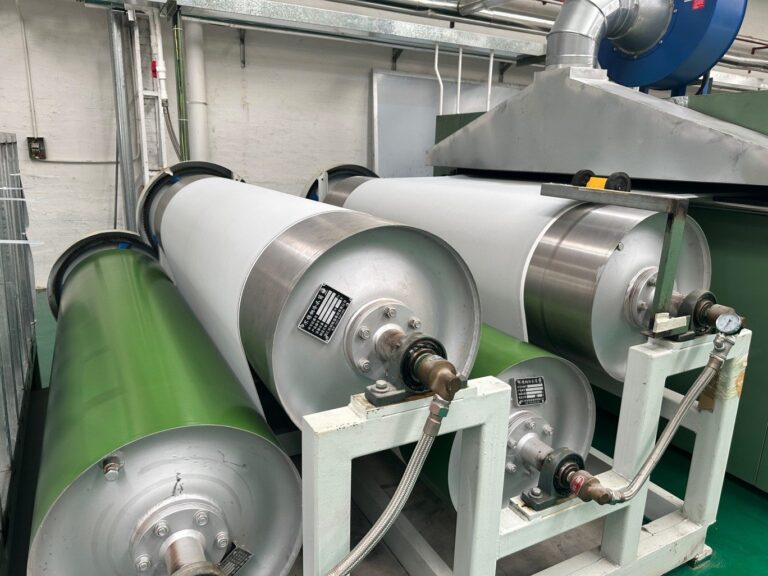
Production flow chart — a documented, solvent-free process is what separates engineered tex leather from commodity-grade synthetic material sold under the same name.
FAQ
How does the tex measurement system relate to leather specification?
The tex unit (grams per 1,000 meters of fiber) quantifies substrate fiber fineness in tex leather. Finer fibers (lower dtex) produce denser, more uniform substrates with higher tear resistance and better coating adhesion. When writing a tex leather spec, include the substrate’s tex/dtex range alongside coating chemistry and test standards to prevent substitution of coarser, lower-quality base fabrics that compromise structural integrity.
Tex Leather: Defined or Disqualified?
Tex leather is not a material — it is a label that can hide four different composite structures with wildly different performance profiles. The term gives suppliers legal cover to ship PU-coated polyester when the buyer expected silicone-coated microfiber. The fix is not to abandon tex leather as a category; it is to specify the coating chemistry, substrate tex range, test standards, and certification stack that make the term meaningful. Silicone-coated tex leather is the only variant that eliminates hydrolysis, UV degradation, and plasticizer migration — the three failure modes that destroy every other tex leather variant within five years. When the spec says “tex leather,” make sure it says which tex leather.