A cactus leather handbag wins sustainability awards. A mushroom leather sneaker gets press coverage. But peel back the marketing and you’ll find that most plant-based leathers contain 8-10% polyurethane binder. That’s the uncomfortable truth about the sustainable leather alternative market in 2026 — and it changes everything about how B2B buyers should evaluate materials. The gap between a compelling sustainability story and actual environmental performance comes down to five measurable tests. Most alternatives pass one or two. Only one passes all five.
Why Most Sustainable Leather Alternatives Still Contain PU
The bio-based leather category sounds clean: cactus, mushroom, pineapple, apple, grape waste. The marketing tells a story of regenerative agriculture and waste upcycling. But the manufacturing reality is different. To turn plant fibers into a flexible, durable sheet that looks and feels like leather, you need a binder. And in most cases, that binder is polyurethane.
Cactus leather — the category darling — is approximately 92% bio-based. The remaining 8% is a petroleum-derived polyurethane coating that provides water resistance and durability. Mushroom mycelium leather requires a plastic backing for structural integrity. Apple leather uses a PU film-forming matrix. These aren’t minor additives. They’re structural components that determine how the material ages, emits, and ultimately degrades.

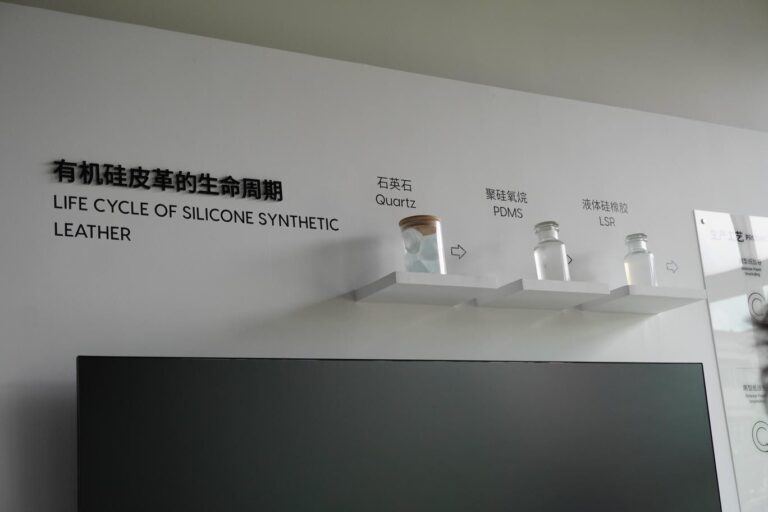
Silicone leather lifecycle display showing raw materials through finished product — no petroleum binders required.
Here’s why that matters for B2B buyers. When you’re evaluating plant-based leather vs silicone leather durability, the PU binder in bio-based options means the same hydrolysis, UV degradation, and delamination problems apply. A cactus leather sofa still peels. A mushroom leather car seat still cracks. The sustainability story doesn’t survive the warranty period.
Most plant-based leathers contain 8-10% polyurethane binder. That means the same hydrolysis and UV degradation that destroys PU leather applies to bio-based alternatives — just with a greener origin story.
5 Tests That Separate Real Sustainability From Greenwashing
Sustainability claims require evidence. Here are the five tests that determine whether a material is genuinely sustainable — or simply marketed that way. These criteria go beyond carbon footprint calculations to address the full lifecycle that matters for B2B procurement.
- Test 1: Binder Chemistry — Does the material use petroleum-based binders? If the answer is yes, the material inherits PU’s end-of-life problems regardless of its bio-content percentage. True sustainable leather certification standards demand binder disclosure, not just bio-content claims.
- Test 2: Durability (Martindale ≥ 100K cycles) — A material that lasts 3 years isn’t sustainable — it’s disposable. The most environmentally damaging product is the one you replace every 36 months. Real sustainability means 10+ years of service life.
- Test 3: VOC Emissions — Per ISO 16000-6 or VDA 277. Materials that off-gas solvents into enclosed spaces — car cabins, furniture showrooms, RV interiors — aren’t sustainable for the people using them.
- Test 4: Recyclability — Can the material be recovered and repurposed at end of life? PU and PVC cannot be effectively recycled. Bio-based leathers with PU binders face the same barrier. This is the recyclable synthetic leather environmental impact question that most sustainability reports skip.
- Test 5: Supply Chain Scalability — A material that sounds perfect in a lab but can’t scale to 500,000 meters per month is a sourcing risk. Mushroom leather production capacity remains measured in square meters, not rolls. Cactus leather has limited geographic sourcing. Sustainability includes supply security.

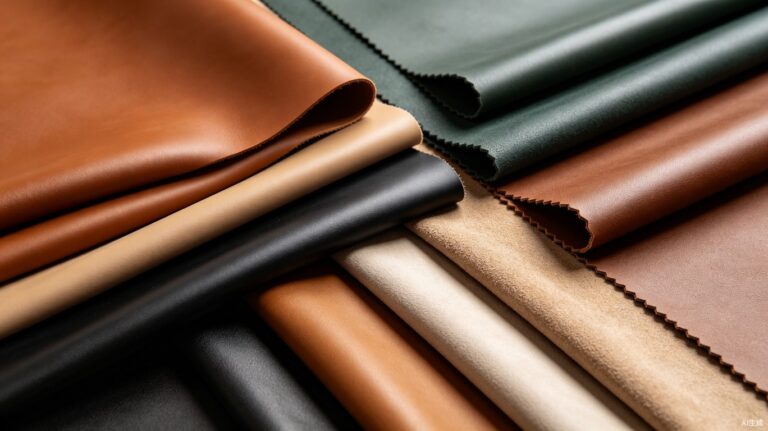
Full-color silicone leather swatches — unlimited Pantone-matched options without petroleum-based pigments or solvents.
How Silicone Chemistry Eliminates the PU Binder Problem
Silicone leather doesn’t need a binder because the silicone polymer itself forms the surface. There’s no plant fiber substrate requiring a PU coating for durability. There’s no petroleum-derived layer separating the “bio” component from the environment. The silicone IS the leather.
In our material testing, silicone leather passes all five sustainability tests. It’s 100% recyclable — the polymer can be recovered and repurposed without quality degradation. VOC emissions are zero. The solvent-free dry coating process means no chemical recovery systems, no emission permits, no worker exposure monitoring. REACH compliant, RoHS compliant, and compatible with EU Ecolabel and LEED certification frameworks — details on our eco-friendly silicone leather page. These aren’t projections — they’re verified test results from SGS and Intertek laboratories.

Sustainable leather alternatives compared side by side — silicone leather requires no petroleum binders for structural integrity.
Watch our silicone leather eco-certification overview — REACH, RoHS, FDA, and EU Ecolabel compatible documentation.
The performance comparison across materials makes the distinction clear:
| Material | Bio-Content | Recyclable | Service Life | VOC Emission | Scalability |
|---|---|---|---|---|---|
| Silicone Leather | 100% (no PU) | Yes | 10+ years | Zero | 500K+ m/month |
| Cactus Leather | ~92% | No (PU binder) | 3-5 years | Low | Limited |
| Mushroom Leather | ~85-90% | No (PU backing) | 2-4 years | Low | Very limited |
| PU/PVC Leather | 0% | No | 2-5 years | Contains solvents | High |
Download Sustainability Data Sheet
Specifying a Sustainable Leather Alternative for B2B Production
The supply chain reality matters as much as the chemistry. We’ve worked with brands that fell in love with a bio-based leather sample at a trade show, only to discover the supplier couldn’t produce more than 200 square meters per month. When your production schedule calls for 5,000 meters, that’s not a sustainable partnership — it’s a stalled program.
For eco-friendly leather suppliers for B2B manufacturing, the evaluation criteria should include both material performance and production capability. Demand third-party test reports — not supplier spec sheets. Verify REACH and RoHS compliance through the actual certificate, not a claim on a website. And check whether the supplier’s MOQ and lead times match your production schedule before committing to sample evaluation.

Full-color silicone leather swatch rack — Pantone-matched, batch-consistent, and scalable to 500,000+ meters monthly.
TOPSUN’s silicone leather is produced in facilities spanning 60,000+ m² across Dongguan and Hubei, with a monthly capacity of 500,000+ meters and 7-15 day lead times. That’s the scale that makes a plant-based sustainable materials program viable — not just a pilot run.
For brands across our application areas, silicone leather is the one material that combines verified sustainability with industrial-scale availability.
See how it compares in our environmentally friendly fabric analysis — the data makes the distinction clear.
Silicone leather passes all 5 sustainability tests: no PU binder, 200,000+ Martindale cycles, zero VOC per ISO 16000-6, 100% recyclable, and 500,000+ meters monthly capacity. No other alternative material matches this combination.
Frequently Asked Questions
Is silicone leather truly more sustainable than plant-based leather?
It depends on how you define sustainability. Plant-based leathers have a compelling agricultural story, but most contain 8-10% PU binder that limits recyclability and durability. Silicone leather uses zero petroleum binders, is 100% recyclable, lasts 10+ years (versus 2-5 years for bio-based options), and is produced through a solvent-free process. If sustainability includes product longevity and end-of-life recovery — not just raw material sourcing — silicone leather outperforms every bio-based alternative currently available.
Can silicone leather be recycled at end of life?
Yes. Unlike PU-coated materials — where the polymer layer is permanently bonded to the fabric backing and cannot be separated — silicone polymer can be recovered and repurposed without quality degradation. The material is also compatible with LEED and EU Ecolabel frameworks. This is a fundamental chemistry advantage: silicone’s polymer structure allows recovery, while PU’s cross-linked bonds with fabric substrates make separation economically and technically impractical.
The Real Test of a Sustainable Leather Alternative
A material that wins sustainability awards but can’t survive three years of use isn’t sustainable — it’s marketing. The genuine sustainable leather alternative isn’t the one with the best origin story. It’s the one that passes all five tests: no petroleum binders, proven durability, zero VOC emissions, full recyclability, and supply chain scalability.
Silicone leather is the only material that meets every criterion. The chemistry is verified. The certifications are documented. The production capacity exists today. The question isn’t whether silicone leather is sustainable — it’s whether your next material specification will demand the evidence that proves it.
Get a Custom Sustainable Leather Quote
About TOPSUN
TOPSUN produces silicone leather as a zero-VOC, solvent-free sustainable leather alternative for brands and manufacturers facing tightening environmental regulations across automotive, furniture, and consumer goods sectors.
Our material is 100% recyclable, PVC-free, phthalate-free, and certified to REACH, RoHS, and EU Ecolabel compatible standards — verified by SGS and Intertek testing. Free A4 swatches shipped worldwide via DHL/FedEx.