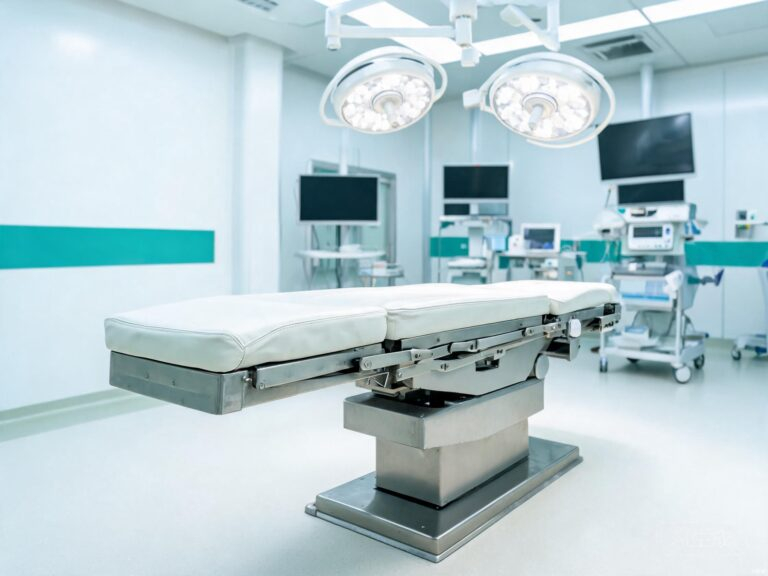
Operating room turnover now averages under twenty minutes per case. Surgical table cover material must survive high-level disinfectants, resist fluid penetration under pressure, and maintain integrity through hundreds of wipe-downs per week. A cover that absorbs blood or delaminates after alcohol exposure creates both infection risk and scheduling delays. This guide explains how to evaluate surgical table pad materials and where silicone leather supports sterile-field protocols.
Download Material Specifications
OR surfaces encounter alcohol wipes, quaternary ammonium sprays, blood, irrigation fluids, and repeated compression from positioning devices. A surgical table cover must maintain its fluid barrier after hundreds of cleaning cycles while supporting sterile draping. Cracks at fold lines or seam gaps become pathways for bacterial migration, turning a surface that looks intact into an infection control liability.
Long procedures add another variable: pressure-induced tissue damage. The International PU/PI Guideline identifies surgical patients as a high-risk group because anesthesia eliminates protective movement. Surgical table cover material selection should support both patient positioning safety and aggressive disinfection protocols. A surface that degrades under disinfectants or allows fluid pooling can compromise outcomes and standards simultaneously.
Procedure type drives specification. Cardiac cases may exceed six hours, requiring pressure distribution at bony prominences. Orthopedic traction tables impose shear loads at attachment points. Outpatient minor-surgery pads need rapid turnover withstanding frequent low-level disinfection. Specifying procedure mix, expected cleaning cycles, and fluid exposure types helps suppliers match surface chemistry and backing construction to real OR demands.

Physical testing laboratory equipment — verifying material performance for surgical table environments.
OR surfaces encounter alcohol wipes, quaternary ammonium sprays, blood, irrigation fluids, and repeated compression from positioning devices. A surgical table cover must maintain its fluid barrier after hundreds of cleaning cycles while supporting sterile draping. Cracks at fold lines or seam gaps become pathways for bacterial migration, turning a surface that looks intact into an infection control liability.
Long procedures add another variable: pressure-induced tissue damage. The International PU/PI Guideline identifies surgical patients as a high-risk group because anesthesia eliminates protective movement. Surgical table cover material selection should support both patient positioning safety and aggressive disinfection protocols. A surface that degrades under disinfectants or allows fluid pooling can compromise outcomes and standards simultaneously.
Procedure type drives specification. Cardiac cases may exceed six hours, requiring pressure distribution at bony prominences. Orthopedic traction tables impose shear loads at attachment points. Outpatient minor-surgery pads need rapid turnover withstanding frequent low-level disinfection. Specifying procedure mix, expected cleaning cycles, and fluid exposure types helps suppliers match surface chemistry and backing construction to real OR demands.
| Decision Area | What to Specify | Best Fit |
|---|---|---|
| Disinfectant resistance | Validated against alcohol, quats, and OR cleaning protocols | Operating rooms with rapid turnover schedules |
| Fluid barrier | Prevents penetration of blood and irrigation fluids at seams | Invasive surgery tables and hybrid ORs |
| Positioning stability | Low stretch under load to maintain patient position | Orthopedic and cardiac procedures with traction |
| Rapid cleanability | Smooth, non-porous surface for between-case wiping | Outpatient surgery centers and high-volume ORs |
How TOPSUN Builds OR-Grade Silicone Leather
TOPSUN supplies silicone leather engineered for surgical and clinical environments where surfaces must withstand aggressive disinfection protocols and rapid turnover cycles. The formulation prioritizes alcohol and quaternary ammonium resistance, fluid barrier integrity, and low particle shedding to support sterile field requirements. Backing options can be adjusted for dimensional stability under positioning loads and compatibility with table pad lamination processes. See our medical and healthcare silicone leather applications for typical healthcare applications.
For surgical OEM projects, we usually start by mapping the OR workflow: procedure duration, disinfectant types, positioning device loads, and draping methods. Then we tune color, grain, thickness, and backing to match the clinical demands. Related references include our medical-grade silicone leather guide and hospital bed upholstery material.

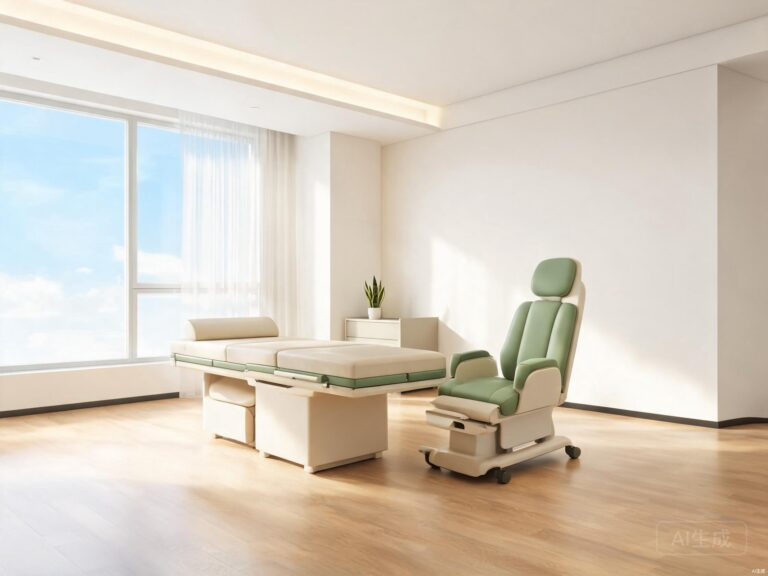
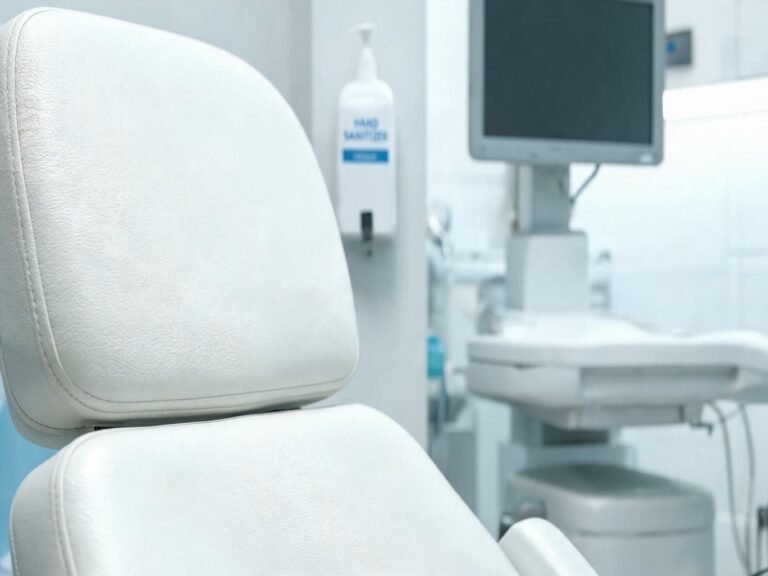
Antibacterial medical chair upholstery.
Alcohol resistance test — critical for surgical environments requiring frequent disinfection.
Specifying Surgical Table Cover Material for OEM Production
A good RFQ for surgical table covers should include target thickness, backing type, disinfectant compatibility list, seam sealing method, color tolerance, and sample test expectations including fluid barrier validation. Do not specify only price per meter. For OR products, a cover with proven disinfectant resistance can reduce replacement frequency and support infection control audits over the product life. TOPSUN can support custom color, embossing, and backing trials before bulk production.
Before approving mass production, request swatches from the same construction that will be used in the order. Test them after repeated wiping with your specified OR disinfectants, simulated fluid exposure at seams, and edge folding where the pad stores against the table frame. This simple step catches many problems early: coating breakdown after alcohol contact, delamination at fold points, color shift after chemical exposure, or backing that does not bond well to the chosen foam core.
Frequently Asked Questions
Can silicone leather withstand hospital-grade disinfectants?
Yes, when properly formulated. TOPSUN silicone leather is tested against common OR disinfectants including alcohol and quaternary ammonium compounds. Buyers should request compatibility data for the specific cleaning agents used in their facility.
What seam design works best for fluid-prone OR tables?
Welded or sealed seams with fluid barrier backing perform better than stitched seams in fluid-prone areas. Buyers should share their table pad drawings so engineers can recommend seam placement away from fluid pooling zones and positioning device attachment points.
Next Step for Buyers
Surgical table cover selection directly affects infection control, patient safety, and OR efficiency. TOPSUN supplies silicone leather surfaces validated against common OR disinfectants, with fluid barrier testing and biocompatibility references available for regulatory submissions. We support custom dimensions, seam configurations, and rapid sample turnaround for OR equipment programs.
About TOPSUN
TOPSUN supplies silicone leather for operating room surfaces, surgical table pads, and sterile-field seating applications.
Relevant capabilities include disinfectant compatibility validation, fluid barrier testing, biological evaluation references, and rapid sample turnaround for OR equipment manufacturers.