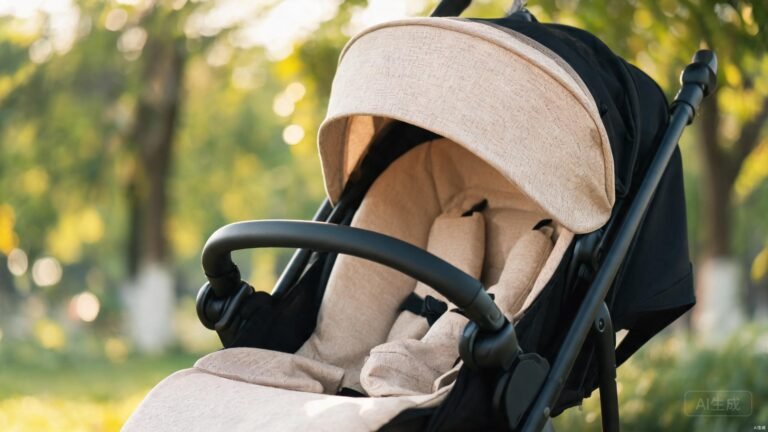
A stroller leather handle is the single most touched surface on a baby stroller. Parents grip it 50+ times a day — in rain, in summer heat, with sunscreen-coated hands, with baby wipes, with groceries dangling from the wrist. The handle material absorbs all of that punishment while sitting inches from a child’s face.
Most stroller brands default to PU leather for handlebar covers. It looks premium, feels soft, and keeps the bill of materials low. But PU leather has a dirty secret: it starts degrading from the exact conditions stroller handles face daily — sweat, UV, friction, and chemical exposure — typically within 12–18 months of regular use.
After testing stroller handle materials against EN 1888 safety requirements and real-world wear conditions, the performance gap between PU and silicone-based leather is striking. Here’s what compliance-focused brands need to know before specifying a stroller leather handle material.
Request Free Baby-Safe Material Samples

Martindale abrasion testing — simulating years of grip friction on stroller handle materials
What Makes a Stroller Leather Handle Safe for Babies?
The EN 1888 standard for wheeled child conveyances sets strict requirements for stroller materials — but many brands don’t realize it covers more than just structural integrity. Material surfaces that come into contact with children must resist tearing, avoid releasing harmful chemicals, and maintain their integrity after repeated cleaning cycles.
For a stroller leather handle, the critical compliance specs are:
- EN 71-3 toy safety: Limits on migratable heavy metals — lead, cadmium, chromium — that children could ingest by touching the handle and then putting their fingers in their mouth.
- REACH compliance: No restricted SVHC substances, including phthalates commonly used as plasticizers in PVC and low-grade PU leather.
- Tear resistance per EN 1888: Handle materials must withstand specified tear forces without delamination, because a torn handle exposes sharp edges and foam cores.
- Color fastness: Dyes must not transfer to skin or clothing when wet — a baby gripping a sweaty handle shouldn’t end up with colored hands.
For brands targeting the European market, these aren’t optional. A stroller that fails EN 1888 material testing cannot be legally sold in the EU. For more on baby-safe applications, see our baby and kids application page.
PU Leather Handles: Why the Default Choice Fails
PU leather dominates the stroller handle market for one reason: cost. At $2–4 per meter, it’s the cheapest way to get a leather-like finish on a handlebar. But the performance profile reveals why premium stroller brands are quietly switching away from it.
In our materials lab, we’ve tested PU stroller handle covers under accelerated aging conditions. The results are consistent: PU leather handles begin showing surface degradation within 6–12 months of daily outdoor use. UV radiation breaks down the polyurethane topcoat, causing it to become tacky and then brittle. Sweat and sunscreen accelerate this — the oils in sunscreen interact with PU plasticizers, softening the surface and accelerating wear.
The most common failure mode we see is peeling at the grip points — the areas where the parent’s hands apply the most pressure. Once the topcoat starts peeling, the exposed fabric backing absorbs moisture and bacteria, creating an unhygienic surface that can’t be properly cleaned. For a product used around infants, that’s unacceptable.
Compliance risk: Some PU formulations contain phthalate plasticizers that are restricted under REACH SVHC. If you’re selling into the EU market, always request a full REACH compliance certificate — not just a material safety data sheet.

Leather material options for stroller handles — EN 71-compliant colors and textures available
Silicone Leather: Meeting EN 1888 and EN 71 Simultaneously
Silicone-coated leather fabric was originally developed for medical and food-contact applications — environments where material safety is a legal requirement, not a marketing claim. When applied to stroller handles, it brings a fundamentally different chemistry: silicone polymers are inherently non-toxic, contain no migratory plasticizers, and remain stable across temperatures from -40°C to 250°C.
Here’s how silicone leather performs on the specs that matter for stroller handles:
| Requirement | PU Leather Handle | Silicone Leather Handle |
|---|---|---|
| EN 71-3 heavy metals | Variable — depends on formulation | Compliant — inherently non-toxic |
| REACH phthalates | Risk — may contain SVHC | Phthalate-free |
| Abrasion (Martindale) | 50,000–100,000 cycles | 200,000+ cycles |
| UV stability | 200–500 hours | 1,000+ hours |
| Chemical cleaning | Limited — alcohol damages coating | Bleach-safe, alcohol-safe |
| Service life (outdoor daily use) | 12–18 months | 5–10+ years |
The cleaning aspect is especially relevant for stroller handles. Parents regularly wipe down the handle with baby wipes, hand sanitizer, or soap and water. PU leather degrades from repeated alcohol exposure — the surface becomes cloudy and then cracks. Silicone leather handles can be cleaned with alcohol disinfectants, bleach solutions, or even steam-sterilized without any surface damage.
Baby-safe certification — how silicone leather meets EN 71 and maternal-infant safety requirements

Baby-safe leather material in stroller and infant product applications
Sourcing Specs for Stroller Handle Materials
When specifying a stroller leather handle material for production, include these requirements in your RFQ to ensure both compliance and long-term durability:
- EN 71-3 test certificate: Request the actual lab report, not a supplier self-declaration. Verify heavy metal content is below migration limits.
- Martindale abrasion ≥ 100,000 cycles — stroller handles experience more friction than most upholstery applications.
- UV stability ≥ 1,000 hours per ISO 105-B06 — strollers are used outdoors daily, in all weather conditions.
- Alcohol resistance test — expose the material to 70% isopropyl alcohol for 100 cycles; if the surface clouds or cracks, it won’t survive real-world cleaning.
- Tear strength ≥ 20N per ISO 34-1 — a torn handle exposes foam and sharp edges, creating both a safety hazard and a warranty claim.
For premium stroller brands, also consider specifying eco-friendly material certification — consumers increasingly expect baby products to be free from harmful chemicals, and silicone leather’s zero-VOC, PVC-free, and phthalate-free profile supports that positioning.
The Handle Is the Product’s First Impression
A stroller’s handle is what parents touch first, grip most often, and notice immediately when it starts to degrade. Choosing PU leather saves a few dollars per unit — but costs brands in warranty claims, customer complaints, and reputation damage when handles peel and crack within the first year.
Silicone leather addresses every failure mode that plagues PU stroller handles: it’s inherently non-toxic, UV-stable, abrasion-resistant, and survives the cleaning chemicals parents use daily. For brands building premium strollers sold with multi-year warranties, it’s the only material that makes both safety and commercial sense.
Get a Custom Stroller Material Quote
About TOPSUN
TOPSUN manufactures baby-safe silicone leather for stroller handles, bumper bars, and infant product surfaces where EN 71 compliance, tear resistance, and chemical cleaning durability are mandatory.
EN 71 toy-safe | ISO 10993 biocompatible | REACH & RoHS compliant | 200,000+ Martindale cycles | Free A4 swatches worldwide