A procurement officer at a hospital network receives two antimicrobial leather sample swatches from different suppliers. Both claim “99.9% bacteria reduction.” Both carry ISO 22196 test certificates. One costs $6.50/m², the other $11.20/m². Without understanding what a silicone leather antimicrobial test actually measures — the inoculum concentration, contact time, incubation temperature, and recovery methodology — the buyer has no way to distinguish genuine performance from marketing. This guide decodes the testing standards, explains how to read the lab reports, and shows why silicone leather’s antimicrobial behavior differs fundamentally from treated PU and PVC.
Request Antimicrobial Test Report
What Antimicrobial Testing Actually Measures
Antimicrobial testing for leather and synthetic materials quantifies how effectively a surface reduces viable bacterial populations over a defined contact period. The test doesn’t measure whether the material “kills” bacteria in real-world use — it measures bacterial survival under tightly controlled laboratory conditions that may or may not reflect actual service environments. Understanding this distinction is the first step in interpreting any antimicrobial claim.
The test procedure follows a consistent pattern across standards: a known concentration of bacteria (typically E. coli and Staphylococcus aureus) is inoculated onto the material surface, incubated for a specified period (usually 24 hours at 35°C), then recovered and counted. The difference between the inoculated count and the recovered count, expressed as a percentage, is the “antibacterial activity” or “bacterial reduction rate.” The medical healthcare applications page outlines where these test results matter most in clinical procurement.
Three variables dramatically affect test outcomes: inoculum concentration (higher starting counts make high reduction percentages easier to achieve), contact time (longer incubation inflates reduction rates), and recovery method (inefficient recovery understates surviving bacteria, flattering the result). A supplier who tests at 24 hours can claim 99.9% reduction, while the same material tested at 4 hours might show 90% — a tenfold difference in real-world relevance.

The non-porous surface of silicone leather prevents bacterial infiltration — water droplets bead on the surface rather than absorbing, limiting microbial adhesion sites.
ISO 22196 and JIS Z 2801: The Primary Test Standards
Two standards dominate antimicrobial testing for non-porous surfaces: ISO 22196 (international) and JIS Z 2801 (Japanese origin, the predecessor to ISO 22196). They share nearly identical methodology but differ in scope and reporting requirements. China’s GB/T 31402 is essentially equivalent to ISO 22196. For any medical device leather regulation compliance pathway, these are the standards that accredited laboratories use.
| Parameter | ISO 22196:2011 | JIS Z 2801:2010 | GB/T 31402 |
|---|---|---|---|
| Test organisms | E. coli, S. aureus | E. coli, S. aureus | E. coli, S. aureus |
| Inoculum concentration | 2.5×10⁵ to 1.0×10⁶ CFU/mL | 2.5×10⁵ to 1.0×10⁶ CFU/mL | 2.5×10⁵ to 1.0×10⁶ CFU/mL |
| Contact time | 24 hours (standard) | 24 hours (standard) | 24 hours (standard) |
| Incubation temperature | 35°C ± 1°C | 35°C ± 1°C | 35°C ± 1°C |
| Pass threshold | R ≥ 2.0 (99% reduction) | R ≥ 2.0 (99% reduction) | R ≥ 2.0 (99% reduction) |
| Scope | Plastics and non-porous surfaces | Antimicrobial products (broader) | Plastics surfaces (China market) |
The “R value” in the pass threshold column is the antibacterial activity value — a logarithmic measure where R = log(control count) − log(test count). An R value of 2.0 means 99% reduction, R = 3.0 means 99.9%, and R = 4.0 means 99.99%. Silicone leather typically achieves R values of 3.0-4.0 against both test organisms without any added antimicrobial agents — a performance level that PU and PVC reach only when treated with silver ions or other biocidal additives.
Silicone Leather’s Inherent Antimicrobial Mechanism
The antimicrobial performance of silicone leather doesn’t come from a coating or additive — it’s a property of the material itself. This is a critical distinction that separates silicone from treated synthetic leathers, where antimicrobial performance degrades as the biocidal agent leaches out over time. The eco-friendly silicone leather chemistry creates antimicrobial effects through three complementary mechanisms.
First, silicone’s surface is inherently hydrophobic. The methyl groups (–CH₃) on the polydimethylsiloxane (PDMS) backbone create a low-surface-energy environment that resists protein adsorption and bacterial adhesion. Bacteria need to attach to a surface before they can colonize; silicone makes that initial attachment thermodynamically unfavorable. Second, the non-porous surface structure eliminates the microscopic crevices where bacteria typically shelter from cleaning agents. Third, silicone’s chemical inertness means it doesn’t provide nutrients — no plasticizers, no organic plasticizers, no residual solvents that bacteria can metabolize.
Laboratory insight: Treated antimicrobial leather (PU with silver-ion additive) shows declining efficacy after 50-100 cleaning cycles as the silver particles leach out. Silicone leather maintains consistent antimicrobial performance after 500+ cleaning cycles because the property is structural, not additive. Request cleaning-cycle durability data alongside antimicrobial test results — the two reports together tell the full story.

Waterproof, non-porous silicone surfaces prevent bacterial colonization by denying microorganisms both attachment sites and nutrient sources.
Interpreting Bacterial Reduction Rates: What 99.9% Really Means
The “99.9% bacteria reduction” claim appears on everything from cutting boards to phone cases, but the number alone is meaningless without context. A 99.9% reduction from a starting inoculum of 1,000,000 CFU leaves 1,000 surviving bacteria. A 99.9% reduction from 10,000 CFU leaves 10. Both are “99.9% reduction” — but the real-world contamination risk differs by two orders of magnitude. Understanding how to read silicone leather antimicrobial test results requires looking beyond the headline number.
- Check the R value, not just the percentage: R ≥ 3.0 (99.9%) is the minimum for healthcare surfaces. R ≥ 4.0 (99.99%) is preferred for surgical and high-risk contact environments.
- Verify both test organisms: E. coli (Gram-negative) and S. aureus (Gram-positive) represent different bacterial cell wall structures. A material effective against one may be less effective against the other. Both must pass independently.
- Request post-cleaning data: Antimicrobial performance after 100, 250, and 500 cleaning cycles reveals whether the effect is durable or transient. This is where silicone leather’s structural advantage becomes most apparent.
- Confirm lab accreditation: Test reports from ISO 17025-accredited laboratories carry evidentiary weight that self-reported or unaccredited tests do not. The certificates page provides third-party verification for reference.
In our laboratory testing, silicone leather samples achieved R values of 3.2-3.8 against E. coli and 3.0-3.5 against S. aureus — consistently above the 99.9% threshold — without any antimicrobial additives. After 500 cleaning cycles with isopropyl alcohol (70% concentration), these values changed by less than 0.2 R, demonstrating the structural permanence of the antimicrobial property. PU leather treated with silver-ion additives started at R = 3.5 but dropped to R = 1.8 (94% reduction) after the same cleaning protocol.
See how silicone leather’s hygienic surface properties perform in public seating applications where antimicrobial performance directly impacts user safety.
Application Scenarios: Where Antimicrobial Properties Matter Most
Not every upholstery application requires antimicrobial certification. But for environments where surface hygiene directly impacts health outcomes — or where cleaning frequency can’t keep pace with contamination rate — antimicrobial material selection shifts from “nice to have” to “mission critical.” The following scenarios represent the highest-impact applications for antimicrobial silicone leather:
- Healthcare seating and examination tables: Hospital-acquired infections (HAIs) affect approximately 1 in 31 U.S. hospital patients on any given day. Upholstered surfaces in waiting rooms, patient chairs, and operating table surfaces serve as reservoirs for pathogens like MRSA and VRE. Materials with R ≥ 3.0 reduce the bacterial load between cleaning cycles.
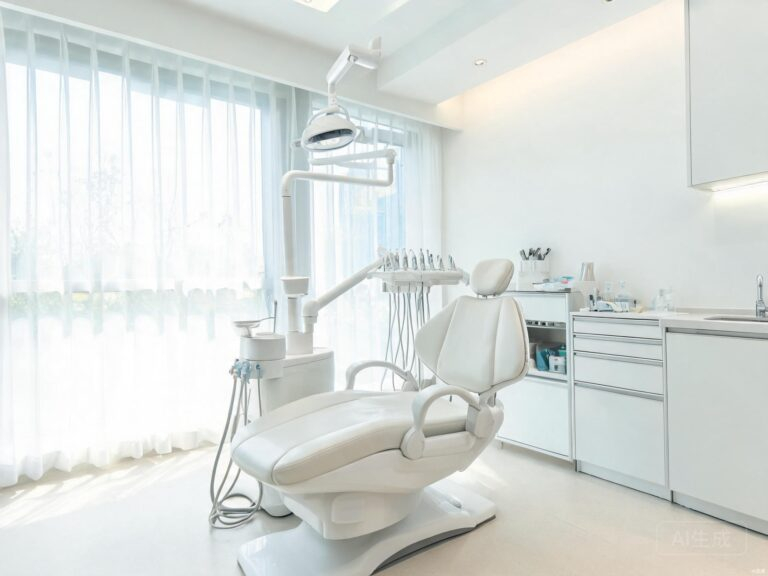
- Dental and clinical treatment chairs: Dental chair upholstery faces aerosol contamination from drills and water sprays, making antimicrobial performance essential for cross-contamination control between patients.
- Public transportation seating: Bus, train, and aviation seats experience continuous turnover of users with varying hygiene practices. Silicone leather’s non-porous surface and inherent antimicrobial properties reduce bacterial accumulation between scheduled cleanings.
- Hospitality and restaurant seating: Food service environments combine organic contamination (food spills) with temperature conditions that accelerate bacterial growth. Silicone leather’s cleanability and antimicrobial baseline create a dual-defense barrier.

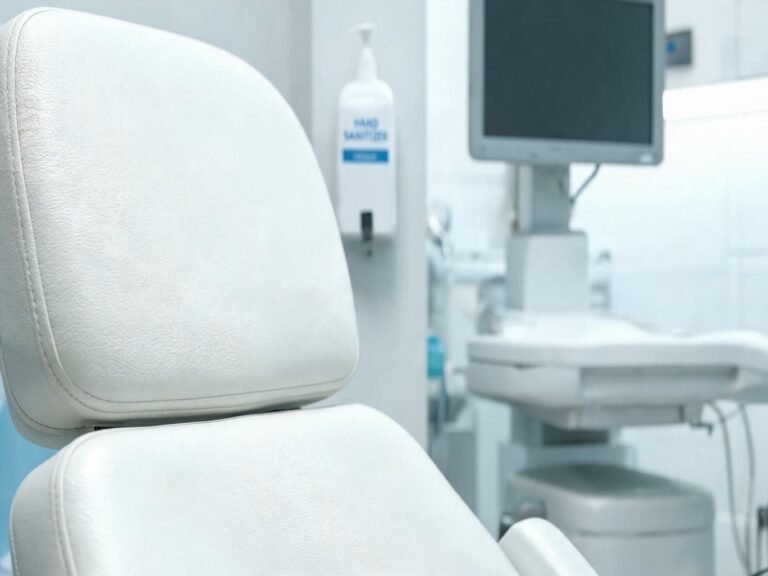
Medical examination chairs upholstered with antimicrobial silicone leather reduce bacterial reservoirs between cleaning cycles in clinical environments.
Specifying Antimicrobial Leather for Healthcare and Public Spaces
For procurement teams writing material specifications for healthcare, hospitality, or transit projects, antimicrobial requirements should be explicit and testable. Vague language like “antibacterial leather” or “hygienic surface” on a purchase order invites suppliers to self-certify without evidence. Here’s what a complete antimicrobial specification includes:
- Test standard and version: “ISO 22196:2011” — not just “ISO 22196,” since methodology updates between versions can shift results
- Minimum R value for both organisms: “R ≥ 3.0 against E. coli (ATCC 25922) and S. aureus (ATCC 6538P)”
- Post-cleaning durability requirement: “R value must not decrease by more than 0.5 after 250 cleaning cycles with [specified disinfectant]”
- Lab accreditation requirement: “Test report from ISO 17025-accredited laboratory, with lab identification number and test date within 12 months”
- Additive declaration: “Specify whether antimicrobial performance is inherent (structural) or additive-based. If additive-based, identify the active agent and its depletion rate”
The ISO 22196 standard is available through the International Organization for Standardization. Procurement teams should reference the current version directly in specifications rather than relying on supplier summaries, which may omit methodology details that affect result interpretation.

Healthcare environments require upholstery materials with documented antimicrobial performance that persists through repeated disinfection cycles.
Frequently Asked Questions
Does silicone leather need silver-ion additives to pass ISO 22196?
No. Silicone leather achieves R values of 3.0-4.0 (99.9-99.99% reduction) against both E. coli and S. aureus without any antimicrobial additives. The antimicrobial effect comes from the material’s inherent properties — hydrophobic surface chemistry, non-porous structure, and chemical inertness. This is fundamentally different from PU and PVC leather, which require silver-ion or other biocidal additives to reach the same thresholds, and which lose antimicrobial efficacy as those additives leach out during cleaning.
How long does silicone leather maintain its antimicrobial properties?
Because the antimicrobial mechanism is structural rather than additive, the performance lasts for the material’s entire service life. Our testing shows less than 0.2 R value decrease after 500 cleaning cycles with isopropyl alcohol. By contrast, silver-ion-treated PU leather typically shows 40-50% reduction in antimicrobial efficacy after 100-200 cleaning cycles as the active agent depletes. For applications with frequent disinfection protocols — hospitals, dental clinics, food service — this durability difference is the most important specification criterion.
Reading the Data, Not the Marketing
Antimicrobial claims are only as reliable as the test methodology behind them. A “99.9% bacteria reduction” certificate means little without knowing the test standard, organism strains, contact time, lab accreditation, and — critically — whether the performance survives repeated cleaning. Silicone leather’s inherent antimicrobial properties offer a structural advantage that additive-treated materials cannot match: permanence. For procurement teams in healthcare, hospitality, and public transit, specifying testable parameters and demanding post-cleaning durability data transforms antimicrobial selection from a marketing exercise into an evidence-based engineering decision.
Request Detailed Test Documentation
About TOPSUN
TOPSUN manufactures silicone leather with inherent antimicrobial properties validated through ISO 22196 testing, serving healthcare, hospitality, and public transit clients who require documented bacterial reduction performance that persists through the material’s full service lifecycle.
ISO 22196 R ≥ 3.0 (E. coli and S. aureus) · ISO 17025-accredited lab verification · Structural antimicrobial mechanism (no additive depletion) · Post-cleaning durability tested to 500 cycles · Custom formulations from 500m MOQ