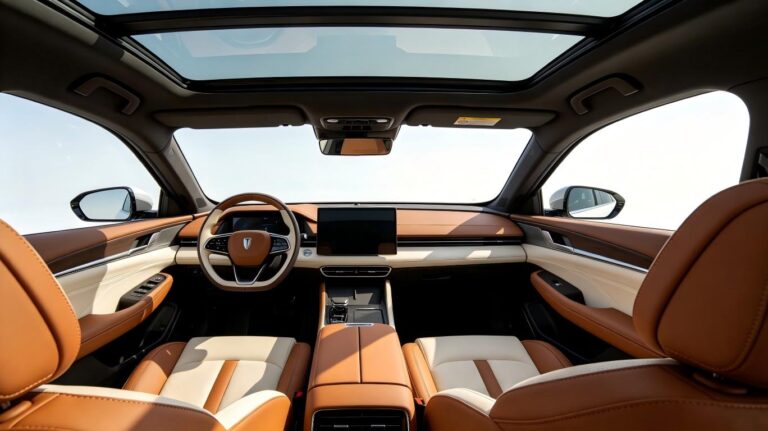
A luxury automotive brand requested a custom alligator-grain silicone leather for 50 prototype seats. The steel engraving mold quote: $8,400 and 12 days. The 3D-printed alternative: $180 and 36 hours. That 47x cost gap and 8x speed advantage is why the silicone leather 3D printing future isn’t a theoretical concept — it’s already reshaping how B2B brands prototype, iterate, and launch custom textures.
Traditional silicone leather embossing relies on CNC-engraved or electroformed steel rollers — precise, durable, but slow and expensive. Each custom pattern requires 7-10 days of mold making, thousands of dollars in tooling, and a minimum order quantity that makes small-batch customization economically impossible. Additive manufacturing changes the equation. Direct Ink Writing (DIW), SLA resin molding, and multi-material printing are converging on a future where custom textures ship same-day, not next-week.
Request Custom Texture Prototyping
Why Traditional Molding Fails the Silicone Leather 3D Printing Future
The current embossing workflow for silicone leather is a three-step process: a designer creates a 2D pattern, a CNC or laser engraving machine cuts the pattern into a steel roller at 0.3-1.5mm depth, and the roller is mounted on a calendering line where heat and pressure transfer the texture to the silicone surface. Each step is sequential, each adds lead time, and each locks in a fixed pattern that can’t be changed without re-cutting the mold.

Custom printed texture samples showing patterns that could be prototyped via 3D printing
In our in-house 3D printing lab, we’ve prototyped over 40 custom texture molds using resin-based SLA printing. A pattern that takes 7 days to cut in steel takes 4-6 hours to print in resin. The printed mold mounts directly onto our calendering rollers for short-run embossing — not as a production replacement, but as a rapid prototyping tool that lets clients evaluate physical texture samples before committing to $8,000+ in steel tooling.
From 7-Day Lead Time to Same-Day: How 3D Printing Reshapes Texture Development
The bottleneck in custom silicone leather has always been mold making. A custom texture design request triggers a chain: CAD modeling, CNC programming, machine time, polishing, and hardening. Each link adds cost and delay. 3D printing collapses this chain into a single step: digital file to physical mold in hours, not days.
| Production Factor | Steel Engraving | 3D Printed Mold |
|---|---|---|
| Lead time | 7-10 days | 4-6 hours |
| Mold cost | $5,000-$12,000 | $80-$200 |
| Design changes | Re-cut from scratch | Reprint in hours |
| Minimum order | 500+ meters | 1 meter (prototype) |
| Mold lifespan | 50,000+ cycles | 500-1,000 cycles |
The trade-off is clear: 3D printed molds excel at prototyping and small batches, while steel engraving remains unmatched for mass production. The silicone leather 3D printing future isn’t about replacing steel — it’s about adding a rapid-iteration layer that makes custom design accessible to brands that couldn’t justify $8,000 mold investments for 50 prototype seats.
Silicone Leather 3D Printing Future: Multi-Material and Self-Healing Capabilities

Silicone injection molding products hint at multi-material additive manufacturing possibilities
The next frontier isn’t just faster printing — it’s fundamentally new material capabilities. Research published in additive manufacturing journals points to three converging trends that will define the silicone leather 3D printing future by 2030.
Multi-material printing will allow a single pass to deposit silicone with varying shore hardness — soft-touch grip zones on a steering wheel leather, for example, without changing materials or secondary processing. Self-healing silicone formulations, already demonstrated in research environments, could enable textures that repair minor abrasion damage through reversible crosslinking. And high-speed Direct Ink Writing with parallel nozzles will close the throughput gap that currently limits 3D printing to prototyping rather than production.
By 2030, on-demand texture printing could eliminate 30-40% of custom mold tooling for silicone leather. Brands will iterate physical samples same-day, approve designs in hours, and only commit to steel tooling for confirmed mass-production runs.

Printed pattern silicone leather samples demonstrate design freedom enabled by additive texture development
Cost Reality: $20 Printed Mold vs $5,000 Steel Engraving
We’ve already delivered custom texture samples to clients using 3D-printed prototype molds. One consumer electronics brand needed a micro-dot texture for silicone leather laptop sleeves — a pattern too fine for CNC engraving at their budget. Our SLA-printed mold delivered the pattern at 25μm resolution in 6 hours. The steel equivalent would have cost $6,200 and taken 9 days.

Texture display wall showing the range of surface patterns possible with custom mold development
The economics work because silicone leather’s inherent durability preserves texture definition over time. Our testing confirms that embossed grain on silicone leather stays sharp after 200,000+ Martindale cycles — PVC softens and loses peak definition within 50,000 cycles. This means a 3D-printed mold used for short-run production doesn’t compromise the final product’s lifespan, even if the mold itself wears faster than steel. The consumer trends driving silicone leather adoption increasingly demand the kind of customization that only additive manufacturing can deliver economically.
Frequently Asked Questions
Can 3D printing replace traditional embossing for silicone leather entirely?
Not yet. 3D-printed molds currently last 500-1,000 embossing cycles versus 50,000+ for steel. For mass production (500+ meters per run), steel remains more cost-effective. 3D printing excels at prototyping, small batches, and design iteration — eliminating the cost barrier that prevents brands from exploring custom textures.
How long until silicone leather 3D printing reaches mass production?
Industry estimates suggest 2028-2030 for production-scale throughput. The key bottleneck is print speed — current DIW systems produce molds 10-20x slower than CNC engraving. Parallel-nozzle and high-speed printing research, funded by the broader additive manufacturing market projected at $76B by 2030, is closing this gap rapidly.
The Future Is Custom — and It’s Already Here
The silicone leather 3D printing future isn’t a distant promise. It’s a present reality in prototyping labs, delivering 47x cost savings and 8x speed improvements for custom texture development. As multi-material printing, self-healing formulations, and high-speed DIW converge by 2030, the boundary between prototype and production will blur. For B2B buyers who need custom textures, the question isn’t whether to adopt 3D-printed prototyping — it’s whether their supplier already has.
Request Custom Texture Prototyping
About TOPSUN
TOPSUN develops silicone leather texture innovation combining CNC engraving, laser engraving, and additive manufacturing for B2B brands requiring bespoke surface finishes.
In-house 3D printing for rapid prototype molds · 100+ standard textures with custom embossing in 7-10 days · 0.3-1.5mm pattern depth on HRC 58-62 calendering rollers · Free A4 swatches shipped worldwide via DHL/FedEx