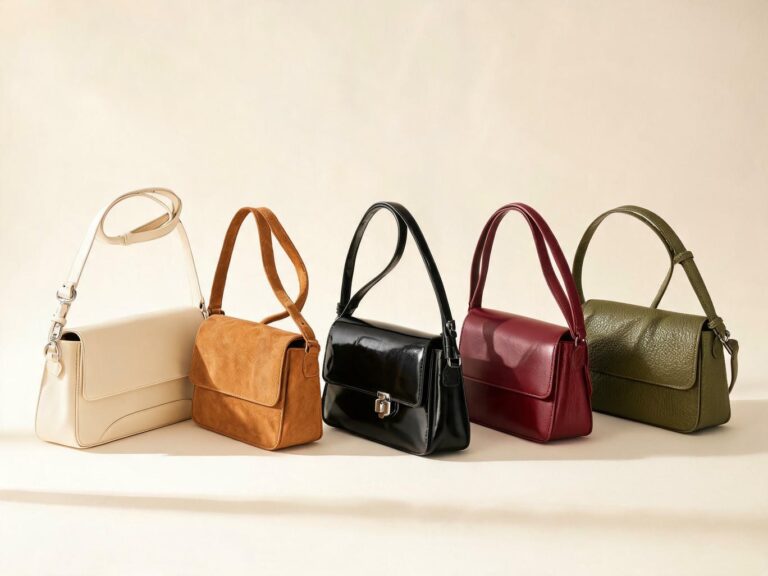
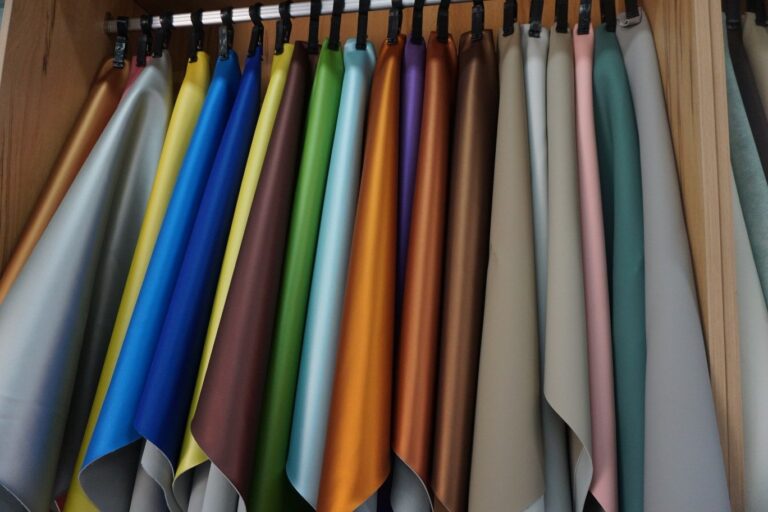
The global recycled leather market reached $1.85 billion in 2025 and is projected to reach $3.27 billion by 2032. Bonded leather alone accounted for 61.7 percent of that volume. Yet two sheets sold under the same recycled label can differ by a factor of eight in actual leather fiber content. One board carries up to 80 percent reclaimed fiber. Another stops at 10. For buyers sourcing recycled leather bags, that spread decides cost, flex life, certification and the claim you can legally print.
What Recycled Leather Bags Are Actually Made Of
Recycled leather is a composite sheet material, not a hide. Manufacturers collect post-industrial waste from tanneries. The stream includes shavings, trimmings and buffing dust. Machines defiberize the scrap into a pulp, and the pulp is blended with binders in a controlled ratio. The slurry is laid into a mat by a wet-laid or air-laid process. Wet-laid lines give more uniform density, while air-laid lines build bulk. The mat then passes through vacuum boxes and pressing rollers. Heat cures the binder in a drying tunnel, and the finished sheet can be embossed, coated or buffed.
A typical composition runs 45 to 80 percent leather fiber by weight. Binders account for another 15 to 40 percent. Additives such as pigments, oils and calcium carbonate fillers make up the final 2 to 10 percent. Every step above has a quality gate. The fiber-to-binder ratio is the gate that decides everything else.
The source of the waste matters as much as the volume. Post-industrial scrap is cleaner and more consistent. Post-consumer material can carry contaminants that weaken the sheet. At the low end of the market sits bonded leather. It holds only 10 to 20 percent leather content together with polyurethane on a fiber backing. That fiber gap explains most of the quality difference buyers feel when comparing samples side by side.
The Recycled Share: From 10 Percent Bonded Boards to 80 Percent Fiber-Rich Panels
Fiber content is the one specification that separates the grades. High-strength boards carry 70 to 80 percent leather fiber with a water-based polyurethane and crosslinker. General purpose sheets run 50 to 65 percent on acrylic or latex blends. Flexible grades hold 45 to 55 percent and are tuned for softness. Economy boards drop to 30 to 45 percent and lean on fillers. The extra filler stiffens the sheet and drifts toward bonded territory.
| Grade | Leather Fiber | Binder System | Best Fit in Bags |
|---|---|---|---|
| High-Strength | 70–80% | Water-based PU + crosslinker | Straps, handles, luggage reinforcement |
| General Purpose | 50–65% | Acrylic or PU latex blend | Body panels, small leather goods |
| Flexible/Soft | 45–55% | High-solids water-based PU | Linings, gussets, fold zones |
| Economy | 30–45% | Acrylic with fillers | Box covering, display, promo items |
Ask for a material data sheet that states the ratio in writing. If a supplier cannot produce one, treat the label claim as unverified. A minimum leather fiber content of 30 percent with a water-based binder is the sensible floor for anything sold as recycled leather rather than bonded board.
Why does the spread matter commercially? Because price tracks fiber share only loosely at the low end. A 40 percent board and an 80 percent board can look similar on a showroom table. The difference shows up in flex life, batch consistency and the recycled percentage you can certify. Post-consumer input raises the sustainability story but adds contamination risk. Premium programs therefore specify post-industrial fiber with full traceability.

Matching Grades to Bag Components: Straps, Panels and Linings
Bag construction puts very different loads on different parts. A carry strap flexes thousands of times under load. A body panel mostly sees abrasion and edge wear. A lining folds but never carries weight. Matching the grade to the component prevents both premature failure and premium material hidden inside zones nobody sees.
Set numeric minimums in the specification. Require tear strength of at least 20 N for any load-bearing zone. Where stitching takes the stress, require tensile strength of at least 8 N/mm². For color consistency across batches, demand spectrophotometer measurement with a Delta E tolerance of 1.0 or tighter. Check raw material moisture below 12 percent to keep mold and odor claims out of your after-sales file.
Thickness adds one more variable. The ISO 2589 range for recycled boards runs 0.6 to 2.0 mm. Straps want the upper half of that range, while linings sit in the lower half. Confirm the tolerance band per lot, because uneven calendering shows up as feed problems on automated cutting tables.
Edges and interfaces deserve their own line items. Recycled boards cannot be burnished like full-grain hide, so plan for painted or folded edges from the start. Specify edge paint systems that stay flexible after curing, and test them on your own flex rig. Hardware is the other friction point. Rivets and turnover posts concentrate stress at punched holes, so request tear data in the hole orientation rather than the sheet default.
Cutting behavior deserves a trial on your own floor. Inconsistent fiber distribution creates weak spots that tear during die cutting, and low-grade binders can melt under skiving friction. Pre-test with your actual cutting dies, and consider laser cutting for dense high-fiber boards.
How Recycled Panels Perform in Bag Service
Laboratory numbers put recycled leather in a clear middle position. The figures below come from standardized test methods, so you can request the same reports from any supplier you evaluate.
| Property | Test Standard | Recycled Leather | Bonded Leather | PU-Coated Split |
|---|---|---|---|---|
| Tensile strength | ISO 3376 | 5–15 N/mm² | 3–8 N/mm² | 10–30 N/mm² |
| Tear strength | ISO 3377-1 | 15–30 N | 10–20 N | 25–60 N |
| Flex resistance | ISO 5402 | 20,000–50,000 cycles | 10,000–30,000 cycles | 50,000–200,000 cycles |
| Thickness | ISO 2589 | 0.6–2.0 mm | 0.4–1.2 mm | 0.8–2.0 mm |
Recycled boards outperform bonded sheets in strength, flexibility and breathability. They also age like leather instead of peeling like a failed PU film. They still trail coated split leather on raw mechanics. That is why the grade choice matters more than the category name. A high-fiber board in the strap zone plus a flexible grade in the lining often beats one mid-grade across the whole bag.
Abrasion and humidity complete the service picture. Ask for Taber abrasion results under ASTM D3884 with the finish you actually specified, because a hard topcoat changes the number. In humid climates, under-cured binder shows up as hydrolytic instability and delamination at the fold lines. Reputable board makers control curing temperature and dwell time, and they will share the curing curve on request. Treat reluctance to share it as a process maturity signal.
How reclaimed material streams cut unit cost without dropping flex specifications.

GRS and RCS: What the Certification Actually Verifies
Two certificates dominate recycled content claims. The Global Recycled Standard, or GRS, verifies the recycled share in the final product. It tracks material through the supply chain via chain-of-custody requirements. It also adds social and environmental criteria for processors. The Recycled Claim Standard, or RCS, covers the chain of custody alone and stops short of the processing criteria.
Certification is necessary but not sufficient. A GRS scope certificate tells you the recycled input is real. It does not tell you the flex endurance of the finished sheet. It says nothing about the binder chemistry used in the board. Pair the certificate with a material data sheet. For critical programs, commission third-party testing by FTIR or thermogravimetric analysis to quantify the organic versus synthetic split.
Binder chemistry carries its own compliance file. Water-based systems cut VOC emissions and support the natural hand feel buyers ask for. Ask suppliers for ZDHC MRSL alignment and REACH documentation on the binder package. Odor complaints in finished goods usually trace back to residual solvents or damp raw material. Demand moisture records below 12 percent with each lot, and use an activated carbon insert in packaging as a cheap final guard for container shipping.
Review the waste stream documentation as well. Genuine post-industrial shavings from named tanneries read very differently on an audit than vague references to reclaimed material of unknown origin.

A Verification Checklist for Recycled Leather Bags
Run five checks before a purchase order goes out. First, demand a material data sheet with the fiber and binder ratio stated in percentages. Second, verify the GRS or RCS certificate scope and request the transaction certificate for the actual lot. Third, collect ISO 3376, ISO 3377-1 and ISO 5402 reports against your numeric minimums. Fourth, audit the waste source and favor documented post-industrial streams. Fifth, run a pre-production flex test on your own line. Strap geometry multiplies stress in ways a lab coupon misses.
| Claim on the Label | Evidence to Demand | Red Flag |
|---|---|---|
| “Recycled leather” | MDS with fiber percentage | No written composition |
| “GRS certified” | Scope and transaction certificate | Certificate covers a different line |
| “Durable” | ISO 5402 flex report | Marketing photos only |
| “Consistent color” | Delta E measurement report | Batch photos without numbers |
| “Eco-friendly” | ZDHC MRSL or REACH binder docs | Vague claims without documents |
Use the verdict table in review meetings, not just in procurement files. A red flag does not always mean a bad supplier. It means the evidence trail is incomplete, and the claim is not ready to print. Teams that keep this table next to the spec sheet close the gap before tooling starts, not after customer returns.
Where a program demands documented flex endurance with zero solvent input, silicone leather offers a complementary route for bag bodies and high-wear zones. The same verification logic applies to it. Ask for the substrate, the coating chemistry and the test file, then match each to the component. Our eco-friendly silicone leather overview documents the solvent-free process in full. For fashion and sports goods, we supply panels with abrasion and flex reports attached, so the bag brand can print a durability claim it can defend.
TOPSUN manufactures silicone leather with zero solvent input, non-detect VOC results and multi-stage QC. Certificates cover abrasion, hydrolysis and color fastness, with SGS batch reports on request.
Monthly capacity runs at 500,000 meters with a 500-meter MOQ, supplying 30+ countries for eight years.
Verify Recycled Claims With Our Team
Request Swatches With Test Reports
References
- https://pmarketresearch.com/chemi/recycled-leat… — Recycled leather market valued at $1.85 billion in 2025 and projected to $3.27 billion by 2032 at an 8.52% CAGR; bonded leather held a 61.7% share in 2025.
- https://chinahandbagfactory.com/recycled-leathe… — Composition ranges of leather fibers 45–80% and binders 15–40%; grade table from 30–80% fiber; ISO 3376, ISO 3377-1 and ISO 5402 benchmark data with GRS and RCS verification guidance.
- https://www.manuel-dreesmann.com/en-us/blogs/in… — Bonded leather typically contains 10–20% real leather content bonded with polyurethane or latex on a fibre sheet.