A container of upholstered furniture arrives at Rotterdam port. The PVC fabric on those sofa panels contains 30-40% phthalate plasticizers by weight. The lab pulls a sample and finds DEHP at 0.15% — 50% above the REACH Annex XVII limit. The shipment is held. The buyer faces demurrage charges of $2,000-4,000 per day while the supplier scrambles for replacement documentation that doesn’t exist. This scenario is playing out with increasing frequency in 2026 as EU enforcement tightens and the restricted-substance list expands. For B2B manufacturers still specifying PVC fabric, the question isn’t whether compliance will catch up with them — it’s which regulation will trigger first, and how much it will cost.
View Our Compliance Certifications
What Makes PVC Fabric a Regulatory Target?
PVC fabric — polyvinyl chloride coated or calendered onto a textile substrate — is the cheapest flexible synthetic material on the market. That low cost comes from a chemistry that regulators are increasingly targeting. Pure PVC is rigid and brittle, like plumbing pipe. To make it soft enough for upholstery, manufacturers add external plasticizers — typically phthalates like DEHP, DINP, or DBP — at 25-40% of total material weight. These plasticizers are not chemically bound to the PVC matrix. They migrate, evaporate, and leach out over time, entering indoor air, contacting skin, and accumulating in dust. That’s the root of every compliance risk that follows.

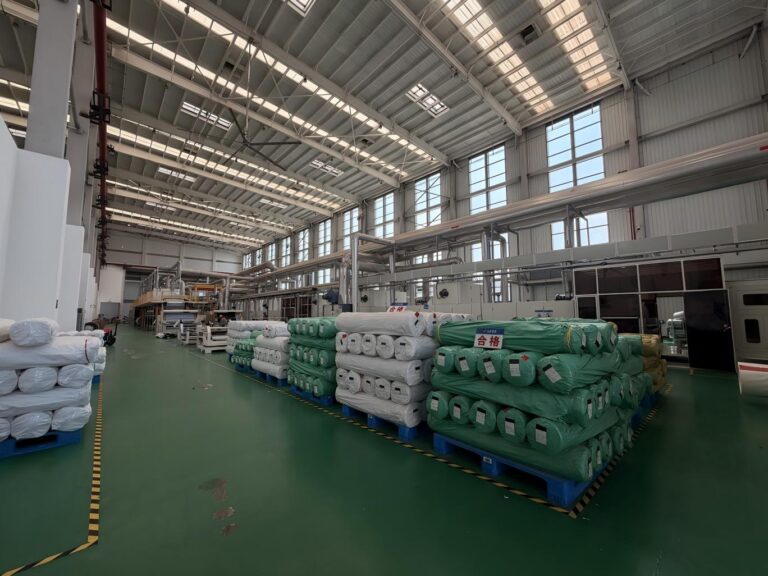
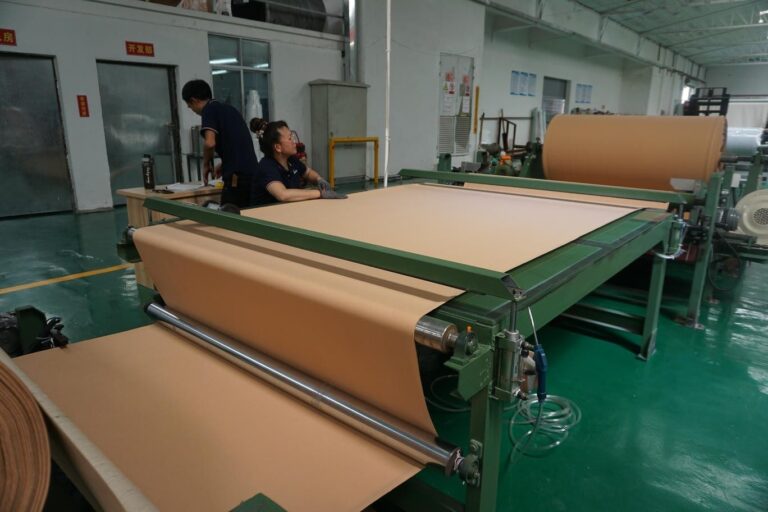
Chemical mixing equipment in factory workshop — the raw material handling stage where plasticizers and additives are incorporated
The regulatory landscape has shifted from voluntary screening to mandatory enforcement. REACH Annex XVII now restricts DEHP, DBP, BBP, and DIBP to ≤0.1% in consumer articles. The US CPSIA caps lead at 100 ppm in children’s products. ISO 16000-6 sets VOC emission thresholds for indoor materials. And the new EU CSDDD directive adds supply chain due diligence obligations that make “I didn’t know what was in my supplier’s PVC” an untenable defense. For a detailed breakdown of how materials compare, our silicone vs PU vs PVC technical comparison covers the full dataset.
Risk 1: REACH Annex XVII Phthalate Restrictions
The European Chemicals Agency (ECHA) has restricted four phthalates — DEHP, DBP, BBP, and DIBP — to ≤0.1% by weight in articles placed on the EU market. For childcare items and products that contact the mouth, the limit applies to DINP, DIDP, and DNOP as well. PVC fabric typically contains these substances at levels far exceeding the threshold — DEHP alone can constitute 15-30% of PVC fabric weight.
What trips up most suppliers: the restriction applies to the article as placed on the market, not to the raw material. A PVC fabric supplier can legally sell material with 0.3% DEHP to a furniture manufacturer. But when that manufacturer turns the fabric into a sofa and ships it to the EU, the finished article must comply with ≤0.1%. The compliance burden falls on the furniture brand — not the fabric supplier. Many B2B buyers don’t discover this until a shipment is seized.
Even “non-phthalate” PVC alternatives using DOTP or DINCH aren’t risk-free. These substitute plasticizers still migrate — they just haven’t been restricted yet. The ECHA’s restriction list expands annually. A material that passes today’s REACH may fail next year’s. This creates a moving compliance target that PVC-dependent manufacturers must chase indefinitely. For more on PVC-free alternatives that eliminate this risk entirely, the data is clear.
Risk 2: CPSIA Lead Content Limits (US Market)
For B2B manufacturers shipping to the US market, the Consumer Product Safety Improvement Act (CPSIA) caps lead content at 100 ppm in children’s products and 90 ppm in lead-containing paint. PVC fabric frequently contains lead-based heat stabilizers — lead stearate is the cheapest thermal stabilizer for PVC processing, and it’s still widely used by cost-driven manufacturers. Lead content in PVC fabric can range from 200 to 2,000+ ppm, well above the CPSIA threshold.

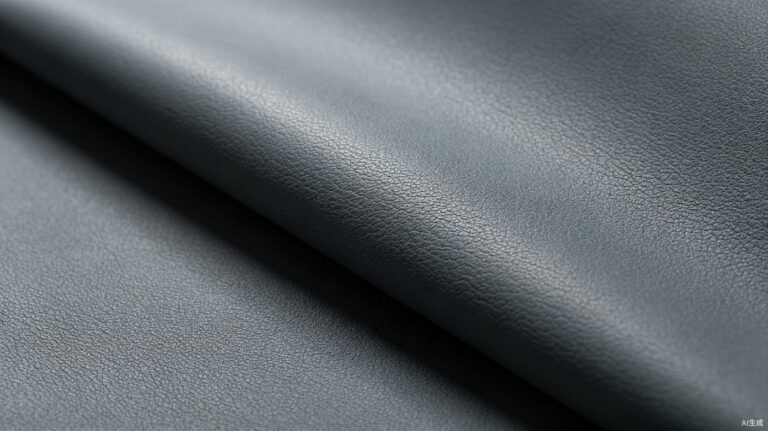
PVC fabric closeup — surface texture and coating structure that may contain phthalate plasticizers and lead stabilizers
The risk isn’t theoretical. CPSC recalls of PVC-containing products — from children’s furniture to baby changing pads — happen regularly. A single recall can cost a manufacturer $100,000-$500,000 in direct costs: product retrieval, disposal, replacement, and regulatory fines. The reputational cost to a B2B brand is harder to quantify but often larger. The solution — switching to calcium-zinc or tin-based stabilizers — adds 8-15% to material cost, which most PVC suppliers won’t absorb voluntarily. Verifying stabilizer chemistry through third-party testing is the only reliable safeguard.
Risk 3: VOC Emission Standards (ISO 16000-6 and VDA 277)
PVC fabric emits volatile organic compounds throughout its lifecycle — not just during manufacturing, but continuously in end-use. The plasticizers that make PVC flexible are semi-volatile organic compounds that slowly evaporate at room temperature and accelerate dramatically at higher temperatures. Accelerated testing at 70°C simulates 1-2 years of ambient leaching in just days. ISO 16000-6 (building product emissions) and VDA 277 (automotive interior VOC) set thresholds that PVC fabric struggles to meet.
For automotive interior suppliers, VDA 277 compliance is non-negotiable — European OEMs require it for every interior material. PVC fabric typically registers VOC levels 3-5× above the VDA 277 limit. Silicone leather, by contrast, records zero-VOC emissions per ISO 16000-6 — verified by SGS testing on our technical data sheet — because the solvent-free dry coating process produces no volatile residuals.
Risk 4: CSDDD Supply Chain Due Diligence
The EU Corporate Sustainability Due Diligence Directive (CSDDD), adopted in 2024 and entering enforcement in 2026-2027, requires companies to identify, prevent, and mitigate adverse environmental and human rights impacts across their supply chains. For B2B buyers sourcing PVC fabric, this means you can no longer treat material compliance as your supplier’s problem. You must actively audit your supply chain for chemical risks, document due diligence, and demonstrate corrective action when issues are found.
PVC fabric creates a disproportionately large CSDDD documentation burden because its supply chain involves multiple high-risk chemical inputs: vinyl chloride monomer (a known carcinogen), phthalate plasticizers (endocrine disruptors), lead stabilizers (neurotoxins), and chlorine gas production (mercury cell process in some regions). Each of these touchpoints must be mapped, audited, and documented. A PVC supply chain that looked acceptable under voluntary frameworks like LWG becomes a compliance minefield under mandatory CSDDD reporting.
Risk 5: End-of-Life Dioxin Regulations
PVC’s chlorine chemistry creates end-of-life risks that no other upholstery material faces. When PVC fabric is incinerated — the standard disposal method for commercial furniture at end of life — it releases hydrogen chloride gas and, under incomplete combustion conditions, polychlorinated dibenzo-p-dioxins (dioxins). The EU Industrial Emissions Directive and national waste incineration regulations require scrubbers and activated carbon filtration to capture these emissions — at significant cost.
As extended producer responsibility (EPR) schemes expand across the EU, manufacturers may become financially responsible for the end-of-life disposal costs of their products. PVC-containing furniture carries higher disposal fees because of the specialized incineration requirements. Silicone leather is 100% recyclable and produces no dioxins or acid gas when processed — a material attribute that future-proofs against tightening EPR regulations.

Solvent-free production process flow chart — silicone leather manufacturing without phthalates, lead stabilizers, or chlorine chemistry
PVC Fabric vs Silicone Leather: Compliance Risk Comparison
| Compliance Dimension | PVC Fabric | Silicone Leather | Risk Level |
|---|---|---|---|
| REACH Phthalates | 30-40% by weight | Zero — phthalate-free | PVC: Critical risk |
| CPSIA Lead | 200-2000+ ppm possible | Not detected (RoHS verified) | PVC: Recall risk |
| VOC Emissions | 3-5× above VDA 277 | Zero per ISO 16000-6 | PVC: Auto OEM reject |
| CSDDD Audit | 4+ high-risk chemical inputs | Solvent-free, no toxic inputs | PVC: Heavy documentation |
| End-of-Life | Dioxin risk on incineration | 100% recyclable | PVC: EPR cost exposure |
| Service Life | 2-3 years (plasticizer loss) | 10+ years (no plasticizers) | PVC: 4× replacement frequency |
| REACH Status | Restricted (Annex XVII) | Compliant (EC 1907/2006) | PVC: Shipment seizure |
The pattern is unmistakable: every major compliance framework — REACH, CPSIA, ISO 16000-6, CSDDD, EPR — flags PVC fabric as a high-risk material. Silicone leather passes each framework by design, not by formulation. For more on eco-friendly silicone leather compliance, our certification page provides the full documentation.
The PVC-Free Path: Silicone Leather Compliance Profile
One of our furniture manufacturing clients transitioned from PVC fabric to silicone leather for a 5,000-unit hospitality sofa order destined for the EU market. The switch eliminated three compliance testing steps (phthalate screening, lead content verification, VOC chamber testing), reduced documentation from 14 to 3 pages, and — critically — passed EU customs clearance on the first attempt. The client’s logistics team reported that their previous PVC-based shipments had a 22% inspection-trigger rate at EU ports, resulting in average 4-day delays. The silicone leather shipment cleared in under 6 hours.
TOPSUN’s silicone leather is verified against every major compliance framework: REACH (EC 1907/2006 — Compliant), RoHS (heavy metals not detected), FDA (21 CFR 177.2600 food-contact compliant), ISO 10993-5 (biocompatibility certified), and EN 71 (toy safety). The industry shift away from PVC isn’t a trend — it’s a regulatory inevitability. The question is whether your supply chain transitions before or after a shipment gets seized.
Export certification overview — how silicone leather meets international compliance standards without PVC chemistry
How to Audit Your PVC Fabric Supply Chain
1. Request full REACH Annex XVII test reports: Not just a supplier declaration — actual third-party lab results showing phthalate content below 0.1% for DEHP, DBP, BBP, and DIBP.
2. Verify stabilizer chemistry: Request CPSIA lead test results. If the supplier can’t confirm lead-free stabilizers (calcium-zinc or organic-based), assume lead is present.
3. Demand VOC emission data: ISO 16000-6 or VDA 277 results from an accredited lab. If absent, the material will fail automotive and indoor air quality standards.
4. Map the CSDDD supply chain: Document every chemical input — vinyl chloride, plasticizers, stabilizers, pigments — and identify which are on the REACH SVHC list.
5. Calculate end-of-life costs: Factor in EPR disposal fees, incineration scrubber costs, and the replacement frequency of 2-3 year PVC versus 10+ year alternatives.
Frequently Asked Questions
Is PVC fabric still legal to use in 2026?
PVC fabric is not banned outright, but it is increasingly restricted. REACH Annex XVII limits phthalates (DEHP, DBP, BBP, DIBP) to ≤0.1% in articles placed on the EU market. Since PVC fabric typically contains 25-40% plasticizers by weight, compliance with these limits is structurally difficult without reformulation. The US CPSIA restricts lead to 100 ppm in children’s products, which PVC may exceed if lead-based stabilizers are used. The regulatory direction is clear: restrictions are tightening annually, and the compliance cost of maintaining PVC in your supply chain is rising. Many manufacturers are transitioning to phthalate-free alternatives like silicone leather to eliminate the compliance burden entirely.
Can “phthalate-free” PVC fabric pass REACH compliance?
Phthalate-free PVC uses substitute plasticizers like DOTP or DINCH, which are not currently on the REACH restricted list. These formulations can pass today’s REACH phthalate limits. However, substitute plasticizers still migrate and volatilize — they haven’t been restricted yet because their regulatory evaluation is still ongoing. The ECHA regularly adds substances to the SVHC candidate list, and non-phthalate plasticizers are under review. Additionally, phthalate-free PVC still carries lead stabilizer risk, VOC emission challenges (ISO 16000-6), CSDDD documentation burden, and end-of-life dioxin concerns. Removing phthalates addresses one risk while leaving five others intact. Silicone leather eliminates all of them by design.
The Compliance Crossroads
PVC fabric built its market dominance on price. But the regulatory landscape of 2026 has made that price deceptive — the visible cost per meter no longer reflects the total cost of compliance, testing, documentation, shipment delays, and end-of-life disposal. For B2B manufacturers who ship internationally, the five compliance risks outlined here aren’t theoretical scenarios — they’re operational realities that are already costing companies time, money, and market access. Silicone leather doesn’t just pass these regulations; it was designed to make them irrelevant. No phthalates to restrict, no lead to detect, no VOCs to measure, no chlorine to audit, no dioxins to scrub. That’s what a compliance-proof material looks like. And for manufacturers tired of chasing a moving regulatory target, that’s the specification worth writing.
Request a Compliance Comparison Sample
About TOPSUN
TOPSUN manufactures PVC-free silicone leather for B2B manufacturers who need upholstery materials that pass international compliance frameworks by design — not by reformulation.
REACH compliant (EC 1907/2006) | RoHS verified — heavy metals not detected | Zero-VOC per ISO 16000-6 | FDA 21 CFR 177.2600 food-contact certified | ISO 10993-5 biocompatibility | Phthalate-free, lead-free, chlorine-free | 100% recyclable — no dioxin end-of-life risk | Solvent-free dry coating process