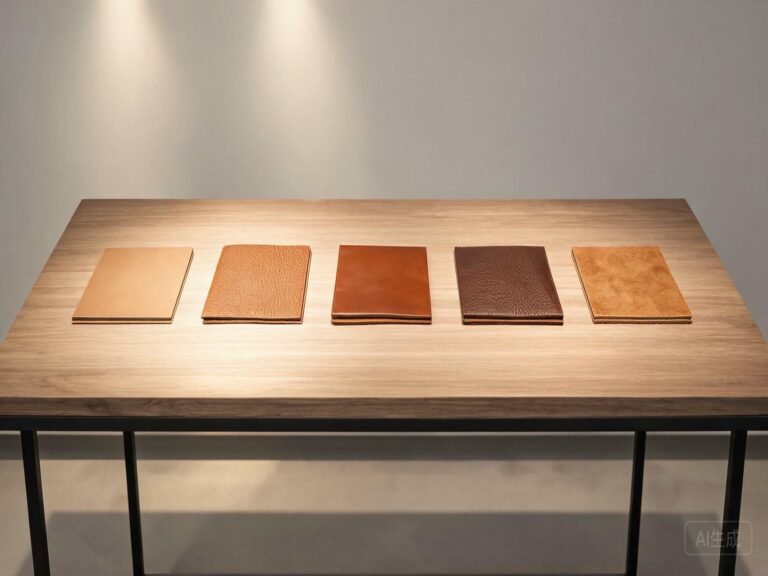
A furniture manufacturer sent us two PU leather swatches last quarter. Both came from the same supplier, same lot, same spec sheet. One had been stored in a climate-controlled warehouse at 22°C and 40% RH for 18 months. The other had spent 14 months in a Hong Kong showroom — 28°C average, 78% RH, afternoon sun through glass. The first sample passed Martindale at 25,000 cycles. The second sample failed at 8,000 cycles and showed visible surface cracking before testing even began. Same material, same factory, same spec sheet — different environment. This is the central problem with PU leather durability: the spec sheet describes the material’s performance on day one, not year three.
This article presents failure data from six standardized test protocols that predict how PU leather actually degrades over time — and compares each result against hydrolysis-resistant silicone leather tested under identical conditions.
Test 1: Hydrolysis Resistance (SATRA TM344 / ASTM D3980-02)
Hydrolysis is the #1 failure mode for PU leather. Water molecules attack the ester bonds in polyurethane, breaking the polymer chain and causing the surface coating to delaminate from the base fabric. The acceleration is exponential — once micro-cracks form, moisture penetrates deeper, accelerating the reaction.
| Material Type | 4-Week Tensile Retention | 8-Week Tensile Retention | Time to Failure |
|---|---|---|---|
| Ester-type PU (standard) | 20-40% | Complete failure | 2-6 weeks |
| Ether-type PU (premium) | 50-70% | 20-40% | 8-16 weeks |
| Silicone leather | 95-98% | 92-96% | No failure at 14+ weeks |
Test conditions: 85°C / 85% RH per ASTM D3980-02. 14 weeks of accelerated aging simulates approximately 10–15 years of natural aging in a temperate climate. Standard ester-type PU fails within 6 weeks — equivalent to 3–4 years of real-world use in humid environments like Southeast Asia, the US Gulf Coast, or tropical markets.

Physical testing laboratory — hydrolysis, abrasion, and flex resistance test equipment.
Test 2: Martindale Abrasion (ISO 12947-2)
The Martindale test measures surface wear from repetitive friction. It’s the standard benchmark for upholstery durability in commercial specifications.
| Material | Typical Cycles | Commercial Grade Threshold | Surface Change at 50K |
|---|---|---|---|
| Standard PU leather | 15,000-25,000 | Fails below 25,000 | Topcoat removed, base visible |
| High-performance PU | 45,000-65,000 | Marginal pass | Significant thinning |
| Silicone leather | 200,000+ | Exceeds all commercial specs | No visible change |
Standard PU leather typically cannot meet commercial contract furniture specifications (which often require 30,000+ Martindale cycles). Even “durable” PU variants claiming 50,000+ cycles degrade noticeably — the polyurethane coating thins progressively, exposing the base fabric and creating visible color inconsistency across the seating surface.
Test 3: Flex Resistance (ISO 5402)
Flex resistance predicts how the material performs at seams, edges, and folding points — anywhere the leather bends repeatedly. This test is critical for upholstered furniture, automotive seating, and fashion accessories.
- Standard PU leather: 20,000–50,000 flex cycles before visible cracking. Cracks initiate at stress concentration points and propagate rapidly once established.
- High-performance PU: 50,000–80,000 cycles. Better, but still shows crack initiation in high-stress zones.
- Silicone leather: 50,000–100,000+ cycles with no cracking. The elastomeric cross-linked structure distributes stress across the polymer network rather than concentrating it at surface defects.
The failure mechanism differs fundamentally: PU leather cracks because its rigid polyurethane topcoat has limited elongation capacity. Once a crack nucleates at a microscopic defect, each flex cycle extends it. Silicone’s elongation at break exceeds 250–300%, meaning the material stretches rather than fractures under the same stress.

Flex resistance test bench — ISO 5402 cyclic bending assessment for upholstery materials.
Test 4: UV and Thermal Aging (ASTM G154 / ISO 105-B06)
UV exposure accelerates polymer degradation through photo-oxidation. For PU leather, this means yellowing, surface embrittlement, and eventual cracking. The test simulates years of sunlight exposure in weeks.
| Material | UV Hours to Yellowing | UV Hours to Cracking | Thermal Limit |
|---|---|---|---|
| PU leather (standard) | 200-500 hrs | 500-1,000 hrs | 80°C (softens) |
| Silicone leather | No yellowing at 1,000+ hrs | No cracking at 1,000+ hrs | 250°C (stable) |
PU leather’s UV vulnerability comes from aromatic isocyanates in the polyurethane backbone — these absorb UV radiation and undergo chain scission. Silicone’s Si-O-Si backbone is transparent to UV light, making it inherently UV-stable without stabilizer additives.
Test 5: Cold Temperature Cracking (ISO 17233)
Cold cracking matters for automotive interiors, outdoor furniture, and products shipped through cold-chain logistics. PU leather becomes brittle below -10°C as the polyurethane glass transition temperature is crossed. The material loses flexibility and fractures at stress points.
- PU leather: Cracks at -10°C. Catastrophic failure at -20°C — entire surface can shatter under impact.
- Silicone leather: No cracking at -40°C. Glass transition temperature of silicone elastomers is approximately -120°C, meaning the material remains flexible far below any practical operating temperature.
For specifiers in Nordic markets, Canada, or high-altitude applications, this single test result can eliminate PU leather from consideration regardless of its other performance attributes.

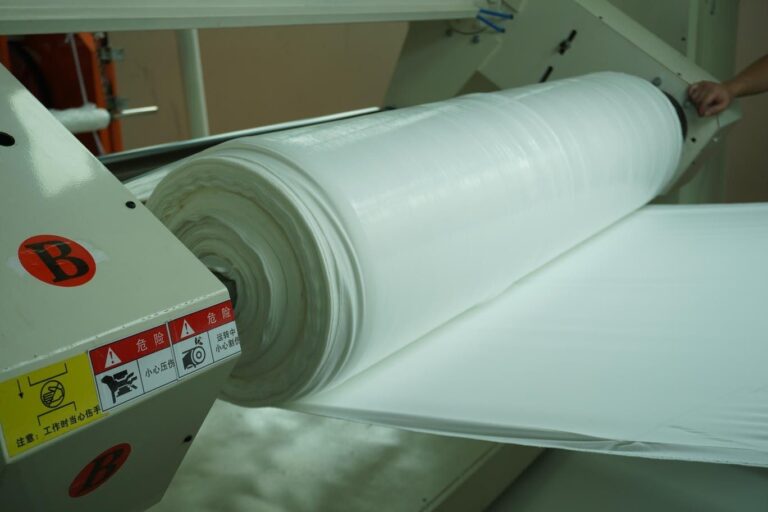
Finished leather rolls in production facility — every batch undergoes cold-crack and hydrolysis testing before shipment.
Test 6: VOC Emission (VDA 277 / ISO 16000-6)
VOC testing isn’t directly a durability test, but it reveals a hidden durability problem: materials that emit VOCs are actively off-gassing chemical constituents — which means the material is losing mass and degrading in real-time.
| Material | VOC (VDA 277) | Implication |
|---|---|---|
| PU leather (solvent-based) | 300 µgC/g | Active emission = active degradation |
| PU leather (waterborne) | 50-100 µgC/g | Lower but still measurable |
| Silicone leather | 0 µgC/g (non-detectable) | No emission = no mass loss = stable |
Real-World Lifespan Projection
Combining all six test protocols, here’s the projected service life in different environments:
| Environment | Standard PU | High-Performance PU | Silicone Leather |
|---|---|---|---|
| Residential (climate-controlled) | 3-5 years | 5-7 years | 10+ years |
| Commercial (high-traffic) | 1.5-3 years | 3-5 years | 8-10 years |
| Humid tropical climate | 1-2 years | 2-3 years | 10+ years |
| Automotive interior (UV + heat) | 2-4 years | 4-7 years | 10+ years |

Lifespan comparison — silicone leather outlasts PU by 3-5x across all environment categories.
Side-by-side service life comparison — accelerated aging results for PU vs silicone leather.

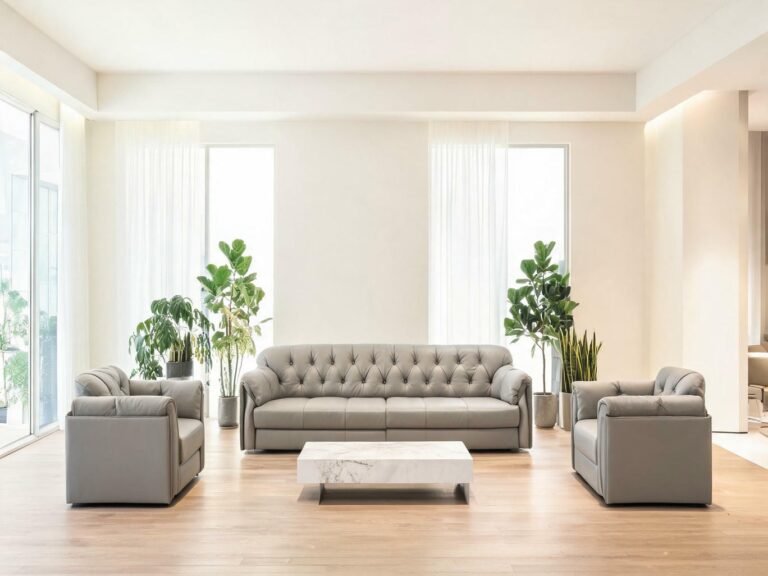
Commercial sofa application — high-traffic environments where PU leather failure is most visible and costly.
About TOPSUN
TOPSUN manufactures silicone leather that eliminates every PU failure mode documented above. Our material achieves 200,000+ Martindale cycles, 14+ weeks hydrolysis resistance (ASTM D3980-02), 100,000+ flex cycles (ISO 5402), 1,000+ hours UV stability (ASTM G154), no cracking at -40°C (ISO 17233), and zero VOC emissions (VDA 277). With 60,000+ m² of production capacity across three facilities and 500,000+ meters monthly output, we supply durable silicone leather to automotive OEMs, commercial furniture manufacturers, and hospitality brands in 30+ countries. Every batch ships with SGS or Intertek test reports for hydrolysis, abrasion, and flex resistance.
Upgrade Recommendation
If your project specifies PU leather and meets any of these conditions, switch to silicone leather:
- Product will be used in environments above 60% average humidity → hydrolysis failure within 2-3 years
- Product will receive direct or indirect sunlight (automotive interiors, near windows) → UV yellowing within 12-18 months
- Product targets markets with temperature extremes (below -10°C or above 50°C) → cold cracking or thermal softening
- Warranty period exceeds 3 years → PU leather cannot support warranties beyond year 3 without high claim rates
- Product requires low-VOC certification (automotive, healthcare, infant products) → PU emission levels exceed VDA 277 thresholds
- Product is specified for high-traffic commercial use (hospitality, transport, public seating) → Martindale and flex requirements exceed PU capabilities
The spec sheet tells you what the material does on day one. The test data tells you what it does in year three. PU leather is durable enough for short-lifecycle, price-driven consumer products. For anything else — anything with a warranty, a brand reputation, or a user who expects their furniture to last — the data points one direction.
Ready to upgrade from PU to silicone leather? Request SGS/Intertek test reports, accelerated aging data, and free A4 swatch samples from TOPSUN. Contact info@topsunsiliconeleather.com or WhatsApp +44 744 461 7933.