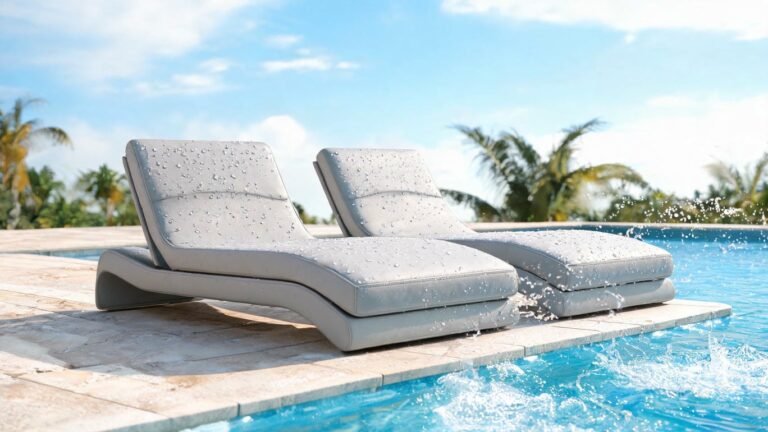
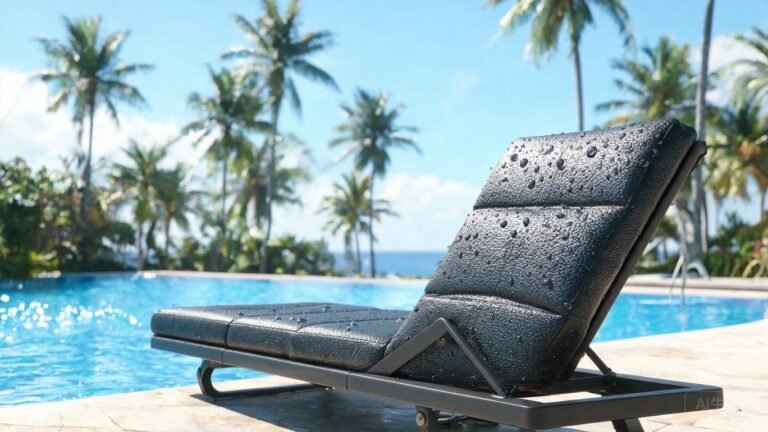
Pool loungers face one of the most chemically aggressive environments in outdoor furniture. Chlorinated water, salt spray, sunscreen oils, and continuous UV exposure attack the surface daily. Quick-dry performance matters because guests expect a dry recline within hours of rain. Reclining comfort is equally important because pool loungers are used for extended relaxation, not brief meals. This guide explains how to evaluate pool sunbed fabric and where silicone leather supports long-term performance in poolside conditions.
Download Material Specifications
Poolside upholstery operates in one of the most chemically aggressive outdoor environments. Chlorinated water, bromine tablets, salt spray, sunscreen oils, and body sweat all contact the surface. A pool lounger cover must resist these chemicals, dry quickly after rain or splashing, and maintain comfort for extended reclining. Submersion risk at sun-shelf edges adds another requirement: the material must not absorb water that would then seep into the cushion core.
Accelerated weathering methods such as ASTM G154 UV exposure practice evaluate how materials respond to sunlight, moisture, and heat cycling. Pool environments add a chemical dimension that standard weathering does not fully capture. Supplemental testing with chlorine solution immersion and sunscreen oil contact provides a more complete picture of whether a surface will survive a full pool season.
Lounger type shapes specification. A shallow-sun-shelf lounger may be partially submerged, requiring full waterproofing at seams. An infinity-edge deck lounger faces constant mist and spray. A resort cabana daybed sees lower chemical exposure but higher expectations for visual luxury. A residential pool recliner may need only moderate chemical resistance but must survive irregular cleaning. Describing the specific pool environment helps suppliers match material properties to actual demands.

Tensile strength testing — pool loungers need materials that resist stretching when wet.
Poolside upholstery operates in one of the most chemically aggressive outdoor environments. Chlorinated water, bromine tablets, salt spray, sunscreen oils, and body sweat all contact the surface. A pool lounger cover must resist these chemicals, dry quickly after rain or splashing, and maintain comfort for extended reclining. Submersion risk at sun-shelf edges adds another requirement: the material must not absorb water that would then seep into the cushion core.
Accelerated weathering methods such as ASTM G154 UV exposure practice evaluate how materials respond to sunlight, moisture, and heat cycling. Pool environments add a chemical dimension that standard weathering does not fully capture. Supplemental testing with chlorine solution immersion and sunscreen oil contact provides a more complete picture of whether a surface will survive a full pool season.
Lounger type shapes specification. A shallow-sun-shelf lounger may be partially submerged, requiring full waterproofing at seams. An infinity-edge deck lounger faces constant mist and spray. A resort cabana daybed sees lower chemical exposure but higher expectations for visual luxury. A residential pool recliner may need only moderate chemical resistance but must survive irregular cleaning. Describing the specific pool environment helps suppliers match material properties to actual demands.
| Decision Area | What to Specify | Best Fit |
|---|---|---|
| UV exposure | Specify accelerated weathering and color-fastness targets | Open pool decks, rooftop pools, tropical resorts |
| Chlorine and moisture | Use hydrolysis-resistant and chemical-proof surfaces | Resort pools, hotel spas, residential poolside |
| Reclining wear | Balance soft hand feel with stretch resistance | Adjustable loungers and daybeds |
| Maintenance | Prefer wipe-clean materials over absorbent textiles | High-turnover resort pools and clubs |
TOPSUN Poolside Materials
TOPSUN supplies silicone leather for resort pool decks, hotel spa loungers, residential poolside daybeds, and rooftop pool clubs. Our marine and outdoor silicone leather applications page shows where waterproof, UV-stable surfaces are commonly used. Buyers comparing alternatives can also review our outdoor furniture waterproof leather guide.
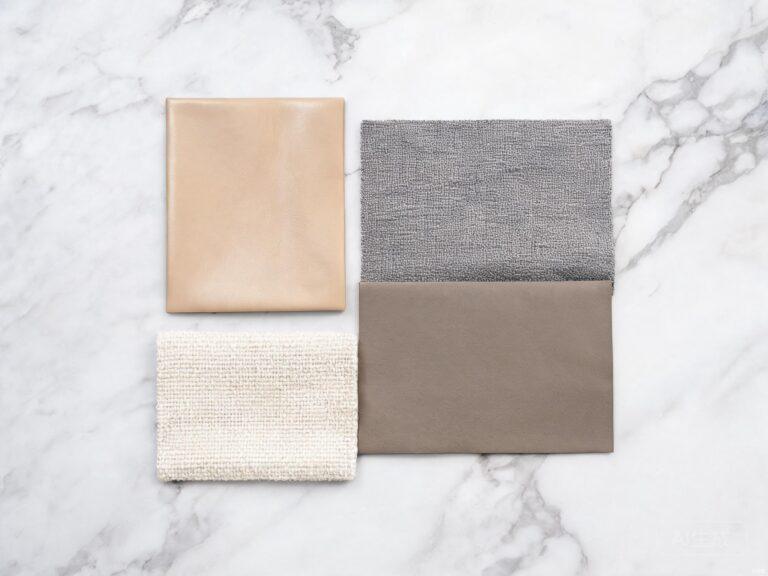
For custom projects, the practical starting point is not a catalog color. It is the environment: sun hours, chlorine concentration, salt exposure, cleaning chemicals, cushion construction, and expected replacement interval. Once these are clear, TOPSUN can tune texture, backing, thickness, and color tolerance for production.

Waterproof outdoor durability — silicone leather resists chlorine, salt, and UV at the poolside.
Waterproof and stain resistance — dual protection essential for poolside lounger materials.
Specifying Pool Lounger Material for Resorts
Include application photos, target color, expected cleaning method, and required sample size in the RFQ. If the project involves tropical resorts or high-chlorine pool decks, request additional notes on UV stability, hydrolysis resistance, chemical compatibility, and stain cleaning. A small pre-production trial often prevents costly replacement later.
For large hospitality or resort programs, approve both appearance and fabrication behavior. Ask the workshop to cut, wrap, stitch, and clean the sample as they would in production. Pool loungers have long flat surfaces and adjustable hinges where material must stretch without sagging. If the material bags across the frame or discolors after chlorine contact tests, adjust the grain, backing, or coating before issuing the purchase order.
Frequently Asked Questions
Is silicone leather enough by itself?
No. The surface material protects the system, but the complete product also depends on foam density, seam design, drainage, quick-dry backing, and cleaning instructions. Pool loungers especially need a full-system approach because chlorine can penetrate at seams if the backing is not properly sealed.
What should buyers test before bulk orders?
Test chlorine and sunscreen compatibility, abrasion, color stability, seam behavior, and the exact backing construction that will be used in production. It is also useful to leave samples in a pool-storage environment for several weeks to observe real chemical and humidity effects.
Next Step for Buyers
Pool lounger material must resist chlorine, salt, sunscreen, and UV while providing quick-dry comfort for resort and residential use. TOPSUN develops silicone leather surfaces with verified chemical resistance and color stability for pool deck applications. We support custom colors, backing constructions, and seam configurations for lounger OEM programs.
About TOPSUN
TOPSUN partners with resort developers and pool furniture manufacturers to deliver silicone leather for pool loungers, daybeds, and spa seating.
Relevant capabilities include chlorine resistance validation, quick-dry surface engineering, UV color stability, and custom backing for drainage-optimized cushion systems.