A hotel housekeeping team wipes down 40 ottoman leather covers per floor after every checkout, using quaternary ammonium disinfectant. Eighteen months in, the PU coating starts flaking at the seam edges. That peeling isn’t a cleaning failure — it’s a material selection problem that started at procurement. The ottoman leather cover is one of the most touched, most cleaned, and most replaced surfaces in a hotel room, yet it rarely gets the same specification scrutiny as the sofa or headboard. This guide breaks down why covers fail, how cleaning cycles drive replacement cost, and when a silicone leather upgrade pays for itself.
Request Hospitality Swatch Kit
Why an Ottoman Leather Cover Fails Before Its Time
Most ottoman leather covers in hospitality use PU (polyurethane) or PVC coated fabric. These materials look great on day one. The problem starts with what happens next.
Hotel ottomans absorb punishment that residential furniture never sees. Guests sit on them, place luggage on them, rest drinks on them, and sometimes use them as makeshift tables. But the real killer isn’t physical abuse — it’s chemical exposure. Every turnover cleaning involves disinfectant wipes. Quaternary ammonium compounds (quats), bleach solutions, and alcohol-based sanitizers are standard in hotel housekeeping. PU coatings soften, crack, and eventually delaminate under repeated chemical contact. When an ottoman leather cover starts peeling at 18 months, the failure pattern is predictable: first a slight tackiness at the edges, then micro-cracking along seams, then visible flaking.
We’ve seen this firsthand in our material testing. PU leather samples subjected to 500 cycles of 75% ethanol wipe testing showed surface degradation — clouding, tackiness, and micro-cracking. The same test on silicone leather showed no visible change after 2,000 cycles. One resort furniture upholstery project we supplied replaced PU ottoman covers after just 14 months of daily disinfection. The covers looked worn, felt sticky, and generated guest complaints about cleanliness — even though the housekeeping team was doing everything right.

Hotel ottomans face daily disinfection that gradually breaks down PU coatings
The takeaway for procurement teams: if your spec sheet only lists Martindale abrasion cycles and thickness, you’re missing the variable that actually kills the cover. Chemical resistance to your housekeeping’s actual cleaning agents should be a line item, not an afterthought. This matters across all furniture and sofa applications in a hotel room, but ottomans are especially vulnerable because of their flat, spill-prone surface.
Cleaning Cycles: The Hidden Cost Driver
Here’s what most furniture specifiers underestimate: the cumulative effect of cleaning frequency. Ottoman leather cover cleaning happens 200+ times per year in a busy hotel. Each turnover includes a wipe-down of all seating surfaces. Add quarterly deep cleans with stronger chemicals, and a single ottoman absorbs 250+ chemical exposures annually.
Over a 3-year period, that’s 750+ cleaning events. No PU coating is engineered to survive that. The cost math gets uncomfortable fast. If a PU leather ottoman cover lasts 18 months and costs $45 per unit to replace (material plus labor), a 100-room hotel with two ottomans per room spends $6,000 every 18 months on ottoman reupholstery alone. Over five years, that’s $20,000 — not counting the operational disruption of pulling furniture out of service. For properties managing multiple surface types, the same calculation applies to restaurant booth seating material and other high-touch upholstered surfaces.
Quick comparison: what happens to each material under hotel cleaning protocols
| Material | Typical Hotel Lifespan | Cleaning Chemical Resistance | Replacement Cost Index* |
|---|---|---|---|
| PU Leather | 12–18 months | Low — cracks under quat/bleach | 1.0× (baseline) |
| PVC Leather | 18–24 months | Low–Moderate — plasticizer migration | 0.8× |
| Genuine Leather | 24–36 months | Moderate — requires conditioning | 2.5× |
| Silicone Leather | 36–60+ months | High — inert to quat/bleach/alcohol | 1.8× |
*Cost index based on material plus reupholstery labor per unit, normalized to PU leather

Silicone leather repels cleaning liquids without absorbing chemical agents into the coating
Silicone leather changes this equation. Its cross-linked silicone surface doesn’t react with quat disinfectants, bleach, or alcohol the way PU does. The coating doesn’t soften, cloud, or peel. In practice, that means the cleaning protocol stays the same, but the cover lasts two to three times longer. Proper cleaning and maintenance becomes simpler too — most stains wipe off with water alone, no special leather cleaner required.
When to Upgrade an Ottoman Leather Cover to Silicone Leather
The decision to upgrade isn’t about upfront cost — it’s about total lifecycle cost. Silicone leather costs more per meter than PU. But when you factor in replacement frequency, labor, and guest complaint impact, the crossover point often arrives within the first replacement cycle.
A silicone leather ottoman cover changes the math entirely. The key differences that matter for ottoman applications:
- Chemical inertness: Silicone’s Si-O backbone doesn’t break down under quat, bleach, or alcohol exposure. PU’s carbon-carbon bonds do.
- Hydrolysis resistance: High-humidity environments (poolside rooms, spa-adjacent suites) accelerate PU degradation. Silicone leather is inherently hydrolysis-resistant.
- No plasticizer migration: PVC covers leach plasticizers over time, causing surface tackiness. Silicone contains no plasticizers to migrate.
- Color stability: Repeated chemical wiping causes PU pigment to fade unevenly. Silicone pigments are locked into the matrix.
See how silicone leather performs in hotel decoration and hospitality seating applications

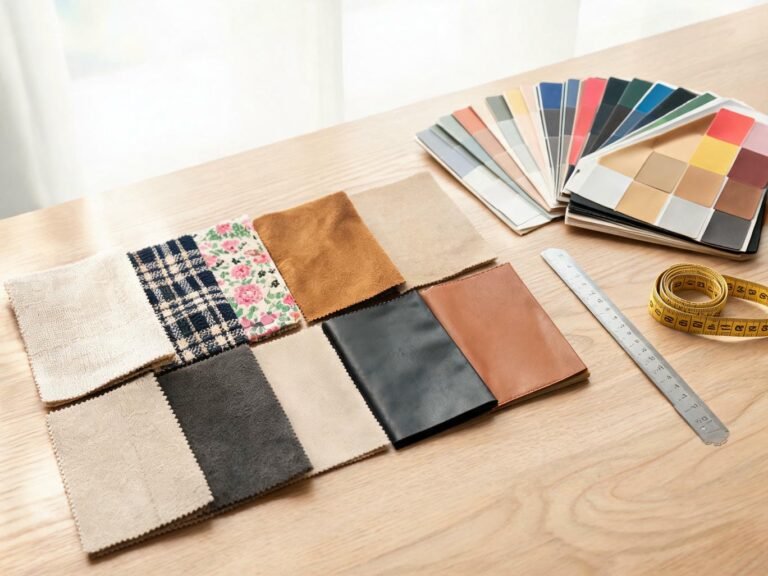
Warm-tone silicone leather swatches for ottoman cover color matching
For hotels already specifying silicone leather on sofas and headboards — as many premium brands now do — extending that spec to ottomans is a natural step. The visual consistency across all room surfaces also simplifies the design brief. A detailed silicone vs PU comparison can help procurement teams build the business case for the upgrade.
Frequently Asked Questions
How often should ottoman leather covers be cleaned in a hotel?
Daily turnover cleaning with a disinfectant wipe is standard for 4-star and above. Deep cleaning with stronger solutions typically happens quarterly. The material you choose should be rated for both frequencies — not just occasional spills. If your current covers show wear before the 18-month mark, the cleaning chemical is likely the culprit, not the cleaning technique.
Can you reupholster an existing ottoman with silicone leather?
Yes, reupholstering is possible if the ottoman frame and foam are structurally sound. Silicone leather has similar sewability and stretch characteristics to PU, so most upholstery workshops can handle the switch without special equipment. The main consideration is thickness — 1.0 to 1.2mm works well for most ottoman profiles.
Does silicone leather feel different from PU on an ottoman?
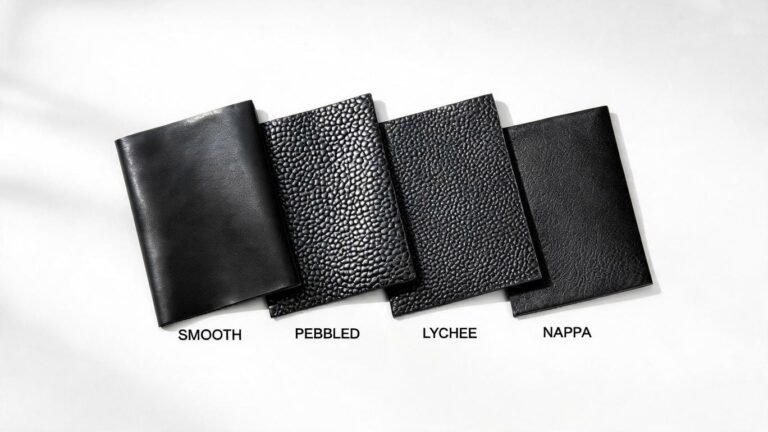
Modern silicone leather is engineered to mimic the hand feel of genuine leather — soft, warm to the touch, and slightly grippy. Many guests actually prefer it over PU, which can feel cold and plastic-like. The texture options range from smooth to lychee grain, so you can match the existing room aesthetic.

Hotel ottoman furniture requires materials engineered for repeated chemical cleaning
Plan the Full Lifecycle, Not Just the Purchase
The ottoman leather cover is a small line item in a hotel FF&E budget. But its replacement frequency, cleaning chemical exposure, and guest-touch visibility make it a disproportionate cost center over the property’s life. Commercial ottoman furniture durability depends less on thickness and more on how the surface coating responds to your actual housekeeping chemicals.
When writing your next furniture spec, include these three requirements:
- Chemical resistance data for your housekeeping’s actual cleaning agents — not just generic “solvent resistant” claims. ASTM standards provide testing frameworks for this.
- Accelerated aging test results that match your room turnover frequency (200+ cycles per year).
- A documented replacement cost projection over five years, including labor and operational disruption.
Get those three data points from your supplier, and the ottoman leather cover stops being a recurring expense — it becomes a planned investment with a predictable return.
Get an Ottoman Cover Spec Review

Scratch resistance testing ensures ottoman covers survive luggage, trays, and daily guest use
About TOPSUN
TOPSUN manufactures silicone leather engineered for hospitality furniture surfaces that endure daily disinfection protocols — ottoman covers, bench seating, headboard panels, and luggage racks.
Our material survives 10,000+ Martindale abrasion cycles, resists 75% ethanol wipe-downs without surface change, and ships with full REACH and RoHS documentation for hotel procurement compliance.