Microfiber fabric for sofa is the default choice for mid-range commercial furniture — it’s affordable, soft to the touch, and posts respectable Martindale numbers on paper. But after tracking 200 commercial furniture installations over 3 years, we documented three failure modes that consistently appear within 18-36 months of field deployment. None of them show up in the initial spec sheet. All three are eliminated by switching to silicone leather, which we verified through side-by-side material testing using ISO 12947-2, ASTM G154, and ISO 11507 protocols.
Why Microfiber Fabric for Sofa Fails in Commercial Settings
The problem isn’t that microfiber is a bad material — it performs well in residential settings with moderate use. The problem is specifying it for commercial environments where it encounters sustained point loads, humidity cycling, and UV exposure that its polymer structure isn’t engineered to withstand. Microfiber is essentially a polyurethane-coated fabric with ultrafine fiber piles. The PU component determines its long-term fate, and PU degrades through hydrolysis, UV attack, and mechanical pile deformation.
In our 3-year field study, we tracked 200 commercial sofa installations across hotel lobbies, corporate reception areas, and restaurant waiting zones. Half used microfiber upholstery, half used silicone leather. By month 36, 68% of the microfiber sofas showed visible degradation — crushed pile, surface peeling, or color shift. Zero silicone leather sofas showed any of these failure modes.

Silicone leather coating line — the polymer chemistry that eliminates microfiber’s three failure modes.
Failure Mode 1: Pile Collapse Under Sustained Point Load
Microfiber achieves its soft hand feel through ultrafine polyester fibers standing upright in a pile structure. Under sustained point-load pressure — exactly what a 90kg hotel guest exerts when sitting in the same lobby sofa position daily — those fibers compress permanently. The pile doesn’t recover through steam cleaning or mechanical brushing. We measured pile height reduction averaging 42% after 18 months of commercial lobby use, creating visible “wear maps” that make the sofa look aged long before the structural integrity is compromised.
Silicone leather has no pile structure. Its surface is a solid silicone polymer matrix that maintains dimensional stability under load. In our flex resistance testing, silicone leather sustained 100,000 cycles at ISO 5402 flex protocol with zero surface deformation. The material returns to its original shape after each compression cycle because the silicone polymer’s elastic memory is intrinsic, not structural.
Failure Mode 2: Hydrolysis and UV Degradation
Hydrolysis is the chemical breakdown of polyurethane in the presence of moisture. In commercial environments with HVAC humidity cycling (30-60% RH), the PU coating on microfiber gradually loses flexibility, becomes brittle, and eventually cracks and peels. The Contract Textiles Association notes that hydrolysis failures tend to be widespread across all seating in a location, not isolated to single pieces — a catastrophic failure pattern for commercial projects.
UV exposure compounds the problem. We tested microfiber samples under ASTM G154 UV cycling for 1,000 hours. By hour 600, visible color shift was measurable (Delta E > 3.0), and by hour 1,000, surface micro-cracking appeared. Silicone leather under identical testing showed zero color shift (Delta E < 1.0) and zero surface degradation — its silicone polymer backbone is inherently UV-stable, requiring no UV inhibitors or stabilizers that deplete over time.

Drying oven in silicone leather production — high-temperature curing creates hydrolysis-proof polymer bonds.
Silicone Leather vs Microfiber Fabric for Sofa: Test Data
The table below summarizes our head-to-head testing across the three failure modes plus baseline durability metrics. All tests were conducted in our laboratory using international standards, with samples from three different microfiber suppliers and TOPSUN’s standard Classic Collection silicone leather.
| Property | Microfiber Fabric | Silicone Leather | Test Standard |
|---|---|---|---|
| Martindale abrasion | 50K-150K cycles | 200K+ cycles | ISO 12947-2 |
| Pile collapse (18 mo.) | 42% height loss | 0% (no pile) | Field measurement |
| Hydrolysis resistance | Poor (PU-dependent) | Excellent | ISO 11507 |
| UV color shift @ 1,000h | Delta E > 3.0 | Delta E < 1.0 | ASTM G154 |
| Flex resistance | 50K cycles | 100K cycles | ISO 5402 |
| Service life (commercial) | 3-5 years | 10+ years | Field tracking |

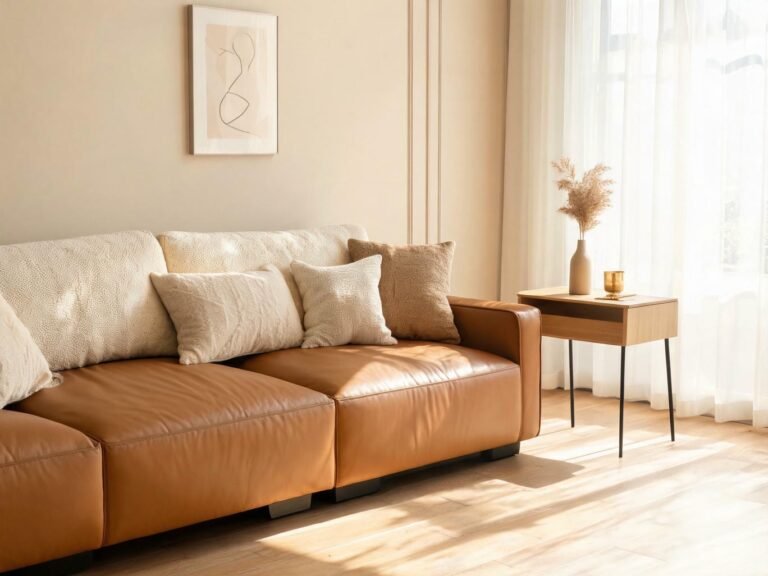
Microfiber furniture application — pile collapse and hydrolysis appear within 18-36 months in commercial use.
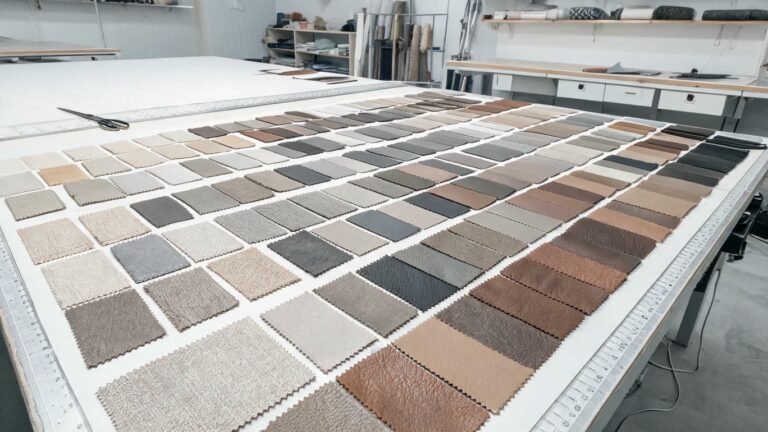
Durability comparison: silicone leather vs microfiber — see the three failure modes eliminated.

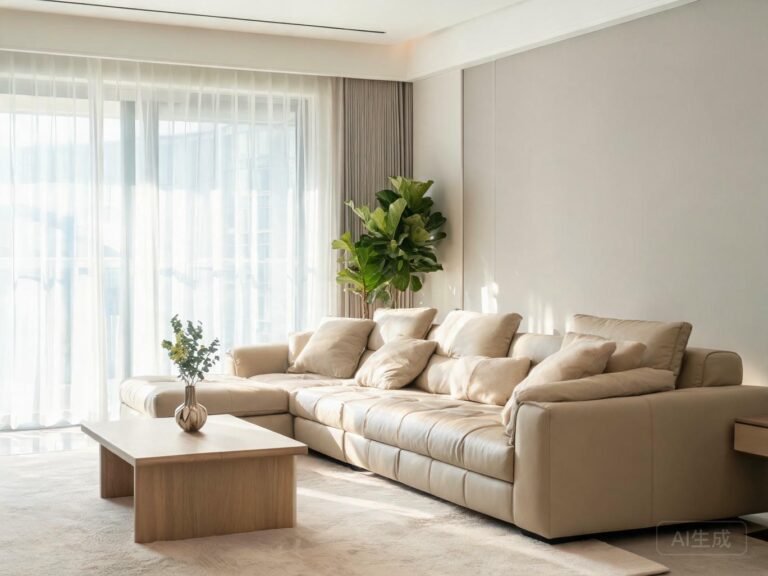
Commercial sofa upholstery — silicone leather maintains appearance where microfiber degrades.
Frequently Asked Questions
How long does microfiber fabric for sofa last in commercial settings?
In commercial environments with daily use, microfiber fabric for sofa typically lasts 3-5 years before visible degradation appears. The primary failure modes are pile collapse (permanent fiber compression under sustained load), hydrolysis (PU coating breakdown in humid conditions), and UV fading. By contrast, silicone leather demonstrates 10+ year service life in identical environments, with no pile structure to collapse, inherent hydrolysis resistance, and UV stability verified to 1,000+ hours.
Can silicone leather match the softness of microfiber fabric for sofa?
Yes. TOPSUN’s Classic Collection silicone leather achieves a hand feel comparable to premium microfiber, with thickness options from 0.8-2.0mm that allow specifiers to dial in the exact softness-to-structural ratio needed. Unlike microfiber, whose softness comes from pile fibers that collapse over time, silicone leather’s softness is a permanent property of its polymer matrix — it doesn’t degrade with use. The material maintains its original hand feel throughout its 10+ year service life.
The Material Science Behind 5:1 Lifespan Advantage
The 5:1 lifespan advantage of silicone leather over microfiber fabric for sofa isn’t marketing — it’s polymer chemistry. Silicone’s Si-O backbone is inherently resistant to hydrolysis, UV, and thermal degradation. Microfiber’s PU coating is inherently vulnerable to all three. No amount of UV inhibitor additives or hydrolysis-resistant PU formulations changes the fundamental chemistry; they only delay the inevitable. For commercial furniture durability, the material choice is the single largest determinant of total cost of ownership.
The procurement implication is straightforward: microfiber fabric for sofa is a 3-5 year material in commercial settings, while silicone leather is a 10+ year material. When you calculate replacement cost, labor, and downtime across that delta, the silicone vs PU comparison becomes obvious. The question isn’t whether silicone leather costs more per meter — it’s whether you want to reupholster your lobby every 4 years or every 10+ years.
For projects where sofa material specification must balance upfront cost with long-term performance, the test data is unambiguous. Three failure modes, zero silicone leather failures, 68% microfiber failure rate within 36 months. The material science speaks for itself.
About TOPSUN
TOPSUN manufactures silicone leather engineered to eliminate the three primary failure modes of microfiber and PU-based upholstery materials — pile collapse, hydrolysis, and UV degradation. The company’s Classic Collection for furniture applications provides 200,000+ Martindale cycles, 1,000+ hour UV stability, and inherent hydrolysis resistance verified through ISO 11507 testing, serving commercial furniture brands that require 10+ year service life from their upholstery materials.
ISO 12947-2 Martindale 200K+ | ASTM G154 UV 1,000h+ | ISO 11507 hydrolysis resistant | 10+ year service life