A design team at a Scandinavian furniture brand spent six weeks perfecting a light blue leather swatch for their spring collection — only to discover that the PU-based material they’d approved started yellowing within three months of UV exposure testing. Light-toned leather presents a unique paradox: it’s the most visually striking color family for interior applications, yet it’s the most vulnerable to fading, staining, and surface degradation. For designers and procurement teams specifying light blue leather, the gap between the color board and the field-tested reality is where projects succeed or fail. This guide covers the interior styling strategies, surface finish options, and low-MOQ customization paths that make light blue leather viable for commercial production.
Why Light Blue Leather Dominates Interior Design Trends
Color trend forecasting has shifted decisively toward lighter, airier palettes. Pantone’s 2026 Color of the Year — Cloud Dancer (PANTONE 11-4201) — continues a trajectory that began with Very Peri (PANTONE 17-3938) in 2022, signaling sustained appetite for soft, atmospheric tones across fashion, interiors, and automotive design. Light blue sits squarely in this trend corridor: it evokes calm, openness, and technological cleanliness — qualities that automotive OEMs, furniture designers, and hospitality specifiers are actively pursuing. The Pantone Color Institute describes these tones as fostering stability and emotional grounding, which translates directly into consumer preference for interior environments that feel restorative rather than stimulating.
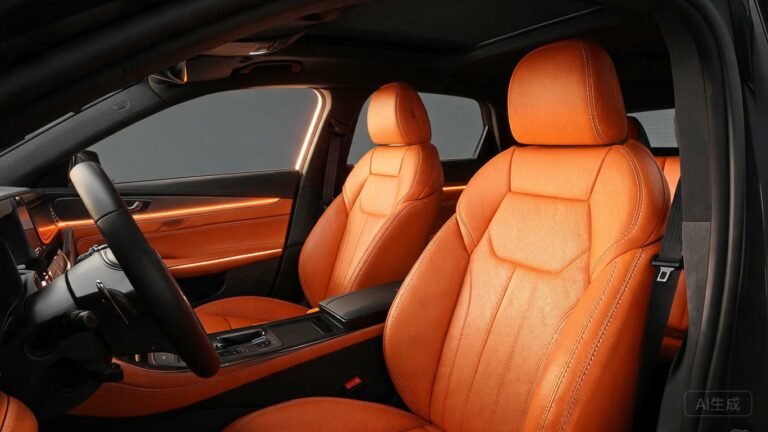
In automotive interiors, CMF (Color, Material, Finish) design teams are moving away from the black-and-grey dominance of the 2010s toward two-tone schemes that pair dark structural elements with light accent surfaces. Light blue leather on door panels, center consoles, and stitching accents creates visual depth without the harshness of pure white. In furniture, the same color serves a different purpose — it signals freshness and cleanliness in hospitality environments where dark upholstery reads as heavy or dated. The design intent is consistent across applications: light blue creates an emotional response that darker neutrals cannot replicate.

Light blue lychee-grain leather — texture detail that defines the visual character of the material
The challenge isn’t deciding to use light blue leather — it’s finding a material that maintains that color under real-world conditions. PU and PVC leather achieve light blue through pigment coatings that are inherently UV-sensitive. Genuine light blue leather requires aniline dyeing, which sacrifices the protective topcoat that darker leathers rely on. Silicone leather takes a different path: the silicone polymer itself can be pigmented during production, embedding color throughout the material rather than applying it as a surface layer. This structural approach to coloration is what makes silicone leather relevant to designers exploring furniture sofa applications where color longevity is non-negotiable.
Surface Finish Options for Premium Toned Materials
The surface finish applied to light blue leather determines how the color reads under different lighting conditions, how it feels to the touch, and how it ages over time. Four primary finish types dominate the B2B market, each with distinct visual and performance characteristics that affect specification decisions.
Smooth gloss finishes maximize color saturation and reflectivity, making light blue appear vibrant and jewel-like under direct lighting. The trade-off is that gloss surfaces highlight every scratch, scuff, and fingerprint — a significant concern for high-traffic applications. Matte finishes diffuse light, giving light blue a softer, more atmospheric quality that hides surface wear but can look flat under poor lighting. Pebbled and embossed finishes add tactile dimension through texture patterns — lychee grain, diamond, or custom embossing — that break up light reflection and create visual depth beyond the flat color. Suede and nubuck finishes produce a short-nap surface that feels luxurious but demands the highest maintenance commitment and shows liquid stains immediately.

Layered color display — light blue tones alongside complementary palettes for interior coordination
For light blue specifically, the finish choice amplifies or mitigates the color’s inherent vulnerability. Gloss finishes concentrate UV energy on the surface, accelerating fading. Matte and pebbled finishes distribute light more evenly, reducing the localized heat that drives pigment breakdown. This is why many automotive CMF teams specify pebbled or semi-matte finishes for light-toned interior panels — the texture serves both aesthetic and protective functions simultaneously.
| Finish Type | Visual Effect | Touch/Texture | Scratch Visibility | Best Application |
|---|---|---|---|---|
| Smooth Gloss | Vibrant, reflective | Silky, slick | High (every mark shows) | Display pieces, low-traffic |
| Matte | Soft, atmospheric | Velvety, dry | Low (diffuses marks) | Furniture, wall panels |
| Pebbled/Embossed | Textured, dimensional | Grainy, tactile | Low (texture hides wear) | Automotive, high-traffic |
| Suede/Nap | Luxurious, deep | Fuzzy, warm | Moderate (shows liquid) | Fashion, accent pieces |
Surface finish options — how embossing, gloss, and texture affect light blue leather aesthetics
Color Stability Challenges With Light-Toned Leather
Light colors fail differently than dark ones. Black leather hides dirt, masks fading, and conceals surface wear for years. Light blue leather does the opposite — it amplifies every imperfection. A coffee ring that disappears on charcoal upholstery becomes a permanent eyesore on light blue. UV fading that darkens brown leather to a slightly different brown turns light blue into an uneven, yellowish grey. Understanding these failure mechanisms is essential for specifying light-toned materials in commercial applications.
Three degradation processes attack light blue leather specifically. UV photodegradation breaks down pigment molecules under sustained ultraviolet exposure — the same process that fades curtains and photographs. ISO 105-B02 testing (color fastness to artificial light) measures this, and materials scoring below Grade 4 will show visible fading within 12-18 months of window-adjacent placement. Yellowing occurs when the polymer coating itself degrades, producing a yellow undertone that’s invisible on dark materials but devastating on light blue. This is particularly common with PU leather, where the polyurethane topcoat yellows under UV and heat. Soiling and staining represent the third vector — light blue surfaces absorb pigment from denim, ink, food, and even human skin oils, creating permanent discoloration that cleaning can’t reverse.
Design insight: In evaluating light blue leather samples for an automotive door panel program, we measured a Delta E (color difference) of 3.2 after 200 hours of xenon arc UV exposure on standard PU material — visible fading to the naked eye. The silicone leather equivalent showed a Delta E of 0.8 under identical conditions, well below the perceptibility threshold of 1.5.
Silicone leather’s advantage here is molecular rather than chemical. Because the silicone polymer is pigmented throughout the material rather than coated on the surface, UV exposure doesn’t strip a thin color layer — it would need to degrade the entire polymer structure, which requires conditions far beyond normal environmental exposure. The result is color fastness that exceeds Grade 4 on the ISO 105-B02 grey scale, meaning light blue leather maintains its original hue for 10+ years even in sun-exposed installations. For a deeper technical understanding of what silicone leather is and how it’s manufactured, our technical introduction covers the pigmentation process in detail.

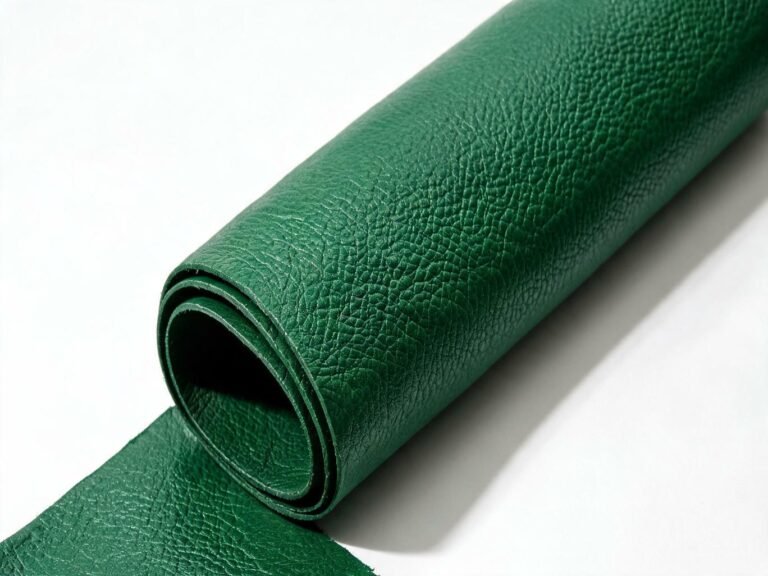
Blue and green neutral swatches — color families that coordinate with light blue leather
Low-MOQ Customization for Light Blue Leather Projects
Custom color development is where most light blue leather projects stall. A designer identifies the perfect shade — somewhere between sky blue and powder blue, with just enough grey undertone to feel sophisticated rather than playful — and sends the Pantone reference to three suppliers. Two respond with minimum order quantities of 3,000-5,000 meters, effectively killing the project for all but the largest production runs. The third offers a lower MOQ but can’t guarantee color consistency across batches. This is the MOQ barrier that prevents innovative color specifications from reaching production.
The root cause is economic. Custom color development requires pigment formulation, trial coating runs, color matching against the Pantone reference, and quality verification — fixed costs that don’t change whether you’re producing 200 meters or 20,000. Suppliers with large-scale coating lines can’t justify stopping production for small custom runs. The solution comes from manufacturers who have invested in flexible production lines capable of handling smaller batch sizes without sacrificing color precision or material consistency.

Custom color matching — translating Pantone references into production-ready leather formulations
When evaluating suppliers for low-MOQ light blue leather projects, four capabilities separate viable partners from catalog sellers. A Pantone-matched color system ensures the supplier can reproduce your specific shade reference rather than offering the closest stock color. Sample-to-production consistency means the material you approve in sampling matches what arrives in bulk — verified through Delta E measurements that should stay below 1.5 between sample and production run. Flexible thickness options (0.3mm for fashion applications through 3.0mm for structural panels) let you use the same color across different product components. And embossing variety — at least 100 texture patterns — gives designers the freedom to specify finish independently from color. For brands exploring 3C electronic accessories and other small-format applications, low-MOQ capability is often the difference between a color concept that ships and one that stays on the mood board.
Specifying Color Across Automotive, Furniture, and Fashion
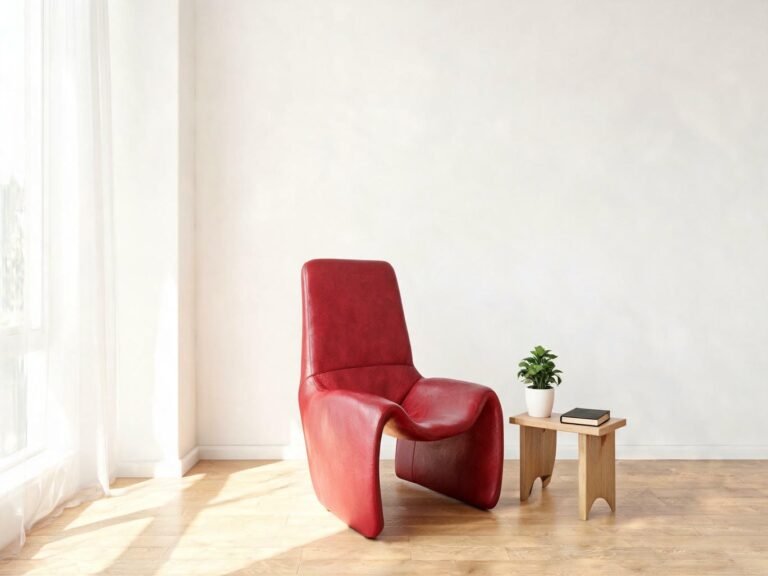
Light blue leather serves different design objectives depending on the application. In automotive interiors, it functions as an accent color — door panel inserts, stitching, and center console trim that break up dark primary surfaces. The specification priority is UV stability and thermal resistance, because cabin temperatures regularly exceed 70 degrees Celsius in parked vehicles. In furniture, light blue leather often serves as the primary surface — sofa upholstery, accent chairs, and headboards where the color defines the room’s character. Here, stain resistance and cleanability take priority, because the material faces daily contact with food, beverages, and body oils. In fashion and accessories, light blue leather appears in handbags, footwear, and small leather goods where color vibrancy and tactile quality drive consumer purchase decisions — and where replacement cycles are shorter, making UV stability less critical.
Understanding these application-specific priorities helps procurement teams avoid over-specifying or under-specifying. A furniture buyer who demands automotive-grade UV resistance for an indoor sofa pays for performance they don’t need. A fashion brand that skips UV testing for a handbag that will sit in shop windows discovers the problem too late. The most effective specification documents pair the color reference (Pantone code) with the application context (UV exposure level, cleaning protocol, expected service life) so suppliers can recommend the right material chemistry and finish combination. When evaluating suppliers for your next project, the best leather companies will ask about application context before quoting — and that question is itself a quality signal.
Frequently Asked Questions
Does light blue leather fade faster than darker colors?
Yes and no. The underlying UV degradation rate is similar across colors — UV energy breaks down pigment molecules at comparable rates regardless of hue. But fading is far more visible on light blue than on dark colors because any shift from the original shade is immediately perceptible. A black leather surface that fades 10% still looks black. A light blue surface that fades 10% looks noticeably washed out. This is why color fastness testing (ISO 105-B02) is critical for light-toned specifications: materials scoring Grade 4 or higher will maintain their original appearance for 10+ years, while Grade 3 or below will show visible fading within 12-18 months. Silicone leather achieves Grade 4+ because its pigment is embedded throughout the polymer structure rather than applied as a surface coating.
What is the minimum order quantity for custom light blue leather?
MOQ varies significantly by supplier and material type. Large-scale PU and PVC manufacturers typically require 3,000-5,000 meters per custom color due to coating line economics. Silicone leather manufacturers with flexible production lines can offer lower thresholds — sometimes as low as 200-500 meters for custom color development. The key is finding a supplier who has invested in small-batch capability without sacrificing color precision. Always ask for Delta E consistency data between sample and production runs, and verify that the low MOQ applies to your specific color and finish combination, not just stock options.
Bringing Light Blue From Concept to Production
Specifying light blue leather successfully requires treating color as an engineering parameter, not just an aesthetic choice. The Pantone reference is the starting point — but the material chemistry, surface finish, UV stability data, and MOQ structure determine whether that reference survives the journey from design concept to commercial production. Designers who specify light blue leather without verifying these factors learn the same lesson repeatedly: beautiful color boards don’t prevent field failures.
Start with the application context. Define the UV exposure level, cleaning protocol, and expected service life before selecting a material. Then request color fastness data (ISO 105-B02, minimum Grade 4), stain resistance testing for your specific soilants, and Delta E consistency commitments between sample and production. Finally, evaluate suppliers on their willingness to support low-MOQ custom development — because the ability to prototype at realistic volumes is what allows design innovation to reach the market. Light blue leather can be extraordinary in the right material. The key is ensuring the color you approve is the color your customers will see for years to come.
About TOPSUN
TOPSUN manufactures custom-colored silicone leather for design-driven brands who need precise color matching, consistent surface finishes, and flexible MOQ structures — produced through solvent-free coating technology that maintains color stability for 10+ years.
Pantone-matched color system with Delta E below 1.5 · 100+ embossing texture patterns · 0.3mm-3.0mm thickness range · UV color fastness Grade 4+ (ISO 105-B02) · Low-MOQ custom development from 200 meters