The market behind every leather wholesaler is estimated at $476.5 billion in 2026, and more than 70% of finished leather products cross a border before they reach a buyer. Yet the word wholesale hides a dozen different businesses behind one label. Research on procurement notes that buying from a middleman typically adds 15 to 35% above the factory exit price. I analyze supply chains for a living, and I read wholesale quotes the way an auditor reads a ledger. The difference between a good order and an expensive one usually comes down to three numbers: the price tier, the MOQ unit, and the capacity claim. This article dissects each one, shows where the margin actually goes, and ends with a quoting method you can copy.
What the $476 Billion Leather Trade Moves Through
Scale explains the layers. Market research sizes leather goods at $476.5 billion in 2026, heading toward $1.06 trillion by 2035 at a 9.3% CAGR. Natural leather still makes up more than half of global product volume. Mid-sized manufacturers produce 100,000 to 500,000 units a year, in batches of 1,000 to 10,000 per SKU. Those batches then pass through a chain of sellers. A leather wholesaler sits somewhere in that chain, and the exact position decides the price you see.

Every roll on a warehouse shelf already carries at least one margin, sometimes three.
Where the Margin Goes Between Factory and Shelf
Follow a single order up the chain and the markups stack. The factory sets an exit price. A trading company reselling that factory’s goods adds 15 to 35%, which on a 5,000-unit order means 5,000 to 12,000 euros of pure intermediary margin. A distributor layer adds around 20% more. A retailer adds roughly 25% on top before the product reaches a consumer. None of these numbers is hidden crime. Each layer funds real services. The problem appears only when a layer adds cost but no service you need.
| Channel | Typical Margin | What You Gain | What You Lose |
|---|---|---|---|
| Factory direct | 0% | Spec control, QC access | Handling small mixed orders |
| True wholesaler | 10-20% | Stock, consolidation | Custom specs |
| Trading company | 15-35% | Sourcing breadth | Production visibility |
| Distributor to retail | 20-25% | Local service | Price efficiency |
The practical test is to name the service before you accept the margin. If a wholesaler holds stock you can draw from weekly, the 15% buys something real. If the seller simply forwards your email to a factory, the 35% buys nothing you could not buy yourself. That single question filters more suppliers than any certificate check.
The MOQ Ladder and Its Unit Trap
The second number that moves is the minimum order, and it moves in different units. Procurement research catalogued the ladder: quarter hides, single hides, 200 square feet, 1,000 square feet, 100 finished units, or 25,000 kilograms of raw material. Every one of those can honestly be called an MOQ, and they describe completely different commitments. Comparing two quotes without converting units is how buyers end up over-committed on paper.
| MOQ Unit | Who Uses It | Typical Scale |
|---|---|---|
| Quarter or half hide | Stockists, prototyping teams | Workshop scale |
| Square feet | Wholesale hide sellers | 200-500 sq ft common |
| Finished units | Goods factories | Per style and color |
| Kilograms | Raw-hide traders | Industrial scale |

A finished-goods warehouse quotes in stock units; a tannery quotes in production lots. The unit tells you who you are talking to.
The fix is to convert before you compare. Ask each seller to restate their minimum in the same unit, in the same color, on the same article. For coated materials, our silicone leather introduction lists the spec fields that should appear next to any genuine quote, from coating weight to base fabric.
How to Qualify a Leather Wholesaler Before You Wire
The third number is capacity, and it is the one most often inflated. A supplier’s total company capacity says nothing about your article. Buyer research on supplier validation recommends asking for three quotes at once: a trial volume, your expected regular monthly volume, and a scaled future volume. Compare price, lead time, payment terms, and inspection process at each level. Then confirm dependable monthly capacity for the exact article, not the company brochure figure.
Document the rest in writing before approval. That means the claims procedure, replacement timing, export paperwork, and the method used to keep color consistent between reorders. A seller who answers all four in one reply runs a real operation. Our furniture and sofa applications page shows how we publish capacity and spec data for one product line, which is the same transparency to expect from any serious leather wholesaler.
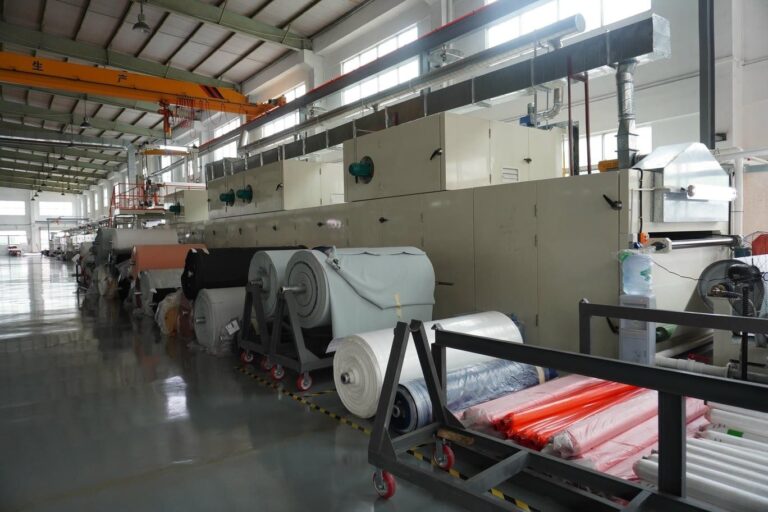
Production capacity on the line: the number that should back every wholesale claim you accept.
Get Factory-Direct Wholesale Pricing
The One-Line Rule for Wholesale Leather Buying
Price, MOQ, and capacity are the three numbers that move, and each one moves for a reason you can name. Pay for layers that add service, convert every MOQ into the same unit before comparing, and never accept a capacity claim without an article number attached. Do those three things and the wholesale chain stops being a maze. It becomes a price list you can read.
Request Wholesale Leather Samples
How much cheaper is buying from a leather wholesaler?
It depends on which layer you remove. Cutting out a trading company typically saves 15 to 35% off the price you were quoted. Cutting out a distributor saves around 20%. Buying factory direct removes both layers, which is why volume buyers negotiate there first.
What MOQ should I expect from a leather supplier?
Expect the number to arrive in different units, and convert before comparing. Hide sellers quote from 200 square feet. Stockists may split a single hide of about 50 square feet. Finished-goods factories quote per style. A fair benchmark is the smallest unit that still lets the seller run a consistent batch in your color.
About TOPSUN
TOPSUN produces silicone-based and microfiber leather on its own coating lines, supplying furniture, bag, and automotive brands in more than 30 countries.
Wholesale buyers get rolls from 500 meters, tiered volume quotes, SGS reports with every batch, and named capacity per article.

The paperwork is the product: a supplier guide worth its price answers the three numbers before you ask.
References
- 1. https://www.360researchreports.com/market-repor… — Leather goods market estimated at $476.5 billion in 2026, forecast $1.06 trillion by 2035 at 9.3% CAGR; natural leather over 50% of volume; more than 70% traded across borders
- 2. https://www.liderkemer.com/en/blog-2/wholesale-… — Middleman margin typically 15-35% above the factory exit price; on a 5,000-unit order that is 5,000-12,000 euros of pure intermediary margin
- 3. https://www.fabulive.com/blogs/news/the-leather… — MOQ ladder from quarter hides and 200 sq ft minimums to 25,000 kg raw material; validation method quotes trial, regular, and scaled volumes with capacity confirmed per article